Hessensteinska palatset, Baroque palace in Riddarholmen, Sweden
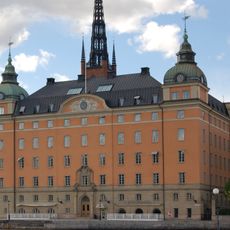
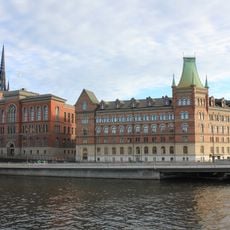
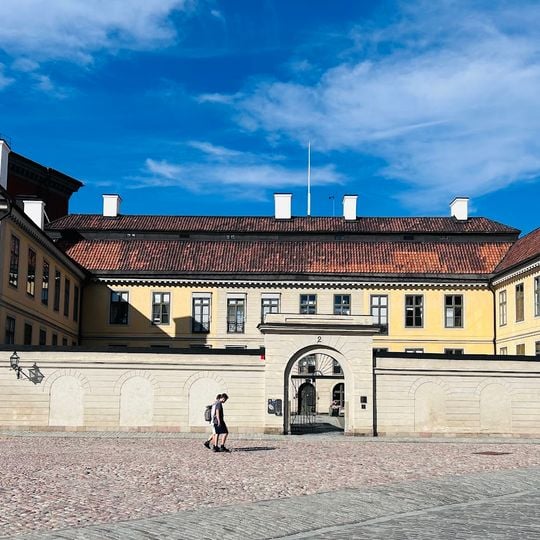
Hessensteinska palatset is a three-storey, three-winged palace on the northeast side of Birger Jarls torg on Riddarholmen. It was built around 1630 in a Mannerist style for the privy councilor Bengt Bengtsson Oxenstierna and rebuilt in its present form around 1680, probably to designs by Nicodemus Tessin the Elder. The building has no central tower.
The plot belonged to the Oxenstierna family from the 16th century. In the 1630s Bengt Bengtsson Oxenstierna built a smaller Renaissance palace here. Around 1680 Bengt Gabrielsson Oxenstierna and Eva Juliana Wachtmeister rebuilt it in its present form, probably after designs by Nicodemus Tessin the Elder. In 1731 Fredrik I gave it to Hedvig Taube, and Carl Hårleman redecorated the upper floor.
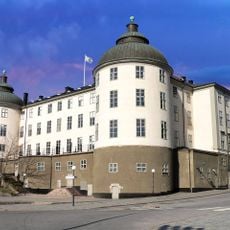
The building's name comes from Frederick William von Hessenstein, the illegitimate son of King Frederick I and Hedvig Taube, who inherited it and completed Carl Hårleman's renovation of the upper floors. Since 1983 the restored 17th- and 18th-century interiors have been used by Svea hovrätt, the Svea Court of Appeal, whose main seat is in the neighbouring Wrangelska palatset.
The building houses Svea hovrätt, Sweden's appeal court, whose main seat is in the neighbouring Wrangelska palatset. It is not open for regular public visits. Visitors can walk around the exterior on Birger Jarls torg and view the three-storey, three-winged facade from the square.
After the royal palace burned down in 1697, Queen Dowager Hedvig Eleonora spent a night in this palace. The building later housed the National Debt Office from 1835 to 1906 and the National Board of Health and Welfare until 1965.
The community of curious travelers
AroundUs brings together thousands of curated places, local tips, and hidden gems, enriched daily by 93,644 contributors worldwide.