Riddarholmsbron, bridge between Riddarholmen and Gamla stan in Stockholm, Sweden
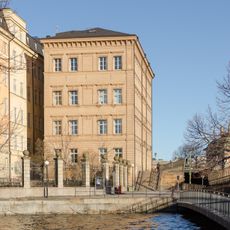
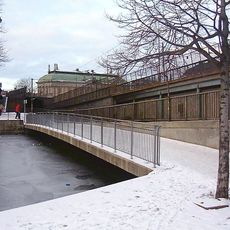
Riddarholmsbron is a 13.4-metre-wide concrete beam bridge with a closed frame, crossing Riddarholmskanalen, the Sammanbindningsbanan railway and Centralbron on two intermediate supports. It links Riddarhustorget in Gamla stan to Riddarholmen. The present structure was inaugurated in 1958, designed by architect Gunnar Lené with engineer Erik Vretblad.
The first link was a simple wooden bridge from the Greyfriars Tower, when Riddarholmen was still Gråmunkeholmen. In 1630 Åke Tott built a drawbridge from the House of Knights; after the 1697 palace fire both bridges were widened, in 1738 and 1751. Erik Palmstedt's stone arch bridge followed in 1784–1789, replaced in 1867 by a cast-iron railway bridge and in 1958 by the present concrete span.
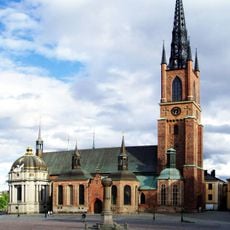
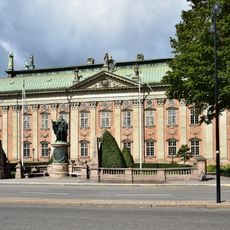
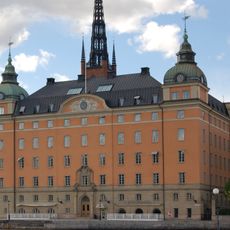
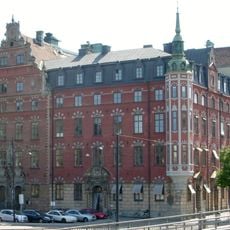
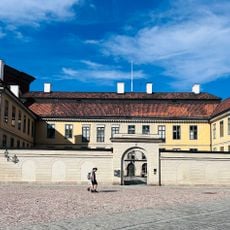
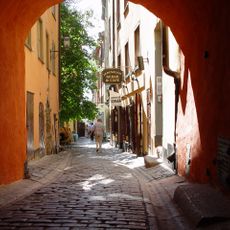
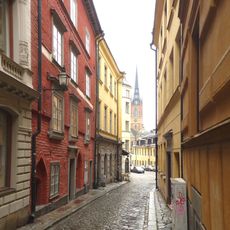
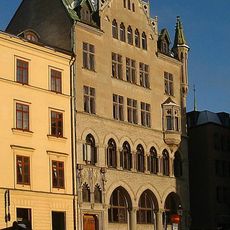
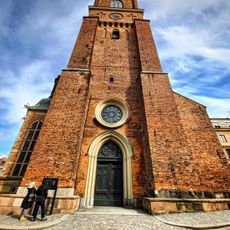
Riddarholmsbron connects two sides of Stockholm's historic center: busy Gamla Stan with its narrow streets and colorful buildings on one side, and the quieter Riddarholmen with its medieval church on the other. The bridge serves as a daily passage for locals moving between the busy old town and the calmer historic island spaces.
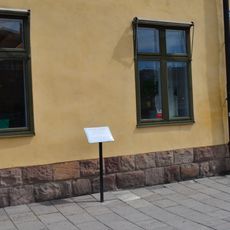
The bridge carries pedestrians and vehicles over Riddarholmskanalen, the connecting railway line and Centralbron. The memorial slate from the 1784 stone bridge now stands beside the walkway on the Gamla stan side. A sculpture by Bengt Inge Lundkvist at Munkbron 7 depicts the bridge's history.
When the 1784 stone bridge was demolished in 1867, architect Ragnar Östberg later reused one of its vaults at the Stockholm City Hall, placing it with two lion-head masks on the tower's south side; the spot is called Palmstedts grotta and holds Ida Matton's marble sculpture "Lokes straff".
The community of curious travelers
AroundUs brings together thousands of curated places, local tips, and hidden gems, enriched daily by 94,408 contributors worldwide.