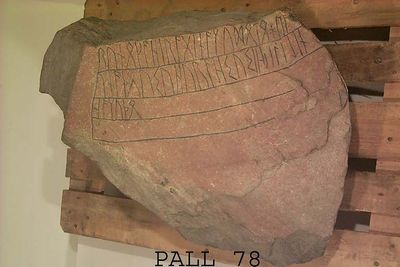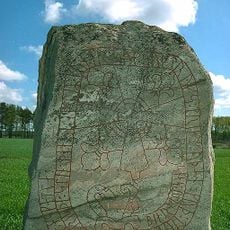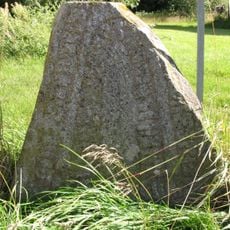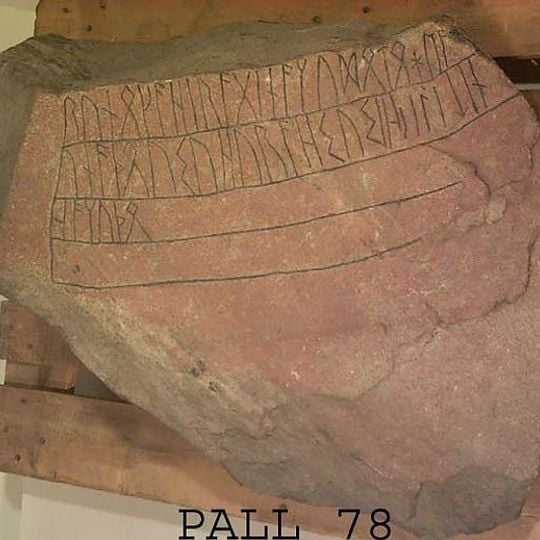
Noleby Runestone, Norse runestone at Swedish History Museum, Sweden
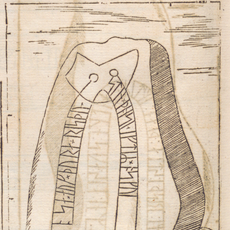
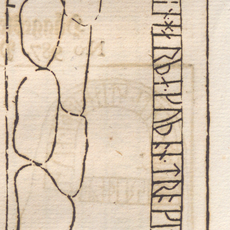
The Noleby Runestone is a monument with three lines of text carved in Elder Futhark script, framed by decorative bands on its surface. The inscription displays the characteristic carving technique and composition of these early medieval stone monuments from Northern Europe.
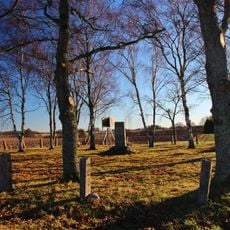
The stone was discovered in 1894 at Stora Noleby farm in Västergötland and dates to around 450 AD based on linguistic analysis. Its age and origins make it a valuable witness to early runestone culture in Scandinavia.
The inscription contains the phrase 'runo raginakundo', meaning runes of divine origin, which reflects how people at that time understood their connection to religious beliefs. This meaning made the stone an important witness to ancient Norse thinking and worldview.
The stone can be viewed at the Swedish History Museum in Stockholm, where it is kept under optimal preservation conditions. Visitors should take time to study the fine details of the carving and the arrangement of the text carefully.
This is the only runestone in Scandinavia that uses a specific star rune form to represent the sound /j/. This distinctive feature makes it an exceptional example of early runecraft and its regional variations.
The community of curious travelers
AroundUs brings together thousands of curated places, local tips, and hidden gems, enriched daily by 91,693 contributors worldwide.