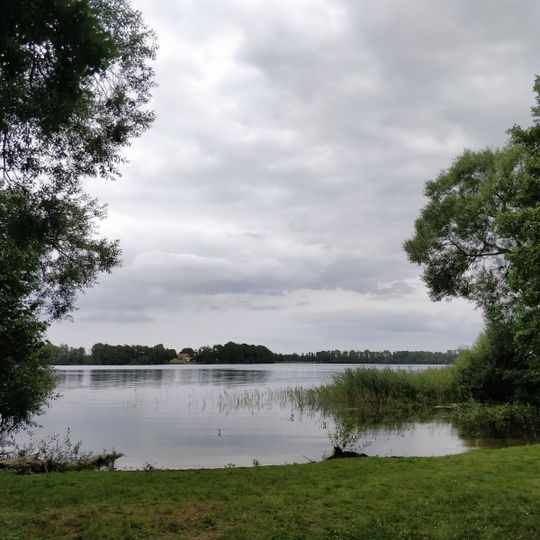
Ivö Lake, Lake water body in Bromölla Municipality, Sweden.
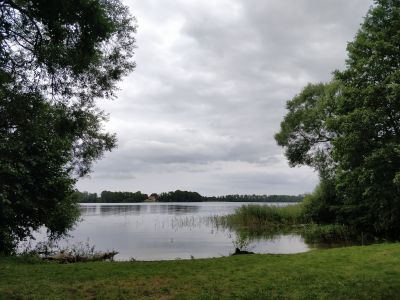
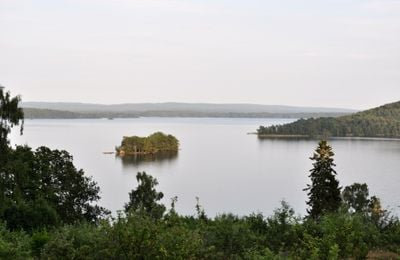
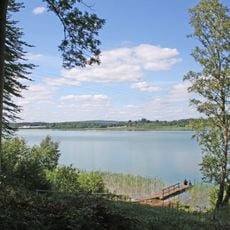
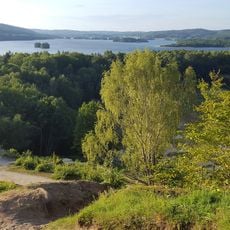
Ivö Lake (Ivösjön) lies in the municipalities of Kristianstad and Bromölla in northeastern Skåne County. It covers just under 55 km² and reaches a maximum depth of 50 metres, making it Skåne's largest and deepest lake. Its shoreline is broken by numerous islands and sheltered bays, with the wooded island of Ivö among the largest.
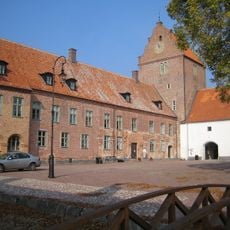
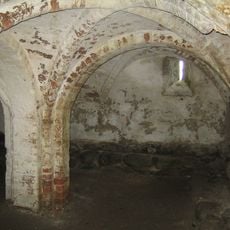
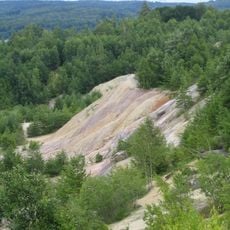
Ivöhus Castle on Ivö island takes its name from Anders Sunesøn, the Danish archbishop of Lund, who died there in 1228. The ruins of his castle remain on the island. Ivö Klack began operating as a kaolinite quarry in 1886, and Gerard De Geer first described its geology in 1889.
Ivö Lake is known across Europe among anglers: 25 to 30 species are caught regularly, among them pike, salmon, burbot, vendace and the spined loach, rare in this region. The surrounding valleys are one of Scania's fruit districts, and the lake's fish richness led to conservation efforts under EU Natura 2000.
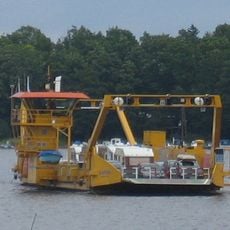
A free cable-driven ferry connects the mainland to an island in the lake and runs throughout the day. Visitors can explore the surroundings at their own pace by foot, boat, or bicycle.
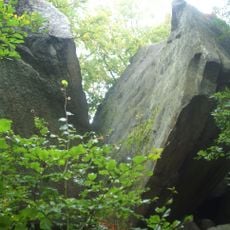
On the island of Ivö, the Ivö Klack site was opened as a kaolinite quarry in 1886 and first described geologically by Gerard De Geer in 1889. Weathered surfaces exposed by the mining resemble rôches moutonnées, which has been used to argue that such landforms elsewhere may have formed before glaciation. The Cretaceous fossil fungus Stomiopeltites ivoeensis was named after the lake.
The community of curious travelers
AroundUs brings together thousands of curated places, local tips, and hidden gems, enriched daily by 93,443 contributors worldwide.