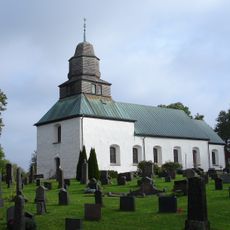
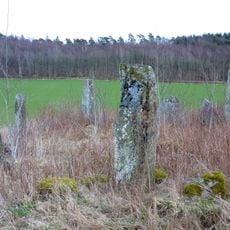
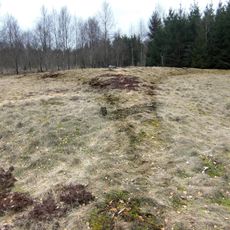
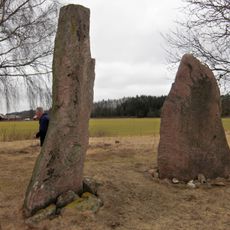
Hagbard's gallow, Bronze Age megalithic monument in Asige, Sweden
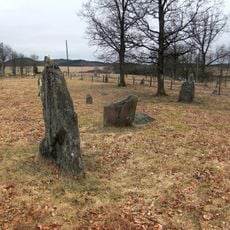
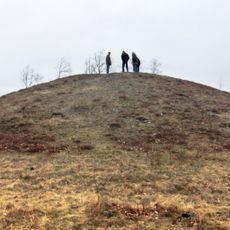
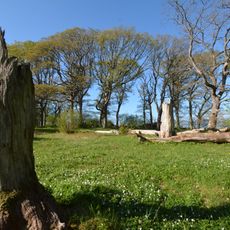
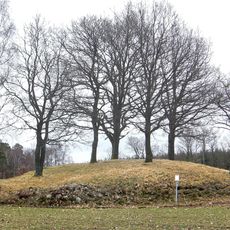
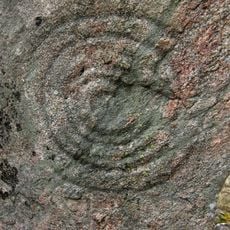
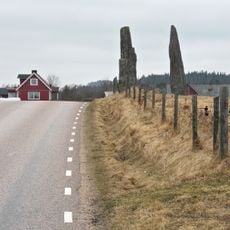
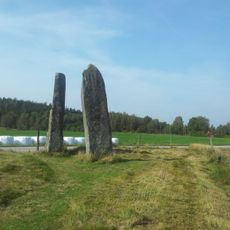
Hagbard's gallow consists of two stone settings, each with a pair of standing stones, in Asige, Halland. The larger setting is 24 m across and 0.8 m high; the one by the road, damaged by the road, measures about 13 by 8 m. The stones carry rock carvings, including human figures, cup marks and a boat, and two stone-lined postholes lie in line between the pairs.
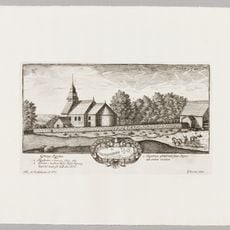
The monument was first recorded in writing in 1598 by Jacob Richardson, who linked it to the Hagbard and Signe legend. Gustaf Brusewitz examined the stones in 1865 and found circular carvings; further symbols were identified in 2010 and 2018. One stone had lain fallen since at least 1729 and was re-erected in 1913. The first archaeological excavations began in 2024.
The name comes from the Norse legend of Hagbard and Signe: condemned at the Asige thing, Hagbard asked to see his cloak hoisted in the gallows first; Signe, believing him dead, set her hall alight and died with her maids. The area is the only one where physical remains carry names from the legend.
The site is located in the Halland region and forms part of the Ekomuseum nedre Ätradalen open-air museum, which provides pathways and information boards. Visitors should wear sturdy footwear and expect changing weather conditions, as the location sits in an open landscape area.
In 2024 the first archaeological excavations began at the site, and dug trenches revealed urn burials of two children, one about 10 years old and one 3–5 years old, with no other grave goods. The elder child's urn, in late Bronze Age style, was carbon-dated to the 9th–8th century BCE.
The community of curious travelers
AroundUs brings together thousands of curated places, local tips, and hidden gems, enriched daily by 94,082 contributors worldwide.