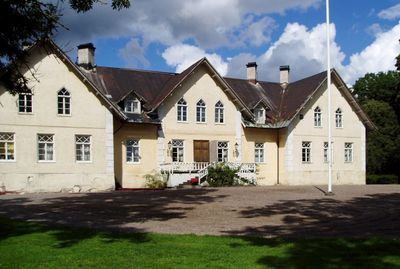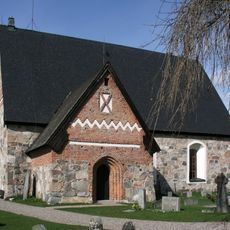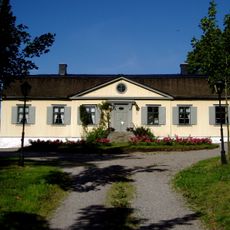
Beateberg, Manor house in Norrtälje Municipality, Sweden
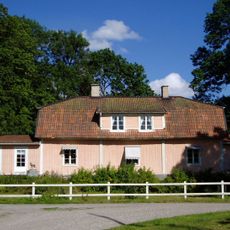
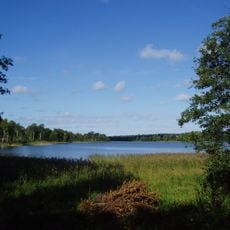
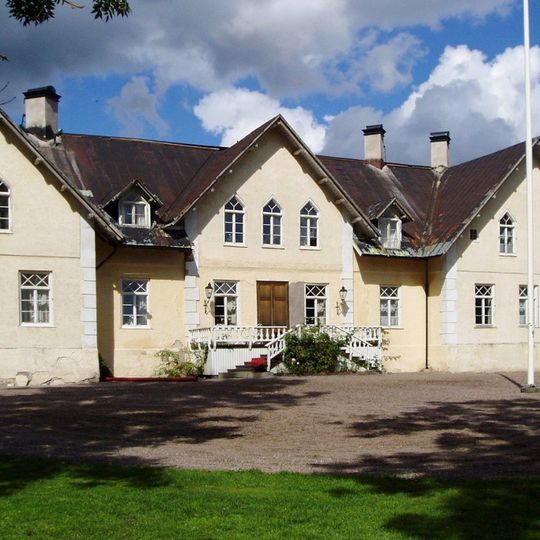
Beateberg is a manor and former säteri by the southern shore of Lake Viren in Rö parish, Norrtälje Municipality. Its present main building was put up in the 1860s in a villa style that displaced traditional manor architecture. The estate also holds the site of the 1795 Beateberg ironworks, with a blast furnace and trip-hammer forge driven by a waterworks beside the main building.
The area is first recorded on maps in 1412 as Mylnakolle (Målnekulla), a frälse torp. Renamed Viraberg in 1670, it took its present name in 1678 from Beata Oxenstierna, daughter of Count Gabriel Bengtsson Oxenstierna and the estate's first known owner. It passed to Nils Adam Bielke by inheritance in the mid-1700s, and a new main building went up in the 1760s. In 1795 Sven Bunge built an ironworks with a blast furnace and trip-hammer forge, powered by a waterworks beside the main building.
The name Beateberg was adopted in 1678 after Beata Oxenstierna, daughter of Count Gabriel Bengtsson Oxenstierna and the estate's first known owner; before that it was Mylnakolle and then Viraberg. Today the estate runs traditional farming with milk production and horse activity, continuing the agricultural use that began on the fertile land south of Lake Viren.
Beateberg lies by the southern shore of Lake Viren in Rö parish, Norrtälje municipality. The estate is a working farm with dairy production and horse activity, so visitors should keep to paths and respect private grounds. The main building and park are best seen in snow-free months.
Robert Ljunglöf, son of the "snus king" Knut Ljunglöf, owned Beateberg from 1941 to 1950. He created the current interiors of the main building, ran a model farm with a stable of English thoroughbreds, and expanded the estate to 2,635 hectares, of which 275 were cultivated.
The community of curious travelers
AroundUs brings together thousands of curated places, local tips, and hidden gems, enriched daily by 94,705 contributors worldwide.