Hedensberg Manor, Manor house in Västerås Municipality, Sweden
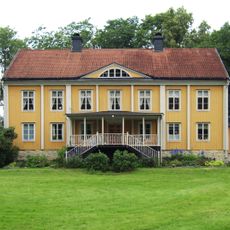
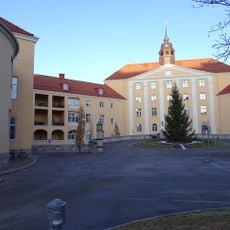
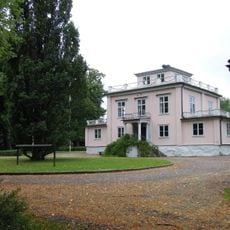
Hedensberg Manor is a manor house in Tillberga parish, Västerås Municipality. The main building was erected around 1750 by county governor Peter Drufva, and the estate was designated an individual listed building complex in 1987.
Hedensberg was first recorded in 1377, when Olof Djäken in Tuna exchanged for 8½ öresland of land there with Finnvid Finnvidsson. The village, comprising seven mantal, was dissolved in the 17th century when the säteri was established. The present main building was erected around 1750 by county governor Peter Drufva; Baron Carl De Geer bought it in 1776 and set up an entail for his daughter Charlotta, wife of Lieutenant General Baron Anders Rudolf du Rietz. The entail passed by marriage to the Piper family and in 1824 to the Hamilton family, lasting 230 years until Archibald Hamilton sold the estate in summer 2006 to Jonas Wahlström's AB Hvalfisken.
The estate's name comes from the medieval hamlet of Hedensberg, first recorded in 1377 when Olof Djäken of Tuna traded 8½ öresland of land there with Finnvid Finnvidsson. The hamlet's seven mantal were dissolved in the 17th century when the säteri was established. The 230-year fideikommiss, created by Carl De Geer in 1776 for his daughter Charlotta, ended when Archibald Hamilton sold the manor in summer 2006.
The manor stands in Tillberga parish, about 10 km north of Västerås, with the former Hedensberga railway station site just west of the buildings; the Sala–Tillberga line opened there in 1875 and passenger service ended in 1967. The estate is privately owned since the 2006 sale to AB Hvalfisken, so view the buildings from the surrounding roads and paths rather than the grounds.
The 1987 listed-building designation did not survive: after Archibald Hamilton sold the estate in summer 2006 to Jonas Wahlström's company AB Hvalfisken, the fideicommissum company was merged and the centuries-old protection of buildings, furnishings and land lapsed. In 2007 the county administrative board reported Hvalfisken's CEO Mats Gustafsson for tearing out much of the 18th-century interior, including wooden floors; he was acquitted of antiquities offences but convicted on one of eight counts, removal of an interior wall.
The community of curious travelers
AroundUs brings together thousands of curated places, local tips, and hidden gems, enriched daily by 94,371 contributors worldwide.