Hunehals, Medieval fortress ruins near Kungsbacka, Sweden
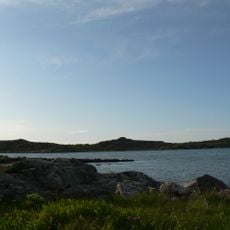
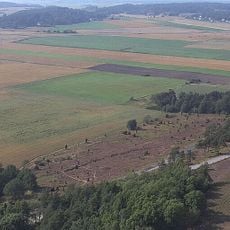
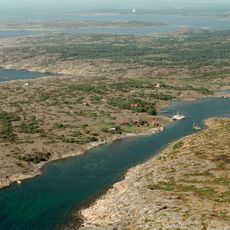
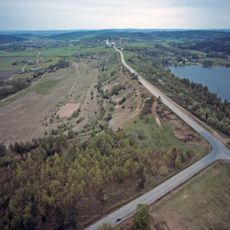
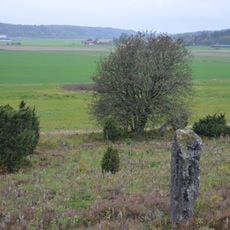
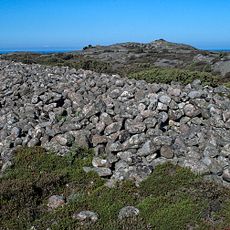
Hunehals is a castle ruin on a cliff on the eastern side of Kungsbackafjorden in Hanhals parish, south of the inlet where Kungsbacka later grew. Excavations in summer 1933 found bricks and large stones from Count Jakob of Halland's castle; its outer defences were earthen ramparts topped with wooden palisades.
Hunehals was fortified around 1287 by Count Jakob of Halland, grandson of Valdemar Sejr, with help from the King of Norway, after he was outlawed for his part in the murder of Erik Klipping. It became a base for the outlaws. In 1327 a Swedish army under Mats Kettilmundsson marched to level it, and after a final siege in 1328 the castle lord Gustaf Tunasson surrendered to the Danes. It may have stood on the same site as Kungsbacka Castle, mentioned in 1366 and 1382.
The name Hunehals appears in the medieval form Hunæ hals, and the site is also linked to Kungsbacka slott in 14th-century letters. In 1366 Archbishop Niels of Lund confirmed that Peter Eskilsson had managed two farms for King Valdemar at this castle, and in 1382 Abraham Brodersson pledged part of Kungsbacka slott to Queen Margareta. Scholars have suggested Hunehals and Kungsbacka slott occupied the same site.
The site is reached through a marked trail from the parking area, with informational signs and QR codes that explain the medieval history. Visit during dry weather, as the ground is rocky and exposed to the elements.
The 1933 excavations found brick and large stones from Count Jakob's castle, whose outer defences were earthen ramparts topped with wooden palisades. The site has also been linked to Kungsbacka Castle, mentioned in 1366 and 1382, suggesting the two names may refer to the same stronghold.
The community of curious travelers
AroundUs brings together thousands of curated places, local tips, and hidden gems, enriched daily by 94,036 contributors worldwide.