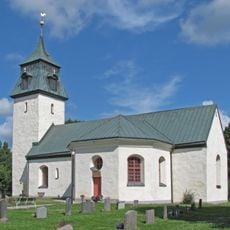
Jäder Church, Lutheran church in Eskilstuna Municipality, Sweden.
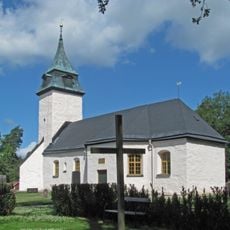
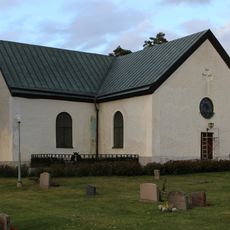
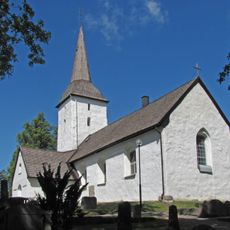
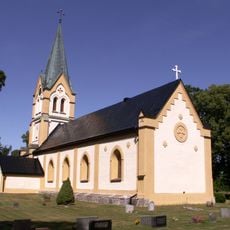
Jäder Church is built of stone and brick on a hill above the plain. It has a nave, a choir of equal width to the east, a sacristy to the north, the Brahe burial chapel to the south, a porch to the south and a tower to the west. The chapel and sacristy form the arms of a Latin cross. The gables carry sandstone decorations from the 1640s and 1650s.
The north wall preserves parts of a 12th-century Romanesque church, enlarged in the late 13th century; the tower and vaults followed in the 15th century. From 1641 to 1659 Axel Oxenstierna had the church rebuilt as his family's burial church after designs by Nicodemus Tessin the Elder, adding the choir, sacristy, porch and Brahe chapel. Helgo Zettervall's spire was completed in 1880.
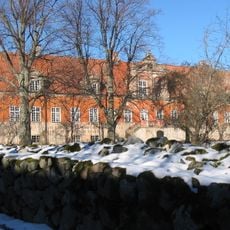
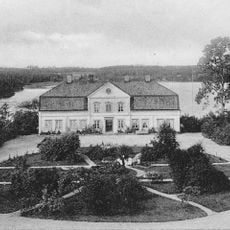
The church owes its nickname "Rekarne Cathedral" to its size, unusually large for a village church. It served for generations as the burial church of the Oxenstierna family of nearby Fiholm Castle, and the Brahe chapel was commissioned by Margareta Brahe for her two first husbands. The medieval tithe barn of brick by the former vicarage also survives.
The church stands about 10 kilometers east of Eskilstuna and remains readily accessible by road. Regular religious services take place throughout the year, and visitors can explore the cemetery on the grounds or arrange a guided visit.
The altarpiece was created in Brussels by a Flemish master painter and represents exceptional late Gothic artistry found in few Swedish locations. This imported artwork reflects the church's historical connections to continental European religious art traditions.
The community of curious travelers
AroundUs brings together thousands of curated places, local tips, and hidden gems, enriched daily by 94,393 contributors worldwide.