Lindholmen Castle, Medieval castle ruins in Lidköping Municipality, Sweden.
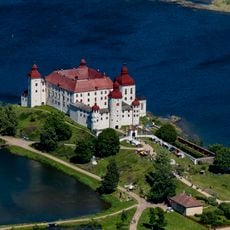
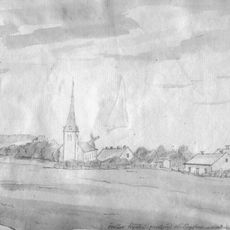
Lindholmen Castle is a ruin in Lidköping Municipality, Sweden, consisting of remnants of a once-fortified complex built on an island. The surviving structure is a 17th-century wing that displays Swedish construction techniques and design principles of that era.
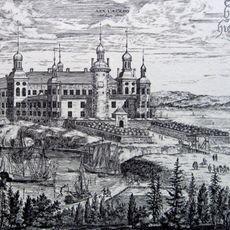
Lindholmen was first mentioned in 1514 as "Lindholmz Spetal" and became a manor house in 1516 under rikshovmästare Ture Jönsson (Tre Rosor). Through Sigrid (Tre Rosor) it passed to Vice Admiral Bengt Gabrielsson Oxenstierna the Elder, who rebuilt it into a large fortified castle with metre-thick walls and a courtyard about 16 metres square. It burned in 1662 and was rebuilt as a Baroque complex, burned to the ground in 1792, and the ruins were restored in 1931–32.
The name Lindholmen appears in 1514 as "Lindholmz Spetal", a hospital name, before Ture Jönsson (Tre Rosor) made it a manor in 1516. Carl Linnaeus visited in 1746 and wrote most about the bathhouse, built of limestone and marble with hand-painted Dutch tiles, crystal and golden Turkish wall hangings; he called it the finest in all of Västergötland.
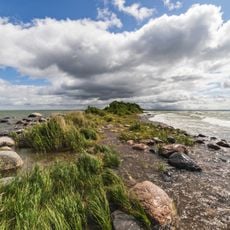
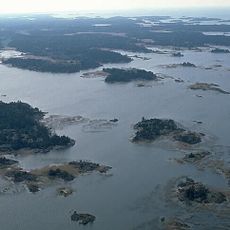
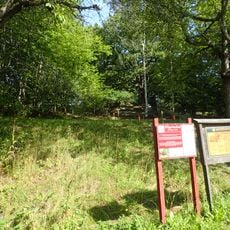
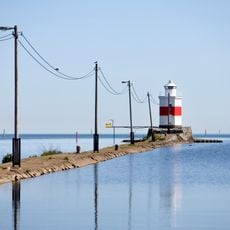
The site sits on an island and can be reached by boat or causeway, making access somewhat limited and keeping it quieter than larger attractions. Visitors should wear sturdy shoes and be ready for simple, unprotected paths across the grounds.
Carl Linnaeus visited in 1746 during his Västgötaland journey and was most taken by the bathhouse, built of limestone and marble with hand-painted Dutch tiles, crystal and golden Turkish wall hangings. He called it the finest he had seen in all of Västergötland, yet lamented that such splendour stood empty and without inhabitants.
The community of curious travelers
AroundUs brings together thousands of curated places, local tips, and hidden gems, enriched daily by 93,459 contributors worldwide.