Munksjön, Freshwater lake in Jönköping, Sweden
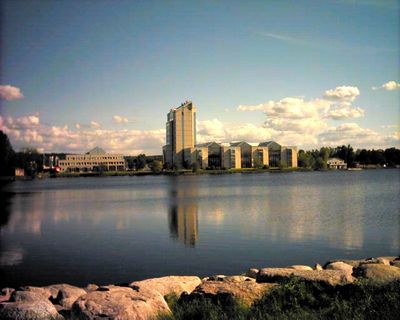
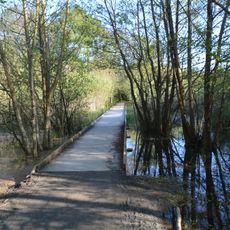
Munksjön is a freshwater lake running through the center of Jönköping with multiple public pathways along its shores for walking and cycling. The lake features varied surroundings with open grassy areas, tree-lined banks, and sections where the water widens, creating different environments throughout its length.
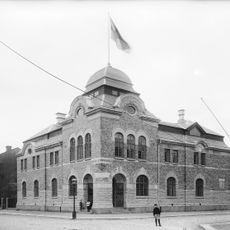
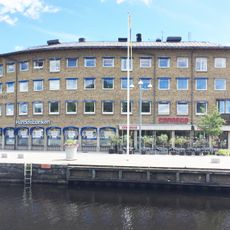
Munksjön was called Lillsjön in the 17th century. After the town burned in the early 1600s, Jönköping was rebuilt for defence on the sandbar of Sanden between Vättern and Munksjön, with plots on Smedjegatan directly on the lake's northern shore. From the 1830s the lake became the town's harbour, reached through the Hamnkanalen canal.
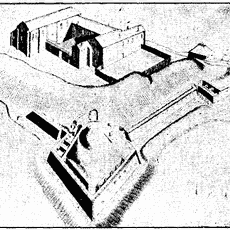
The lake's name comes from the monks whose medieval monastery stood on the western shore, later rebuilt as Jönköping Castle. Since 1830 it has been the city's harbour, and boats entering through the Hamnkanal were let through by a train swing bridge, a road swing bridge and the Vindbron bascule bridge. Jönköpings Roddsällskap still rows and races from Holmen on the eastern shore.
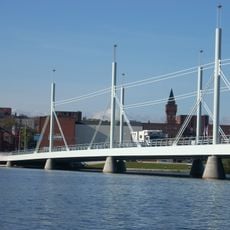
Munksjön connects to Vättern through the Hamnkanalen in the north, so boats enter from that side; the Tabergsån flows in at Jordbron in the south. Five road and rail bridges cross the lake and its outlet, including Slottsbron (1961) and Munksjöbron (2006). The Jönköping Rowing Society is based at Holmen on the east shore.
In 1998, samples showed mercury levels of 2.14 mg/kg dry matter in the fibre bank on the western lake bed, which the Swedish EPA classes as high. The bank, about 6 hectares of cellulose fibres from the paper mill, is over 7.7 metres deep in places. A Viking-era balance scale with its tongue preserved was also found in the lake.
The community of curious travelers
AroundUs brings together thousands of curated places, local tips, and hidden gems, enriched daily by 93,538 contributors worldwide.