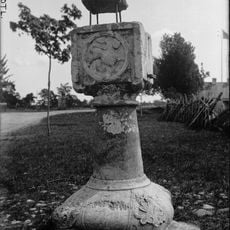
Ojnareskogen, Protected forest in Gotland, Sweden
Ojnareskogen is a forest area in Bunge parish in northern Gotland, between the Natura 2000 sites Bräntings haid and Bästeträsk. It is a water protection area with key biotopes and lies over the catchment of Bästeträsk, Gotland's largest lake and freshwater source for northern Gotland. The forest is proposed as a national park.
The forest became the focus of environmental protests in 2012 when Nordkalk began limestone extraction operations between two Natura 2000 protected areas. This conflict raised awareness and led to stronger conservation efforts in the region.
The name Ojnare appears in local place names, and the forest lies in Bunge parish, where the limestone dispute became a public cause. In 2012 the Fältbiologerna youth organisation camped in the forest, and islanders blocked Mellanskog's logging machines; Gotland's largest police operation to that date began on 28 August 2012. The government's 31 August 2015 decision to make Ojnare a nature reserve was pushed by the Green Party over ten years.
The forest lies in Bunge parish in northern Gotland, between the Natura 2000 areas Bräntings haid and Bästeträsk. It is a water protection area and includes key biotopes, so visitors should stay on paths and avoid the springs and wetlands that feed Bästeträsk, Gotland's largest lake and freshwater source for northern Gotland.
The planned quarry would have covered 170 hectares and reached 25 metres deep, directly over the catchment of Bästeträsk, Gotland's largest lake and the drinking water source for northern Gotland. In 2017 the Supreme Administrative Court upheld the government's extension of the Bästeträsk Natura 2000 area, which secured protection for the forest.
The community of curious travelers
AroundUs brings together thousands of curated places, local tips, and hidden gems, enriched daily by 95,320 contributors worldwide.