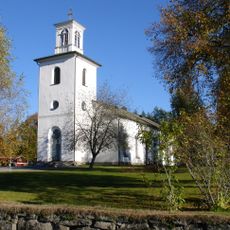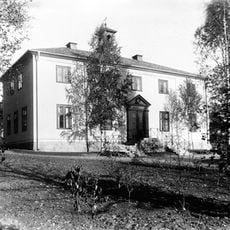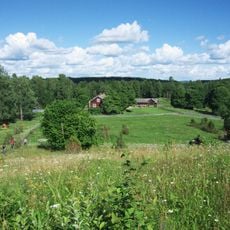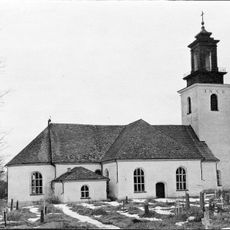
Skramlestenen, Norse runestone in Gunnarskog, Sweden
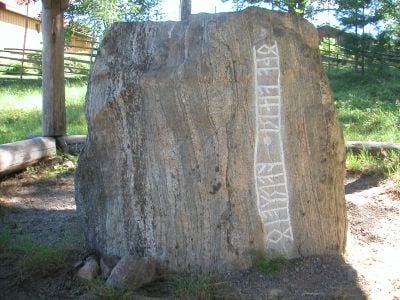
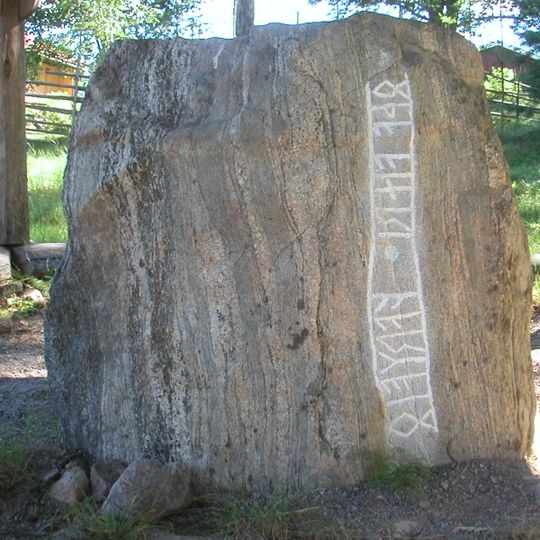
Skramlestenen is a broad, rough-hewn slab of fine-grained gneiss with rounded corners and a heavily striated face. A vertical band of white-painted runes runs down its right side, ending in a diamond-shaped frame. The stone now stands at Gunnarskogs Hembygdsgård.
The Skramle farm is named in oral tradition as the oldest in Gunnarskog but was deserted after the Black Death. Excavation of the site began in spring 1990 and ended in 1998; the runestone, the most unexpected find, turned up in 1993. Its carving is dated to 520–570, and the stone now stands at Gunnarskogs Hembygdsgård.
The stone carries an inscription in early runes left by people who lived in this area long ago. It shows how inhabitants communicated through symbols carved into rock and passed their words down through time.
The stone now stands at Gunnarskogs Hembygdsgård, not at Skramle udde where it was found in 1993. Look for the white-painted runes running down the right side of the slab, ending in a diamond frame; the sign beside the stone gives the reading "Othawin carved, I know danger". The inscription is not fully interpreted, so the sign's translation is a guide rather than a settled text.
The inscription is not fully interpreted; the sign by the stone gives the reading "Othawin carved, I know danger". The runes are urnordic, a script found on only about twenty stones in all of Sweden, and the carving is dated to 520–570.
The community of curious travelers
AroundUs brings together thousands of curated places, local tips, and hidden gems, enriched daily by 93,580 contributors worldwide.