Eda Sconce, Military fort in Värmland County, Sweden
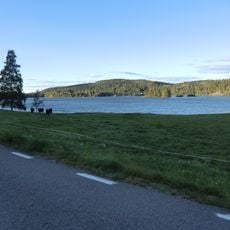
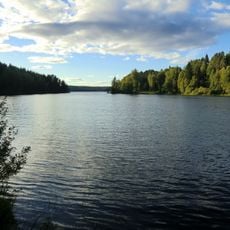
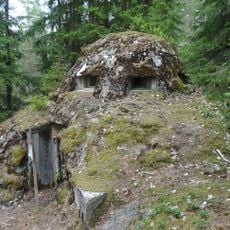
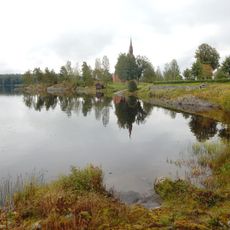
Eda Sconce is an earthwork fortification between Charlottenberg and Åmotfors in Värmland, beside Bysjön. Its six bastions and 600-metre ramparts, about 2.5 metres high and 3 metres wide, were laid out under Erik Dahlbergh from 1676. The site also holds traces of a two-storey blockhouse and 59 prepared gun positions from the 1717–1718 rebuild.
Eda Sconce was built in summer 1657 under Gustaf Oxenstierna during the Krabbefejden, replacing Morast and Emterud sconces that lay too close to the Norwegian border. Erik Dahlbergh expanded it in 1676 with six bastions and 600-metre earth ramparts; its 331-man garrison repelled a Norwegian siege in 1679. It was refortified in 1717–1718 and again in 1808, then sold at auction in 1815 after the union with Norway.
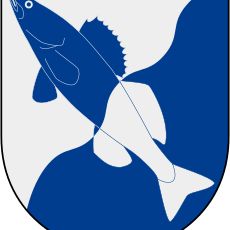
Eda Sconce appears in Eda Municipality's coat of arms. At the 1788 muster for Gustav III's visit on 26 September, the farmer Gunnar Persson of Eda wrote down the music played; his notebooks, found later, show that the six to eight drummers also played clarinet, oboe, bassoon and trumpet.
The site is open to visitors year-round and provides good access to the original defensive structures and layout. Wear comfortable shoes as the terrain is uneven and exploring the elevated grounds requires walking through varied landscape.
The fort is part of Eda Municipality's coat of arms. Its earthworks were restored to their 1808 appearance and reopened in summer 1949; three of its original cannon have since returned to the site.
The community of curious travelers
AroundUs brings together thousands of curated places, local tips, and hidden gems, enriched daily by 94,340 contributors worldwide.