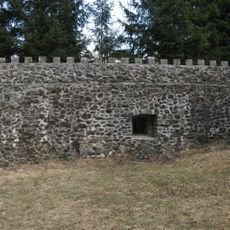
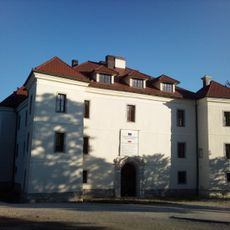
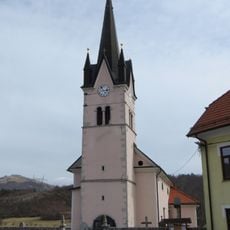
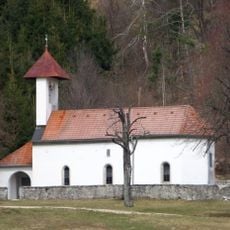
Claustra Alpium Iuliarum, Roman fortification system in the Julian Alps, Slovenia and Croatia.
Claustra Alpium Iuliarum is a chain of Roman fortifications guarding the Postojna Gate between Italy and Pannonia, centred on Castra ad Fluvium Frigidum at today's Ajdovščina. Other key strongholds were Ad Pirum on the Hrušica Plateau and Tarsatica, now part of Rijeka. At Ad Pirum archaeologists uncovered walls 8 m high and 2 m thick, with towers 10 m tall.
Construction of the Claustra Alpium Iuliarum began after the Great Illyrian Revolt of 6 AD, with most work carried out after 284 under Diocletian and Constantine I. It was an inner border defence between Italia and Pannonia, centred on Castra ad Fluvium Frigidum at today's Ajdovščina and governed from Aquileia. In 394 the Battle of the Frigidus, fought between Castra and Ad Pirum, ended with Theodosius I defeating Eugenius. After the 5th century the fortifications fell into disrepair.
The name Claustra Alpium Iuliarum is Latin for 'Barrier of the Julian Alps', though the system ran from the Julian Alps to the Kvarner Gulf. Its centre was Castra ad Fluvium Frigidum in today's Ajdovščina, where remains are still visible; other fortresses stood at Ad Pirum on the Hrušica Plateau and at Tarsatica, now part of Rijeka.
The system is not one site: remains stand in Ajdovščina (Castra), on the Hrušica Plateau (Ad Pirum) and near Vrhnika, where the perimeter of a defence tower by Štampet's Bridge and the Turnovše tower were restored. Plan visits around these separate locations rather than a single trail; the Hrušica walls were 8 m high and 2 m thick.
Ad Pirum, a fortress within the system, had facilities to temporarily house tens of thousands of soldiers, though only a few hundred stayed there normally. This contrast shows how the Roman military could adjust its forces based on threat levels.
The community of curious travelers
AroundUs brings together thousands of curated places, local tips, and hidden gems, enriched daily by 94,420 contributors worldwide.