Ľadový štít, Mountain summit in High Tatras, Slovakia
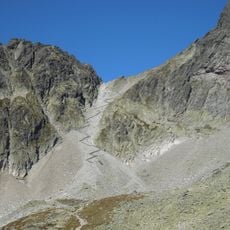
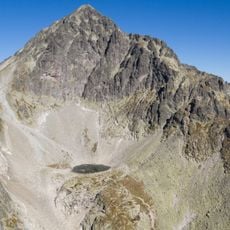
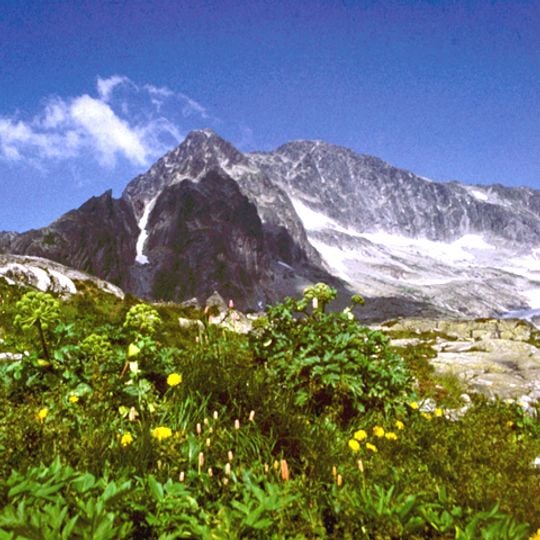
Ľadový štít rises to 2,627 m in the main ridge of the High Tatras, between Široká veža and Baranie rohy, above Tatranská Lomnica. Its steepest walls fall to the north and north-west, where permanent firn fields gave the peak its name; the eastern wall above the Kotlina Piatich spišských plies, near Téryho chata, is the most climbed. A dry ridge, Suchý hrebeň, branches west from the summit.
The first documented ascent was made in 1835 by three Berlin students, Karl Hartlaub, Alexander Keyserling and Alexander Blasius. On about 31 August 1843 John Ball, Wilhelm Richter, an unnamed Hungarian painter and guides from Jurgów reached the top. In 1867 the Zakopane priest Józef Stolarczyk climbed it and recorded his party as the first, unaware of Ball's ascent. Theodor Wundt and Jakob Horvay made the first winter ascent on 28 December 1891.
The name comes from the Ľadová dolinka, where snow and ice linger through summer. A 1717 panorama by Juraj Buchholtz labels the peak Gans, after a creeping plant mistaken for silverweed; Jurgov poachers called it Wielki Kolba. The summit appears in a poem by Jan Kasprowicz, and its slopes were searched for legendary treasures.
The summit lies in national nature reserves within Tatra National Park and is not freely accessible: it may be climbed only with a mountain guide. The routes are rated UIAA I, but the approach from Sedielko via Malý Ľadový štít demands route-finding, and the northern line over Ľadový kôň is exposed. A green-marked trail from Tatranská Javorina through Javorová dolina passes nearby Sedielko on its way to Téryho chata.
The southeast wall features the Grósz route and Brnčal pillar, which offer technical climbing challenges in granite. These less-known paths appeal to experienced climbers seeking demanding granite ascents.
The community of curious travelers
AroundUs brings together thousands of curated places, local tips, and hidden gems, enriched daily by 94,124 contributors worldwide.