Ochtinská Aragonite Cave, Show cave in Rožňava District, Slovakia
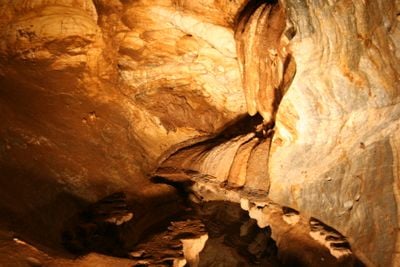
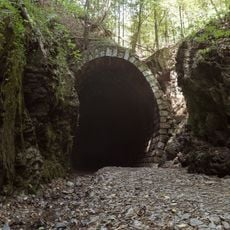
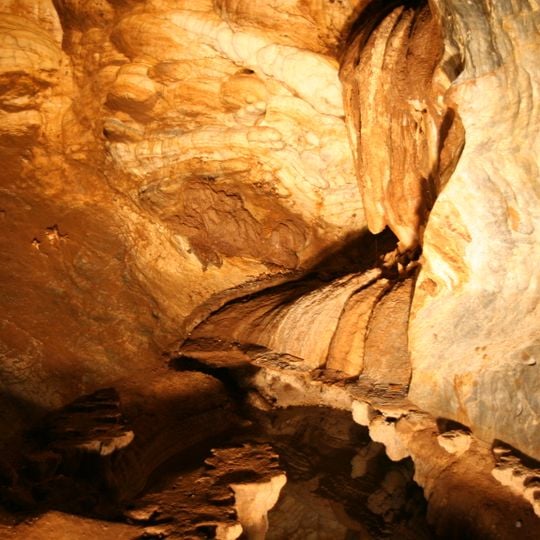
Ochtinská Aragonite Cave is a 300-metre cave in the Revúcka vrchovina highlands between Jelšava and Štítnik, entered through a 144-metre artificial tunnel with 104 steps. Its chambers formed by corrosion along tectonic faults in Lower Devonian crystalline limestones and ankerites. The walls show three generations of aragonite: milky kidney-shaped forms 121,000–138,000 years old, white needles and twisted helictites about 14,000 years old, and tiny 2–4 mm fans still growing.
Mining workers M. Cangár and J. Prošek discovered the cave in 1954 while conducting drilling operations for geological surveys. It was prepared and opened to the public in 1972 following its discovery.
The cave lies in the Ochtinský kryptokras, a limestone lens within phyllites of the Gemericum unit, and forms part of the UNESCO World Heritage site Caves of Aggtelek Karst and Slovak Karst. Its aragonite grows from water rich in magnesium, iron and manganese ions under a stable microclimate of 7.2–7.8 °C and 92–97 % humidity. Iron ochres in the cave absorb and release water vapour, helping keep that microclimate steady.
Access is through a 144-meter artificial tunnel with 104 steps that is straightforward to navigate. The temperature stays around 7 degrees Celsius year-round, so bring a light jacket to stay comfortable while exploring.
The oldest aragonite, dated 121,000 to 138,000 years old, is milky and kidney-shaped and partly recrystallized into calcite. The second generation, about 14,000 years old, forms decimetre-long needles and twisted helictites, including the so-called iron flower, and is still growing. The youngest generation creates tiny fans 2 to 4 mm wide on iron ochres.
The community of curious travelers
AroundUs brings together thousands of curated places, local tips, and hidden gems, enriched daily by 94,195 contributors worldwide.