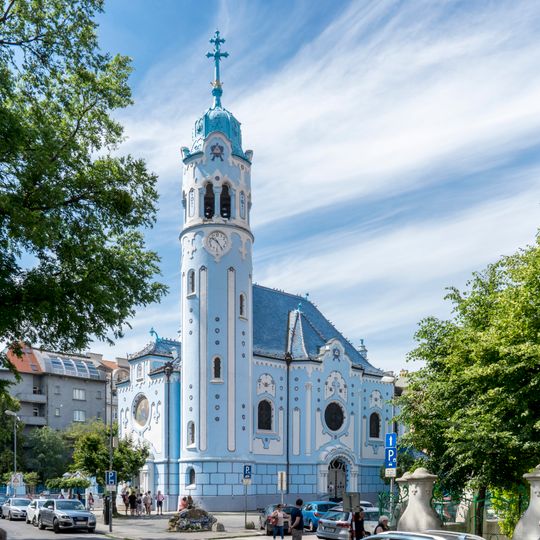
Church of St. Elisabeth, Art Nouveau Catholic church in Bratislava, Slovakia.
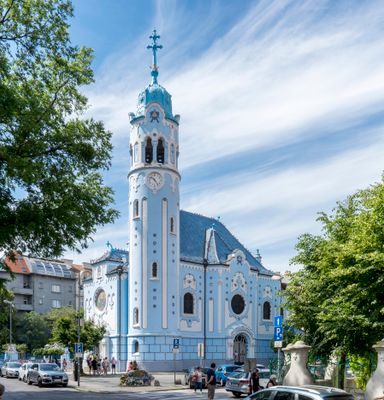
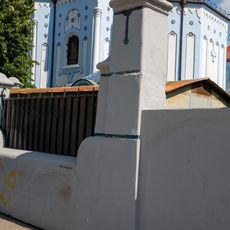
The Church of St. Elisabeth, known as the Blue Church, is a one-nave Hungarian Secessionist building on Bezručova Street in Bratislava's Old Town. Its light blue plaster and blue-glazed roof tiles cover an oval ground plan, with a 36.8-metre cylindrical tower at the front left topped by a helmet-shaped dome. A blue tile and wave-strip band encircles the facade, and Romanesque-style double pillars frame the main and side entrances.
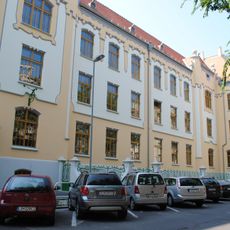
Ödön Lechner's plans for the church date from 1904; construction ran from 1909 to 1913, and the foundation stone was laid on 23 August 1909 by Dr. Šimon Való, deputy of Archbishop Klaudius František Vaszary. The builder was Anton Durvay, the reinforced-concrete vaults came from a Bratislava firm, the cross was raised on 26 June 1910 and the bells installed on 14 May 1911. The church began as the chapel of the neighbouring gymnasium.
The church is dedicated to Elisabeth of Hungary, daughter of King Andrew II, who grew up at Pressburg Castle; it was intended as her symbolic mausoleum. The rose, linked to the legend of her gifts of bread turning into roses, inspired the small ornamental decoration. The main altar holds relics of St Elisabeth together with those of St Clement, St Vincentia and St Theodora, and above it hangs Július Túry's 1911 painting of her giving alms.
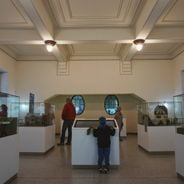
The church can be visited during religious services held on different days throughout the week. It is helpful to check the schedule in advance, as service times vary depending on the day.
The roof is covered with blue-glazed ceramic tiles that work together with the majolica decorations on the facade to create a single-color design effect. This continuous color scheme is uncommon and makes the building instantly recognizable.
The community of curious travelers
AroundUs brings together thousands of curated places, local tips, and hidden gems, enriched daily by 95,390 contributors worldwide.