See the monuments around you in AROpen chests in the app
Around Us is built for your phone — point your camera at the streets and discover the monuments and places around you in augmented reality.Around Us is built for your phone — chests unlock when you walk, explore and capture nearby places.
Bratislava reveals itself through its architecture that combines Gothic, Baroque, and Art Nouveau influences. The Slovak capital is centered around its medieval old town with cobblestone streets, dominated by Bratislava Castle and its recognizable outline with four corner towers. Visitors can explore St. Martin's Cathedral, the site of Hungarian royal coronations for several centuries, or the Blue Church, a 1913 Art Nouveau building fully decorated with blue and white mosaics.
The city also features unexpected sites such as the Čumil statue, a bronze figure of a worker emerging from a manhole cover, and the UFO observation deck perched 95 meters above the top of the SNP Bridge. The surrounding area is worth visiting for Devín Castle, a medieval fortress built on a rocky promontory at the confluence of the Danube and Morava rivers, and the Slavín memorial that overlooks the city from a hill. This collection gathers Bratislava's main monuments and museums to facilitate your exploration of the Slovak capital.
Bratislava reveals itself through its architecture that combines Gothic, Baroque, and Art Nouveau influences. The Slovak capital is centered around its medieval old town with cobblestone streets, dominated by Bratislava Castle and its recognizable outline with four corner towers. Visitors can explore St. Martin's Cathedral, the site of Hungarian royal coronations for several centuries, or the Blue Church, a 1913 Art Nouveau building fully decorated with blue and white mosaics.
The city also features unexpected sites such as the Čumil statue, a bronze figure of a worker emerging from a manhole cover, and the UFO observation deck perched 95 meters above the top of the SNP Bridge. The surrounding area is worth visiting for Devín Castle, a medieval fortress built on a rocky promontory at the confluence of the Danube and Morava rivers, and the Slavín memorial that overlooks the city from a hill. This collection gathers Bratislava's main monuments and museums to facilitate your exploration of the Slovak capital.
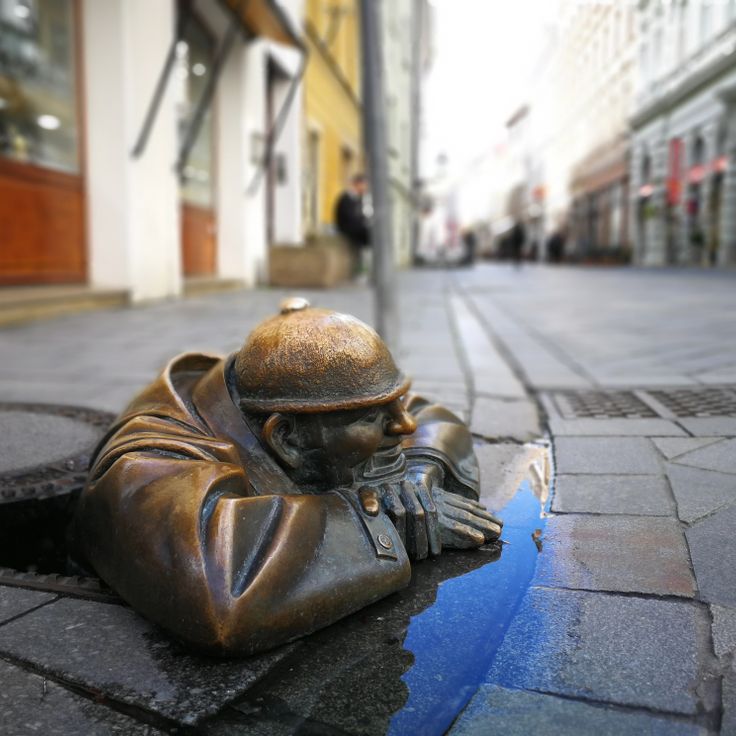
This bronze sculpture in the middle of Bratislava's Old Town shows a worker peering out of a manhole. The figure sits low to the ground, resting its chin on folded arms, watching the legs of people walking by. It is a popular stop for visitors and a favorite subject for photos.
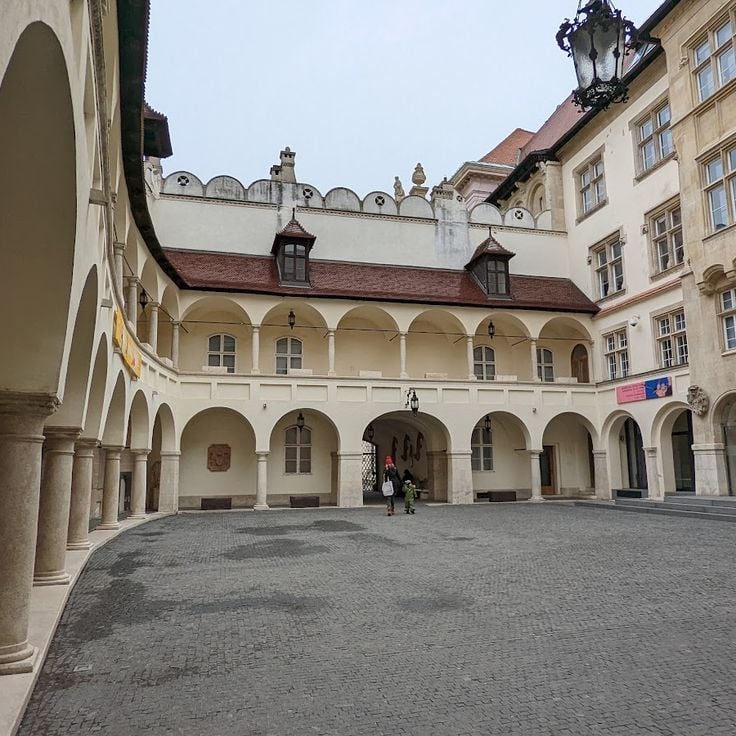
Bratislava's Old Town occupies a network of cobblestone streets and historic squares where Baroque townhouses and Gothic churches form the architectural fabric. The medieval center represents the core of the Slovak capital, with 18th-century buildings and traditional markets held regularly on the squares. Visitors walk through traffic-calmed streets lined with former guild houses, palaces and religious structures that document different periods of the city's history.
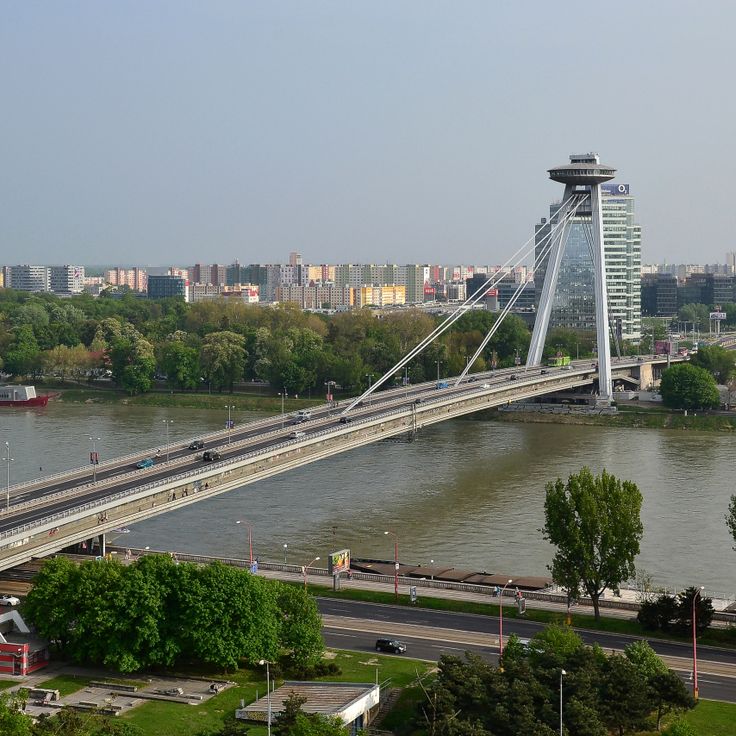
The SNP Bridge spans the Danube since 1972 and connects the Old Town to Petržalka district via a 1,410-foot asymmetric structure supported by a single pylon without anchorage on the riverbanks, while the UFO restaurant at 280 feet (85 meters) provides an observation deck over Bratislava.
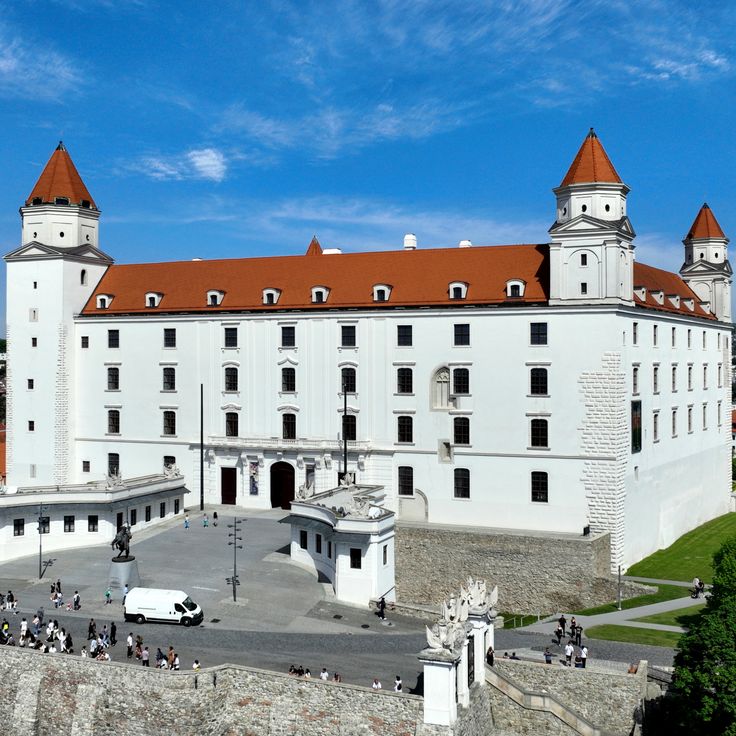
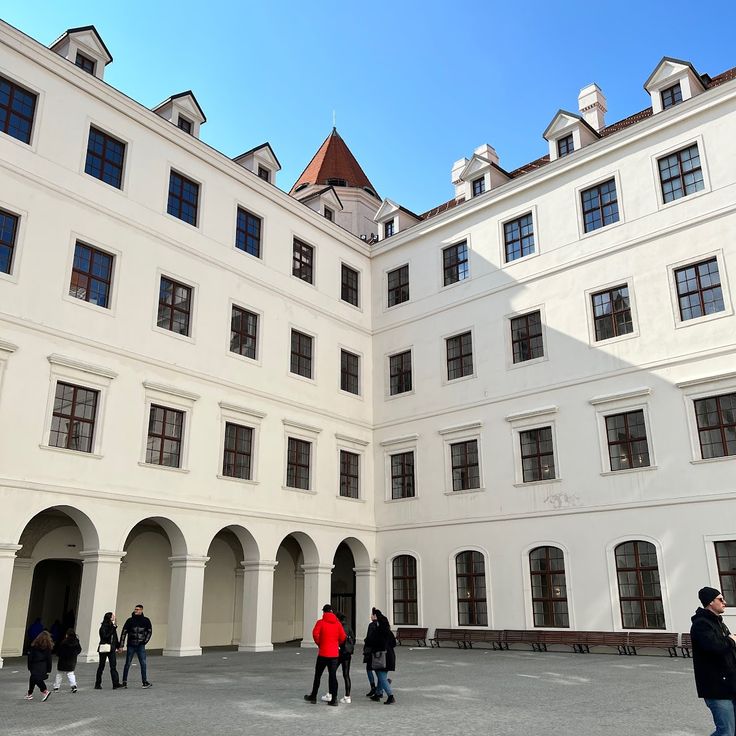
Bratislava Castle sits on a hilltop 85 meters (280 feet) above the Danube River, its rectangular structure marked by four corner towers that define the 15th-century main building. The fortress served as a residence for Hungarian kings for centuries before a fire destroyed much of it in 1811. Reconstruction between 1953 and 1968 restored the castle, which now houses the Slovak National Museum with collections covering the country's history. The castle grounds provide views across the city and into neighboring Austria and Hungary.
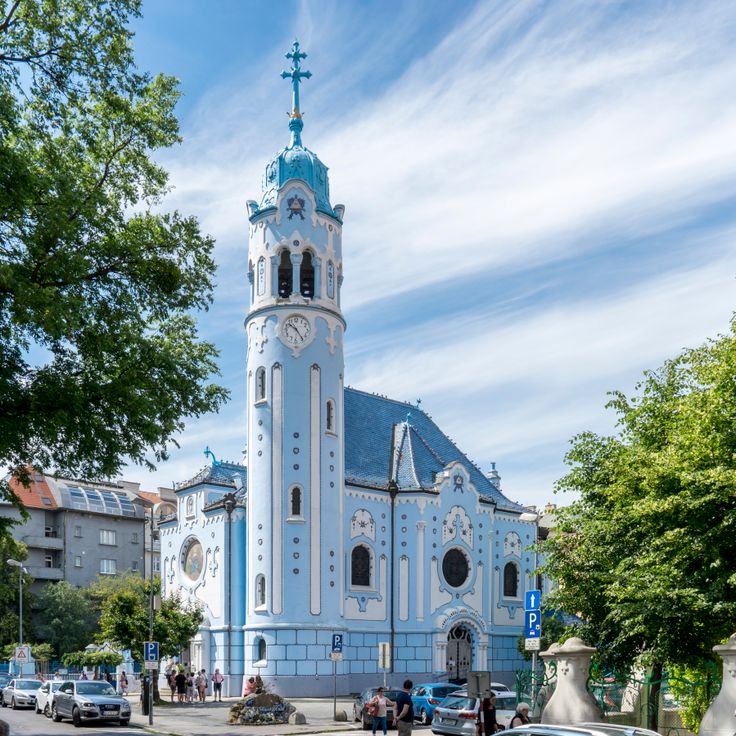
The Blue Church ranks among Bratislava's most recognized Art Nouveau buildings and was completed in 1913 following designs by Hungarian architect Ödön Lechner. Facades, roof and interior spaces are covered entirely with blue and white ceramic tiles and mosaics that give the structure its distinctive color. The oval floor plan and curved forms follow typical Art Nouveau design principles. The building serves today as a Catholic church dedicated to Saint Elizabeth of Hungary and can be visited during services. The church stands in the eastern part of the city and adds to the architectural heritage of the Slovak capital with an example of early 20th century Central European Art Nouveau architecture.
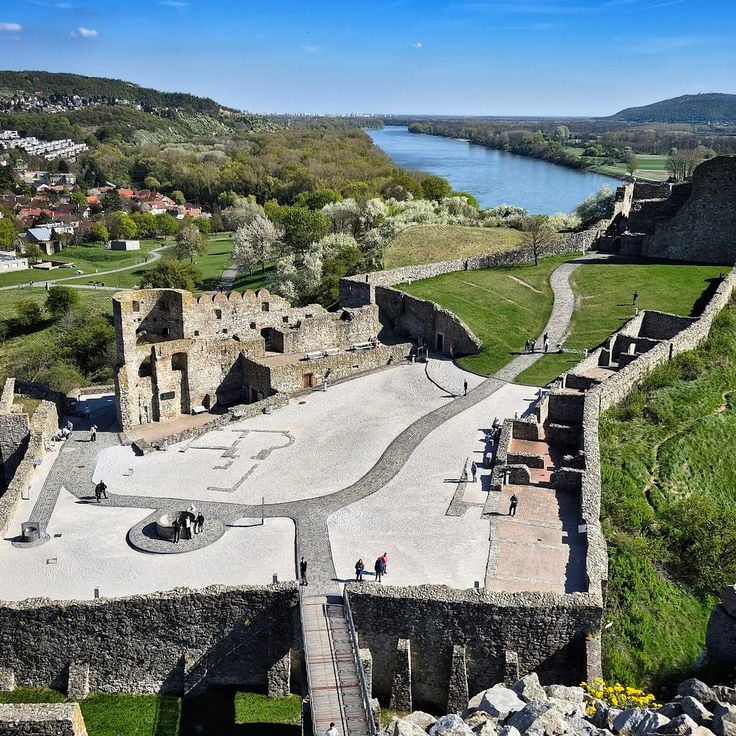
Devín Castle stands on a rocky promontory at the confluence of the Danube and Morava rivers, about 6 miles (10 kilometers) west of Bratislava. This strategic position allowed control over Danube navigation and the Amber Road, a major trade route connecting the Mediterranean with the Baltic Sea for centuries. Archaeological finds document settlement dating back to the Neolithic period. The castle complex was built in the 13th century and destroyed in 1809 during the Napoleonic Wars. Visitors today can explore the preserved ruins, remaining walls and the castle tower, which offers extensive views over the river landscape.
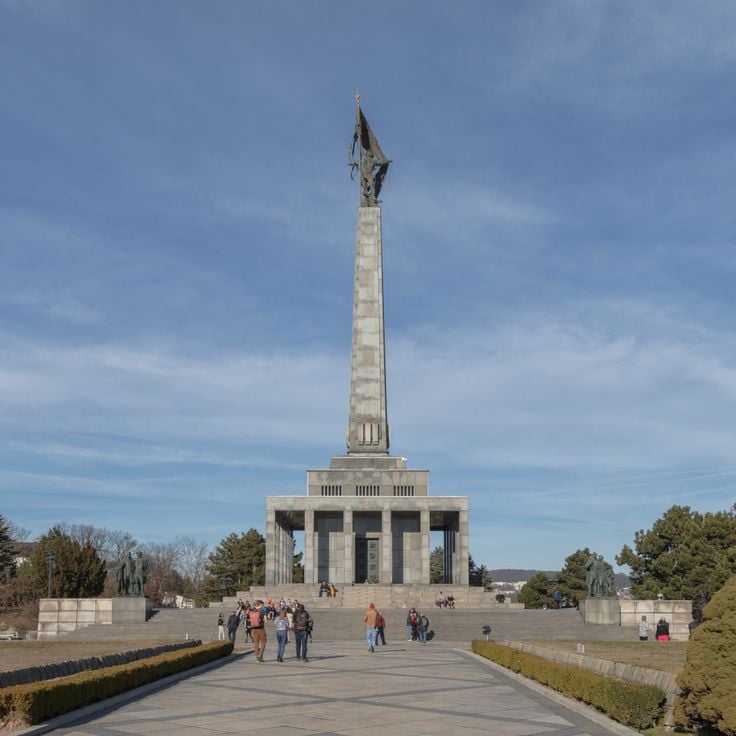
The Slavín Memorial rises on a hill above Bratislava to commemorate the 6,845 Soviet soldiers who fell during the city's liberation in 1945. The site was built in 1960 as a military cemetery and features a central obelisk that stands 130 feet (39.5 meters) high, topped by a statue of a Soviet soldier holding a flag. The graves are arranged across several terraces along the hillside, while the viewing platform provides sweeping views over the Slovak capital and the Danube plain. Access is via a wide staircase or a road about 1.2 miles (2 kilometers) from the city center. The memorial remains a significant historical marker of World War II and the Soviet presence in Czechoslovakia.
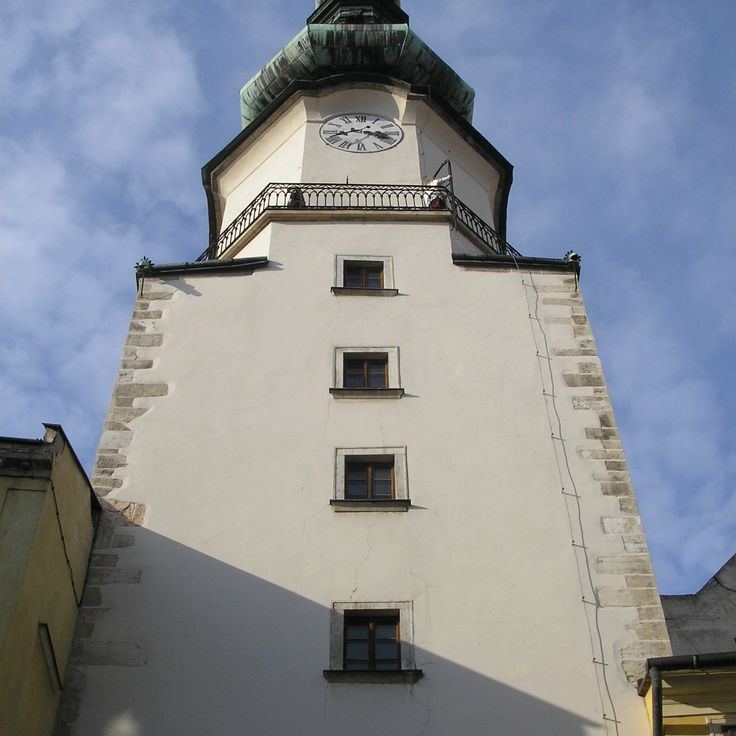
Michael's Tower dates from the 14th century and stands as one of the few surviving elements of the medieval fortifications. The 51-meter (167-foot) stone structure climbs through a narrow spiral staircase to an observation platform with views across the old town rooftops. The ground floor houses a museum on the history of the city's defenses, while the Gothic spire topped with a copper statue of Archangel Michael marks the skyline.
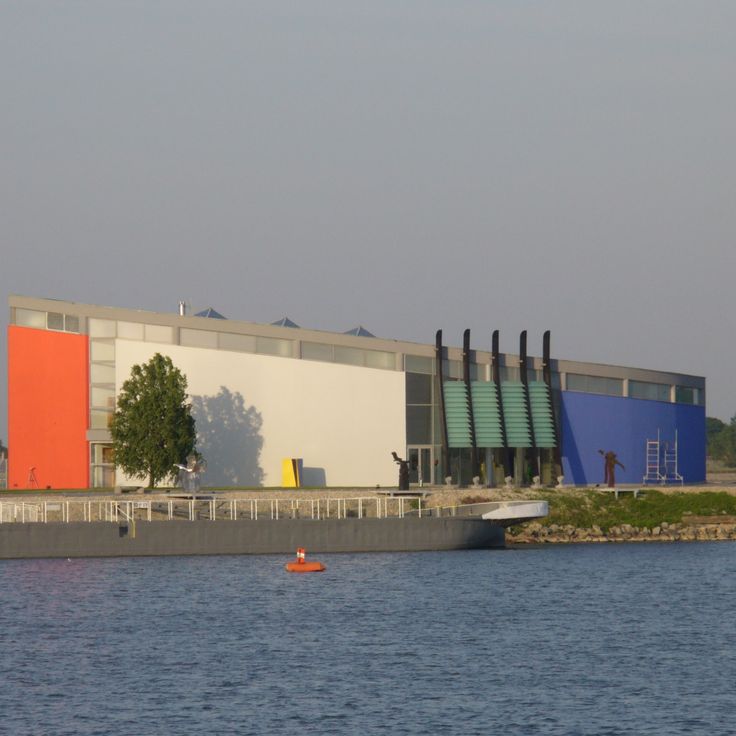
The Musée d'Art Danubiana is an exhibition center built on a Danube peninsula that presents Slovak and international modern and contemporary art in bright galleries, maintaining an outdoor sculpture park that contributes to exploring the region's art scene.
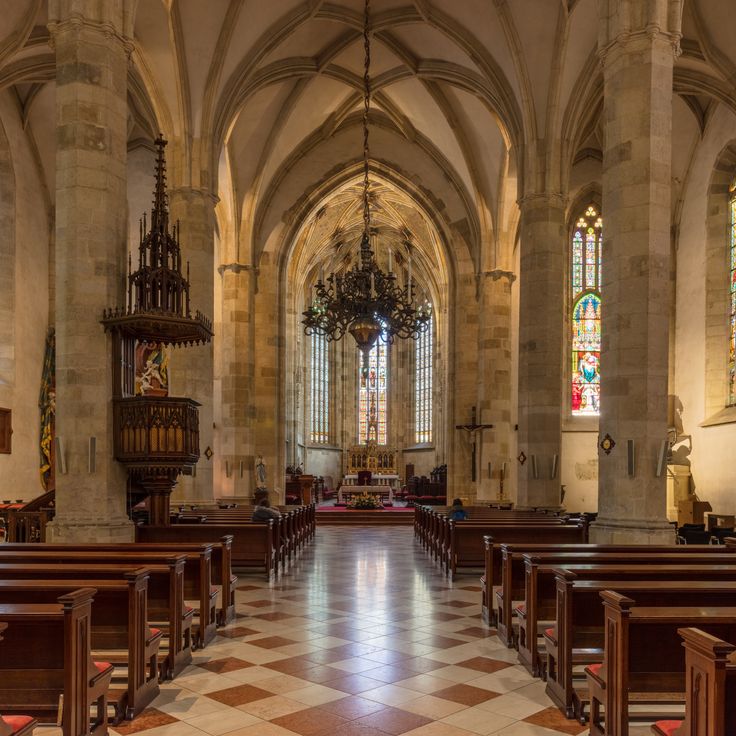
St. Martin's Cathedral served as the coronation church for eleven Hungarian kings and eight queens between 1563 and 1830. This Gothic church was built between 1311 and 1452 and features a 280-foot (85-meter) tower crowned with a gilded replica of the Hungarian crown. The interior preserves baroque altars and several epitaphs from the Habsburg monarchy period. The cathedral stands at the western edge of the Old Town, at the foot of the castle hill, and was once integrated into the medieval city fortifications.
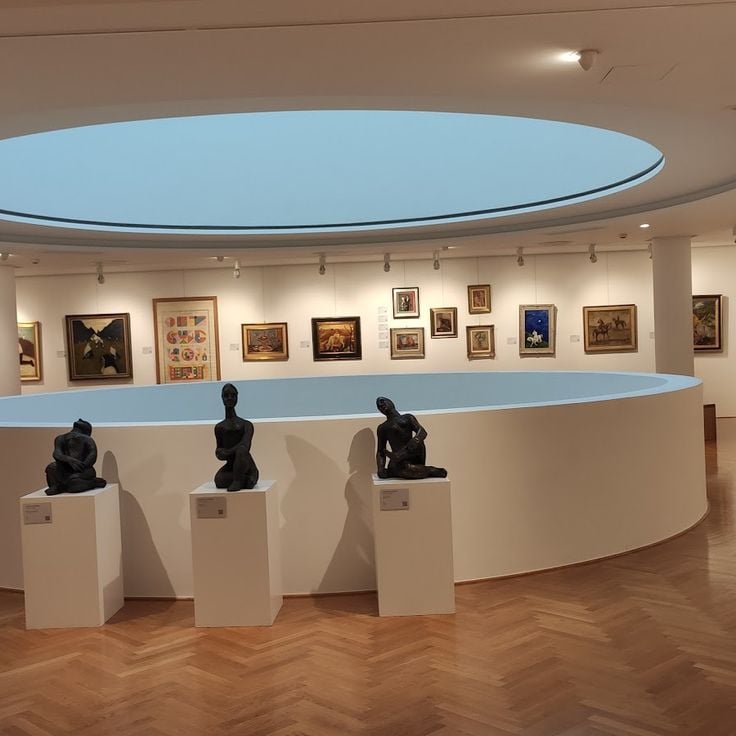
Nedbalka Gallery displays a permanent collection of Slovak art from the 20th century to the present across four floors. The collection includes paintings and sculptures by local artists, documenting the development of Slovak artistic movements over more than a century. The museum occupies a restored historic building in central Bratislava and complements the city's architectural landmarks with insight into modern Slovak art history.
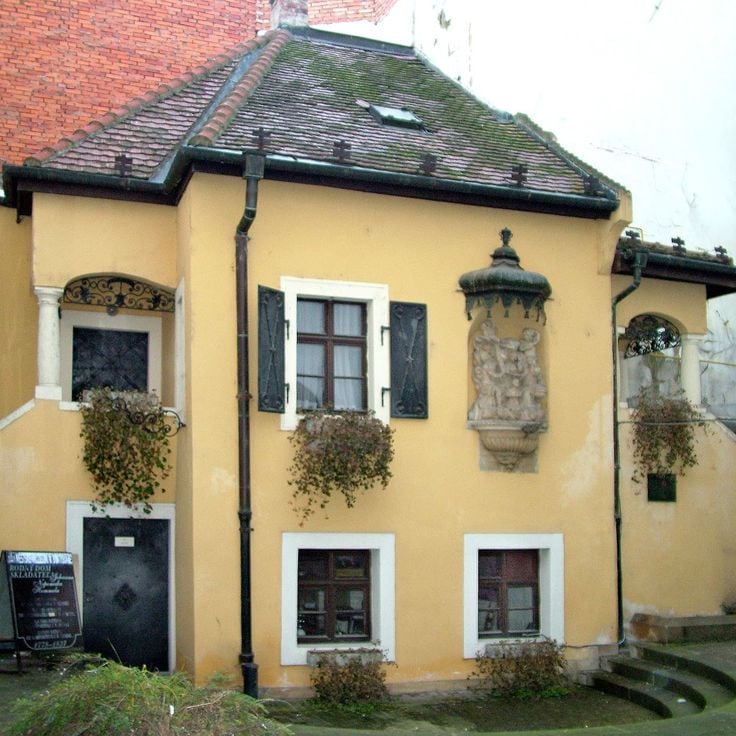
This museum occupies the birthplace of composer Johann Nepomuk Hummel and displays original manuscripts, period musical instruments and personal items from the 18th century. The exhibition documents the life and work of the composer, who was born in this house in 1778 and became known as a student of Mozart and concert master at the Weimar court. The museum traces his compositional development from piano concertos to chamber music works and provides insights into the musical life of the classical era.
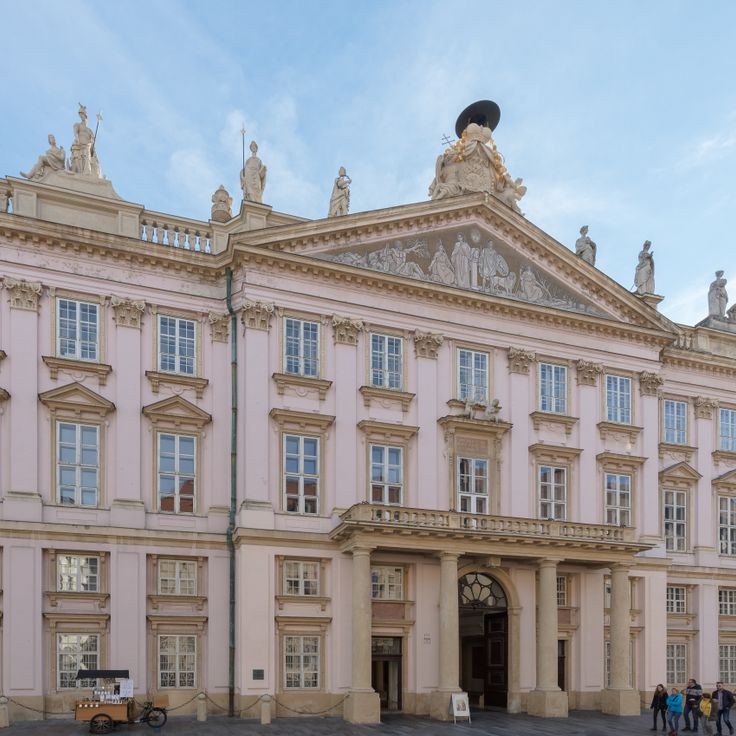
The Primate's Palace ranks among the most important neoclassical buildings in the Slovak capital and was constructed between 1778 and 1781 as the residence of the Archbishop of Pressburg. In the Hall of Mirrors, Napoleon Bonaparte and Emperor Franz I signed the Peace of Pressburg on December 26, 1805, ending the War of the Third Coalition. The pink facade features a characteristic cardinal's hat on the pediment weighing 330 pounds (150 kilograms). Inside, visitors can view a collection of six English tapestries from the 17th century depicting Greek mythology, rediscovered during renovation work in 1903. The palace now serves as the seat of the Mayor of Bratislava and houses representative halls for official receptions.
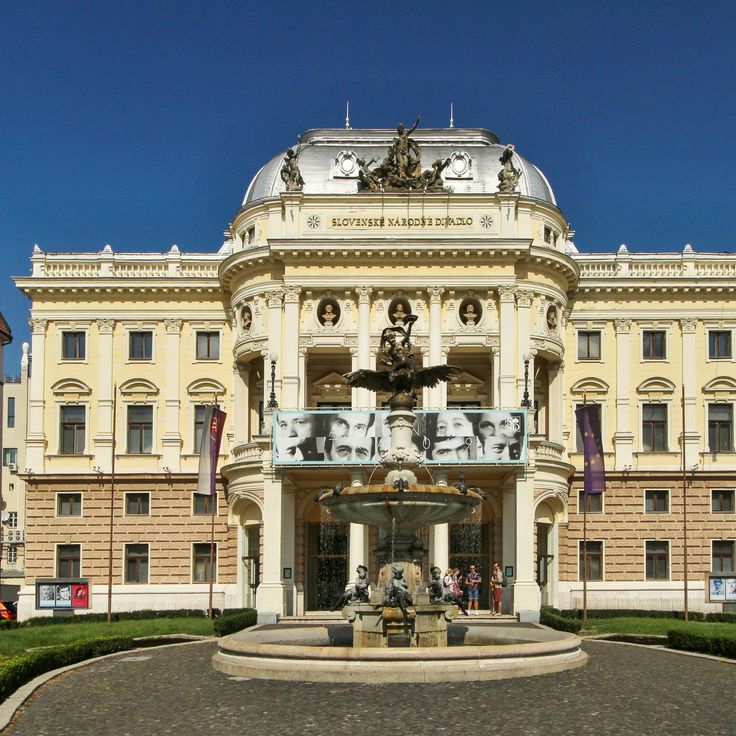
The Slovak National Theatre is an 1886 building that presents operas, dramatic plays and ballets in a Neo-Renaissance interior, shaping the cultural life of the Slovak capital for over a century. The theatre stands in the old town near the Danube and ranks among Bratislava's most important cultural institutions, hosting regular performances of classical and contemporary repertoire.
The A4 Institute presents contemporary art by Slovak and international artists in a renovated building in central Bratislava. This cultural center organizes rotating exhibitions, multimedia installations and performances that engage with current social and cultural themes. The spaces accommodate experimental formats and interdisciplinary projects that document contemporary artistic production in the region and place it in an international context.
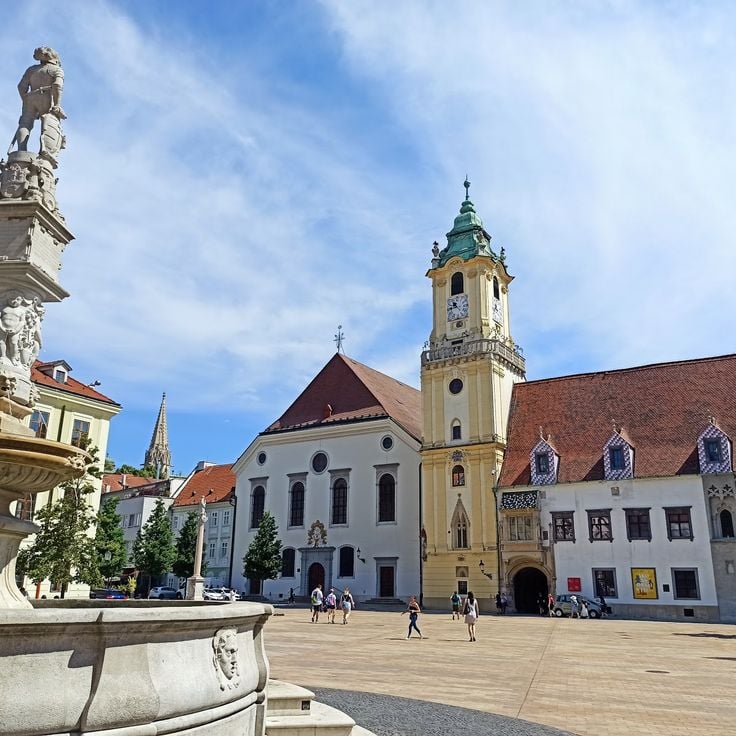
The Bratislava History Museum documents the development of the Slovak capital from the Middle Ages to the present day in a 15th-century Gothic building with observation tower. The permanent collection displays archaeological finds, medieval craft tools, historical documents from the Hungarian royal era and artifacts from the Habsburg period. Exhibition rooms occupy several floors of the former town hall and provide insights into municipal administration, guild systems and daily life across the centuries.
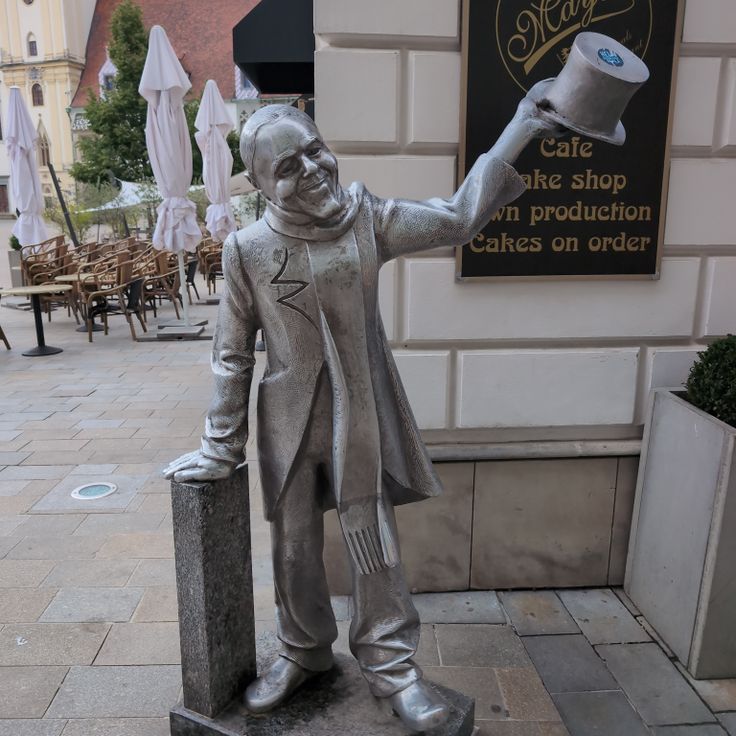
This bronze statue depicts Ignác Lamár, a historical figure in Bratislava who became known in the 1960s for his courteous greetings in the city center. The sculpture shows Lamár in an elegant suit and top hat, raising his hat in greeting. The statue stands on Sedlárska Street in the old town and commemorates the man who, despite his difficult life circumstances, became a symbol of urban hospitality through his friendly manner.
This historic street runs along the north side of St. Martin's Cathedral and preserves its original paving of Danube pebbles. Baroque canonry buildings line the street, including several from the 17th and 18th centuries. A stone portal from the medieval period marks the entrance from Cathedral Square. The street leads to the Primate's Palace and connects several important buildings of the former church administration. Visitors will find architectural details including wrought-iron lanterns and restored facades that reflect the ecclesiastical character of the quarter.
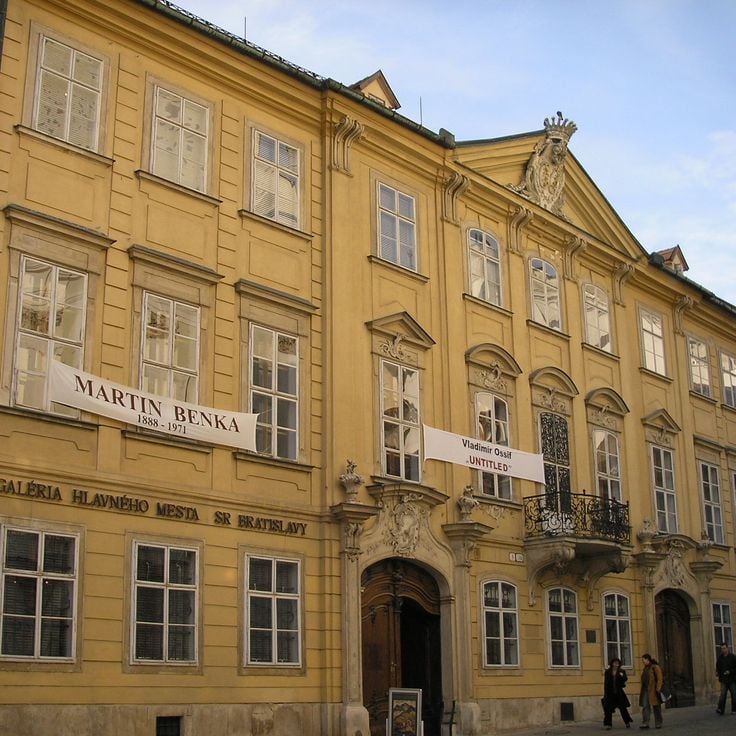
This 18th-century Rococo palace houses the Bratislava City Gallery and presents collections of Flemish, Italian and Dutch paintings in its historic rooms spanning several centuries of European art.
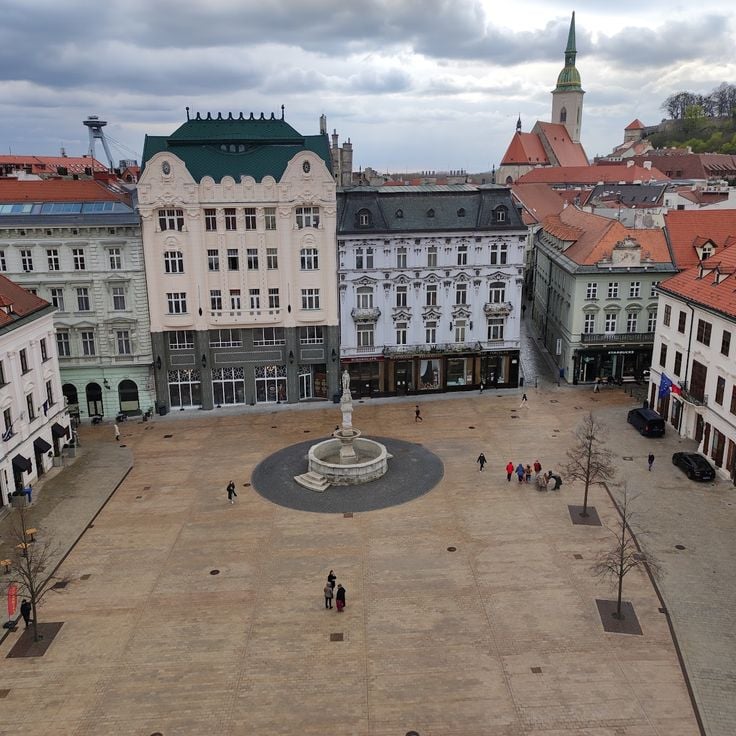
This medieval square forms the historic center of the Slovak capital with classical buildings and the Maximilian Fountain from 1572. The Main Square served for centuries as a marketplace and gathering point where royal proclamations were announced. The facades of the surrounding townhouses display various architectural styles from medieval to Baroque periods, while the Renaissance fountain with its statue of the knight Roland stands as the central feature.
The Janko Jesenský Museum presents manuscripts, photographs and personal effects of the Slovak writer and poet in his former residence. The permanent exhibition documents his literary work and life in the early 20th century. Visitors can view original manuscripts, first editions of his works and correspondence with contemporary authors.
This rectangular plaza extends for 650 feet (200 meters) through the historic center and takes its name from Slovak poet Pavol Országh Hviezdoslav. The tree-lined pedestrian zone is framed by 19th-century buildings, including the Carlton Hotel from 1837, whose facade features Art Nouveau elements. A fountain stands at the center of the plaza, surrounded by benches and cafés. The promenade connects several key locations in Bratislava, from the Slovak National Theater at its northern end to the Old Bridge in the south.
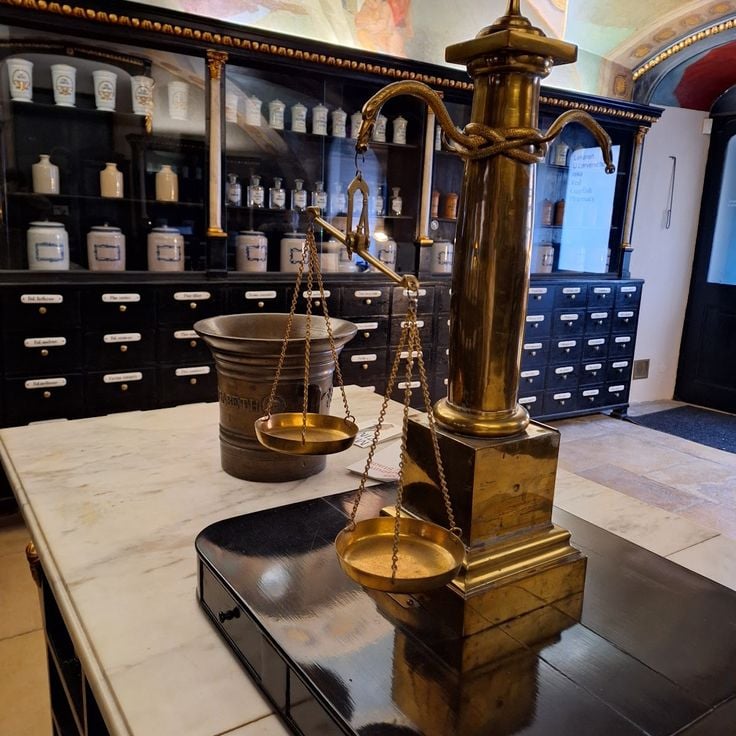
The museum houses a collection of historic pharmaceutical instruments and apothecary vessels in a 16th-century pharmacy. The original furnishings and interior fittings remain preserved, illustrating pharmaceutical practices from past centuries in Bratislava.
The Kutscherfeld Palace was built in the 18th century for a noble family and illustrates Baroque architecture in Bratislava through its facade decorated with sculptures and ornamental elements. The building is among the historical urban palaces that shape the architectural heritage of the Slovak capital. Visitors can observe the exterior design, which displays characteristic features of Central European Baroque.
The Clock Museum displays timepieces from the 17th to the 20th century in the House of the Good Shepherd, one of Bratislava's narrowest buildings. The collection includes standing clocks, pocket watches and mechanical measuring instruments from various European workshops. The museum documents the development of clockmaking in Slovakia and Central Europe.
This Baroque fountain from 1572 features Emperor Maximilian II in knight's armor and recalls Bratislava's connection to the Habsburg Empire over several centuries. The sculpture once supplied water to residents of the quarter and now stands as a historical monument on the main square. The fountain ranks among the oldest public monuments in the old town and illustrates the urban development during the Habsburg monarchy.
The collection of weapons and armor from the 15th through 19th centuries in St. Michael's Gate displays swords, arquebuses and military equipment that documents the evolution of warfare in the region and provides visitors with insight into Bratislava's defensive history.
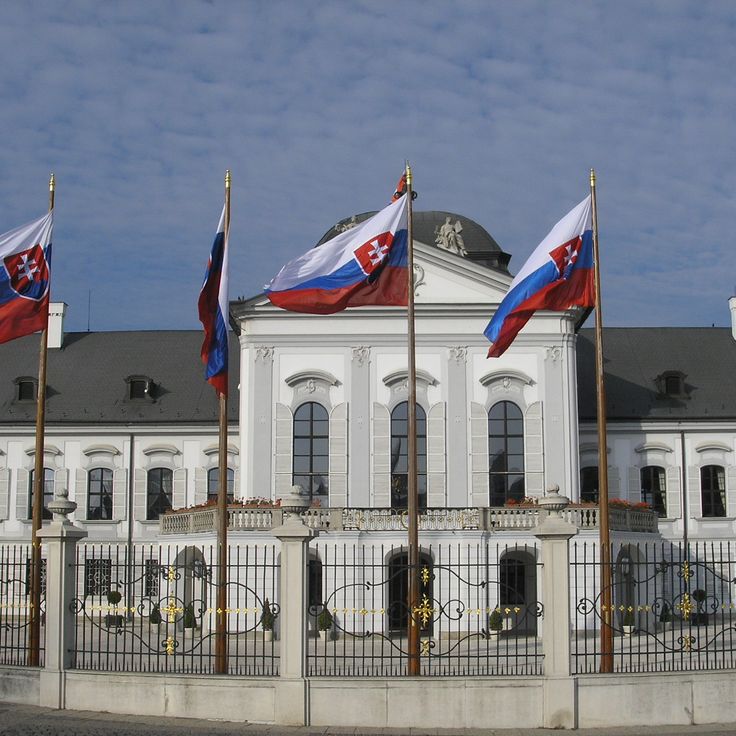
The Grassalkovich Palace was built in 1760 to designs by Anton Mayerhoffer for Count Anton Grassalkovich, combining Baroque and Rococo elements. Since 1996, the building has served as the official residence of the Slovak president. The symmetrical main structure with central projection is surrounded by French gardens featuring geometric flower beds that remain open to the public. The interior rooms with historic stucco ceilings and wall paintings host state receptions and official ceremonies.
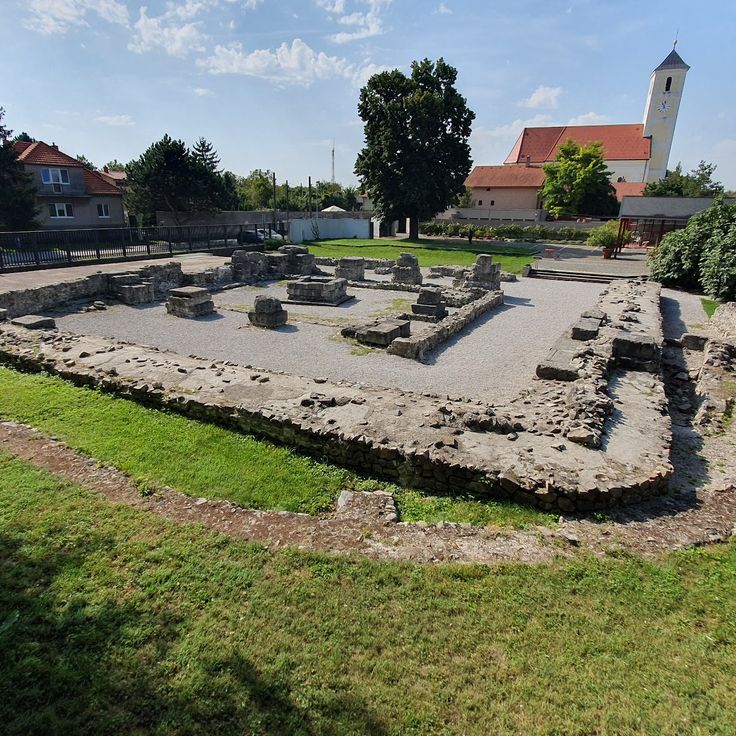
This museum displays the remains of the Roman military camp of Gerulata from the 2nd century, positioned along the Danube frontier of the Roman Empire. The archaeological site contains foundations of bathhouses, barracks and a military cemetery. The exhibition features objects recovered during excavations, including weapons, pottery and everyday items from the Roman garrison. The museum is located in the Rusovce district on the southern edge of Bratislava.
The Wine Museum presents the winemaking tradition of the Bratislava region through a permanent collection of historical tools and wine presses dating from the 18th century, offering insight into three centuries of wine production in the Slovak capital's surroundings.
This bronze sculpture in the middle of Bratislava's Old Town shows a worker peering out of a manhole. The figure sits low to the ground, resting its chin on folded arms, watching the legs of people walking by. It is a popular stop for visitors and a favorite subject for photos.
Bratislava's Old Town occupies a network of cobblestone streets and historic squares where Baroque townhouses and Gothic churches form the architectural fabric. The medieval center represents the core of the Slovak capital, with 18th-century buildings and traditional markets held regularly on the squares. Visitors walk through traffic-calmed streets lined with former guild houses, palaces and religious structures that document different periods of the city's history.
The SNP Bridge spans the Danube since 1972 and connects the Old Town to Petržalka district via a 1,410-foot asymmetric structure supported by a single pylon without anchorage on the riverbanks, while the UFO restaurant at 280 feet (85 meters) provides an observation deck over Bratislava.
Bratislava Castle sits on a hilltop 85 meters (280 feet) above the Danube River, its rectangular structure marked by four corner towers that define the 15th-century main building. The fortress served as a residence for Hungarian kings for centuries before a fire destroyed much of it in 1811. Reconstruction between 1953 and 1968 restored the castle, which now houses the Slovak National Museum with collections covering the country's history. The castle grounds provide views across the city and into neighboring Austria and Hungary.
The Blue Church ranks among Bratislava's most recognized Art Nouveau buildings and was completed in 1913 following designs by Hungarian architect Ödön Lechner. Facades, roof and interior spaces are covered entirely with blue and white ceramic tiles and mosaics that give the structure its distinctive color. The oval floor plan and curved forms follow typical Art Nouveau design principles. The building serves today as a Catholic church dedicated to Saint Elizabeth of Hungary and can be visited during services. The church stands in the eastern part of the city and adds to the architectural heritage of the Slovak capital with an example of early 20th century Central European Art Nouveau architecture.
Devín Castle stands on a rocky promontory at the confluence of the Danube and Morava rivers, about 6 miles (10 kilometers) west of Bratislava. This strategic position allowed control over Danube navigation and the Amber Road, a major trade route connecting the Mediterranean with the Baltic Sea for centuries. Archaeological finds document settlement dating back to the Neolithic period. The castle complex was built in the 13th century and destroyed in 1809 during the Napoleonic Wars. Visitors today can explore the preserved ruins, remaining walls and the castle tower, which offers extensive views over the river landscape.
The Slavín Memorial rises on a hill above Bratislava to commemorate the 6,845 Soviet soldiers who fell during the city's liberation in 1945. The site was built in 1960 as a military cemetery and features a central obelisk that stands 130 feet (39.5 meters) high, topped by a statue of a Soviet soldier holding a flag. The graves are arranged across several terraces along the hillside, while the viewing platform provides sweeping views over the Slovak capital and the Danube plain. Access is via a wide staircase or a road about 1.2 miles (2 kilometers) from the city center. The memorial remains a significant historical marker of World War II and the Soviet presence in Czechoslovakia.
Michael's Tower dates from the 14th century and stands as one of the few surviving elements of the medieval fortifications. The 51-meter (167-foot) stone structure climbs through a narrow spiral staircase to an observation platform with views across the old town rooftops. The ground floor houses a museum on the history of the city's defenses, while the Gothic spire topped with a copper statue of Archangel Michael marks the skyline.
The Musée d'Art Danubiana is an exhibition center built on a Danube peninsula that presents Slovak and international modern and contemporary art in bright galleries, maintaining an outdoor sculpture park that contributes to exploring the region's art scene.
St. Martin's Cathedral served as the coronation church for eleven Hungarian kings and eight queens between 1563 and 1830. This Gothic church was built between 1311 and 1452 and features a 280-foot (85-meter) tower crowned with a gilded replica of the Hungarian crown. The interior preserves baroque altars and several epitaphs from the Habsburg monarchy period. The cathedral stands at the western edge of the Old Town, at the foot of the castle hill, and was once integrated into the medieval city fortifications.
Nedbalka Gallery displays a permanent collection of Slovak art from the 20th century to the present across four floors. The collection includes paintings and sculptures by local artists, documenting the development of Slovak artistic movements over more than a century. The museum occupies a restored historic building in central Bratislava and complements the city's architectural landmarks with insight into modern Slovak art history.
This museum occupies the birthplace of composer Johann Nepomuk Hummel and displays original manuscripts, period musical instruments and personal items from the 18th century. The exhibition documents the life and work of the composer, who was born in this house in 1778 and became known as a student of Mozart and concert master at the Weimar court. The museum traces his compositional development from piano concertos to chamber music works and provides insights into the musical life of the classical era.
The Primate's Palace ranks among the most important neoclassical buildings in the Slovak capital and was constructed between 1778 and 1781 as the residence of the Archbishop of Pressburg. In the Hall of Mirrors, Napoleon Bonaparte and Emperor Franz I signed the Peace of Pressburg on December 26, 1805, ending the War of the Third Coalition. The pink facade features a characteristic cardinal's hat on the pediment weighing 330 pounds (150 kilograms). Inside, visitors can view a collection of six English tapestries from the 17th century depicting Greek mythology, rediscovered during renovation work in 1903. The palace now serves as the seat of the Mayor of Bratislava and houses representative halls for official receptions.
The Slovak National Theatre is an 1886 building that presents operas, dramatic plays and ballets in a Neo-Renaissance interior, shaping the cultural life of the Slovak capital for over a century. The theatre stands in the old town near the Danube and ranks among Bratislava's most important cultural institutions, hosting regular performances of classical and contemporary repertoire.
The A4 Institute presents contemporary art by Slovak and international artists in a renovated building in central Bratislava. This cultural center organizes rotating exhibitions, multimedia installations and performances that engage with current social and cultural themes. The spaces accommodate experimental formats and interdisciplinary projects that document contemporary artistic production in the region and place it in an international context.
The Bratislava History Museum documents the development of the Slovak capital from the Middle Ages to the present day in a 15th-century Gothic building with observation tower. The permanent collection displays archaeological finds, medieval craft tools, historical documents from the Hungarian royal era and artifacts from the Habsburg period. Exhibition rooms occupy several floors of the former town hall and provide insights into municipal administration, guild systems and daily life across the centuries.
This bronze statue depicts Ignác Lamár, a historical figure in Bratislava who became known in the 1960s for his courteous greetings in the city center. The sculpture shows Lamár in an elegant suit and top hat, raising his hat in greeting. The statue stands on Sedlárska Street in the old town and commemorates the man who, despite his difficult life circumstances, became a symbol of urban hospitality through his friendly manner.
This historic street runs along the north side of St. Martin's Cathedral and preserves its original paving of Danube pebbles. Baroque canonry buildings line the street, including several from the 17th and 18th centuries. A stone portal from the medieval period marks the entrance from Cathedral Square. The street leads to the Primate's Palace and connects several important buildings of the former church administration. Visitors will find architectural details including wrought-iron lanterns and restored facades that reflect the ecclesiastical character of the quarter.
This 18th-century Rococo palace houses the Bratislava City Gallery and presents collections of Flemish, Italian and Dutch paintings in its historic rooms spanning several centuries of European art.
This medieval square forms the historic center of the Slovak capital with classical buildings and the Maximilian Fountain from 1572. The Main Square served for centuries as a marketplace and gathering point where royal proclamations were announced. The facades of the surrounding townhouses display various architectural styles from medieval to Baroque periods, while the Renaissance fountain with its statue of the knight Roland stands as the central feature.
The Janko Jesenský Museum presents manuscripts, photographs and personal effects of the Slovak writer and poet in his former residence. The permanent exhibition documents his literary work and life in the early 20th century. Visitors can view original manuscripts, first editions of his works and correspondence with contemporary authors.
This rectangular plaza extends for 650 feet (200 meters) through the historic center and takes its name from Slovak poet Pavol Országh Hviezdoslav. The tree-lined pedestrian zone is framed by 19th-century buildings, including the Carlton Hotel from 1837, whose facade features Art Nouveau elements. A fountain stands at the center of the plaza, surrounded by benches and cafés. The promenade connects several key locations in Bratislava, from the Slovak National Theater at its northern end to the Old Bridge in the south.
The museum houses a collection of historic pharmaceutical instruments and apothecary vessels in a 16th-century pharmacy. The original furnishings and interior fittings remain preserved, illustrating pharmaceutical practices from past centuries in Bratislava.
The Kutscherfeld Palace was built in the 18th century for a noble family and illustrates Baroque architecture in Bratislava through its facade decorated with sculptures and ornamental elements. The building is among the historical urban palaces that shape the architectural heritage of the Slovak capital. Visitors can observe the exterior design, which displays characteristic features of Central European Baroque.
The Clock Museum displays timepieces from the 17th to the 20th century in the House of the Good Shepherd, one of Bratislava's narrowest buildings. The collection includes standing clocks, pocket watches and mechanical measuring instruments from various European workshops. The museum documents the development of clockmaking in Slovakia and Central Europe.
This Baroque fountain from 1572 features Emperor Maximilian II in knight's armor and recalls Bratislava's connection to the Habsburg Empire over several centuries. The sculpture once supplied water to residents of the quarter and now stands as a historical monument on the main square. The fountain ranks among the oldest public monuments in the old town and illustrates the urban development during the Habsburg monarchy.
The collection of weapons and armor from the 15th through 19th centuries in St. Michael's Gate displays swords, arquebuses and military equipment that documents the evolution of warfare in the region and provides visitors with insight into Bratislava's defensive history.
The Grassalkovich Palace was built in 1760 to designs by Anton Mayerhoffer for Count Anton Grassalkovich, combining Baroque and Rococo elements. Since 1996, the building has served as the official residence of the Slovak president. The symmetrical main structure with central projection is surrounded by French gardens featuring geometric flower beds that remain open to the public. The interior rooms with historic stucco ceilings and wall paintings host state receptions and official ceremonies.
This museum displays the remains of the Roman military camp of Gerulata from the 2nd century, positioned along the Danube frontier of the Roman Empire. The archaeological site contains foundations of bathhouses, barracks and a military cemetery. The exhibition features objects recovered during excavations, including weapons, pottery and everyday items from the Roman garrison. The museum is located in the Rusovce district on the southern edge of Bratislava.
The Wine Museum presents the winemaking tradition of the Bratislava region through a permanent collection of historical tools and wine presses dating from the 18th century, offering insight into three centuries of wine production in the Slovak capital's surroundings.
This bronze sculpture in the middle of Bratislava's Old Town shows a worker peering out of a manhole. The figure sits low to the ground, resting its chin on folded arms, watching the legs of people walking by. It is a popular stop for visitors and a favorite subject for photos.
Bratislava's Old Town occupies a network of cobblestone streets and historic squares where Baroque townhouses and Gothic churches form the architectural fabric. The medieval center represents the core of the Slovak capital, with 18th-century buildings and traditional markets held regularly on the squares. Visitors walk through traffic-calmed streets lined with former guild houses, palaces and religious structures that document different periods of the city's history.
The SNP Bridge spans the Danube since 1972 and connects the Old Town to Petržalka district via a 1,410-foot asymmetric structure supported by a single pylon without anchorage on the riverbanks, while the UFO restaurant at 280 feet (85 meters) provides an observation deck over Bratislava.
Bratislava Castle sits on a hilltop 85 meters (280 feet) above the Danube River, its rectangular structure marked by four corner towers that define the 15th-century main building. The fortress served as a residence for Hungarian kings for centuries before a fire destroyed much of it in 1811. Reconstruction between 1953 and 1968 restored the castle, which now houses the Slovak National Museum with collections covering the country's history. The castle grounds provide views across the city and into neighboring Austria and Hungary.
The Blue Church ranks among Bratislava's most recognized Art Nouveau buildings and was completed in 1913 following designs by Hungarian architect Ödön Lechner. Facades, roof and interior spaces are covered entirely with blue and white ceramic tiles and mosaics that give the structure its distinctive color. The oval floor plan and curved forms follow typical Art Nouveau design principles. The building serves today as a Catholic church dedicated to Saint Elizabeth of Hungary and can be visited during services. The church stands in the eastern part of the city and adds to the architectural heritage of the Slovak capital with an example of early 20th century Central European Art Nouveau architecture.
Devín Castle stands on a rocky promontory at the confluence of the Danube and Morava rivers, about 6 miles (10 kilometers) west of Bratislava. This strategic position allowed control over Danube navigation and the Amber Road, a major trade route connecting the Mediterranean with the Baltic Sea for centuries. Archaeological finds document settlement dating back to the Neolithic period. The castle complex was built in the 13th century and destroyed in 1809 during the Napoleonic Wars. Visitors today can explore the preserved ruins, remaining walls and the castle tower, which offers extensive views over the river landscape.
The Slavín Memorial rises on a hill above Bratislava to commemorate the 6,845 Soviet soldiers who fell during the city's liberation in 1945. The site was built in 1960 as a military cemetery and features a central obelisk that stands 130 feet (39.5 meters) high, topped by a statue of a Soviet soldier holding a flag. The graves are arranged across several terraces along the hillside, while the viewing platform provides sweeping views over the Slovak capital and the Danube plain. Access is via a wide staircase or a road about 1.2 miles (2 kilometers) from the city center. The memorial remains a significant historical marker of World War II and the Soviet presence in Czechoslovakia.
Michael's Tower dates from the 14th century and stands as one of the few surviving elements of the medieval fortifications. The 51-meter (167-foot) stone structure climbs through a narrow spiral staircase to an observation platform with views across the old town rooftops. The ground floor houses a museum on the history of the city's defenses, while the Gothic spire topped with a copper statue of Archangel Michael marks the skyline.
The Musée d'Art Danubiana is an exhibition center built on a Danube peninsula that presents Slovak and international modern and contemporary art in bright galleries, maintaining an outdoor sculpture park that contributes to exploring the region's art scene.
St. Martin's Cathedral served as the coronation church for eleven Hungarian kings and eight queens between 1563 and 1830. This Gothic church was built between 1311 and 1452 and features a 280-foot (85-meter) tower crowned with a gilded replica of the Hungarian crown. The interior preserves baroque altars and several epitaphs from the Habsburg monarchy period. The cathedral stands at the western edge of the Old Town, at the foot of the castle hill, and was once integrated into the medieval city fortifications.
Nedbalka Gallery displays a permanent collection of Slovak art from the 20th century to the present across four floors. The collection includes paintings and sculptures by local artists, documenting the development of Slovak artistic movements over more than a century. The museum occupies a restored historic building in central Bratislava and complements the city's architectural landmarks with insight into modern Slovak art history.
This museum occupies the birthplace of composer Johann Nepomuk Hummel and displays original manuscripts, period musical instruments and personal items from the 18th century. The exhibition documents the life and work of the composer, who was born in this house in 1778 and became known as a student of Mozart and concert master at the Weimar court. The museum traces his compositional development from piano concertos to chamber music works and provides insights into the musical life of the classical era.
The Primate's Palace ranks among the most important neoclassical buildings in the Slovak capital and was constructed between 1778 and 1781 as the residence of the Archbishop of Pressburg. In the Hall of Mirrors, Napoleon Bonaparte and Emperor Franz I signed the Peace of Pressburg on December 26, 1805, ending the War of the Third Coalition. The pink facade features a characteristic cardinal's hat on the pediment weighing 330 pounds (150 kilograms). Inside, visitors can view a collection of six English tapestries from the 17th century depicting Greek mythology, rediscovered during renovation work in 1903. The palace now serves as the seat of the Mayor of Bratislava and houses representative halls for official receptions.
The Slovak National Theatre is an 1886 building that presents operas, dramatic plays and ballets in a Neo-Renaissance interior, shaping the cultural life of the Slovak capital for over a century. The theatre stands in the old town near the Danube and ranks among Bratislava's most important cultural institutions, hosting regular performances of classical and contemporary repertoire.
The A4 Institute presents contemporary art by Slovak and international artists in a renovated building in central Bratislava. This cultural center organizes rotating exhibitions, multimedia installations and performances that engage with current social and cultural themes. The spaces accommodate experimental formats and interdisciplinary projects that document contemporary artistic production in the region and place it in an international context.
The Bratislava History Museum documents the development of the Slovak capital from the Middle Ages to the present day in a 15th-century Gothic building with observation tower. The permanent collection displays archaeological finds, medieval craft tools, historical documents from the Hungarian royal era and artifacts from the Habsburg period. Exhibition rooms occupy several floors of the former town hall and provide insights into municipal administration, guild systems and daily life across the centuries.
This bronze statue depicts Ignác Lamár, a historical figure in Bratislava who became known in the 1960s for his courteous greetings in the city center. The sculpture shows Lamár in an elegant suit and top hat, raising his hat in greeting. The statue stands on Sedlárska Street in the old town and commemorates the man who, despite his difficult life circumstances, became a symbol of urban hospitality through his friendly manner.
This historic street runs along the north side of St. Martin's Cathedral and preserves its original paving of Danube pebbles. Baroque canonry buildings line the street, including several from the 17th and 18th centuries. A stone portal from the medieval period marks the entrance from Cathedral Square. The street leads to the Primate's Palace and connects several important buildings of the former church administration. Visitors will find architectural details including wrought-iron lanterns and restored facades that reflect the ecclesiastical character of the quarter.
This 18th-century Rococo palace houses the Bratislava City Gallery and presents collections of Flemish, Italian and Dutch paintings in its historic rooms spanning several centuries of European art.
This medieval square forms the historic center of the Slovak capital with classical buildings and the Maximilian Fountain from 1572. The Main Square served for centuries as a marketplace and gathering point where royal proclamations were announced. The facades of the surrounding townhouses display various architectural styles from medieval to Baroque periods, while the Renaissance fountain with its statue of the knight Roland stands as the central feature.
The Janko Jesenský Museum presents manuscripts, photographs and personal effects of the Slovak writer and poet in his former residence. The permanent exhibition documents his literary work and life in the early 20th century. Visitors can view original manuscripts, first editions of his works and correspondence with contemporary authors.
This rectangular plaza extends for 650 feet (200 meters) through the historic center and takes its name from Slovak poet Pavol Országh Hviezdoslav. The tree-lined pedestrian zone is framed by 19th-century buildings, including the Carlton Hotel from 1837, whose facade features Art Nouveau elements. A fountain stands at the center of the plaza, surrounded by benches and cafés. The promenade connects several key locations in Bratislava, from the Slovak National Theater at its northern end to the Old Bridge in the south.
The museum houses a collection of historic pharmaceutical instruments and apothecary vessels in a 16th-century pharmacy. The original furnishings and interior fittings remain preserved, illustrating pharmaceutical practices from past centuries in Bratislava.
The Kutscherfeld Palace was built in the 18th century for a noble family and illustrates Baroque architecture in Bratislava through its facade decorated with sculptures and ornamental elements. The building is among the historical urban palaces that shape the architectural heritage of the Slovak capital. Visitors can observe the exterior design, which displays characteristic features of Central European Baroque.
The Clock Museum displays timepieces from the 17th to the 20th century in the House of the Good Shepherd, one of Bratislava's narrowest buildings. The collection includes standing clocks, pocket watches and mechanical measuring instruments from various European workshops. The museum documents the development of clockmaking in Slovakia and Central Europe.
This Baroque fountain from 1572 features Emperor Maximilian II in knight's armor and recalls Bratislava's connection to the Habsburg Empire over several centuries. The sculpture once supplied water to residents of the quarter and now stands as a historical monument on the main square. The fountain ranks among the oldest public monuments in the old town and illustrates the urban development during the Habsburg monarchy.
The collection of weapons and armor from the 15th through 19th centuries in St. Michael's Gate displays swords, arquebuses and military equipment that documents the evolution of warfare in the region and provides visitors with insight into Bratislava's defensive history.
The Grassalkovich Palace was built in 1760 to designs by Anton Mayerhoffer for Count Anton Grassalkovich, combining Baroque and Rococo elements. Since 1996, the building has served as the official residence of the Slovak president. The symmetrical main structure with central projection is surrounded by French gardens featuring geometric flower beds that remain open to the public. The interior rooms with historic stucco ceilings and wall paintings host state receptions and official ceremonies.
This museum displays the remains of the Roman military camp of Gerulata from the 2nd century, positioned along the Danube frontier of the Roman Empire. The archaeological site contains foundations of bathhouses, barracks and a military cemetery. The exhibition features objects recovered during excavations, including weapons, pottery and everyday items from the Roman garrison. The museum is located in the Rusovce district on the southern edge of Bratislava.
The Wine Museum presents the winemaking tradition of the Bratislava region through a permanent collection of historical tools and wine presses dating from the 18th century, offering insight into three centuries of wine production in the Slovak capital's surroundings.