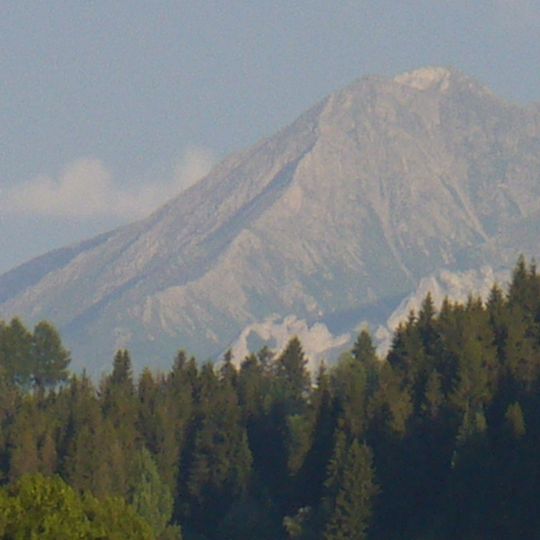
Havran, Mountain summit in High Tatras, Slovakia
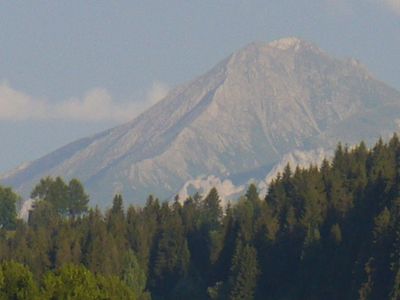
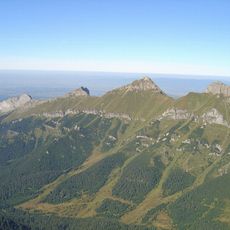
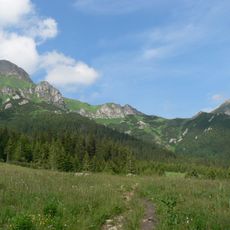
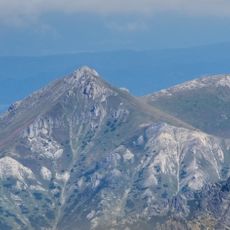
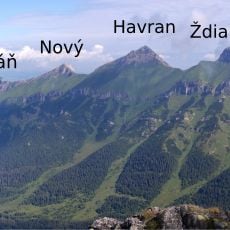
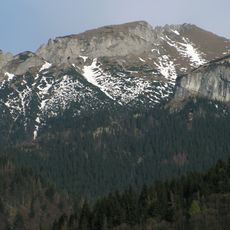
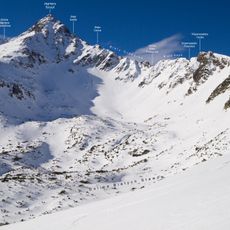
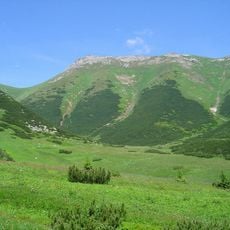
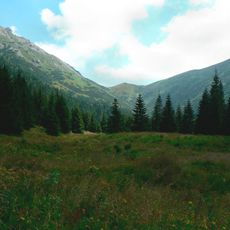
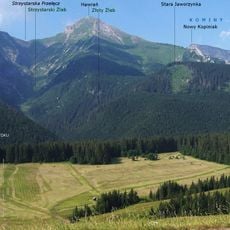
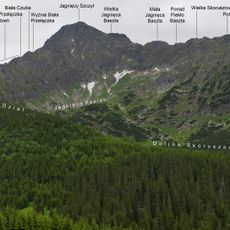
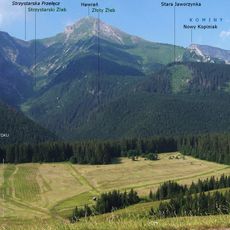
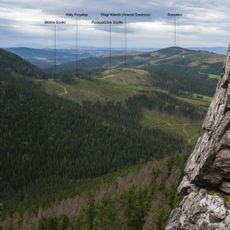
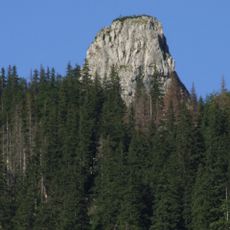
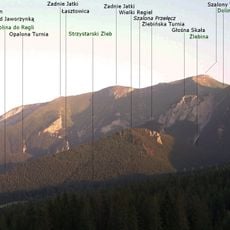
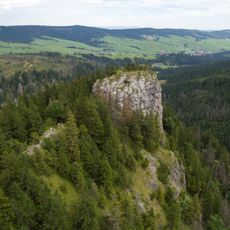
Havran (2,151.5 m) is the highest summit of the Belianske Tatry, a limestone peak in the main ridge between Nový and Ždiarska vidla. Its broad, rounded top rises above coniferous forest, with bare grey rock cut by near-vertical striations and gullies; whitish rock bands lie on the lower right flank. The summit is closed to hikers.
The name Havran appeared only about a century ago; earlier the summit was grouped with the neighbouring Płaczliwa Skała as Gabelspitze, in Slovak Nižna vidla or Panská vidla. In 1887 Prince Christian Hohenlohe bought this part of the Tatras for hunting, fenced it off and barred entry. A yellow-marked trail from Ždiar later led to the top but was closed in 1978, when the massif became part of the strict Belianske Tatry reserve.
The summit carries different names across the region: Havran in Slovak, Holló-kő in Hungarian, and Hawrań in Polish, reflecting how local communities each have their own way of calling this place. These varied names show how the mountain belongs to multiple cultural traditions at once.
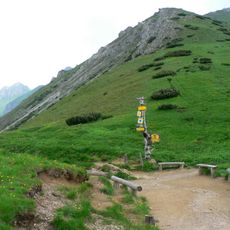
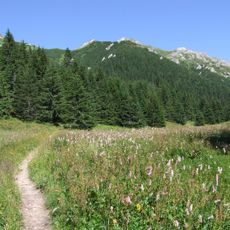
The summit has been closed to hikers since 1978, when it was included in the Belianske Tatry national nature reserve, so no marked trail leads to the top. The nearest marked route is the blue trail from Tatranská Javorina through Zadné Meďodoly and Kopské sedlo to Tatranské Matliare. A nature trail through Monkova dolina climbs to the ridge at Široké sedlo (1825.5 m).
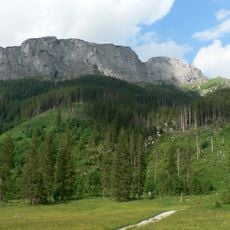
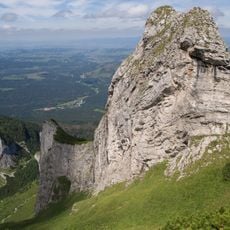
The massif holds more than a dozen caves, the best known being Jaskinia Strzystarska, the deepest in the Bielskie Tatry at 201 m. The highest wall in these mountains, about 250 m high, drops from the Skrajny Hawrani Kopiniak into Dolina Hawrania. Władysław Broniewski wrote the poem Hawrań i Murań in 1935.
The community of curious travelers
AroundUs brings together thousands of curated places, local tips, and hidden gems, enriched daily by 95,303 contributors worldwide.