Mount Hermon, Mountain peak in Rashaya District, Syria
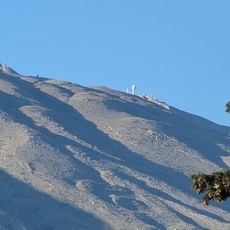
Mount Hermon is a limestone massif with three peaks in Rashaya District, Syria, stretching across the southern edge of the Anti-Lebanon range. The highest point stands at 2814 meters and overlooks several valleys and plains.
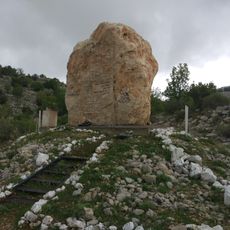
Siryon appears in Egyptian execration texts of the 19th century BC, and Senir in the inscriptions of Shalmaneser III, who recorded Hazael fortifying its peak. A Greek inscription found on the mountain attests to its cult in the 4th century AD, and the summit temple of large ashlar blocks, 11 by 10 metres, was described by Charles Warren in 1869.
The name Hermon derives from the Semitic root ḥrm, meaning "taboo" or "consecrated", as in Hebrew ḥerem and Arabic al-ḥaram. Arabic speakers call the mountain Jabal al-Shaykh, "Mountain of the Elder", for its snow-white summit resembling grey hair; the Talmud knew it as Tur Talga, "Mountain of Snow". A Greek inscription found on the mountain attests to its cult in the 4th century CE.
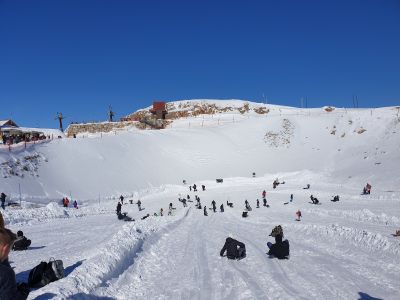
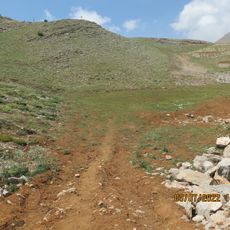
The southern slopes host a ski area up to 2040 meters during winter, while summer brings hiking paths and berry picking. Visitors should bring warm clothing, as temperatures remain cool at higher elevations even in summer.
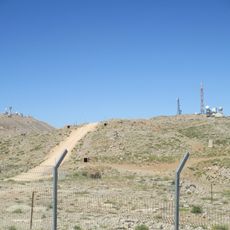
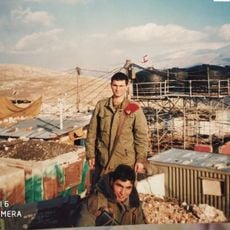
A permanently staffed United Nations position sits on the summit, known as Hermon Hotel, monitoring the buffer zone between territories. The site stands as the highest of its kind worldwide.
The community of curious travelers
AroundUs brings together thousands of curated places, local tips, and hidden gems, enriched daily by 92,273 contributors worldwide.