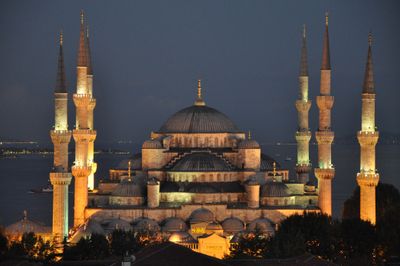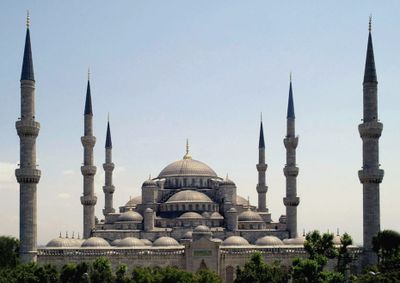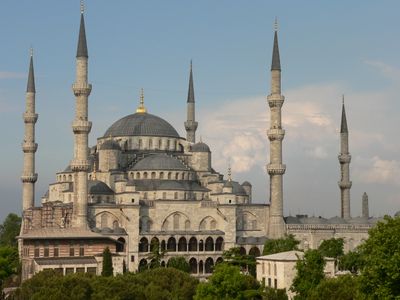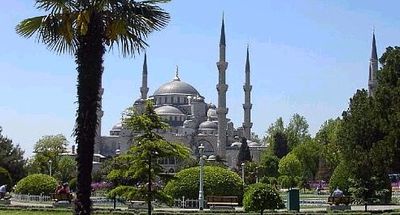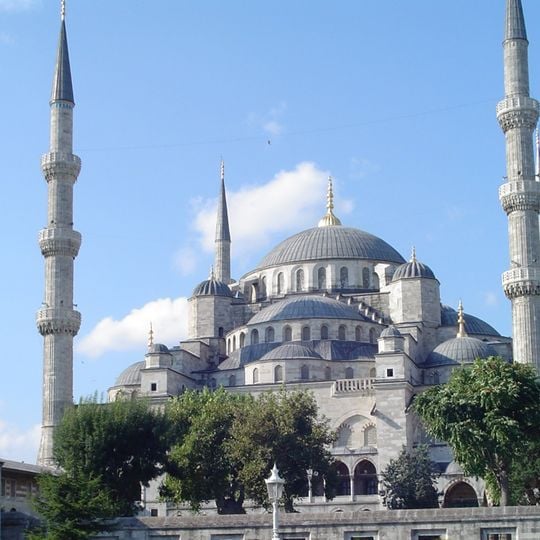
Sultan Ahmed Mosque, Ottoman mosque in Eminönü, Turkey
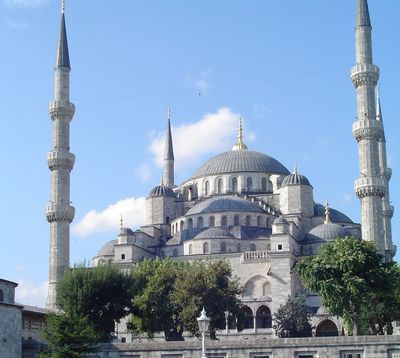
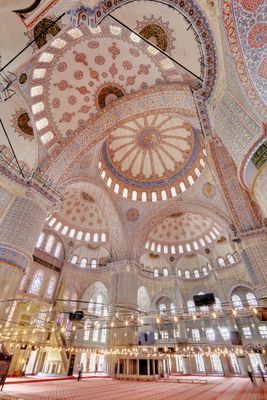
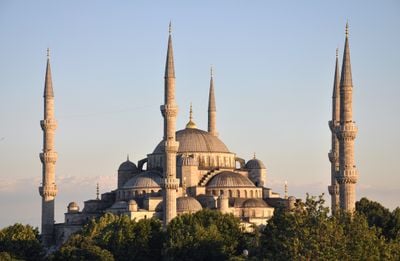
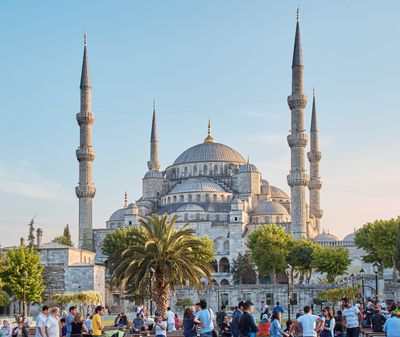
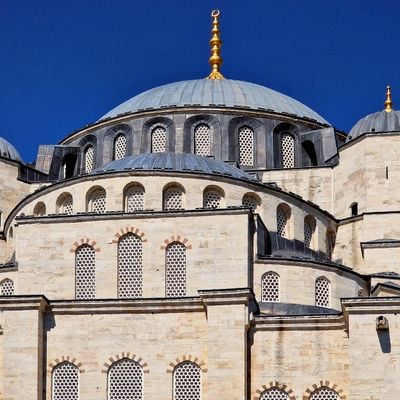
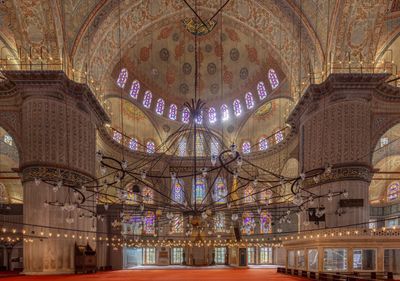
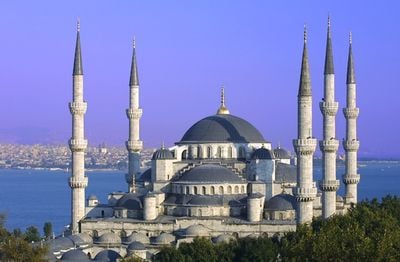
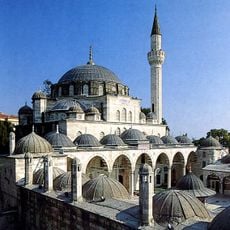
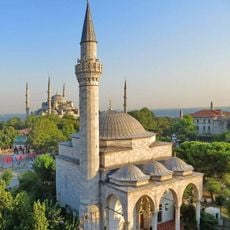
The Sultan Ahmed Mosque is an early 17th-century structure in the Eminönü district, commonly called the Blue Mosque due to its interior tilework. The main prayer hall opens under a central dome 23 meters in diameter, supported by four half-domes and massive columns, all decorated inside with painted geometric and floral patterns.
Sultan Ahmed I commissioned the architect Sedefkar Mehmet Ağa to design the building in 1609, seeking to celebrate his reign with a grand religious monument. Work finished seven years later, shortly before the sultan's death, making it the last major Ottoman mosque project before a long pause in imperial construction.
Worshippers gather five times a day on the carpeted floor, and outside prayer times visitors walk quietly along the side galleries to observe the space without disturbing those in reflection. Local families bring children here on Fridays and religious holidays, treating the building as both a spiritual center and a place to introduce younger generations to communal practice.
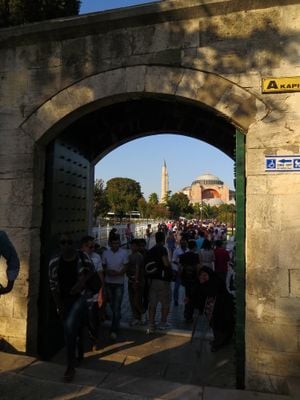
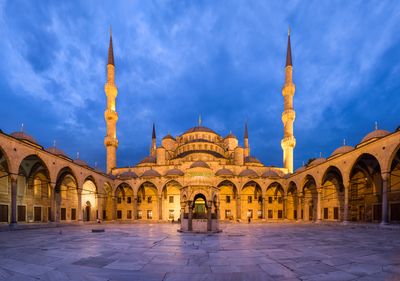
Entry happens through a large courtyard where visitors remove their shoes and women cover their hair before stepping inside. During prayer times the central area closes to tourists, but side aisles often remain open so you can view the space from a distance.
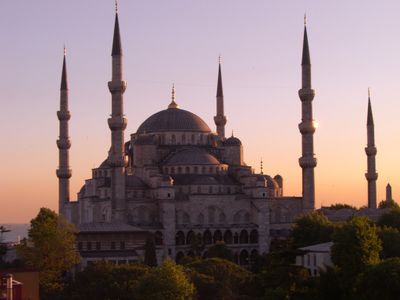
When completed, the six minarets sparked diplomatic tension because only the grand mosque in Mecca had the same number at the time. To resolve the issue, the sultan funded the addition of a seventh minaret in Mecca, allowing both sites to maintain their distinct status.
The community of curious travelers
AroundUs brings together thousands of curated places, local tips, and hidden gems, enriched daily by 90,843 contributors worldwide.