Westminster Abbey, Gothic collegiate church in Westminster, England
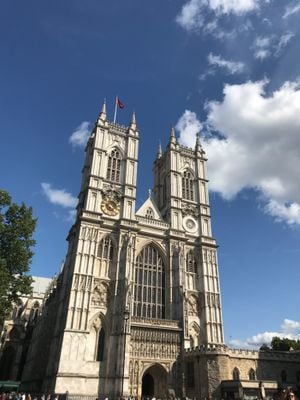
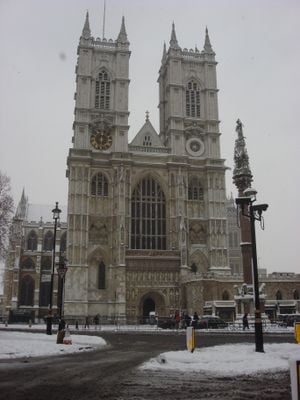
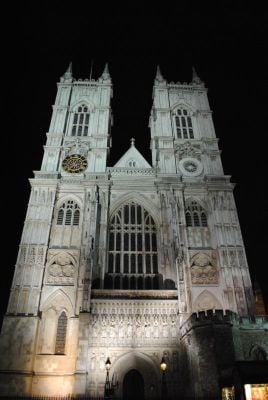
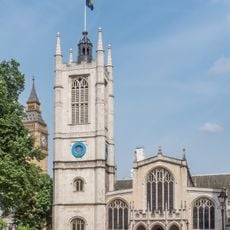
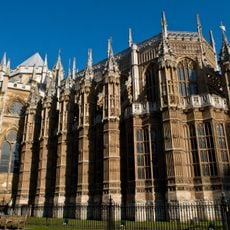
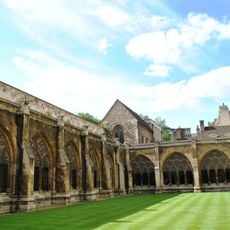
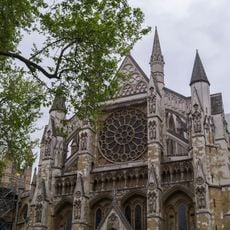
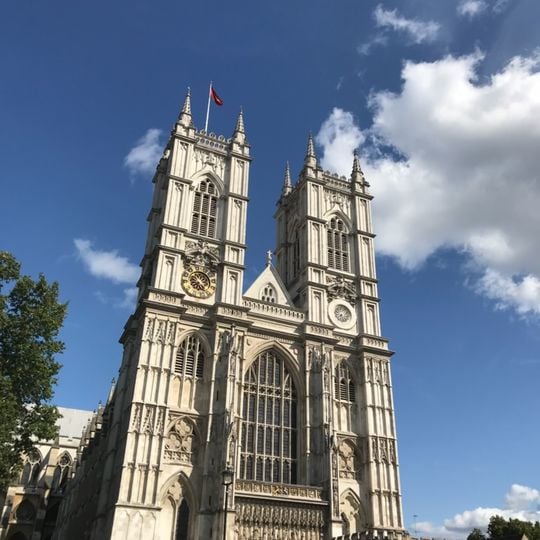
Westminster Abbey is an Anglican collegiate church in Westminster, London. Its west front has two square towers built between 1722 and 1745 by Christopher Wren, Nicholas Hawksmoor and John James; the left tower carries a clock, the right an unadorned circular opening. The nave, built from 1376 to 1506, leads to Henry VII's Chapel (1503–1519), a Perpendicular Gothic work called orbis miraculum by John Leland.
King Henry III began construction of the current building in 1245, replacing the earlier Romanesque church with a Gothic structure. Later monarchs added chapels and side wings, and the building remained a royal church even after Henry VIII dissolved the monasteries, surviving bomb damage during the Second World War.
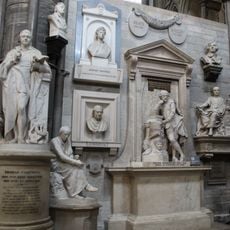
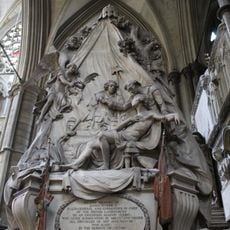
The monarchy uses this building for coronations, weddings, and services, so visitors experience a living royal tradition. Literature enthusiasts visit the corner with memorials to English writers, where they discover graves and inscriptions of famous authors and often leave flowers.
Visitors must book tickets in advance through the official website, with guided tours offered in several languages. Wheelchair access is limited because some areas are not accessible, and photography restrictions apply inside the building.
The Coronation Chair in Edward the Confessor's chapel held the Stone of Scone until 1996, when it was returned to Scotland and placed in Edinburgh Castle; the stone was stolen from the abbey at Christmas 1950 and recovered after a long search. The abbey also keeps a salmon delivered each year by the Fishmongers' Company, a custom tied to a legend that a Thames fisherman saw Saint Peter near the site.
The community of curious travelers
AroundUs brings together thousands of curated places, local tips, and hidden gems, enriched daily by 92,140 contributors worldwide.