See the monuments around you in AROpen chests in the app
Around Us is built for your phone — point your camera at the streets and discover the monuments and places around you in augmented reality.Around Us is built for your phone — chests unlock when you walk, explore and capture nearby places.
Monasteries in Europe: medieval abbeys, Orthodox buildings, and religious architecture
European religious architecture spans over a thousand years, from the Middle Ages to the present day. This collection includes monasteries and buildings constructed in a variety of styles, from Romanesque to Gothic, Baroque to Rococo, and innovative modern designs still under development. Some are situated in notable locations: Mont-Saint-Michel rises on its rocky islet surrounded by tides, Meteora monasteries overlook the Thessalian plain from their sandstone pinnacles, while Kylemore Abbey reflects in the waters of Connemara.
Many of these sites retain their original religious purpose. Monks still inhabit Sainte-Catherine in Sinai, Rila in Bulgaria, and Kylemore in Ireland. Others, like San Galgano in Tuscany, have lost their roofs and inhabitants but still bear witness to the scale of medieval constructions. Visitors can explore Wiblingen's baroque libraries, walk through the underground tunnels of Petchersk Lavra, or admire the royal tombs at Alcobaça Monastery. Each structure tells a part of the continent's religious and architectural history.
Monasteries in Europe: medieval abbeys, Orthodox buildings, and religious architecture
European religious architecture spans over a thousand years, from the Middle Ages to the present day. This collection includes monasteries and buildings constructed in a variety of styles, from Romanesque to Gothic, Baroque to Rococo, and innovative modern designs still under development. Some are situated in notable locations: Mont-Saint-Michel rises on its rocky islet surrounded by tides, Meteora monasteries overlook the Thessalian plain from their sandstone pinnacles, while Kylemore Abbey reflects in the waters of Connemara.
Many of these sites retain their original religious purpose. Monks still inhabit Sainte-Catherine in Sinai, Rila in Bulgaria, and Kylemore in Ireland. Others, like San Galgano in Tuscany, have lost their roofs and inhabitants but still bear witness to the scale of medieval constructions. Visitors can explore Wiblingen's baroque libraries, walk through the underground tunnels of Petchersk Lavra, or admire the royal tombs at Alcobaça Monastery. Each structure tells a part of the continent's religious and architectural history.
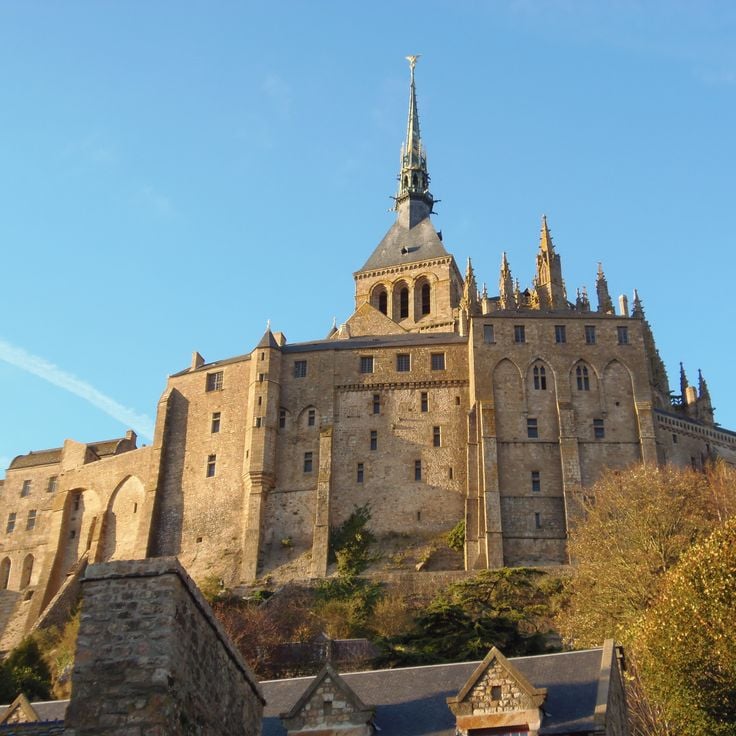
This Benedictine monastery was founded in the eighth century on a tidal island off the Normandy coast. Gothic architecture defines much of the complex, with pointed spires and fortified ramparts that reflect several centuries of construction. At high tide, the sea surrounds the rock; at low tide, the surrounding mudflats emerge.
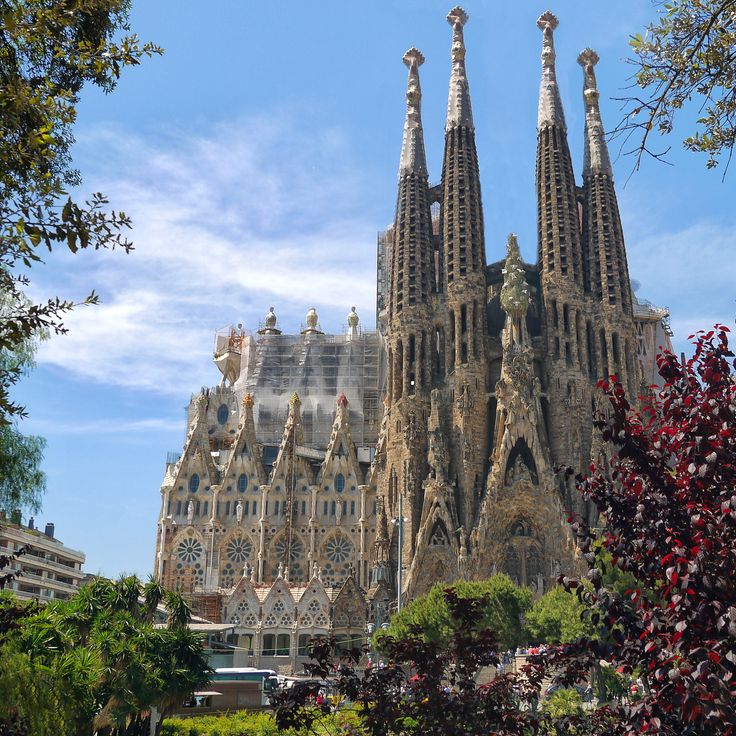
This Roman Catholic basilica ranks among the most recognizable unfinished sacred buildings in the world. Construction began in 1882, and more than a century later, only nine of the planned 18 towers stand complete. Architect Antoni Gaudí took over the project one year after its start and shaped the church with his modernist vision until his death in 1926. The facades display biblical scenes in detailed stone sculpture, while the interior rises on slender columns that branch like trees and filter colored light through the windows. The Sagrada Família merges Gothic traditions with organic forms and remains an active construction site, funded by admission fees and private donations.
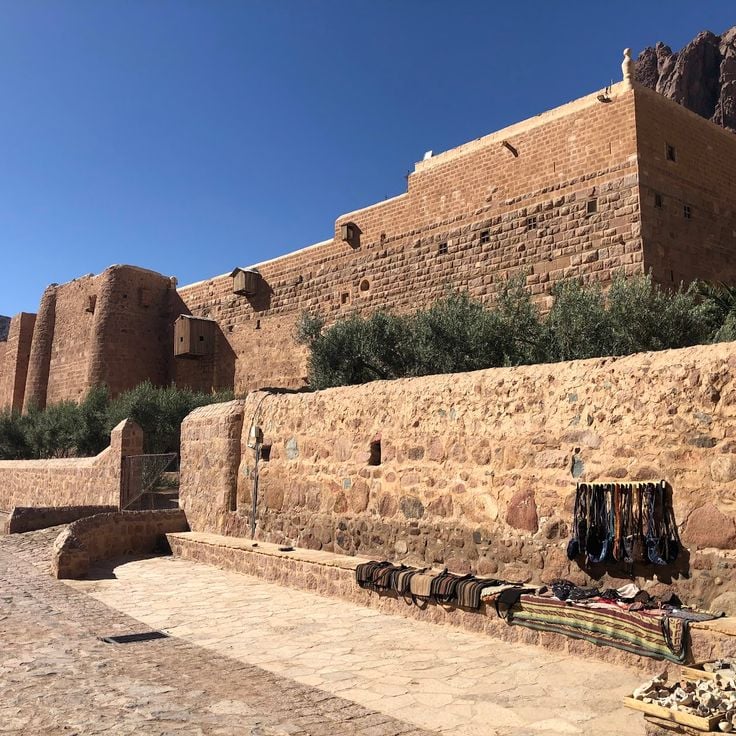
Saint Catherine's Monastery stands at the foot of Mount Sinai at an elevation of approximately 5,250 feet (1,600 meters). Emperor Justinian I commissioned the complex in the sixth century to protect pilgrims and preserve the revered burning bush. Monks continue to inhabit the monastery and safeguard an extensive collection of icons, manuscripts and liturgical objects. The library holds over three thousand manuscripts in several languages, including Greek, Arabic, Syriac and Ethiopic texts. The basilica houses the gilded shrine of Saint Catherine. Visitors enter through an old gateway into the walled compound and may tour portions of the collection and the chapels.
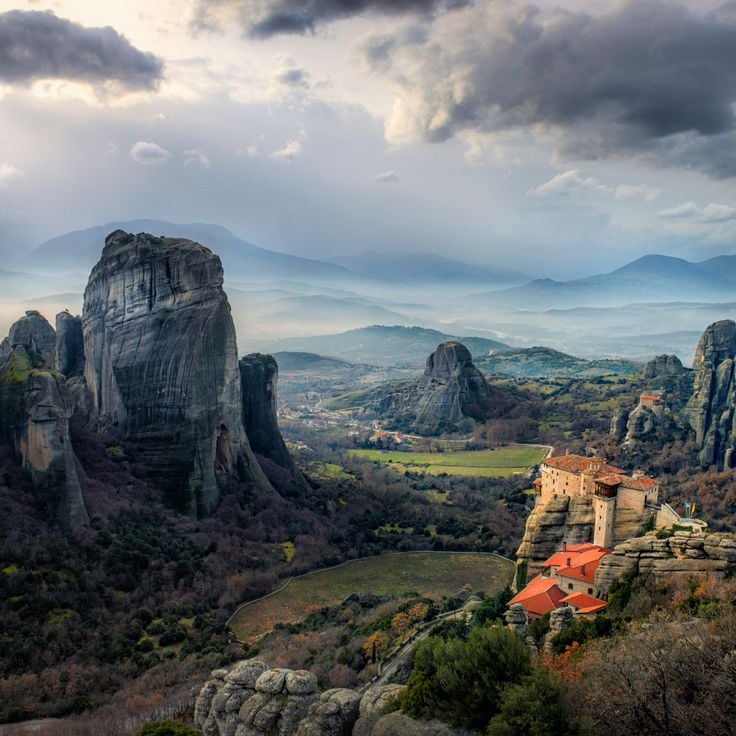
The Meteora monasteries stand atop sandstone pillars rising some 400 feet above the Thessalian plain. Six medieval Orthodox monasteries remain active today, drawing visitors from around the world. Monks and nuns occupy the complexes, whose origins date back to the 14th century. The monasteries house religious artwork, frescoes and manuscripts. Visitors reach them via staircases and footpaths carved into the rock, which were once accessible only by ladders and rope baskets.
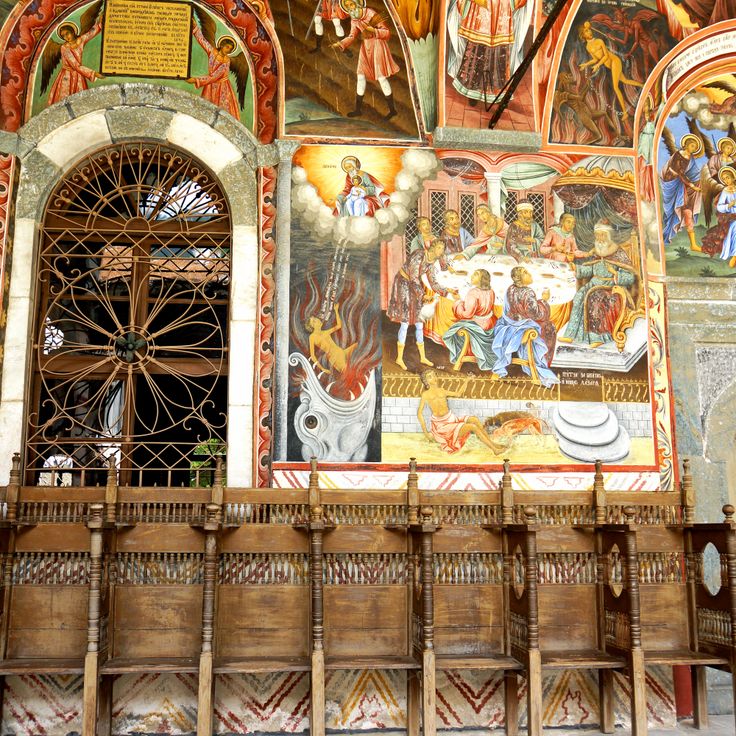
Rila Monastery was founded in the 10th century and today houses around 60 monks. The complex includes the main church with five domes, four chapels, 19th-century frescoes and approximately 300 cells distributed across four floors around the inner courtyard. The site sits at an elevation of 3,763 feet (1,147 meters) in the Rila Mountains and has been a UNESCO World Heritage Site since 1983.
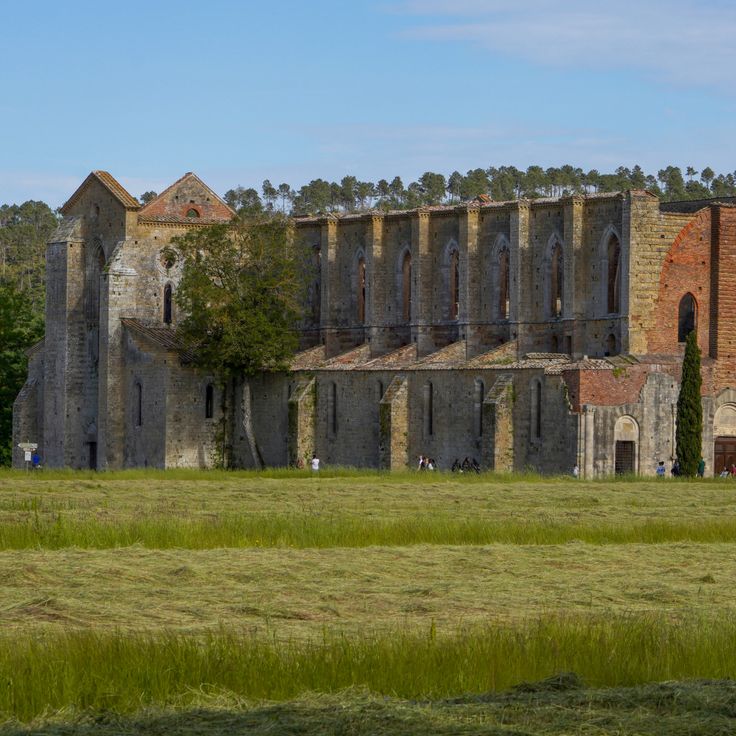
This 13th-century Cistercian abbey stands about twenty miles southwest of Siena in the Tuscan countryside. After centuries of decline, the building lost its roof in the late 18th century, leaving the stone walls and Gothic arches open to the sky. Visitors can walk through the roofless nave and observe the proportions of medieval monastic architecture. Nearby stands the Rotonda di Montesiepi, a round chapel housing a sword embedded in stone, linked to the legend of Galgano Guidotti. The abbey offers an example of Cistercian construction in central Italy and attracts those interested in medieval religious architecture and the processes of decay. The site remains accessible to the public and serves as a setting for cultural events during summer months.
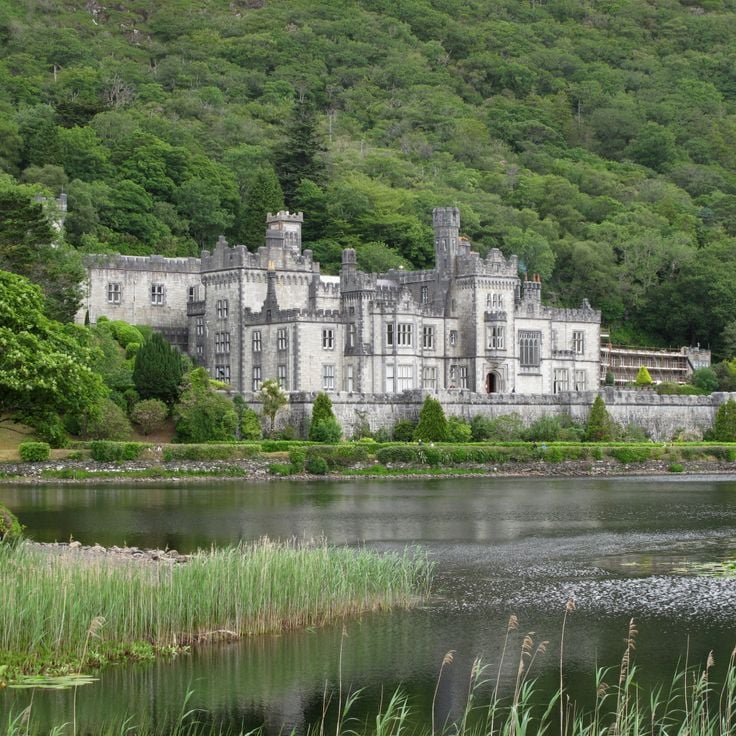
Kylemore Abbey occupies a 19th-century castle on the shores of a lake since 1920, when Benedictine nuns established it after fleeing Ypres. The complex features Gothic Revival architecture, a chapel and Victorian walled gardens with restored glasshouses. Visitors can tour sections of the castle interiors, the church and the garden grounds, while the nuns continue to reside in separate quarters of the estate.
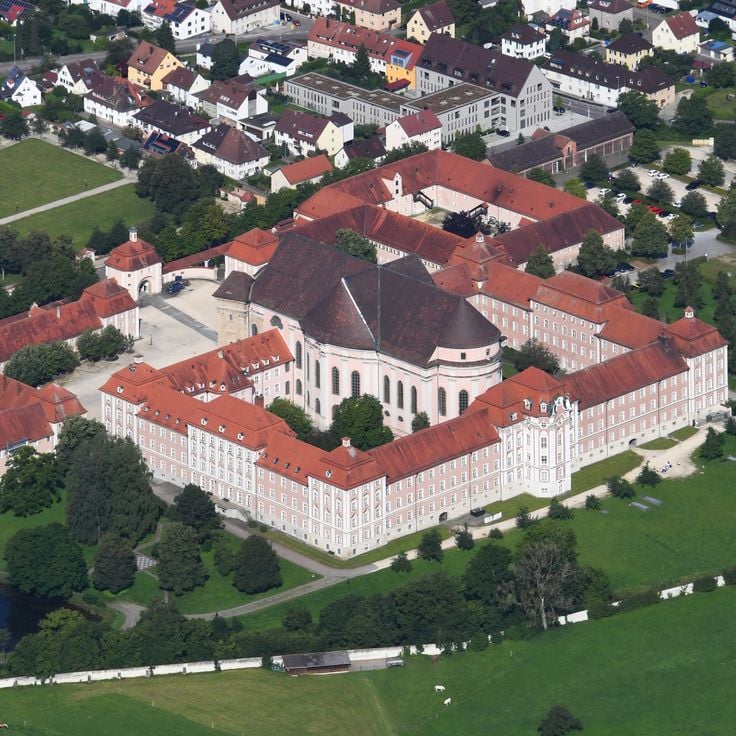
This Benedictine abbey near Ulm was founded in the 11th century and reconstructed in Baroque style during the 18th century. The monastery library displays Rococo ornamentation with gilded stucco work and theological frescoes covering walls and ceiling. The library hall extends across multiple floors and houses historical manuscripts and printed volumes from several centuries. The abbey church was built according to plans by multiple architects, with portions of the medieval predecessor integrated into the Baroque complex.
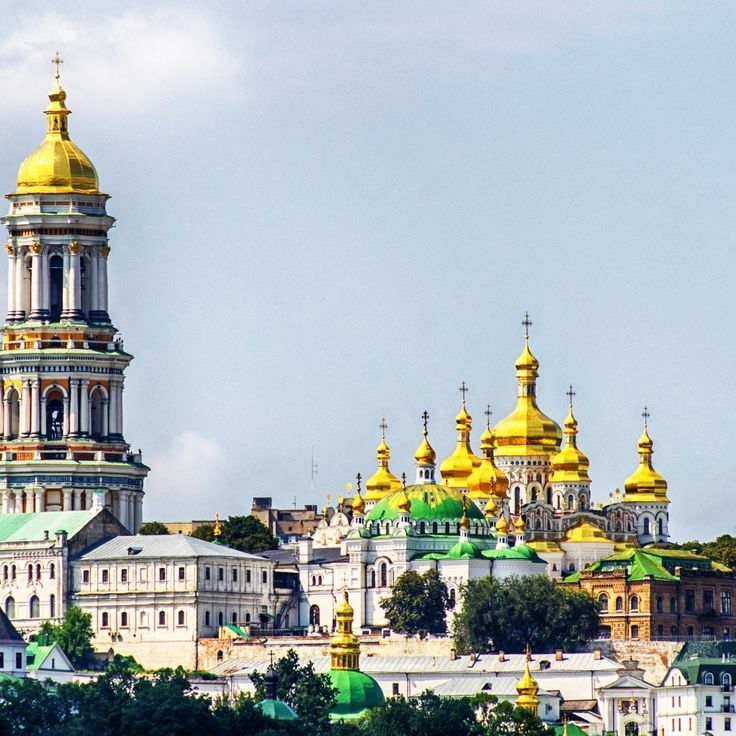
The Lavra of Petchersk is an 11th-century religious complex in Kyiv. Beneath its churches and monastic buildings extends a roughly 2-kilometer (1.2-mile) network of underground passages and burial caves where monks have been interred over the centuries. The cave system is among the largest of its kind in Europe and provided the foundation for the monastery's growth. Visitors can enter the narrow underground corridors to see the mummified remains of the monastic community. The site ranks among the most important centers of Orthodox architecture and spirituality in Ukraine and continues to function as a place of pilgrimage.
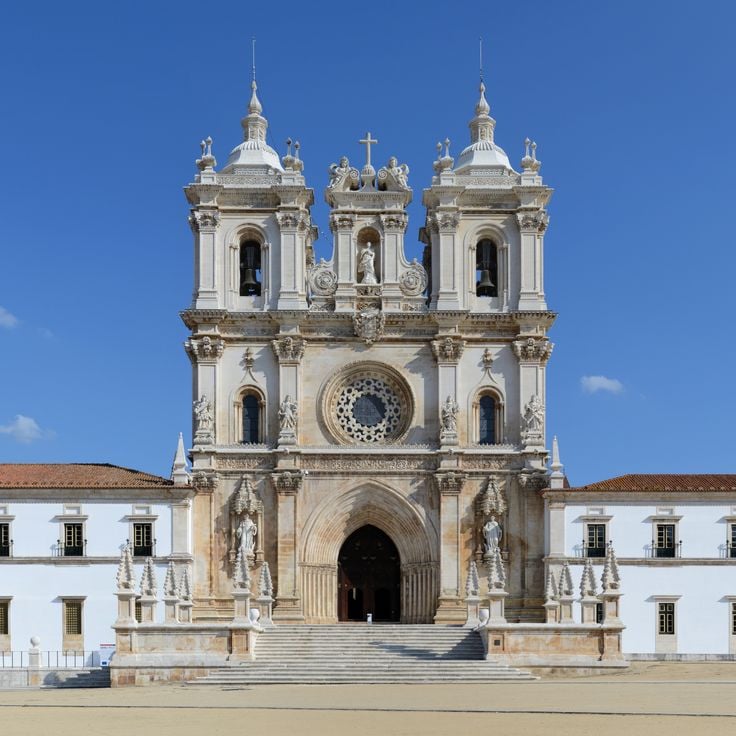
The Mosteiro de Alcobaça was founded in the 12th century and stands as one of the most significant Cistercian monasteries on the Iberian Peninsula. The Gothic church houses the royal tombs of Pedro I and Inês de Castro, whose story has become part of Portuguese national mythology. The cloister, library and refectory demonstrate the austere architectural language of the order and its adaptation to local building traditions.
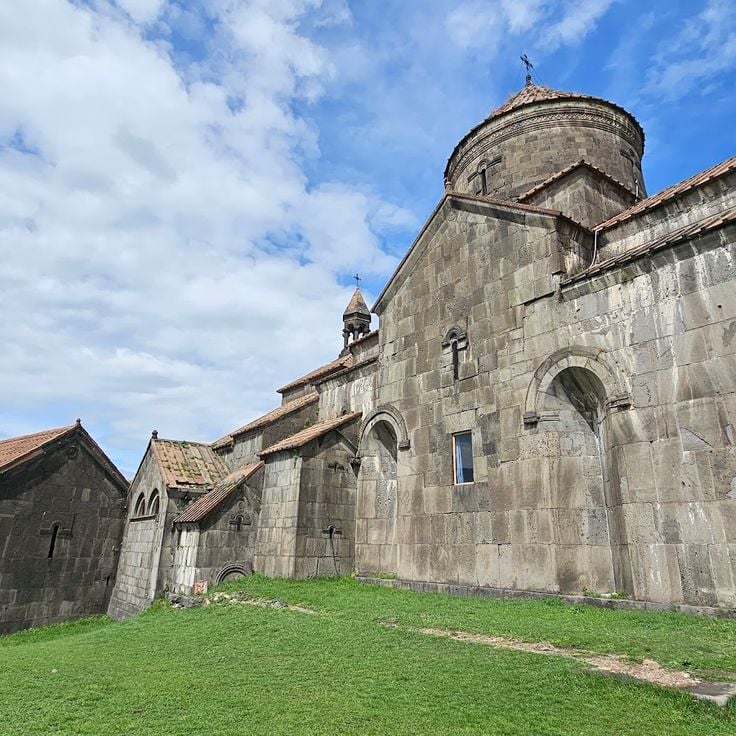
Haghpat Monastery was built in the tenth century in the mountains northeast of Yerevan and stands as a major example of Armenian monastic architecture. The complex includes several churches, a library and a bell tower constructed between the tenth and thirteenth centuries. Outer walls and interior spaces display numerous khachkars, those cross-stones carved with figural and botanical motifs characteristic of Armenia. Some rooms preserve medieval frescoes depicting scenes from the New Testament. Haghpat served for centuries as a spiritual center and housed a school for calligraphy and manuscript illumination.
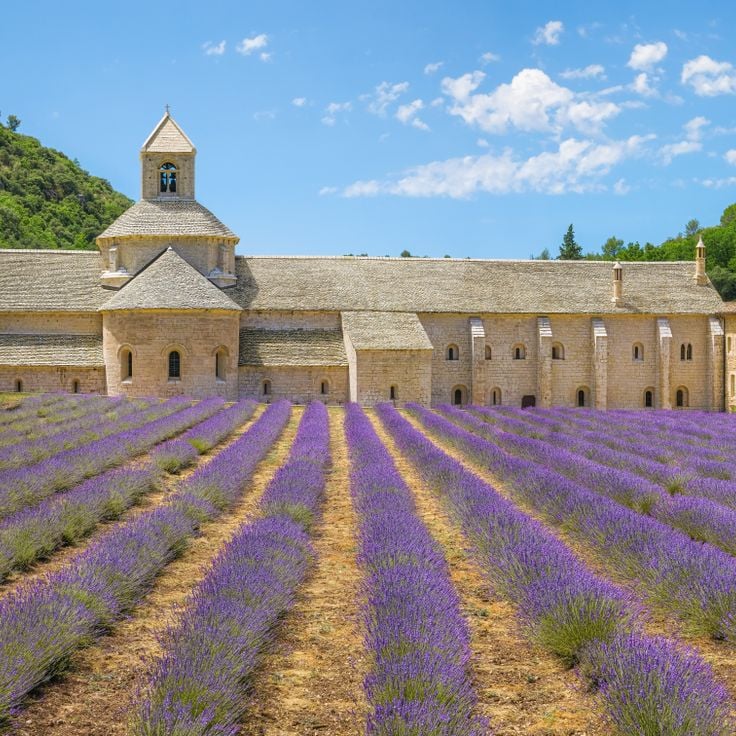
This Cistercian abbey was built in the 12th century in a Provençal valley and follows the strict architectural principles of the Romanesque style. Monks continue to inhabit the monastery and cultivate the surrounding lavender fields, which frame the stone complex during the flowering season. The church, cloister and conventual buildings display the characteristic simplicity of the Cistercian order.
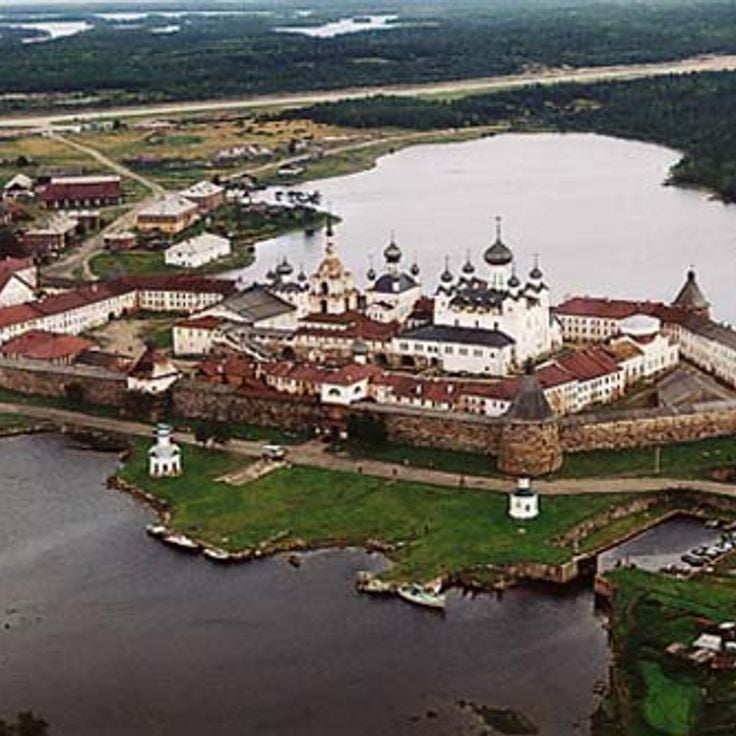
This 15th-century monastic complex on the Solovetsky Islands in the White Sea contains five stone churches within a fortified enclosure with eight towers. The Orthodox foundation served for centuries as a spiritual center and later as a prison camp before gaining UNESCO World Heritage status. Visitors explore the Assumption Cathedral, the Transfiguration Church and other religious structures that, despite the remote location, testify to the monastery's significance in Russian ecclesiastical history.
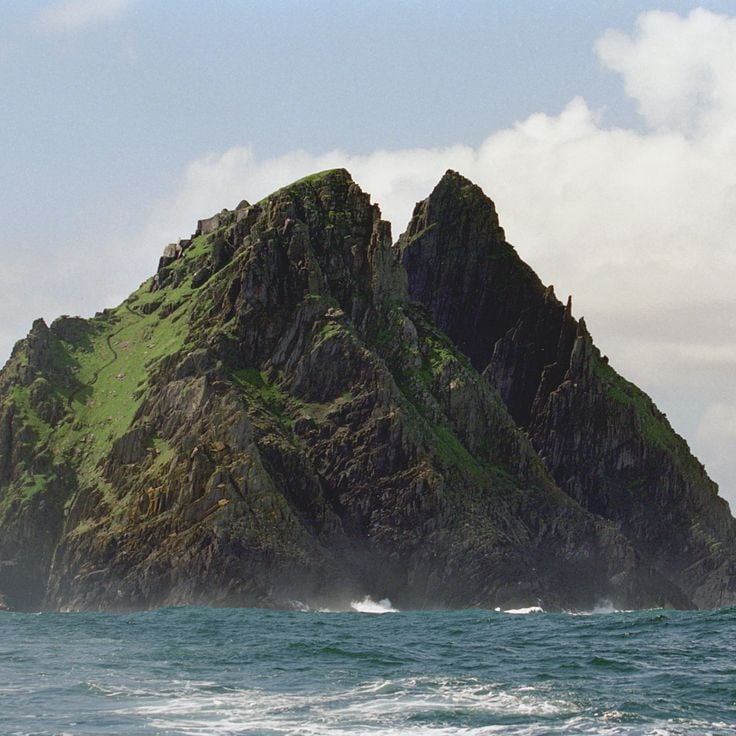
Skellig Michael comprises six beehive cells and two small chapels built by monks on an isolated Atlantic rock island from the sixth or seventh century onward. The medieval monastery sits at the top of more than 600 steps carved into the steep slopes of the island. Monks lived here under extreme conditions until they abandoned the site permanently in the thirteenth century. The cells are built from dry stone without mortar, a technique that has withstood Atlantic storms for over a thousand years. Access to the island depends on weather conditions, and visitors face a long, steep climb once they arrive.
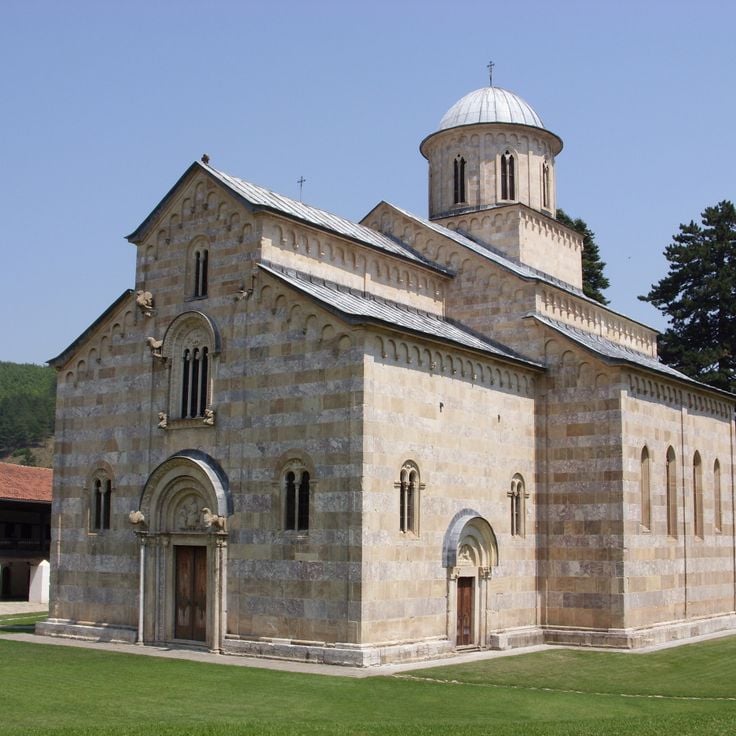
This 14th-century monastic church contains over one thousand medieval wall paintings arranged across four levels, documenting the Byzantine heritage of the region. Romanesque architectural elements blend into the Orthodox tradition, creating a synthesis of Western and Eastern building techniques. The monastery was built during the medieval expansion of Serbian rule in Kosovo and served as a spiritual center and burial site. The frescoes extend from the foundation walls to the domes, depicting biblical scenes, saints and historical events.
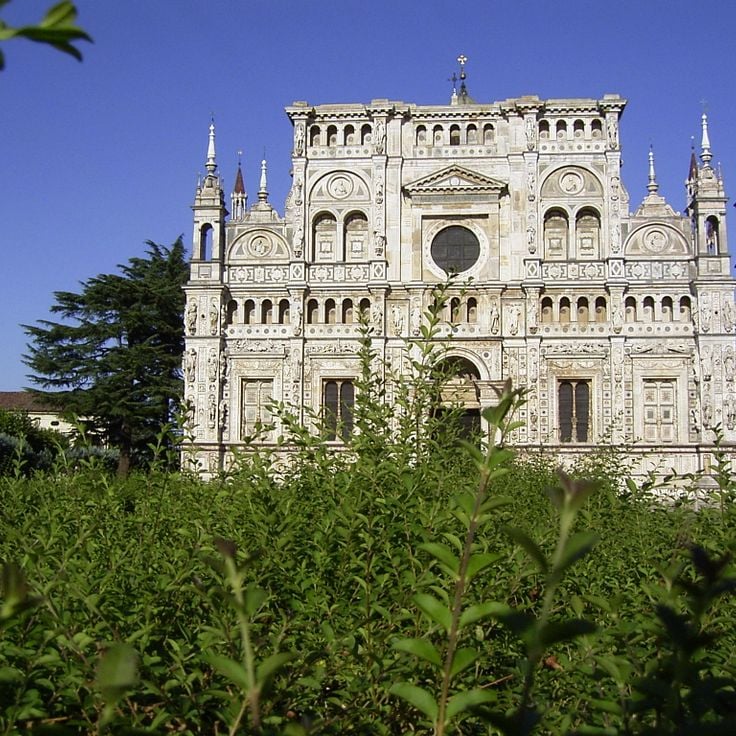
The facade of the Certosa di Pavia displays marble work from the 15th century, including reliefs with biblical scenes and medallions. The complex stands among the major monastic constructions of Lombardy, its elaborate exterior documenting the artistic development of the Italian Renaissance. Visitors can examine the ornamental elements of the front, which illustrate the transition between Gothic and early modern architectural sculpture. The Certosa continues to serve as an example of the connection between monastic tradition and representational architecture in northern Italy.
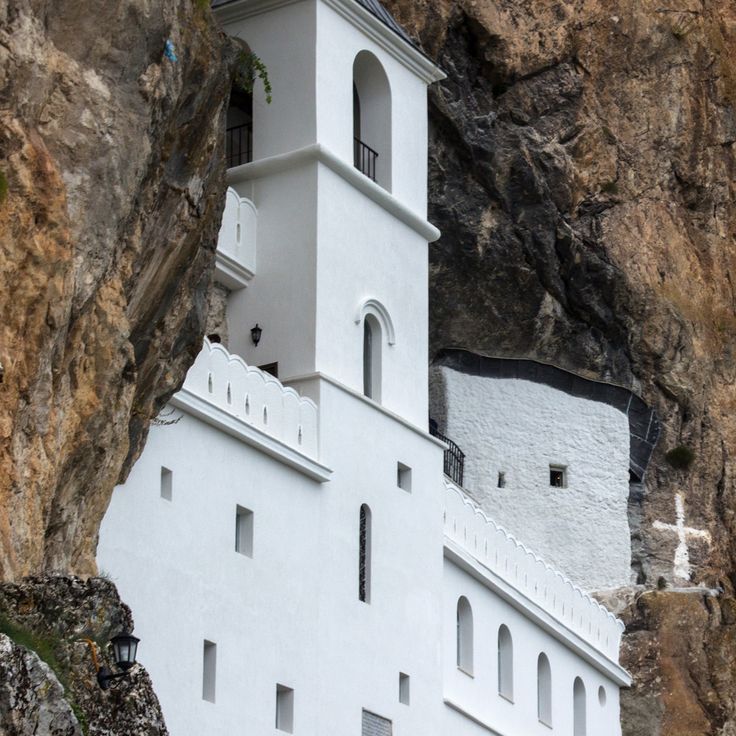
Ostrog Monastery clings to a sheer cliff face 3,000 feet (900 meters) above the Zeta valley and was founded in the 17th century as a refuge during Ottoman rule. The complex divides into two sections: the upper monastery contains two cave churches with frescoes and the relics of Saint Basil of Ostrog, a bishop and miracle worker whose tomb became Montenegro's most visited Orthodox pilgrimage site. The lower monastery was rebuilt after a 19th-century fire and serves as living quarters for the monks. Visitors can reach the complex via a winding mountain road or on foot through the forest and explore the rock-hewn churches.
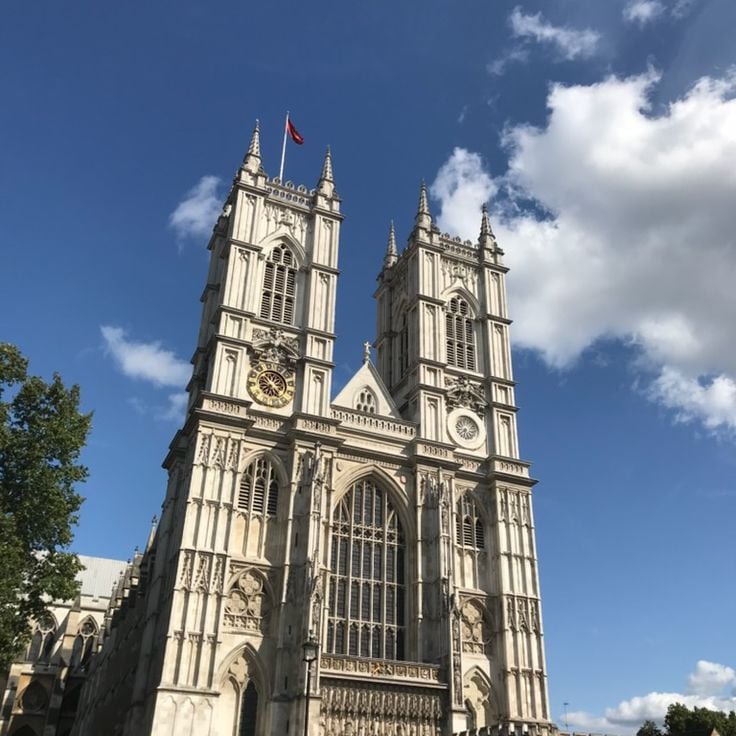
This Gothic church from the 13th century has served for centuries as the coronation site and burial place of British monarchs. Westminster Abbey was built from 1245 under Henry III in the high Gothic style and contains more than 3,000 burial sites, including those of Elizabeth I, Mary Stuart and Isaac Newton. The complex includes the main nave with its vaults rising 102 feet (31 meters), the Henry VII Chapel with its fan vaulting, plus the cloisters and chapter houses. Daily services take place while visitors may explore the historic spaces outside liturgical hours.
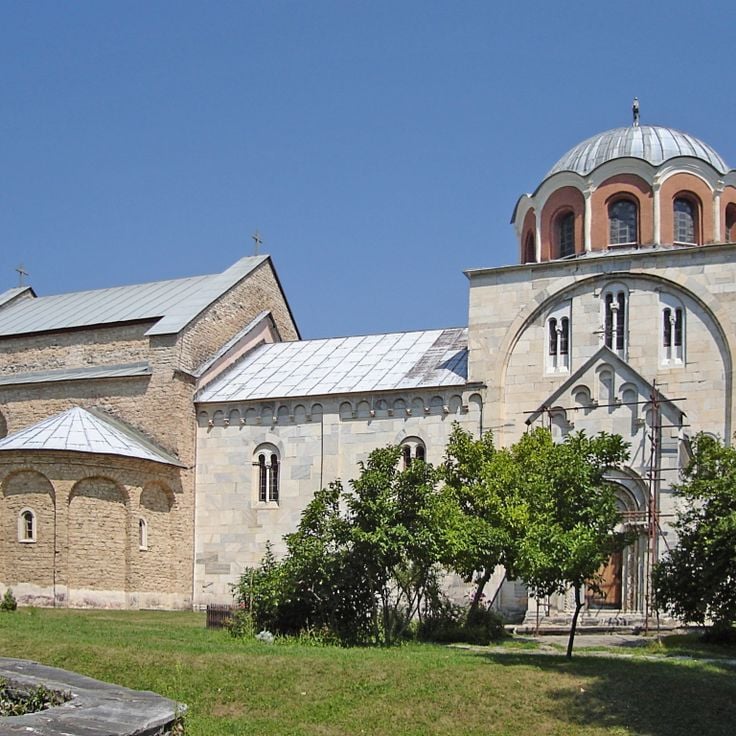
Studenica Monastery was founded in the 12th century and ranks among the most important medieval monastic complexes in Serbia. The site comprises two churches built with white marble, their exterior walls displaying the architectural style characteristic of Serbian construction during that period. Byzantine frescoes from various epochs survive inside, including paintings from the 13th and 14th centuries. The main church houses the tombs of several members of the Nemanjić dynasty. Orthodox monks continue to inhabit the monastery and maintain the religious traditions that have persisted since its founding.
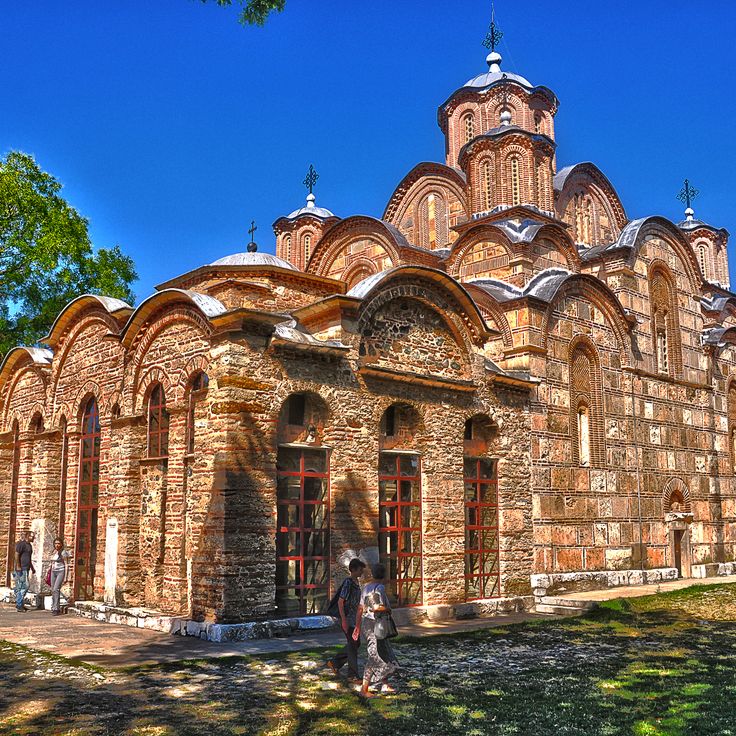
The Monastery of Gračanica stands among the significant Orthodox religious buildings of medieval Europe. Built in the 14th century, the church combines Byzantine architecture with five domes and houses frescoes depicting biblical scenes. The complex continues to serve Orthodox worship and preserves elements of late Byzantine art. Visitors can explore the interior spaces and study the preserved wall paintings, which rank among the important testimonies of this period.
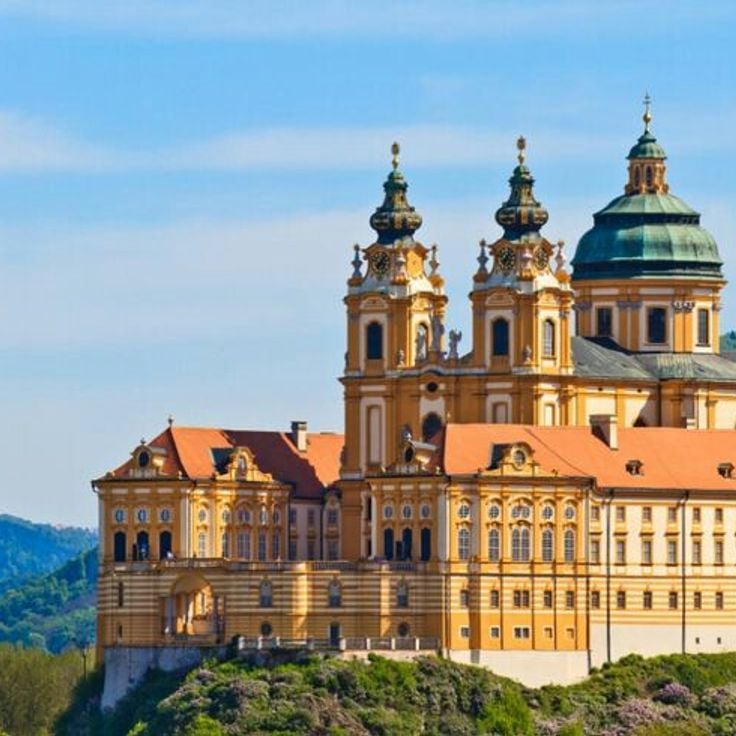
Melk Abbey rises above the Danube Valley and dates back to the 11th century, though its current baroque appearance took shape in the 18th century. The complex houses an extensive library containing some 100,000 volumes, including numerous medieval manuscripts and early printed works. The abbey church features frescoes by Johann Michael Rottmayr and stucco work by Antonio Beduzzi. Benedictine monks continue to live and work at this monastery, which stands among the largest preserved baroque monastic complexes in Central Europe.
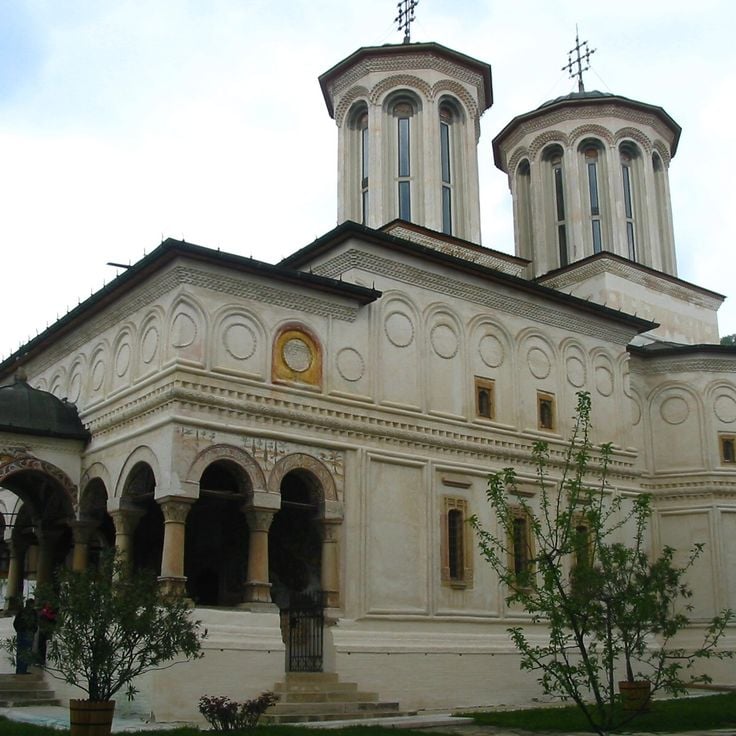
Horezu Monastery was founded in 1690 by Prince Constantin Brâncoveanu and exemplifies the Brâncovenesc style that emerged in Wallachia during his reign. The main church features exterior frescoes depicting biblical scenes and saintly figures, while interior walls carry liturgical motifs executed by regional painters. The complex includes several smaller chapels, monastic cells and a fortified courtyard that reflects the defensive concerns of the period. The church follows a plan with an open exonarthex, a feature typical of Wallachian religious architecture. Orthodox monks continue to inhabit the site, maintaining its liturgical function and preserving workshops that produce traditional ceramics and embroidered textiles.
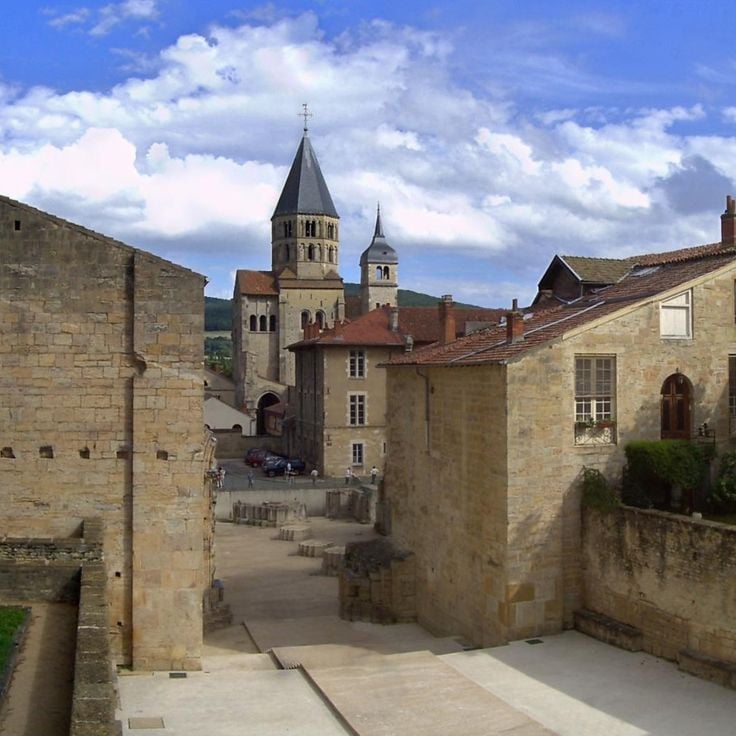
This Benedictine abbey, founded in the tenth century, shaped European monastic life for centuries and controlled more than a thousand monasteries from the Holy Roman Empire to the Iberian Peninsula. The church of Cluny III reached an overall length of 615 feet (187 meters) and surpassed every other Christian structure until the rebuilding of St. Peter's Basilica in the sixteenth century. Revolutionaries destroyed most of the complex after 1789, but the southern arm of the great transept and several chapter houses remain. Visitors can explore the preserved architecture and understand the original scale of this Burgundian abbey through models and reconstructions.
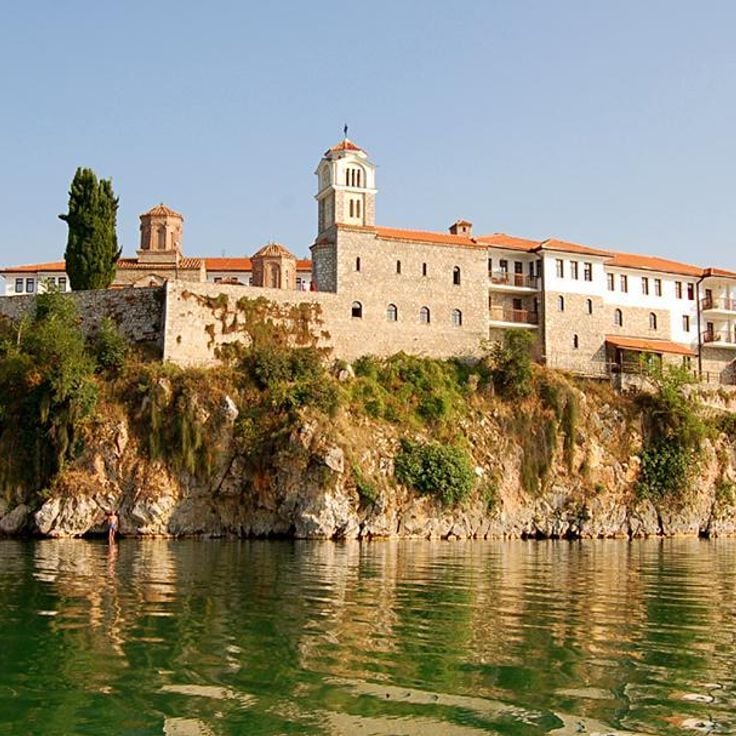
This monastery sits on the southern shore of Lake Ohrid, just a few miles from the Albanian border. Saint Naum founded the complex in 900 CE on a hillside above a spring that feeds into the lake. The church houses his tomb and medieval frescoes from the 16th and 17th centuries, depicting scenes from his life and biblical episodes. Peacocks roam freely across the monastery grounds, which attract pilgrims and visitors alike. The surrounding area offers access to boat rides on the spring-fed rivers and walking paths along the lakeshore.
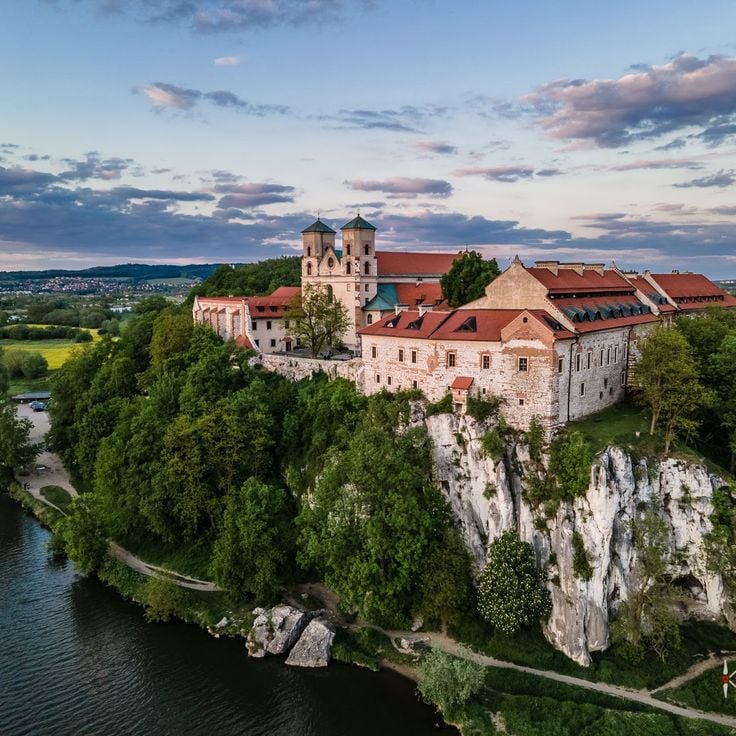
This Benedictine monastery stands on a limestone hill above the Vistula and ranks among Poland's oldest religious foundations. Established in the 11th century, it combines Romanesque foundations with Baroque expansions from the 17th and 18th centuries. Monks still live here, continuing the Benedictine tradition. Visitors can explore the abbey church with its Baroque interior, walk through the cloister and take in views of the river and surrounding countryside from the hilltop. The monastery lies about 6 miles (10 kilometers) west of central Kraków.
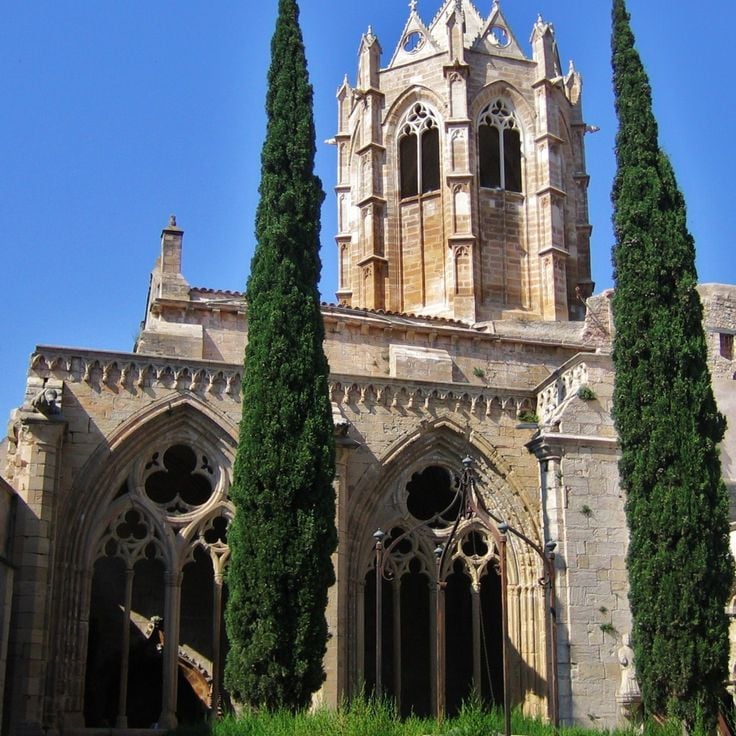
The Monastery of Vallbona de les Monges was founded in the 12th century and follows the Cistercian rule for women. The complex combines a Romanesque cloister with Gothic additions built in later centuries. Nuns continue to reside in this monastery, maintaining a monastic tradition that spans several hundred years. Visitors can explore the church, cloister and other spaces that offer insight into Cistercian architecture and religious life in Catalonia.
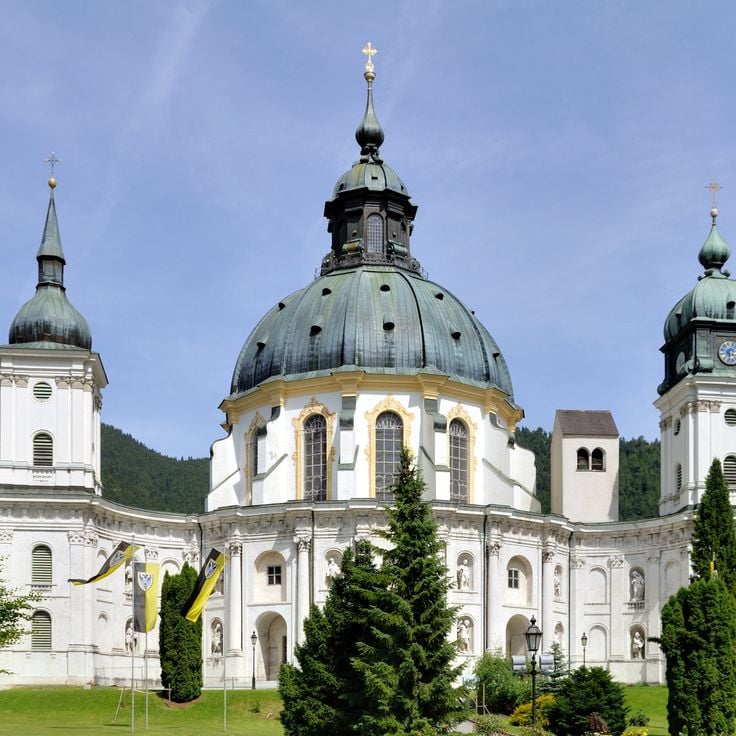
Ettal Monastery was founded in the fourteenth century by Emperor Louis of Bavaria and ranks among the major Benedictine abbeys of Upper Bavaria. The abbey church received its current Baroque form in the eighteenth century with a dome rising to 213 feet (65 meters). Johann Jakob Zeiller created the ceiling frescoes depicting scenes from Benedictine life. The monks operate a brewery, a distillery and a college. Visitors can attend services and tour the monastic buildings.
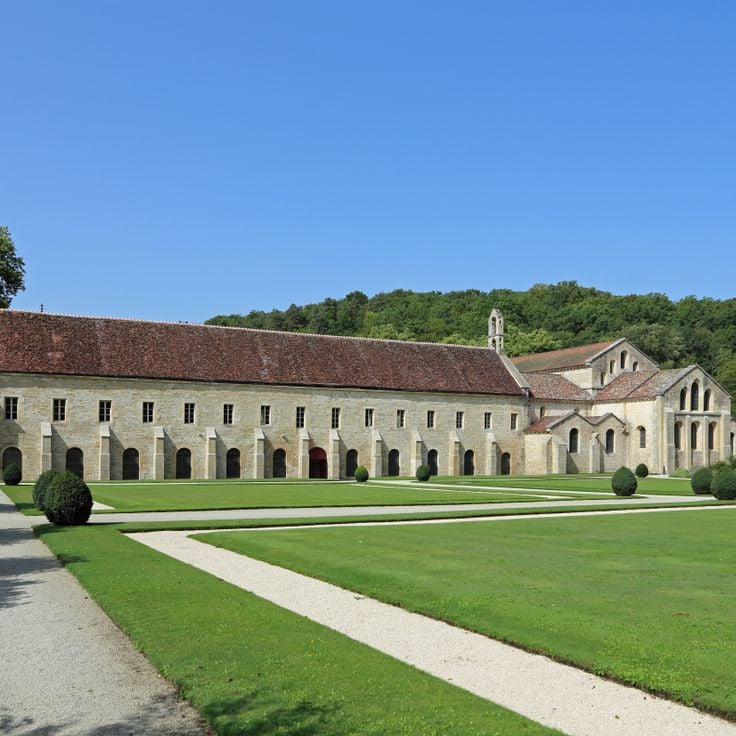
This 12th-century Cistercian abbey preserves its original Romanesque condition with cloister, dormitory and forge. Fontenay ranks among the early foundations of the Cistercian order and demonstrates the architecture characteristic of this monastic movement, which emphasized simplicity and functional design. The complex includes, alongside the abbey church with its pointed barrel vault, a square cloister, an upper-floor dormitory and a forge by the watercourse, illustrating the economic organization of the medieval monastic community.
This Benedictine monastery was founded in the eighth century on a tidal island off the Normandy coast. Gothic architecture defines much of the complex, with pointed spires and fortified ramparts that reflect several centuries of construction. At high tide, the sea surrounds the rock; at low tide, the surrounding mudflats emerge.
This Roman Catholic basilica ranks among the most recognizable unfinished sacred buildings in the world. Construction began in 1882, and more than a century later, only nine of the planned 18 towers stand complete. Architect Antoni Gaudí took over the project one year after its start and shaped the church with his modernist vision until his death in 1926. The facades display biblical scenes in detailed stone sculpture, while the interior rises on slender columns that branch like trees and filter colored light through the windows. The Sagrada Família merges Gothic traditions with organic forms and remains an active construction site, funded by admission fees and private donations.
Saint Catherine's Monastery stands at the foot of Mount Sinai at an elevation of approximately 5,250 feet (1,600 meters). Emperor Justinian I commissioned the complex in the sixth century to protect pilgrims and preserve the revered burning bush. Monks continue to inhabit the monastery and safeguard an extensive collection of icons, manuscripts and liturgical objects. The library holds over three thousand manuscripts in several languages, including Greek, Arabic, Syriac and Ethiopic texts. The basilica houses the gilded shrine of Saint Catherine. Visitors enter through an old gateway into the walled compound and may tour portions of the collection and the chapels.
The Meteora monasteries stand atop sandstone pillars rising some 400 feet above the Thessalian plain. Six medieval Orthodox monasteries remain active today, drawing visitors from around the world. Monks and nuns occupy the complexes, whose origins date back to the 14th century. The monasteries house religious artwork, frescoes and manuscripts. Visitors reach them via staircases and footpaths carved into the rock, which were once accessible only by ladders and rope baskets.
Rila Monastery was founded in the 10th century and today houses around 60 monks. The complex includes the main church with five domes, four chapels, 19th-century frescoes and approximately 300 cells distributed across four floors around the inner courtyard. The site sits at an elevation of 3,763 feet (1,147 meters) in the Rila Mountains and has been a UNESCO World Heritage Site since 1983.
This 13th-century Cistercian abbey stands about twenty miles southwest of Siena in the Tuscan countryside. After centuries of decline, the building lost its roof in the late 18th century, leaving the stone walls and Gothic arches open to the sky. Visitors can walk through the roofless nave and observe the proportions of medieval monastic architecture. Nearby stands the Rotonda di Montesiepi, a round chapel housing a sword embedded in stone, linked to the legend of Galgano Guidotti. The abbey offers an example of Cistercian construction in central Italy and attracts those interested in medieval religious architecture and the processes of decay. The site remains accessible to the public and serves as a setting for cultural events during summer months.
Kylemore Abbey occupies a 19th-century castle on the shores of a lake since 1920, when Benedictine nuns established it after fleeing Ypres. The complex features Gothic Revival architecture, a chapel and Victorian walled gardens with restored glasshouses. Visitors can tour sections of the castle interiors, the church and the garden grounds, while the nuns continue to reside in separate quarters of the estate.
This Benedictine abbey near Ulm was founded in the 11th century and reconstructed in Baroque style during the 18th century. The monastery library displays Rococo ornamentation with gilded stucco work and theological frescoes covering walls and ceiling. The library hall extends across multiple floors and houses historical manuscripts and printed volumes from several centuries. The abbey church was built according to plans by multiple architects, with portions of the medieval predecessor integrated into the Baroque complex.
The Lavra of Petchersk is an 11th-century religious complex in Kyiv. Beneath its churches and monastic buildings extends a roughly 2-kilometer (1.2-mile) network of underground passages and burial caves where monks have been interred over the centuries. The cave system is among the largest of its kind in Europe and provided the foundation for the monastery's growth. Visitors can enter the narrow underground corridors to see the mummified remains of the monastic community. The site ranks among the most important centers of Orthodox architecture and spirituality in Ukraine and continues to function as a place of pilgrimage.
The Mosteiro de Alcobaça was founded in the 12th century and stands as one of the most significant Cistercian monasteries on the Iberian Peninsula. The Gothic church houses the royal tombs of Pedro I and Inês de Castro, whose story has become part of Portuguese national mythology. The cloister, library and refectory demonstrate the austere architectural language of the order and its adaptation to local building traditions.
Haghpat Monastery was built in the tenth century in the mountains northeast of Yerevan and stands as a major example of Armenian monastic architecture. The complex includes several churches, a library and a bell tower constructed between the tenth and thirteenth centuries. Outer walls and interior spaces display numerous khachkars, those cross-stones carved with figural and botanical motifs characteristic of Armenia. Some rooms preserve medieval frescoes depicting scenes from the New Testament. Haghpat served for centuries as a spiritual center and housed a school for calligraphy and manuscript illumination.
This Cistercian abbey was built in the 12th century in a Provençal valley and follows the strict architectural principles of the Romanesque style. Monks continue to inhabit the monastery and cultivate the surrounding lavender fields, which frame the stone complex during the flowering season. The church, cloister and conventual buildings display the characteristic simplicity of the Cistercian order.
This 15th-century monastic complex on the Solovetsky Islands in the White Sea contains five stone churches within a fortified enclosure with eight towers. The Orthodox foundation served for centuries as a spiritual center and later as a prison camp before gaining UNESCO World Heritage status. Visitors explore the Assumption Cathedral, the Transfiguration Church and other religious structures that, despite the remote location, testify to the monastery's significance in Russian ecclesiastical history.
Skellig Michael comprises six beehive cells and two small chapels built by monks on an isolated Atlantic rock island from the sixth or seventh century onward. The medieval monastery sits at the top of more than 600 steps carved into the steep slopes of the island. Monks lived here under extreme conditions until they abandoned the site permanently in the thirteenth century. The cells are built from dry stone without mortar, a technique that has withstood Atlantic storms for over a thousand years. Access to the island depends on weather conditions, and visitors face a long, steep climb once they arrive.
This 14th-century monastic church contains over one thousand medieval wall paintings arranged across four levels, documenting the Byzantine heritage of the region. Romanesque architectural elements blend into the Orthodox tradition, creating a synthesis of Western and Eastern building techniques. The monastery was built during the medieval expansion of Serbian rule in Kosovo and served as a spiritual center and burial site. The frescoes extend from the foundation walls to the domes, depicting biblical scenes, saints and historical events.
The facade of the Certosa di Pavia displays marble work from the 15th century, including reliefs with biblical scenes and medallions. The complex stands among the major monastic constructions of Lombardy, its elaborate exterior documenting the artistic development of the Italian Renaissance. Visitors can examine the ornamental elements of the front, which illustrate the transition between Gothic and early modern architectural sculpture. The Certosa continues to serve as an example of the connection between monastic tradition and representational architecture in northern Italy.
Ostrog Monastery clings to a sheer cliff face 3,000 feet (900 meters) above the Zeta valley and was founded in the 17th century as a refuge during Ottoman rule. The complex divides into two sections: the upper monastery contains two cave churches with frescoes and the relics of Saint Basil of Ostrog, a bishop and miracle worker whose tomb became Montenegro's most visited Orthodox pilgrimage site. The lower monastery was rebuilt after a 19th-century fire and serves as living quarters for the monks. Visitors can reach the complex via a winding mountain road or on foot through the forest and explore the rock-hewn churches.
This Gothic church from the 13th century has served for centuries as the coronation site and burial place of British monarchs. Westminster Abbey was built from 1245 under Henry III in the high Gothic style and contains more than 3,000 burial sites, including those of Elizabeth I, Mary Stuart and Isaac Newton. The complex includes the main nave with its vaults rising 102 feet (31 meters), the Henry VII Chapel with its fan vaulting, plus the cloisters and chapter houses. Daily services take place while visitors may explore the historic spaces outside liturgical hours.
Studenica Monastery was founded in the 12th century and ranks among the most important medieval monastic complexes in Serbia. The site comprises two churches built with white marble, their exterior walls displaying the architectural style characteristic of Serbian construction during that period. Byzantine frescoes from various epochs survive inside, including paintings from the 13th and 14th centuries. The main church houses the tombs of several members of the Nemanjić dynasty. Orthodox monks continue to inhabit the monastery and maintain the religious traditions that have persisted since its founding.
The Monastery of Gračanica stands among the significant Orthodox religious buildings of medieval Europe. Built in the 14th century, the church combines Byzantine architecture with five domes and houses frescoes depicting biblical scenes. The complex continues to serve Orthodox worship and preserves elements of late Byzantine art. Visitors can explore the interior spaces and study the preserved wall paintings, which rank among the important testimonies of this period.
Melk Abbey rises above the Danube Valley and dates back to the 11th century, though its current baroque appearance took shape in the 18th century. The complex houses an extensive library containing some 100,000 volumes, including numerous medieval manuscripts and early printed works. The abbey church features frescoes by Johann Michael Rottmayr and stucco work by Antonio Beduzzi. Benedictine monks continue to live and work at this monastery, which stands among the largest preserved baroque monastic complexes in Central Europe.
Horezu Monastery was founded in 1690 by Prince Constantin Brâncoveanu and exemplifies the Brâncovenesc style that emerged in Wallachia during his reign. The main church features exterior frescoes depicting biblical scenes and saintly figures, while interior walls carry liturgical motifs executed by regional painters. The complex includes several smaller chapels, monastic cells and a fortified courtyard that reflects the defensive concerns of the period. The church follows a plan with an open exonarthex, a feature typical of Wallachian religious architecture. Orthodox monks continue to inhabit the site, maintaining its liturgical function and preserving workshops that produce traditional ceramics and embroidered textiles.
This Benedictine abbey, founded in the tenth century, shaped European monastic life for centuries and controlled more than a thousand monasteries from the Holy Roman Empire to the Iberian Peninsula. The church of Cluny III reached an overall length of 615 feet (187 meters) and surpassed every other Christian structure until the rebuilding of St. Peter's Basilica in the sixteenth century. Revolutionaries destroyed most of the complex after 1789, but the southern arm of the great transept and several chapter houses remain. Visitors can explore the preserved architecture and understand the original scale of this Burgundian abbey through models and reconstructions.
This monastery sits on the southern shore of Lake Ohrid, just a few miles from the Albanian border. Saint Naum founded the complex in 900 CE on a hillside above a spring that feeds into the lake. The church houses his tomb and medieval frescoes from the 16th and 17th centuries, depicting scenes from his life and biblical episodes. Peacocks roam freely across the monastery grounds, which attract pilgrims and visitors alike. The surrounding area offers access to boat rides on the spring-fed rivers and walking paths along the lakeshore.
This Benedictine monastery stands on a limestone hill above the Vistula and ranks among Poland's oldest religious foundations. Established in the 11th century, it combines Romanesque foundations with Baroque expansions from the 17th and 18th centuries. Monks still live here, continuing the Benedictine tradition. Visitors can explore the abbey church with its Baroque interior, walk through the cloister and take in views of the river and surrounding countryside from the hilltop. The monastery lies about 6 miles (10 kilometers) west of central Kraków.
The Monastery of Vallbona de les Monges was founded in the 12th century and follows the Cistercian rule for women. The complex combines a Romanesque cloister with Gothic additions built in later centuries. Nuns continue to reside in this monastery, maintaining a monastic tradition that spans several hundred years. Visitors can explore the church, cloister and other spaces that offer insight into Cistercian architecture and religious life in Catalonia.
Ettal Monastery was founded in the fourteenth century by Emperor Louis of Bavaria and ranks among the major Benedictine abbeys of Upper Bavaria. The abbey church received its current Baroque form in the eighteenth century with a dome rising to 213 feet (65 meters). Johann Jakob Zeiller created the ceiling frescoes depicting scenes from Benedictine life. The monks operate a brewery, a distillery and a college. Visitors can attend services and tour the monastic buildings.
This 12th-century Cistercian abbey preserves its original Romanesque condition with cloister, dormitory and forge. Fontenay ranks among the early foundations of the Cistercian order and demonstrates the architecture characteristic of this monastic movement, which emphasized simplicity and functional design. The complex includes, alongside the abbey church with its pointed barrel vault, a square cloister, an upper-floor dormitory and a forge by the watercourse, illustrating the economic organization of the medieval monastic community.
This Benedictine monastery was founded in the eighth century on a tidal island off the Normandy coast. Gothic architecture defines much of the complex, with pointed spires and fortified ramparts that reflect several centuries of construction. At high tide, the sea surrounds the rock; at low tide, the surrounding mudflats emerge.
This Roman Catholic basilica ranks among the most recognizable unfinished sacred buildings in the world. Construction began in 1882, and more than a century later, only nine of the planned 18 towers stand complete. Architect Antoni Gaudí took over the project one year after its start and shaped the church with his modernist vision until his death in 1926. The facades display biblical scenes in detailed stone sculpture, while the interior rises on slender columns that branch like trees and filter colored light through the windows. The Sagrada Família merges Gothic traditions with organic forms and remains an active construction site, funded by admission fees and private donations.
Saint Catherine's Monastery stands at the foot of Mount Sinai at an elevation of approximately 5,250 feet (1,600 meters). Emperor Justinian I commissioned the complex in the sixth century to protect pilgrims and preserve the revered burning bush. Monks continue to inhabit the monastery and safeguard an extensive collection of icons, manuscripts and liturgical objects. The library holds over three thousand manuscripts in several languages, including Greek, Arabic, Syriac and Ethiopic texts. The basilica houses the gilded shrine of Saint Catherine. Visitors enter through an old gateway into the walled compound and may tour portions of the collection and the chapels.
The Meteora monasteries stand atop sandstone pillars rising some 400 feet above the Thessalian plain. Six medieval Orthodox monasteries remain active today, drawing visitors from around the world. Monks and nuns occupy the complexes, whose origins date back to the 14th century. The monasteries house religious artwork, frescoes and manuscripts. Visitors reach them via staircases and footpaths carved into the rock, which were once accessible only by ladders and rope baskets.
Rila Monastery was founded in the 10th century and today houses around 60 monks. The complex includes the main church with five domes, four chapels, 19th-century frescoes and approximately 300 cells distributed across four floors around the inner courtyard. The site sits at an elevation of 3,763 feet (1,147 meters) in the Rila Mountains and has been a UNESCO World Heritage Site since 1983.
This 13th-century Cistercian abbey stands about twenty miles southwest of Siena in the Tuscan countryside. After centuries of decline, the building lost its roof in the late 18th century, leaving the stone walls and Gothic arches open to the sky. Visitors can walk through the roofless nave and observe the proportions of medieval monastic architecture. Nearby stands the Rotonda di Montesiepi, a round chapel housing a sword embedded in stone, linked to the legend of Galgano Guidotti. The abbey offers an example of Cistercian construction in central Italy and attracts those interested in medieval religious architecture and the processes of decay. The site remains accessible to the public and serves as a setting for cultural events during summer months.
Kylemore Abbey occupies a 19th-century castle on the shores of a lake since 1920, when Benedictine nuns established it after fleeing Ypres. The complex features Gothic Revival architecture, a chapel and Victorian walled gardens with restored glasshouses. Visitors can tour sections of the castle interiors, the church and the garden grounds, while the nuns continue to reside in separate quarters of the estate.
This Benedictine abbey near Ulm was founded in the 11th century and reconstructed in Baroque style during the 18th century. The monastery library displays Rococo ornamentation with gilded stucco work and theological frescoes covering walls and ceiling. The library hall extends across multiple floors and houses historical manuscripts and printed volumes from several centuries. The abbey church was built according to plans by multiple architects, with portions of the medieval predecessor integrated into the Baroque complex.
The Lavra of Petchersk is an 11th-century religious complex in Kyiv. Beneath its churches and monastic buildings extends a roughly 2-kilometer (1.2-mile) network of underground passages and burial caves where monks have been interred over the centuries. The cave system is among the largest of its kind in Europe and provided the foundation for the monastery's growth. Visitors can enter the narrow underground corridors to see the mummified remains of the monastic community. The site ranks among the most important centers of Orthodox architecture and spirituality in Ukraine and continues to function as a place of pilgrimage.
The Mosteiro de Alcobaça was founded in the 12th century and stands as one of the most significant Cistercian monasteries on the Iberian Peninsula. The Gothic church houses the royal tombs of Pedro I and Inês de Castro, whose story has become part of Portuguese national mythology. The cloister, library and refectory demonstrate the austere architectural language of the order and its adaptation to local building traditions.
Haghpat Monastery was built in the tenth century in the mountains northeast of Yerevan and stands as a major example of Armenian monastic architecture. The complex includes several churches, a library and a bell tower constructed between the tenth and thirteenth centuries. Outer walls and interior spaces display numerous khachkars, those cross-stones carved with figural and botanical motifs characteristic of Armenia. Some rooms preserve medieval frescoes depicting scenes from the New Testament. Haghpat served for centuries as a spiritual center and housed a school for calligraphy and manuscript illumination.
This Cistercian abbey was built in the 12th century in a Provençal valley and follows the strict architectural principles of the Romanesque style. Monks continue to inhabit the monastery and cultivate the surrounding lavender fields, which frame the stone complex during the flowering season. The church, cloister and conventual buildings display the characteristic simplicity of the Cistercian order.
This 15th-century monastic complex on the Solovetsky Islands in the White Sea contains five stone churches within a fortified enclosure with eight towers. The Orthodox foundation served for centuries as a spiritual center and later as a prison camp before gaining UNESCO World Heritage status. Visitors explore the Assumption Cathedral, the Transfiguration Church and other religious structures that, despite the remote location, testify to the monastery's significance in Russian ecclesiastical history.
Skellig Michael comprises six beehive cells and two small chapels built by monks on an isolated Atlantic rock island from the sixth or seventh century onward. The medieval monastery sits at the top of more than 600 steps carved into the steep slopes of the island. Monks lived here under extreme conditions until they abandoned the site permanently in the thirteenth century. The cells are built from dry stone without mortar, a technique that has withstood Atlantic storms for over a thousand years. Access to the island depends on weather conditions, and visitors face a long, steep climb once they arrive.
This 14th-century monastic church contains over one thousand medieval wall paintings arranged across four levels, documenting the Byzantine heritage of the region. Romanesque architectural elements blend into the Orthodox tradition, creating a synthesis of Western and Eastern building techniques. The monastery was built during the medieval expansion of Serbian rule in Kosovo and served as a spiritual center and burial site. The frescoes extend from the foundation walls to the domes, depicting biblical scenes, saints and historical events.
The facade of the Certosa di Pavia displays marble work from the 15th century, including reliefs with biblical scenes and medallions. The complex stands among the major monastic constructions of Lombardy, its elaborate exterior documenting the artistic development of the Italian Renaissance. Visitors can examine the ornamental elements of the front, which illustrate the transition between Gothic and early modern architectural sculpture. The Certosa continues to serve as an example of the connection between monastic tradition and representational architecture in northern Italy.
Ostrog Monastery clings to a sheer cliff face 3,000 feet (900 meters) above the Zeta valley and was founded in the 17th century as a refuge during Ottoman rule. The complex divides into two sections: the upper monastery contains two cave churches with frescoes and the relics of Saint Basil of Ostrog, a bishop and miracle worker whose tomb became Montenegro's most visited Orthodox pilgrimage site. The lower monastery was rebuilt after a 19th-century fire and serves as living quarters for the monks. Visitors can reach the complex via a winding mountain road or on foot through the forest and explore the rock-hewn churches.
This Gothic church from the 13th century has served for centuries as the coronation site and burial place of British monarchs. Westminster Abbey was built from 1245 under Henry III in the high Gothic style and contains more than 3,000 burial sites, including those of Elizabeth I, Mary Stuart and Isaac Newton. The complex includes the main nave with its vaults rising 102 feet (31 meters), the Henry VII Chapel with its fan vaulting, plus the cloisters and chapter houses. Daily services take place while visitors may explore the historic spaces outside liturgical hours.
Studenica Monastery was founded in the 12th century and ranks among the most important medieval monastic complexes in Serbia. The site comprises two churches built with white marble, their exterior walls displaying the architectural style characteristic of Serbian construction during that period. Byzantine frescoes from various epochs survive inside, including paintings from the 13th and 14th centuries. The main church houses the tombs of several members of the Nemanjić dynasty. Orthodox monks continue to inhabit the monastery and maintain the religious traditions that have persisted since its founding.
The Monastery of Gračanica stands among the significant Orthodox religious buildings of medieval Europe. Built in the 14th century, the church combines Byzantine architecture with five domes and houses frescoes depicting biblical scenes. The complex continues to serve Orthodox worship and preserves elements of late Byzantine art. Visitors can explore the interior spaces and study the preserved wall paintings, which rank among the important testimonies of this period.
Melk Abbey rises above the Danube Valley and dates back to the 11th century, though its current baroque appearance took shape in the 18th century. The complex houses an extensive library containing some 100,000 volumes, including numerous medieval manuscripts and early printed works. The abbey church features frescoes by Johann Michael Rottmayr and stucco work by Antonio Beduzzi. Benedictine monks continue to live and work at this monastery, which stands among the largest preserved baroque monastic complexes in Central Europe.
Horezu Monastery was founded in 1690 by Prince Constantin Brâncoveanu and exemplifies the Brâncovenesc style that emerged in Wallachia during his reign. The main church features exterior frescoes depicting biblical scenes and saintly figures, while interior walls carry liturgical motifs executed by regional painters. The complex includes several smaller chapels, monastic cells and a fortified courtyard that reflects the defensive concerns of the period. The church follows a plan with an open exonarthex, a feature typical of Wallachian religious architecture. Orthodox monks continue to inhabit the site, maintaining its liturgical function and preserving workshops that produce traditional ceramics and embroidered textiles.
This Benedictine abbey, founded in the tenth century, shaped European monastic life for centuries and controlled more than a thousand monasteries from the Holy Roman Empire to the Iberian Peninsula. The church of Cluny III reached an overall length of 615 feet (187 meters) and surpassed every other Christian structure until the rebuilding of St. Peter's Basilica in the sixteenth century. Revolutionaries destroyed most of the complex after 1789, but the southern arm of the great transept and several chapter houses remain. Visitors can explore the preserved architecture and understand the original scale of this Burgundian abbey through models and reconstructions.
This monastery sits on the southern shore of Lake Ohrid, just a few miles from the Albanian border. Saint Naum founded the complex in 900 CE on a hillside above a spring that feeds into the lake. The church houses his tomb and medieval frescoes from the 16th and 17th centuries, depicting scenes from his life and biblical episodes. Peacocks roam freely across the monastery grounds, which attract pilgrims and visitors alike. The surrounding area offers access to boat rides on the spring-fed rivers and walking paths along the lakeshore.
This Benedictine monastery stands on a limestone hill above the Vistula and ranks among Poland's oldest religious foundations. Established in the 11th century, it combines Romanesque foundations with Baroque expansions from the 17th and 18th centuries. Monks still live here, continuing the Benedictine tradition. Visitors can explore the abbey church with its Baroque interior, walk through the cloister and take in views of the river and surrounding countryside from the hilltop. The monastery lies about 6 miles (10 kilometers) west of central Kraków.
The Monastery of Vallbona de les Monges was founded in the 12th century and follows the Cistercian rule for women. The complex combines a Romanesque cloister with Gothic additions built in later centuries. Nuns continue to reside in this monastery, maintaining a monastic tradition that spans several hundred years. Visitors can explore the church, cloister and other spaces that offer insight into Cistercian architecture and religious life in Catalonia.
Ettal Monastery was founded in the fourteenth century by Emperor Louis of Bavaria and ranks among the major Benedictine abbeys of Upper Bavaria. The abbey church received its current Baroque form in the eighteenth century with a dome rising to 213 feet (65 meters). Johann Jakob Zeiller created the ceiling frescoes depicting scenes from Benedictine life. The monks operate a brewery, a distillery and a college. Visitors can attend services and tour the monastic buildings.
This 12th-century Cistercian abbey preserves its original Romanesque condition with cloister, dormitory and forge. Fontenay ranks among the early foundations of the Cistercian order and demonstrates the architecture characteristic of this monastic movement, which emphasized simplicity and functional design. The complex includes, alongside the abbey church with its pointed barrel vault, a square cloister, an upper-floor dormitory and a forge by the watercourse, illustrating the economic organization of the medieval monastic community.