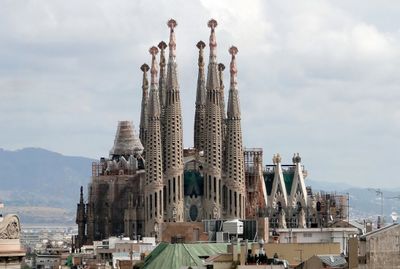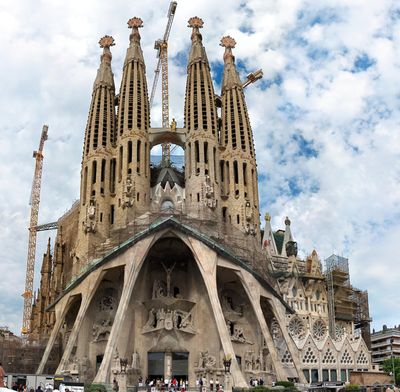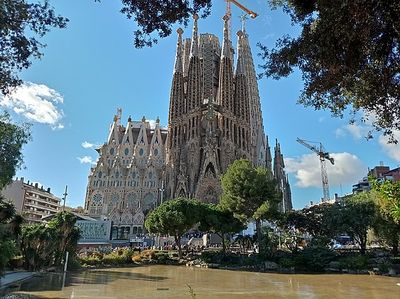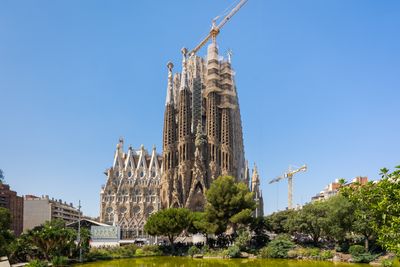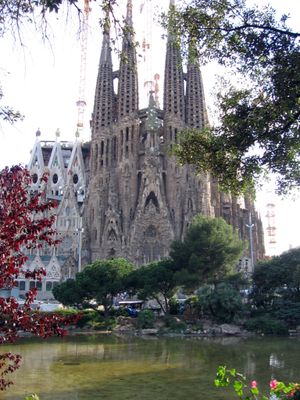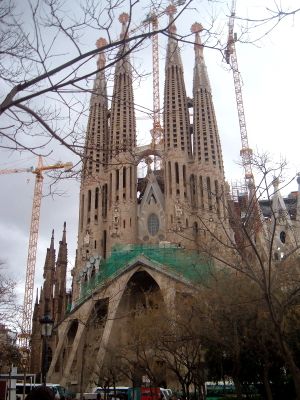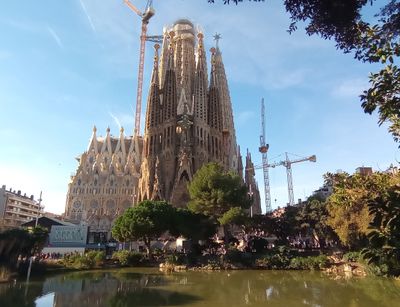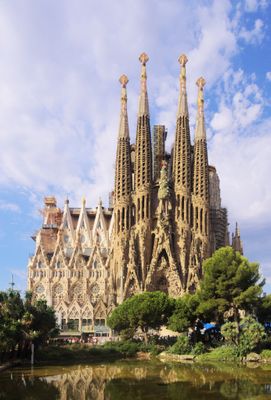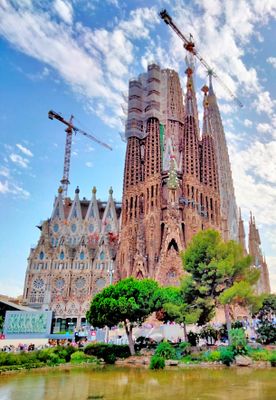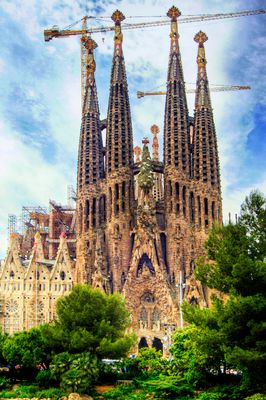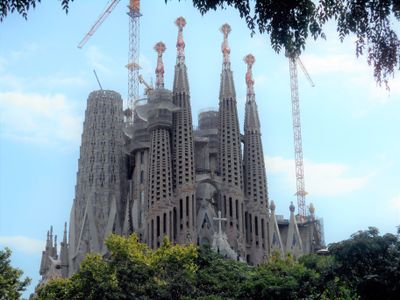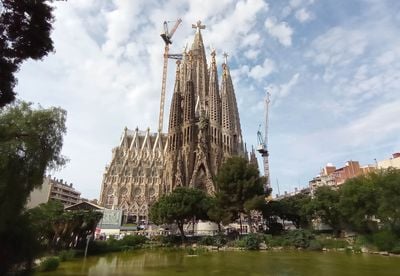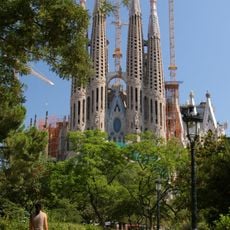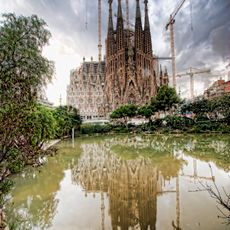
Sagrada Familia, Roman Catholic basilica in Eixample, Barcelona, Spain
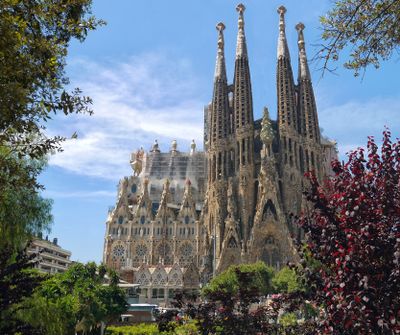
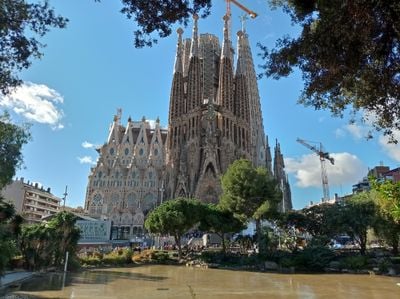
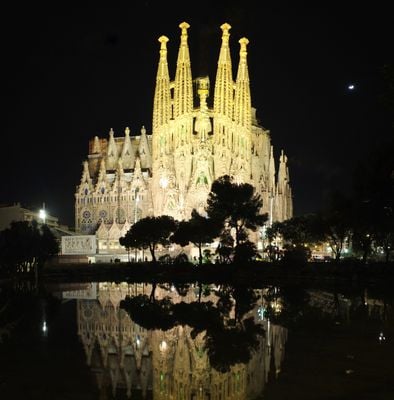
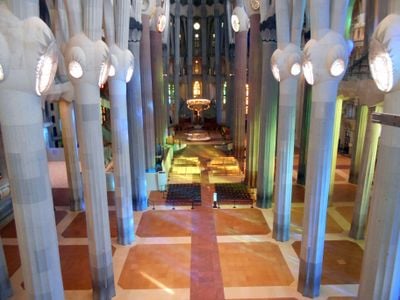
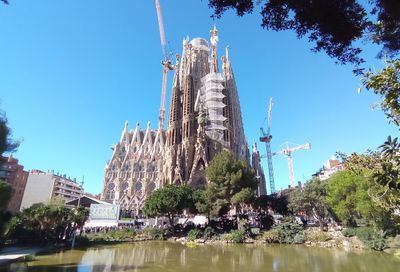
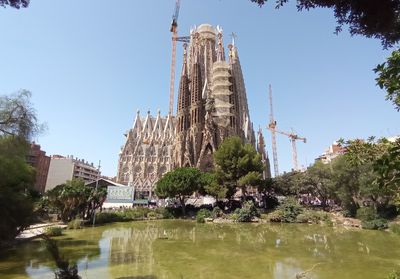
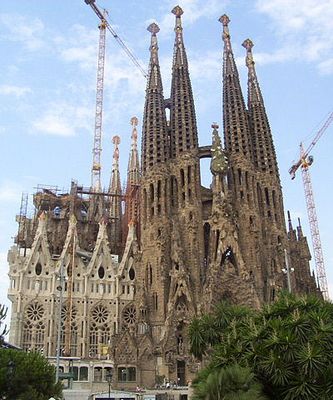
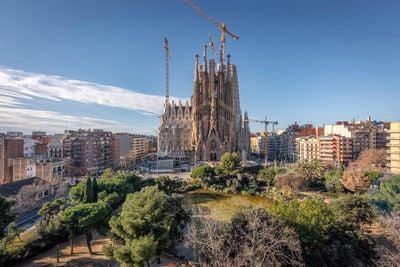
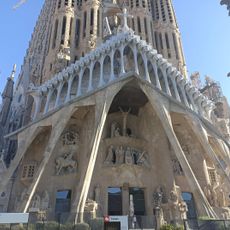
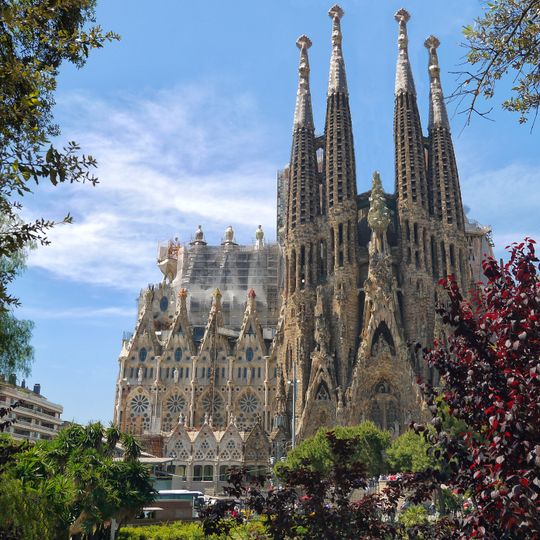
The Sagrada Família is a Catholic basilica under construction in the Eixample neighborhood of Barcelona. Columns shaped like tree trunks rise through the interior, and three main facades display biblical scenes carved into stone.
Construction began in 1882 following a neo-Gothic design, but Antoni Gaudí took over a year later and created an entirely new vision. After his death in 1926, other architects continued the work using his plans and models.
Each morning, local worshipers gather for Mass in the side chapels while thousands of travelers move through the nave. Residents see the building as a living part of their identity and often return to watch the progress.
Work continues with a planned finish in 2026, and guided tours run daily between 9 AM and 8 PM. Buying tickets online ahead of time helps avoid long waits at the entrance.
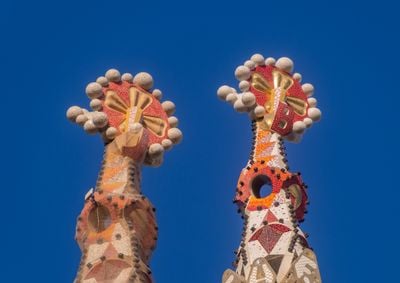
When complete, 18 towers will represent the twelve apostles, four evangelists, the Virgin Mary, and Jesus Christ. The central tower will stand as the tallest church structure in the world, one meter taller than Montjuïc hill.
Location: Sagrada Família
Architects: Antoni Gaudí
Architectural style: Catalan modernism, Gothic Revival, Noucentisme
Elevation above the sea: 46 m
Height: 138 m
Length: 90 m
Width: 60 m
Accessibility: Wheelchair accessible
Made from material: stone, concrete, wood, glass
Address: Mallorca, 401, Marina, 253, Provença, 450 i Sardenya, 314-318
Opening Hours: Monday-Sunday 09:00-20:00
Phone: +34932080414
Website: https://sagradafamilia.org/en/home
GPS coordinates: 41.40369,2.17433
Latest update: December 2, 2025 20:41
20th and 21st-century architecture has transformed city centers with structures that push engineering boundaries. Observation towers like the Seattle Space Needle and experimental residential complexes like Habitat 67 in Montreal demonstrate the evolution of construction techniques. Architects have explored new forms using materials such as steel, glass, and concrete, creating structures that meet the growing demands of metropolitan areas. This collection includes buildings that marked their time with innovative design. In Barcelona, Antoni Gaudí's Casa Milà features a wavy facade that breaks traditional norms, while in London, 30 St Mary Axe incorporates energy-saving technologies into its 180-meter structure. From Bilbao's Guggenheim Museum clad in titanium to artificial islands shaped in the Persian Gulf in Dubai, these projects illustrate the diversity of architectural approaches worldwide. Each building reflects its urban context while offering solutions to technical and functional challenges of its era.
This collection presents significant architectural works from different periods and continents. From medieval cathedrals to contemporary skyscrapers, the selection documents the technical and aesthetic development of building design. The listed buildings were created by influential architects and have shaped the evolution of modern architecture. The list includes religious structures such as Gothic churches and monasteries, public facilities like museums and concert halls, and residential buildings that established new construction standards. Each building demonstrates particular structural solutions or stylistic features that contribute to understanding architectural history. The selection offers insights into various building styles, materials and construction methods.
Architecture does not have to follow straight lines and right angles. This collection presents buildings that stand out through their form: domes, spirals, tilted facades or organic structures that recall animals or plants. From Gaudí's mosaic covered works in Barcelona to the stacked concrete cubes of Habitat 67 in Montreal or the conical trulli of Alberobello, these structures demonstrate alternative approaches to construction. Some emerged from technical necessity, such as the temporary cardboard cathedral in Christchurch after the 2011 earthquake. Others are artistic statements: the Guggenheim Museum in Bilbao with its titanium plates, the Dancing House in Prague or the cubist houses in Rotterdam. In Đà Lạt, the Crazy House transforms tree trunks and caves into habitable spaces, while the Atomium in Brussels represents a magnified iron crystal. These structures attract visitors but also raise questions about function and livability. The Longaberger Basket Building in Ohio takes the form of a seven story basket. The Lotus Temple in New Delhi uses concrete shells to form 27 petals. The Aldar headquarters in Abu Dhabi resembles a circular coin. These buildings expand the definition of what architecture can be.
This collection presents neogothic architecture from the 19th and early 20th centuries, when architects across Europe, the Americas, Asia and Oceania revived medieval building forms. The movement began in Britain and spread worldwide, employing pointed arches, flying buttresses, ribbed vaults and stone spires. This architectural language was used for churches, universities, government buildings and railway stations. The collection includes religious structures like Cologne Cathedral and Notre-Dame Basilica in Montreal, government buildings such as the Parliament Complex in Ottawa and the Palace of Westminster in London, educational institutions like the University of Glasgow Main Building, and transport hubs including St. Pancras Station in London and Victoria Terminus in Mumbai. These structures demonstrate how architects adapted medieval techniques to modern building materials and functions.
European religious architecture spans over a thousand years, from the Middle Ages to the present day. This collection includes monasteries and buildings constructed in a variety of styles, from Romanesque to Gothic, Baroque to Rococo, and innovative modern designs still under development. Some are situated in notable locations: Mont-Saint-Michel rises on its rocky islet surrounded by tides, Meteora monasteries overlook the Thessalian plain from their sandstone pinnacles, while Kylemore Abbey reflects in the waters of Connemara. Many of these sites retain their original religious purpose. Monks still inhabit Sainte-Catherine in Sinai, Rila in Bulgaria, and Kylemore in Ireland. Others, like San Galgano in Tuscany, have lost their roofs and inhabitants but still bear witness to the scale of medieval constructions. Visitors can explore Wiblingen's baroque libraries, walk through the underground tunnels of Petchersk Lavra, or admire the royal tombs at Alcobaça Monastery. Each structure tells a part of the continent's religious and architectural history.
Barcelona offers a wide range of architectural and cultural sites that reflect centuries of Catalan history. The city combines Gothic churches and medieval streets with the organic forms of Antoni Gaudí's modernist buildings. From the Sagrada Família to Parc Güell, his designs shape the cityscape, while the Gothic Quarter and palaces such as Palau Güell represent earlier periods. Museums including the Picasso Museum and Joan Miró Foundation illustrate the city's artistic legacy. Markets like La Boqueria and Sant Antoni provide insight into Catalan daily life. The waterfront district of La Barceloneta, the Olympic Port, and Montjuïc with its cable car and fountain broaden the range. Other destinations include Casa Batlló, Casa Milà, the Hospital de Sant Pau, the National Art Museum of Catalonia, and the Aquarium.
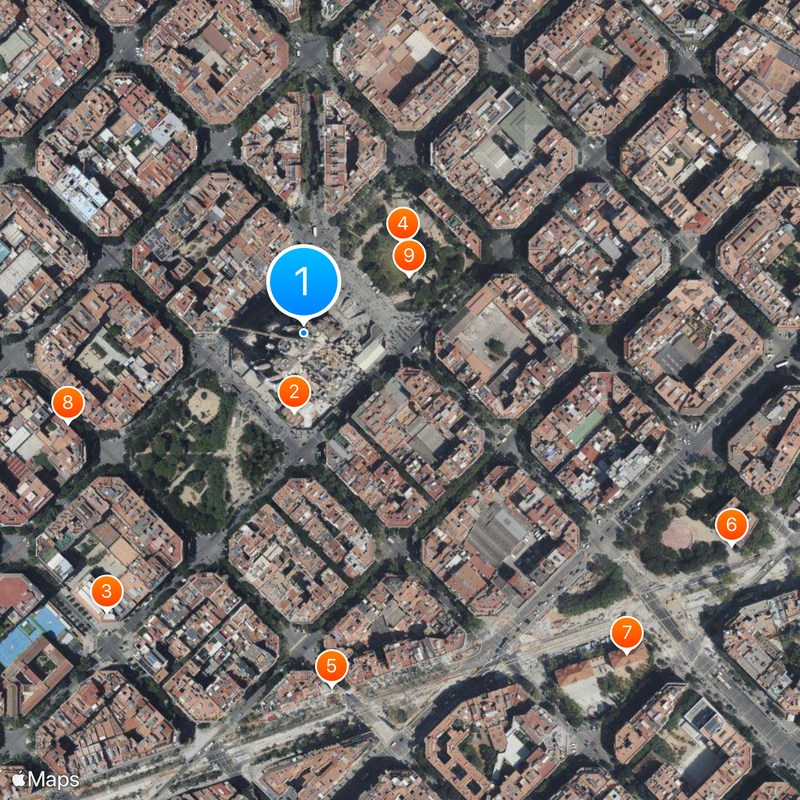
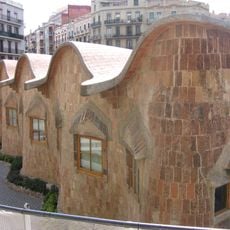
Sagrada Família schools
77 m
Myrurgia
337 m
Casa Macaya
578 m
Plaça de Gaudí
131 m
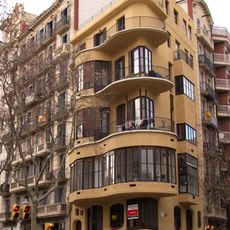
Casa Planells
347 m
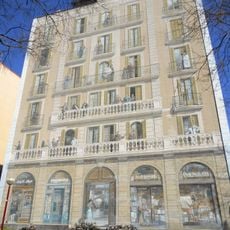
Balcons de Barcelona
468 m
Grup Escolar Ramon Llull
445 m
La Sedeta
567 m
Casa Dolors Alesan de Gibert
580 m
Escola Marillac
248 m
Casa Elisa Conty
490 m
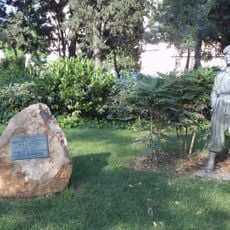
A Nicolau Maria Rubió i Tudurí
117 m
Cases Vallés
182 m
Casa Ramon Mestre Domingo
337 m
Biblioteca Sagrada Família-Josep M. Ainaud de Lasarte
276 m
Indústria 123
525 m
Casa Ginestà
500 m
Casa Vallés
600 m
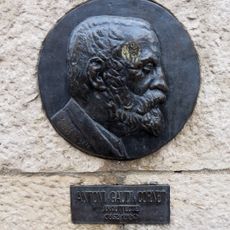
Medalló Antoni Gaudí
132 m
Biblioteca de l'Escola Superior de Música de Catalunya
564 m
Els periòdics de Jaume Castell
588 m
Miliu
113 m
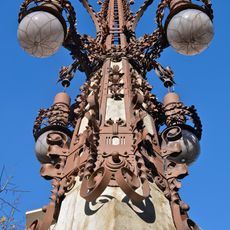
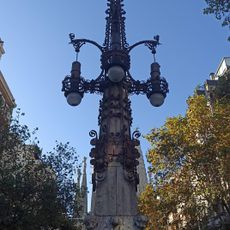
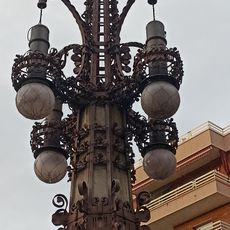
Fanals de l'avinguda Gaudí
113 m
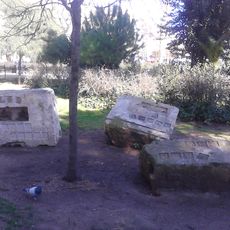
Als donants d'òrgans i teixits
180 m
Font rèplica del model Wallace
501 m
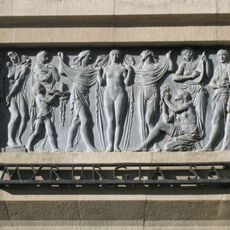
Collita, Venus i La caça
336 m
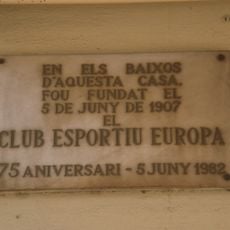
Club Esportiu Europa
247 m
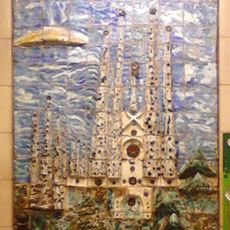
Metro L5 Estació Sagrada Família, Vuit murals ceràmics
103 mDiscover hidden gems everywhere you go!
From secret cafés to breathtaking viewpoints, skip the crowded tourist spots and find places that match your style. Our app makes it easy with voice search, smart filtering, route optimization, and insider tips from travelers worldwide. Download now for the complete mobile experience.
A unique approach to discovering new places❞
— Le Figaro
All the places worth exploring❞
— France Info
A tailor-made excursion in just a few clicks❞
— 20 Minutes