From ancient ruins to medieval castles, Europe provides a series of structures that show how people lived and organized themselves over the centuries.
Europe brings together signs of the past that tell thousands of years of human history. From Greek temples on the Acropolis in Athens to Roman arenas at the Colosseum, from the stone structures of Stonehenge to Renaissance palaces, each era has left buildings that still speak today. These sites help understand how Europeans lived, what they built, and how their societies changed.
This collection gathers places covering all the history of the continent. You can find ancient remains like Pompeii or the Pont du Gard, medieval neighborhoods such as Alfama in Lisbon, religious sites like the Sagrada Familia in Barcelona, and memory spots like the American Cemetery in Normandy. Each place provides a direct link to history, whether you are interested in Roman architecture, curious about life in the Middle Ages, or want to learn about events of the 20th century.
From ancient ruins to medieval castles, Europe provides a series of structures that show how people lived and organized themselves over the centuries.
Europe brings together signs of the past that tell thousands of years of human history. From Greek temples on the Acropolis in Athens to Roman arenas at the Colosseum, from the stone structures of Stonehenge to Renaissance palaces, each era has left buildings that still speak today. These sites help understand how Europeans lived, what they built, and how their societies changed.
This collection gathers places covering all the history of the continent. You can find ancient remains like Pompeii or the Pont du Gard, medieval neighborhoods such as Alfama in Lisbon, religious sites like the Sagrada Familia in Barcelona, and memory spots like the American Cemetery in Normandy. Each place provides a direct link to history, whether you are interested in Roman architecture, curious about life in the Middle Ages, or want to learn about events of the 20th century.
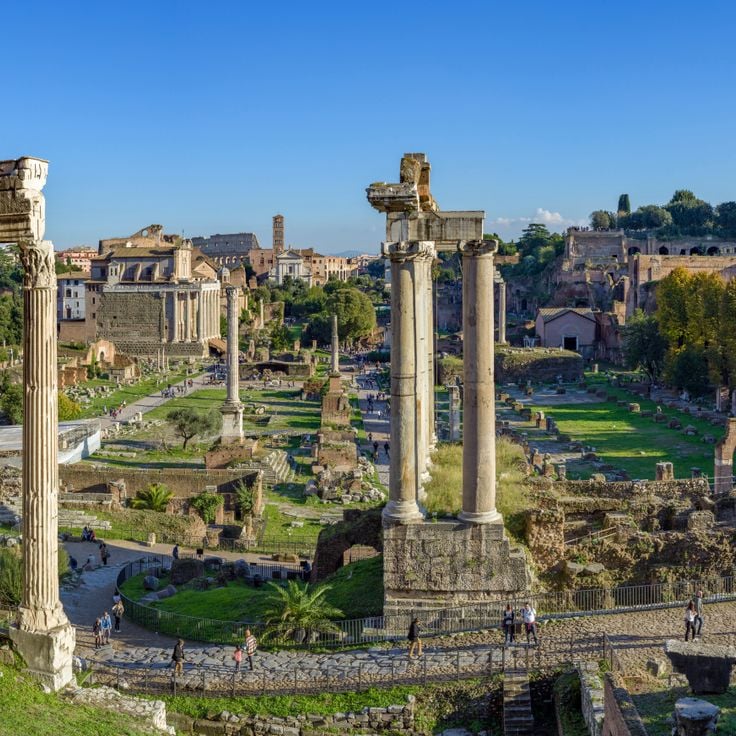
The Roman Forum was the heart of political and commercial life in ancient Rome. Here stood important temples, basilicas, and triumphal arches built over many centuries of Roman rule. Today visitors can walk among the ruins and see what remains of these structures that shaped how the Romans built their city. The Forum allows you to understand the power and importance of Rome in ancient times.
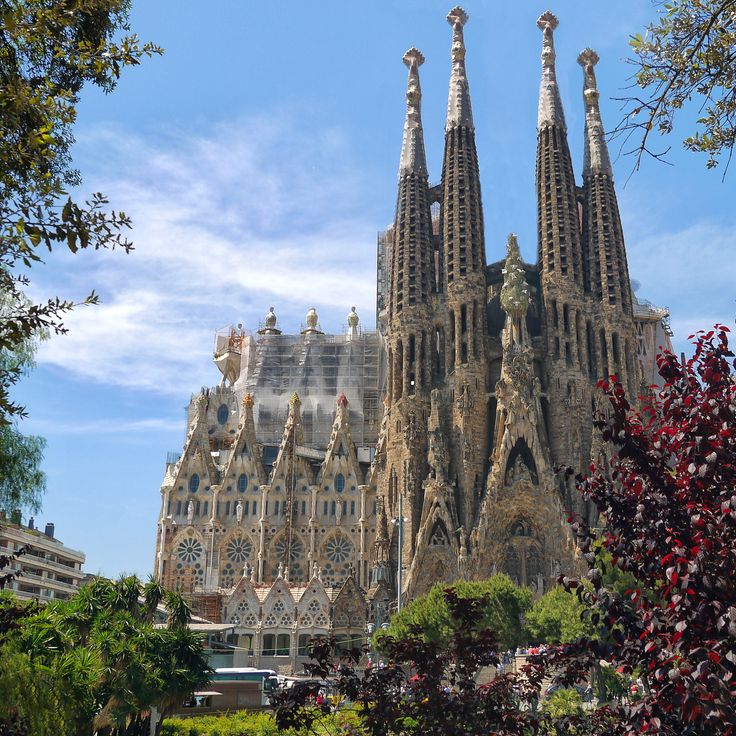
The Sagrada Familia is a basilica in Barcelona designed by Antoni Gaudi starting in 1882. The building blends Gothic and Art Nouveau styles in ways that feel fresh and personal. Its facades display detailed stonework and symbolic imagery. Inside, slender columns guide your eyes upward to vaulted ceilings that resemble a stone forest. Gaudi led this project until his death in 1926, pouring many of his architectural ideas into it. The basilica continues to be completed today, with craftspeople working from his original plans. It shows how architecture and skilled craftsmanship can come together.
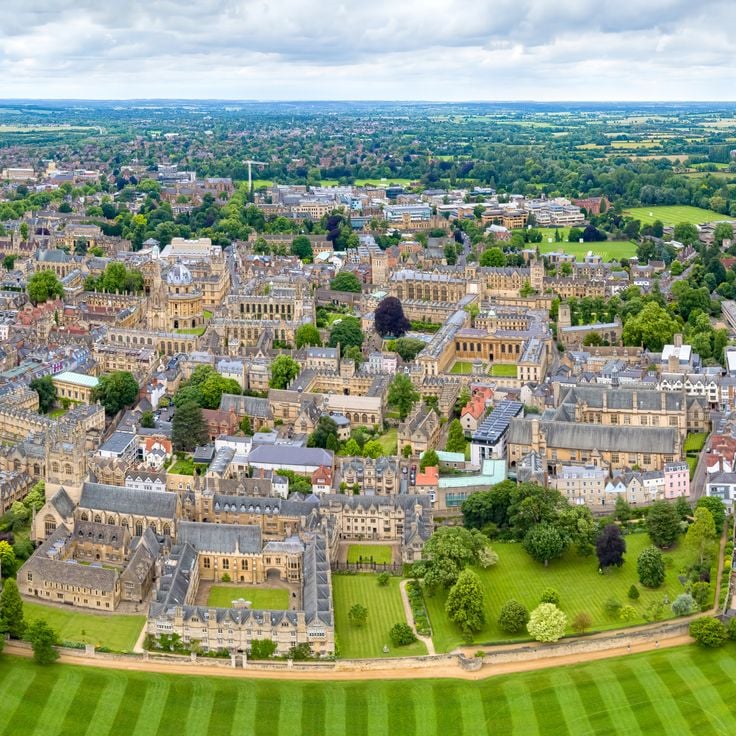
University of Oxford is one of the world's oldest universities and has shaped intellectual life in England for centuries. With 39 colleges scattered throughout the city, it presents a mix of different architectural styles, from Gothic structures to modern buildings. The university shows how education and architecture have developed over hundreds of years. Its colleges function like small communities with their own dining halls, gardens, and libraries, where students and scholars live and work together. The narrow streets and courtyards tell of a long academic tradition that goes back to the Middle Ages.
The Acropolis of Athens is an ancient fortification and citadel built in the 5th century before Christ. It contains numerous archaeological remains, including the Parthenon, one of the most significant structures of classical antiquity. The Acropolis shows how the ancient Greeks built their cities and what role religion and power held in their society. Visitors can see here the traces of a civilization that deeply shaped European culture.
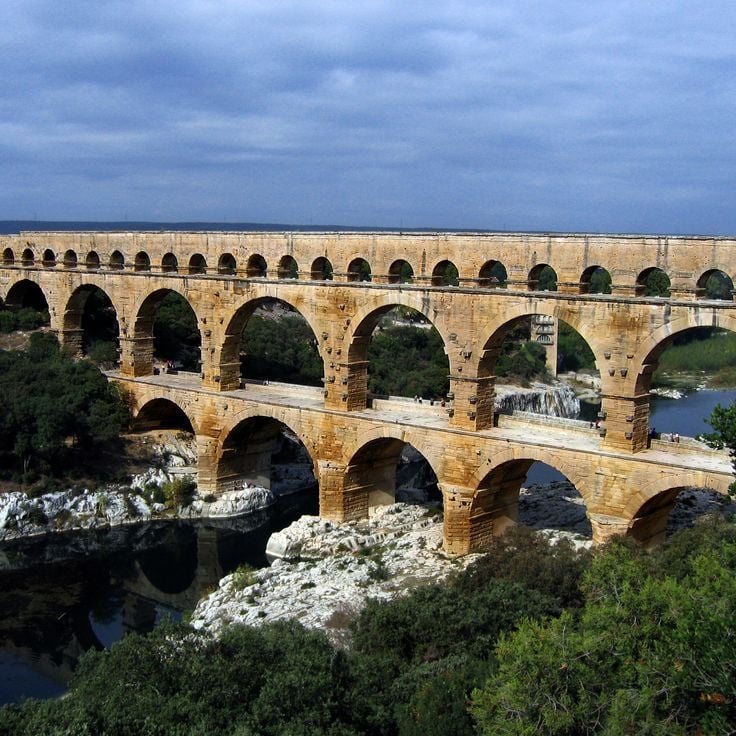
This bridge was once a Roman aqueduct from the 1st century and shows the engineering skill of ancient times. The structure carried water across three levels of arches and was part of a larger system that supplied water to the city of Nimes. Today visitors can walk across the massive stone structure and see the precise craftsmanship up close. The bridge sits in a green gorge and stands as a testament to Roman builders who understood how to move water over long distances.
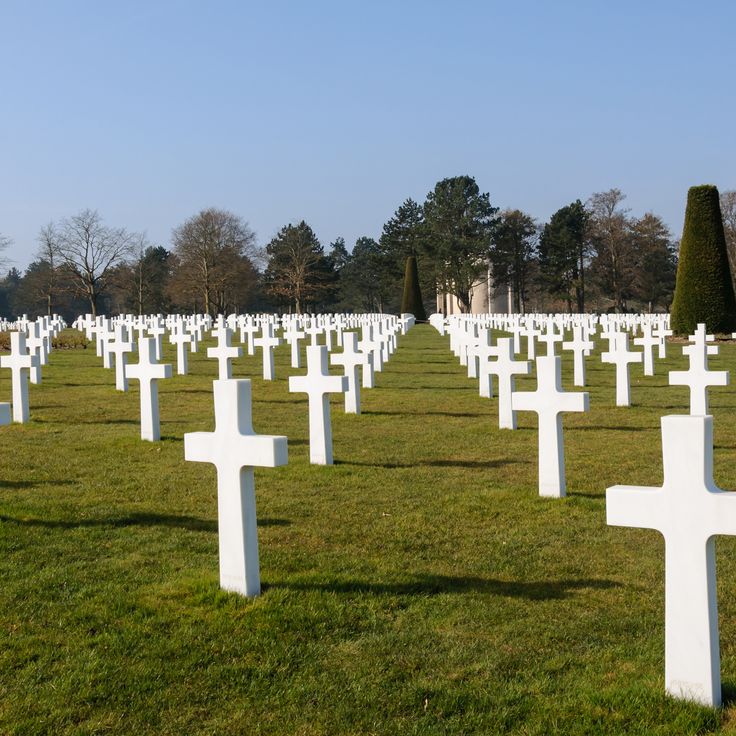
The Normandy American Cemetery holds the graves of about 10 000 American soldiers who died during World War II. This burial ground in Colleville-sur-Mer is part of a larger collection of historical sites across Europe that connect visitors to the past. Standing here, you can reflect on the sacrifice made during one of the defining events of the 20th century and understand how this conflict shaped European history.
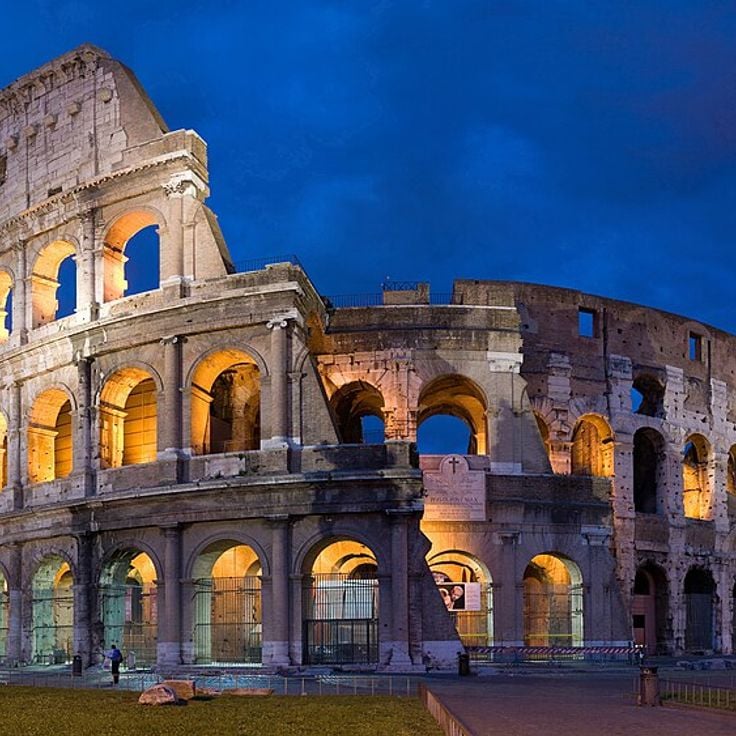
The Colosseum is a large Roman stadium from the first century that could hold up to 80,000 spectators. It was built to host gladiator fights and other public shows. The structure shows the skill of Roman building with its arches, columns, and multiple levels. Today, visitors can walk through the ruins and imagine how this stadium worked nearly 2000 years ago.
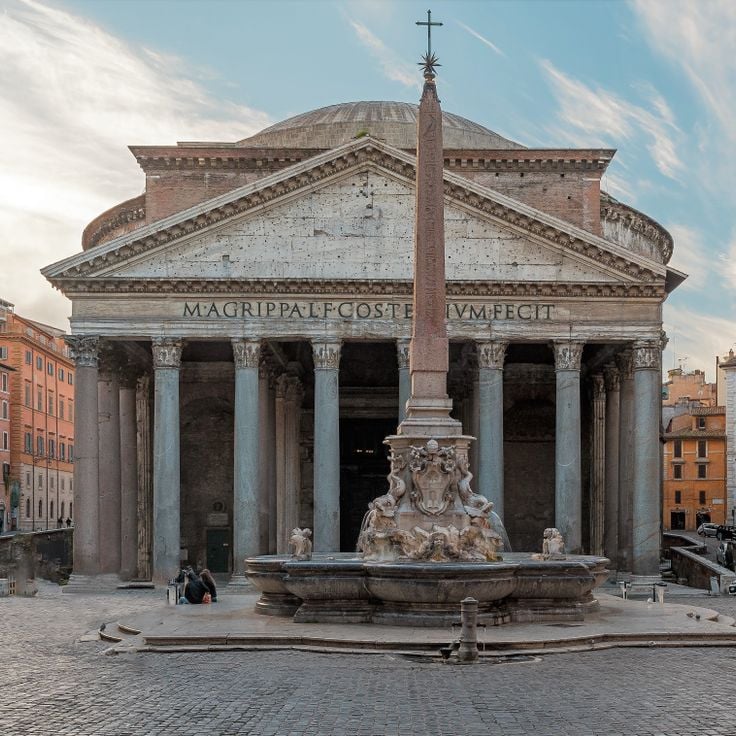
The Pantheon is a Roman building in Rome, constructed over 2000 years ago. It stands out for its massive concrete dome, built without steel reinforcement. With a diameter of 43 meters, it is the largest of its kind in the world. The interior feels open and bright thanks to a large opening at the top of the dome. Visitors experience here how Romans already possessed advanced construction techniques and created spaces that have lasted for centuries.
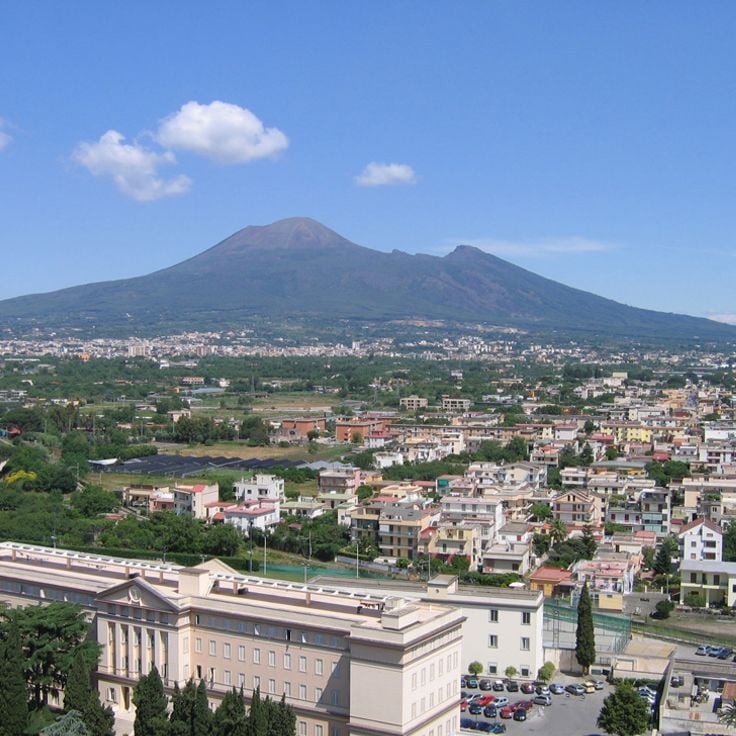
Pompeii was a Roman city buried under the ash of Mount Vesuvius in the year 79 after Christ. The city was rediscovered in 1748 and shows Roman life exactly as it was before the volcano erupted. You can walk through the streets and see houses, shops, and public spaces. The bodies of people who died there were preserved by the ash and show what happened in that moment. Pompeii helps us understand how Romans lived, what they ate, how they worked, and what mattered to them.
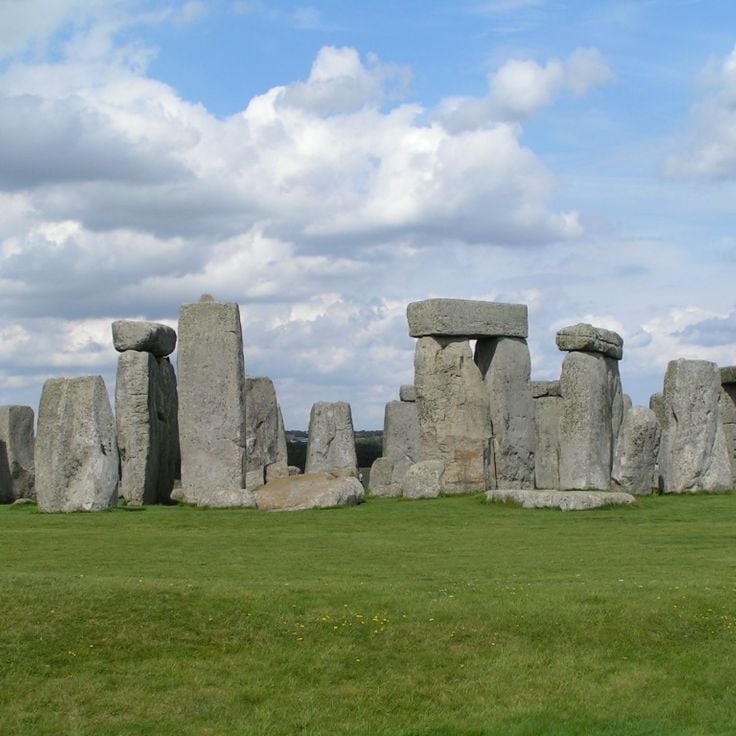
Stonehenge stands on Salisbury Plain as a circle of stones raised about 4500 years ago. The stones measure about 13 feet (4 meters) high and form a pattern that raises questions: Who built this structure? For what purpose? Scientists believe it may have been a sanctuary or a calendar. This monument shows how ancient peoples in Europe could already plan and carry out large construction projects.
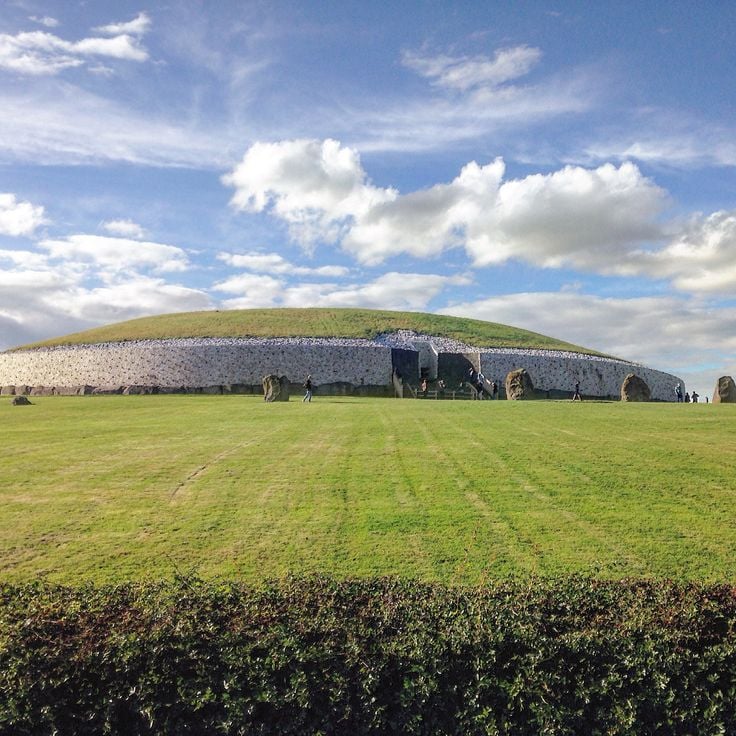
Newgrange is a large ancient burial mound from the early period of farming, older than the Egyptian pyramids. This site was built about 5200 years ago and shows how the first people in Ireland lived and how they honored their dead. A special feature of Newgrange is its direction: at sunrise on the winter solstice, the light shines straight into the inner chamber. This shows that the builders watched the sun carefully and used this knowledge in the stone.
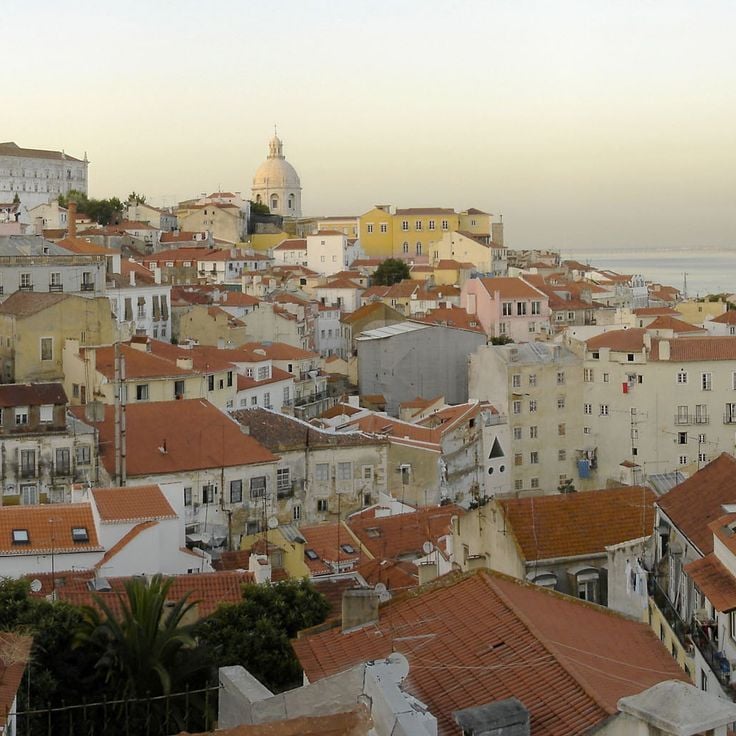
Alfama is Lisbon's oldest neighborhood, dating back to the 8th century. Its narrow, winding streets form a maze shaped by Moorish and medieval influences. Walking through these passages, you see yellow tiles on the building facades, laundry hanging between houses, and unexpected staircases leading up or down. The architecture shows how people lived here across centuries, with low doorways, tight passages, and tightly packed buildings. This quarter tells Lisbon's story from the Middle Ages to today.
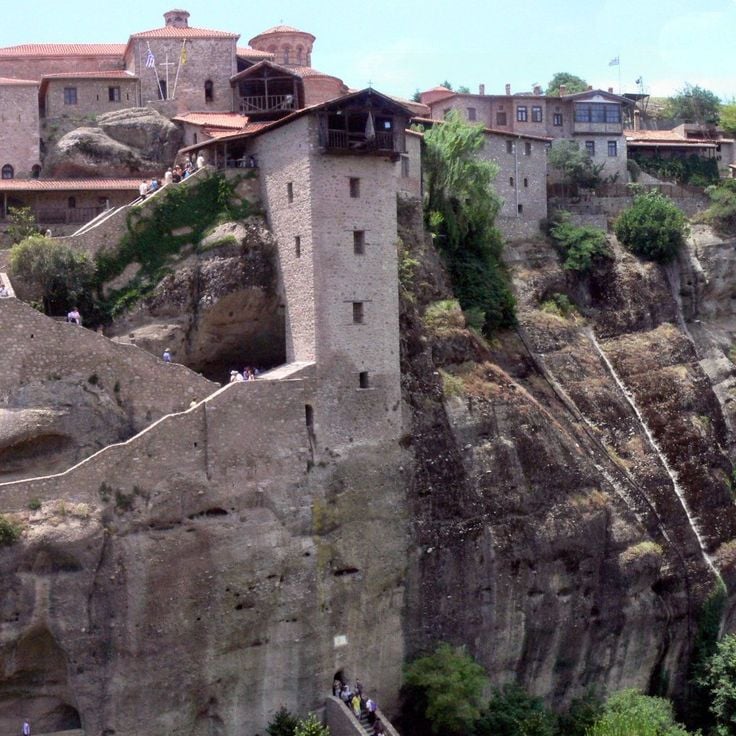
Meteora is a collection of Eastern Orthodox monasteries built on top of towering rock formations near Kalambaka. Monks established these communities starting in the 14th century, seeking solitude and spiritual life at great heights. The monasteries are carved into and built upon the stone peaks, creating structures that seem to grow from the rocks themselves. Visitors encounter a place where monks still live and worship, maintaining traditions that have continued for centuries.
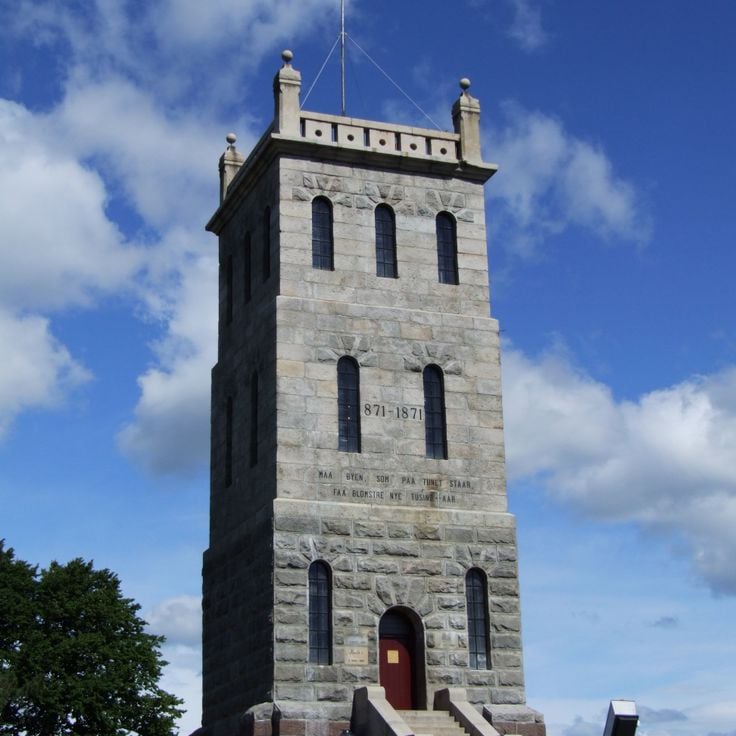
Tønsberg Fortress is one of Norway's oldest fortified structures, dating to the 13th century. It once served as a royal residence and military stronghold. This fortress shows how medieval Norwegian power was organized and defended. Walking through its remains, you can see the walls and towers that shaped the country's early history.
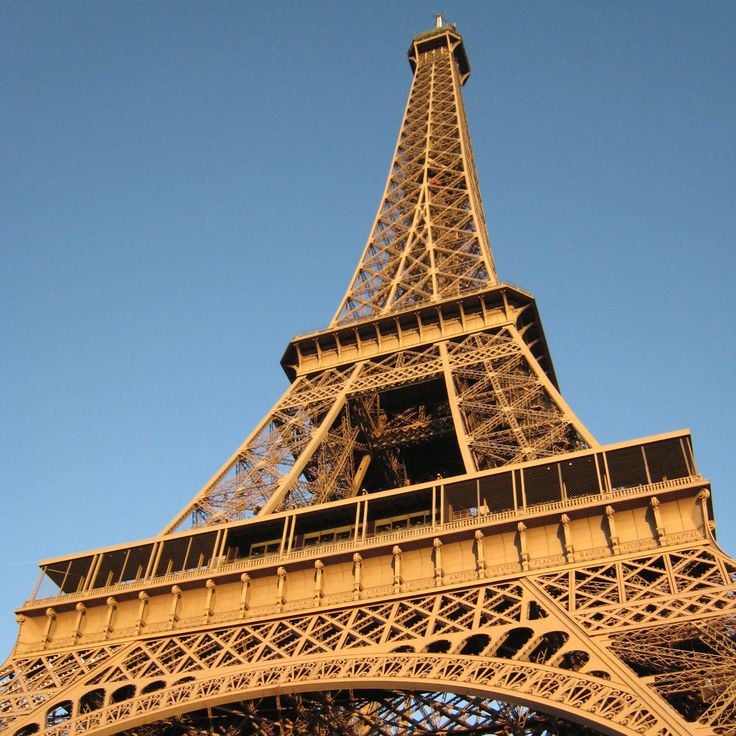
The Eiffel Tower was built by Gustav Eiffel in 1889 and shows the skill of engineers at that time in working with iron in new ways. Many people thought it was ugly when it was first built. Today, the tower is part of how people see Paris. When you go up the stairs or take the elevator, you can see the whole city below. The Eiffel Tower fits in this collection because it shows how the 19th century changed how Europe looked. While other places in this collection show ancient ruins or medieval walls, this tower shows how Europe developed in modern times.
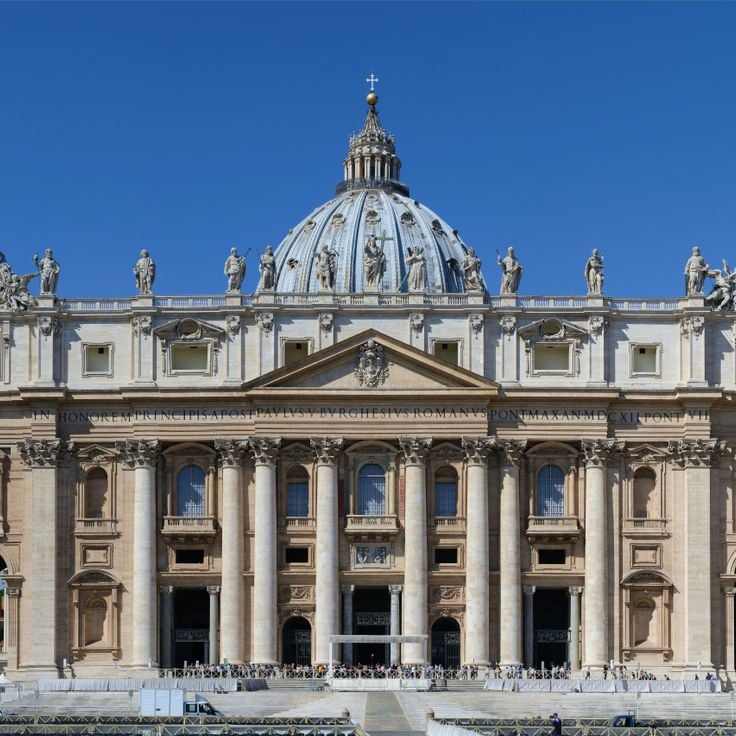
St. Peter's Basilica is one of the world's largest churches and a major work of the Renaissance. Construction began in 1506 and took roughly 120 years to complete. The building shows the craftsmanship and ambition of its era through its architecture, art, and decoration. Visitors can see how artists and workers labored across generations to build this project.
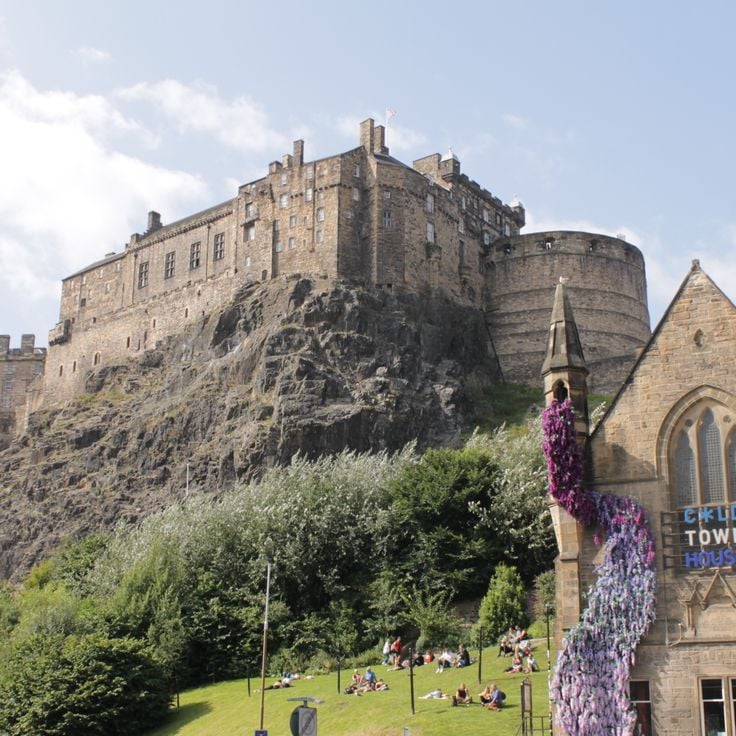
Edinburgh Castle rises from a rocky outcrop in Scotland's capital and has been a center of power since the 12th century. This fortress combines Romanesque and medieval architecture, showing how Scotland developed over time. Inside, rooms tell stories of kings, warfare, and everyday life, while the walls offer views across the city and surrounding hills. Edinburgh Castle is one of the places that helps you understand the history of the British Isles.
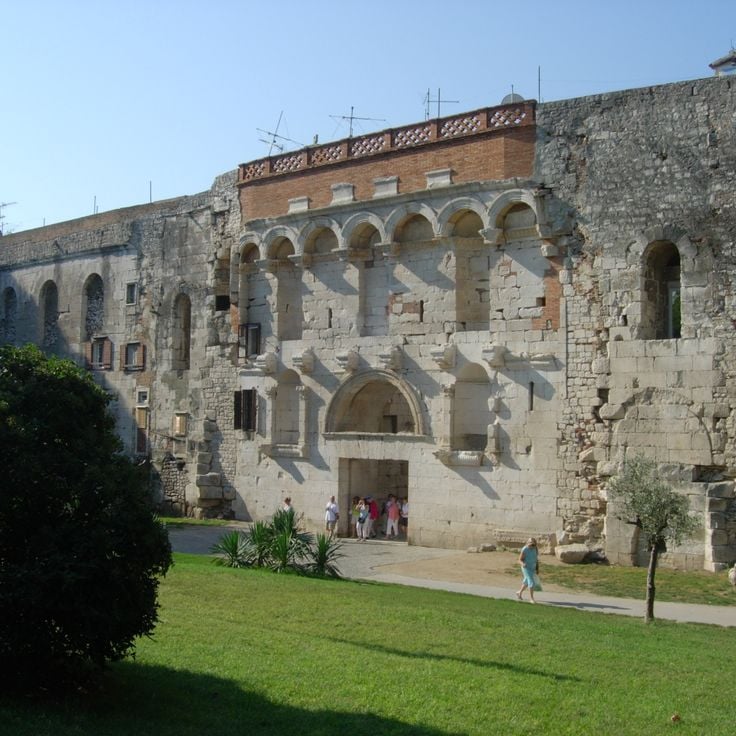
Diocletian's Palace in Split was the residence of a Roman emperor who retired there in 305 CE. The building combines Roman construction with elements from Egypt and the Mediterranean world. Marble from Italy and Greece was used in its making. Columns and Egyptian sphinxes ornament the structure. The palace reveals how Roman rulers lived at the end of their reign and what resources they commanded for their buildings.
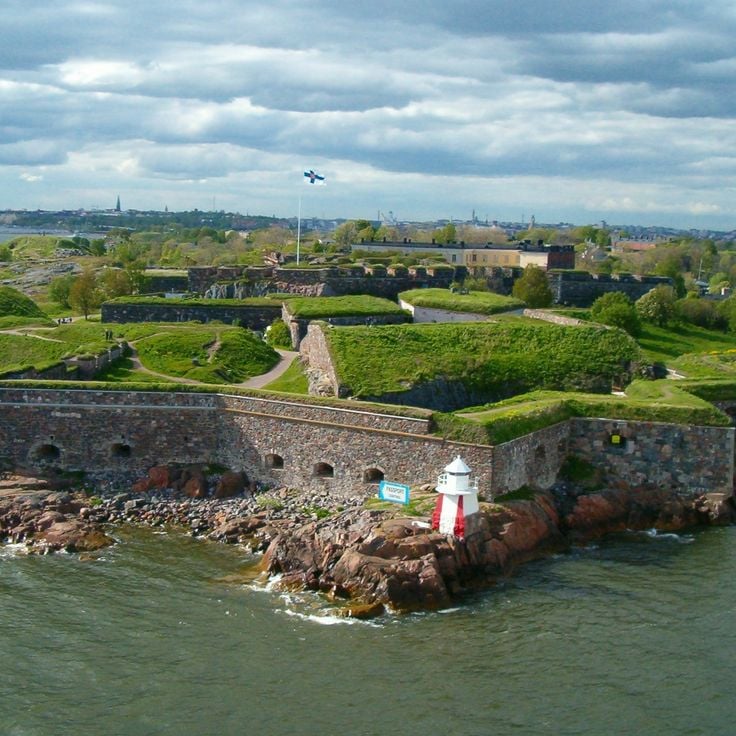
Suomenlinna is a sea fortress built in the 18th century across eight islands to protect Helsinki. The fortifications and barracks show how coastal cities were defended at that time. You can walk through the bastions, see old cannons, and understand the history of coastal defense. This place is recognized as a UNESCO World Heritage site.
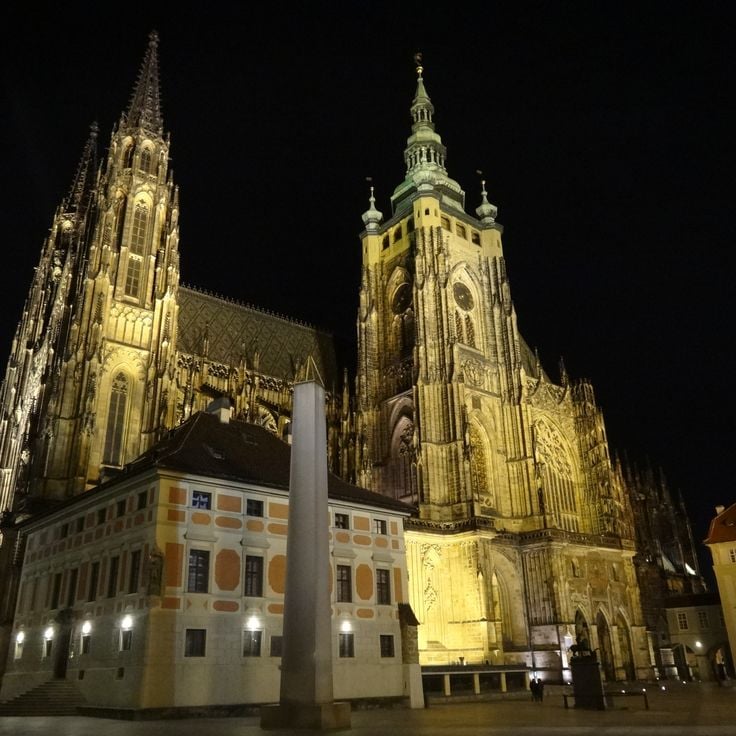
Prague Castle is the largest ancient castle complex in the world and tells the story of Central European power over more than a thousand years. Construction began in the 9th century and the site grew into a center of royal and imperial authority. The complex contains palaces, churches, and gardens that show different building styles from Romanesque to Baroque periods. Visitors walk through rooms where kings and emperors lived and can enter St. Vitus Cathedral, which sits at the heart of the grounds. The castle served as a seat of power for the region's most important rulers for centuries.
Wawel Castle stands on a hilltop in Krakow and served as the main seat of Polish kings for about 9 centuries starting in the 11th century. The castle displays Roman, Gothic, and Baroque styles, with each era leaving its mark on the buildings and decorations. Walking through the rooms, you see where monarchs once made decisions that shaped Poland. The inner courtyard feels calm, surrounded by arched galleries. A chapel inside holds tombs of important Polish figures. Visitors can explore the royal chambers, still furnished with objects and artworks from different periods, and understand how kings lived and ruled from this location.
Neuschwanstein Castle is a 19th-century fortress that King Ludwig II. built in the Bavarian Alps. Its white walls and towers rise above the landscape on a hilltop. The castle blends medieval building traditions with romantic ideals and fairy-tale imagery. Looking at it from outside, you see how much the king was drawn to stories from the Middle Ages. Inside, the rooms display scenes from old legends and tales. The castle attracts many visitors because it shows how people in the 1800s turned their dreams into stone architecture.
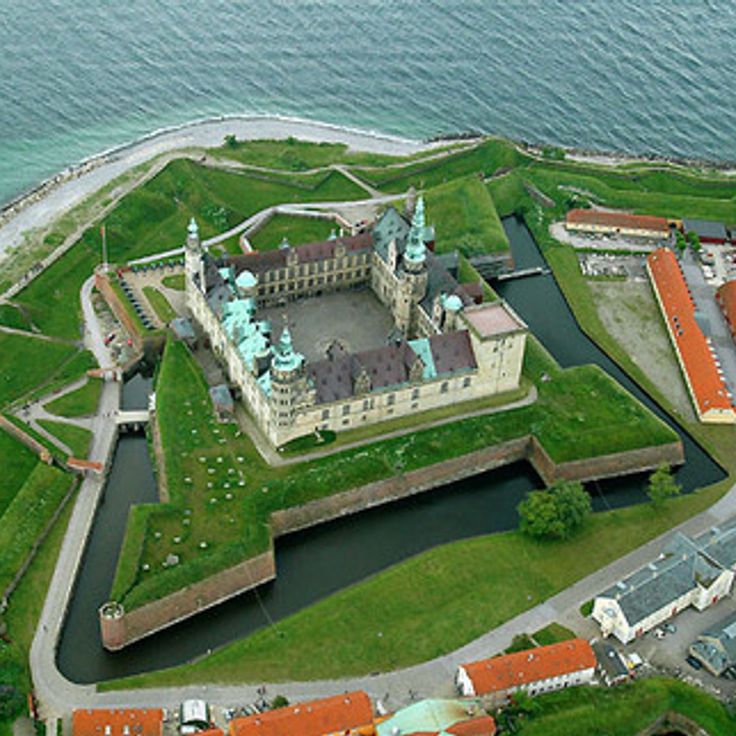
Kronborg Castle in Helsingør, Denmark, began as a fortress around 1420 and evolved into a Renaissance masterpiece. Recognized as a UNESCO World Heritage site, it gained fame through Shakespeare's Hamlet, which draws visitors from around the world. You can walk through its thick stone walls, explore the royal rooms, and stand on the ramparts overlooking the strait between Denmark and Sweden. The castle shows how military structures transformed into elegant royal residences.
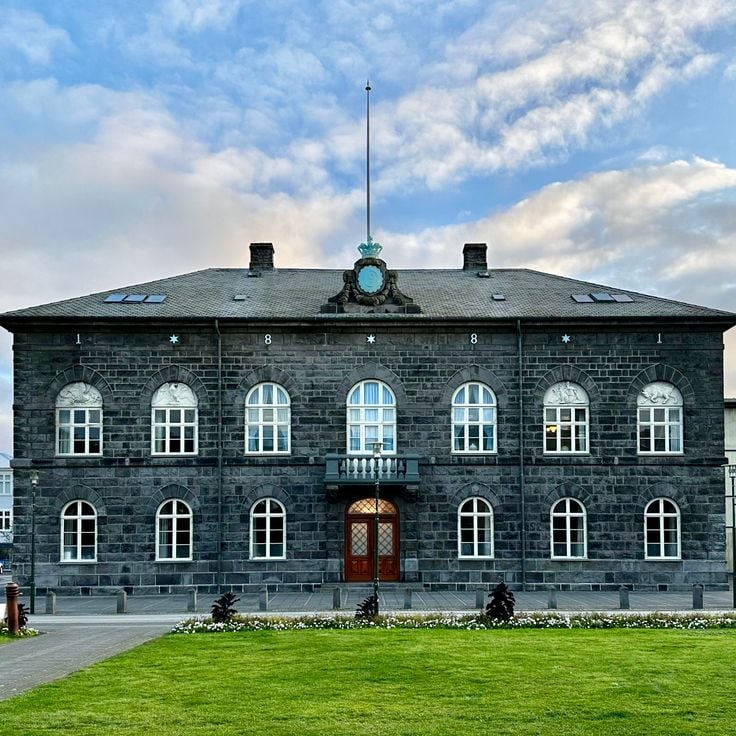
The Althing in Reykjavik is one of the oldest gathering places for lawmakers in the world. Founded in 930, this site served as where Icelandic leaders came together to make decisions and create laws. It shows how early Icelanders developed forms of assembly and shared governance. This place belongs to the European locations that document political life across centuries, from the origins of parliament to modern democracy.
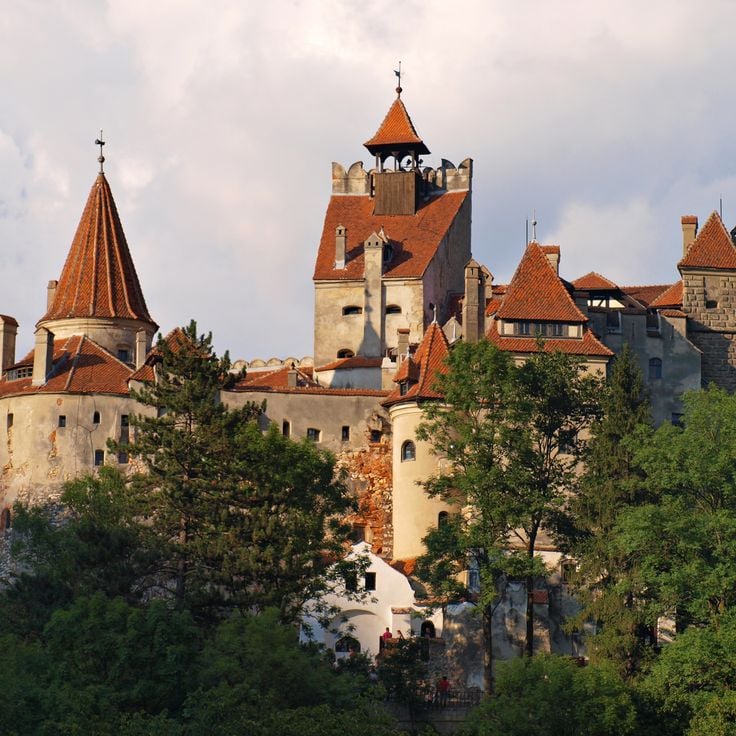
Bran Castle was built by Saxons in 1377 and stands as a national monument of Transylvania. This fortress rises from a hilltop and connects medieval history to the landscape of the region. The castle is known worldwide because of its link to the Dracula legend, but its real story is about trade, defense, and life in Transylvania over centuries. Visitors walk through rooms furnished with objects from different periods and learn how people lived within these walls.
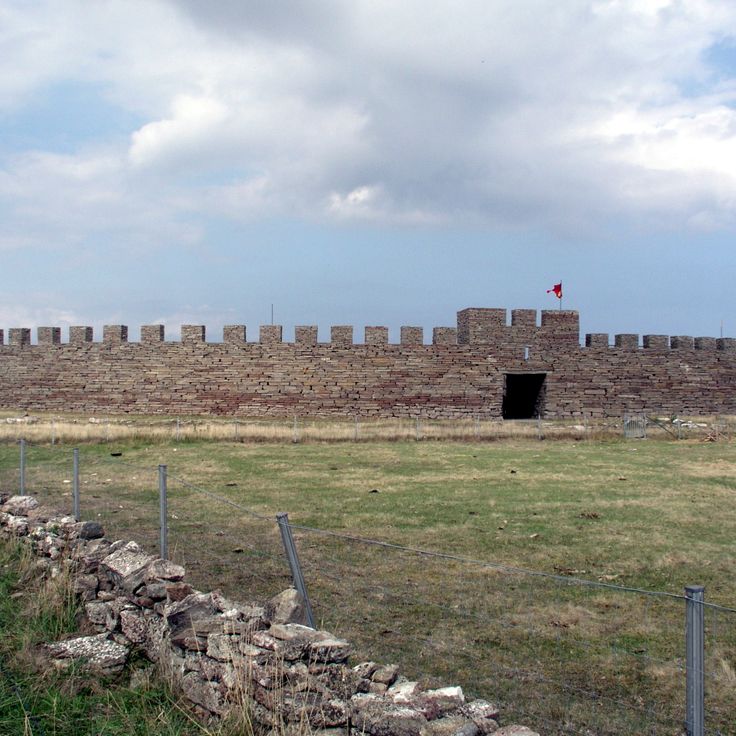
Eketorp is an Iron Age fortification built around 400 AD on the Swedish island of Öland. Archaeologists have uncovered more than 24,000 objects at this site, revealing how people lived during that era. Today it functions as an open-air museum where visitors can explore the remains of the ancient fortification and learn about its role in Swedish history.
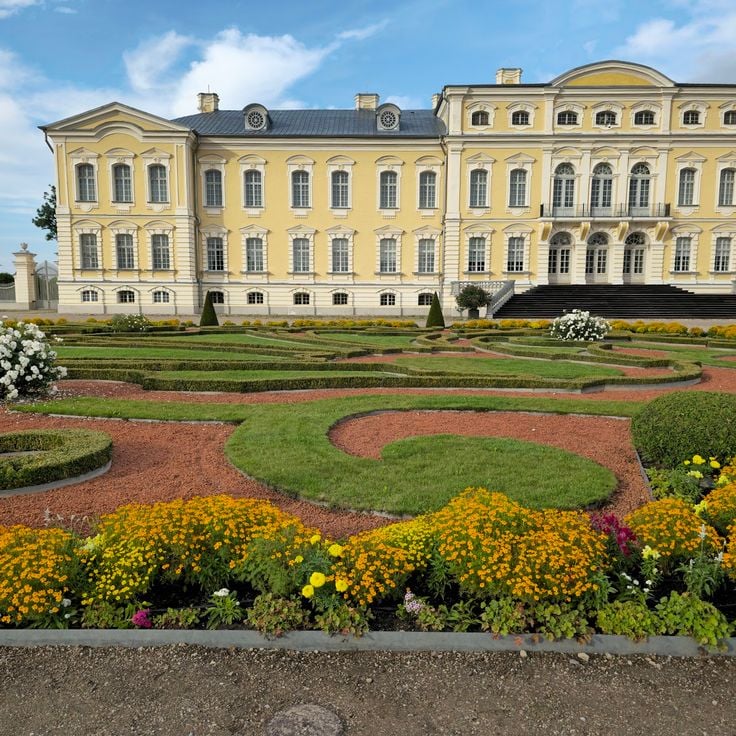
Rundale Palace is a Baroque and Rococo castle built in the 18th century, designed by Francesco Rastrelli. It served as the summer residence of the Duke of Courland and shows the grandeur that European nobility could create in this period. With its halls, gardens, and decoration, this castle tells the story of how the aristocracy lived and what architecture meant to them at that time. It is one of those places in Europe where you can experience history directly through the rooms and their details.
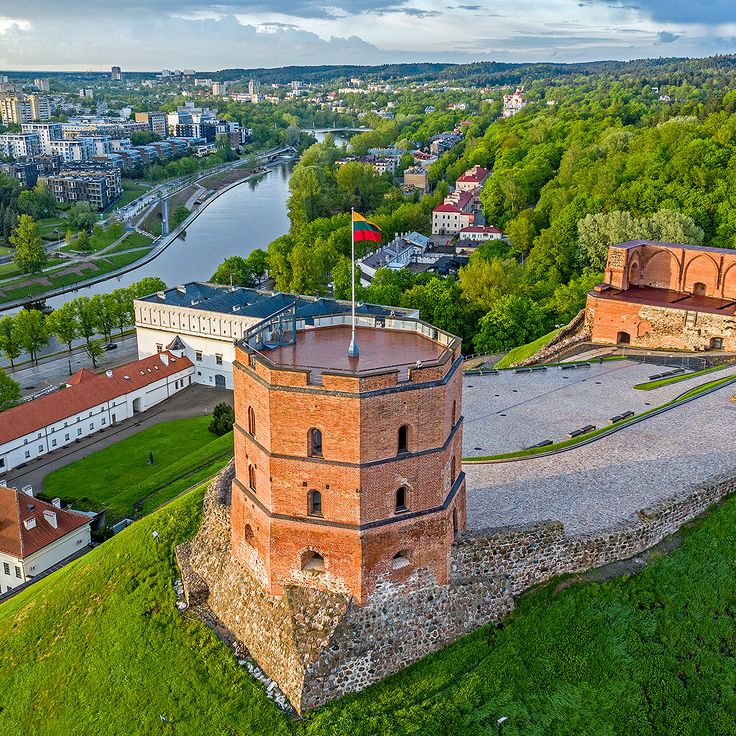
Gediminas Tower is the last remaining part of Vilnius's upper castle from the 13th century. This red brick tower sits on a hill above the city and marks the place where the medieval fortress once stood. The tower became a symbol of Lithuanian independence and tells the story of the country's past. Visitors can climb to the top and see the city spread out below.
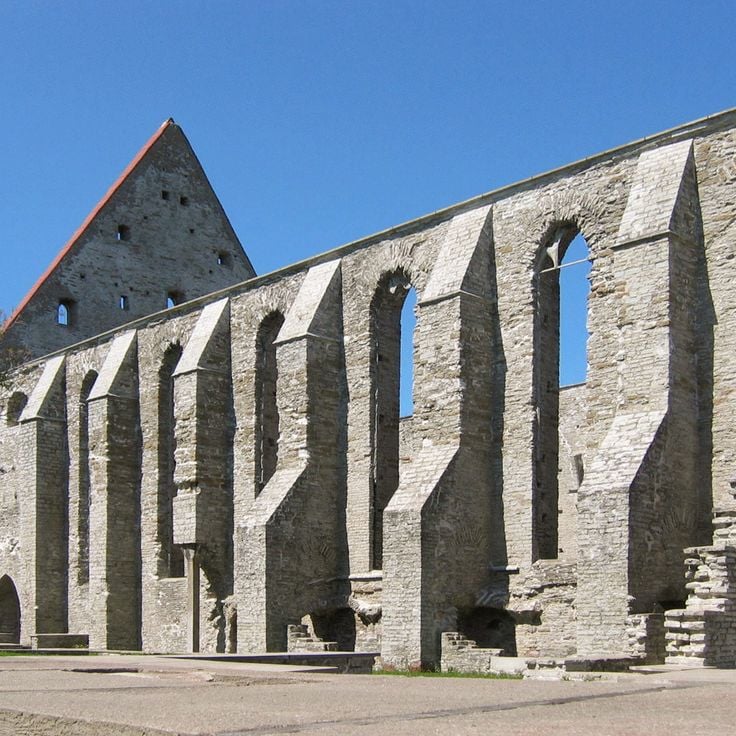
The ruins of this convent in Tallinn were built in 1407 and were once among the most important monastic complexes in Northern Europe. In 1575, the convent was destroyed during a Russian invasion. Today, the remaining stone walls and arches tell the story of a time when this convent served as a religious and cultural center for the region, drawing people from across the surrounding area.
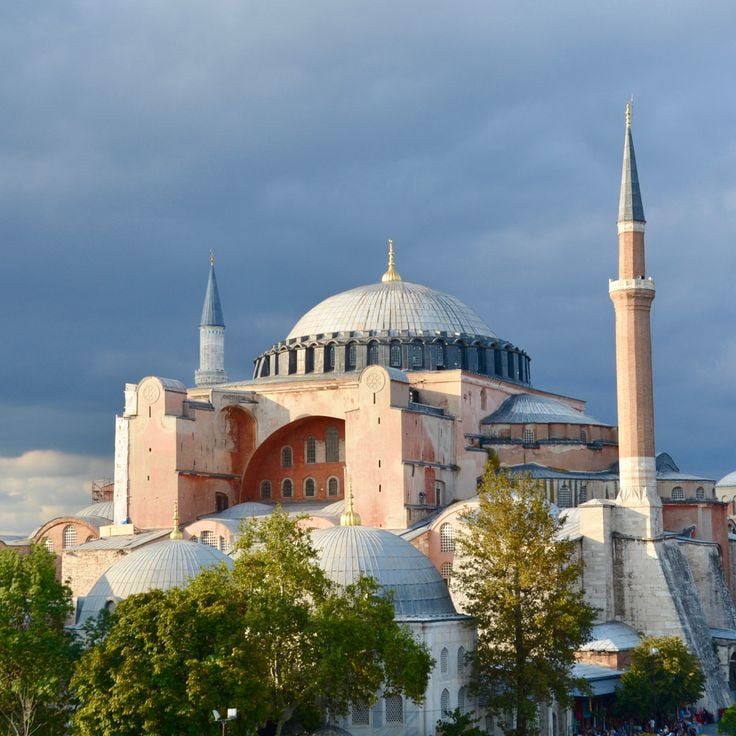
Hagia Sophia was originally a church built in the 6th century in Istanbul and was converted into a mosque in the 15th century. Its massive dome seems to float above the interior space, a defining feature of Byzantine architecture. This structure reveals the complex history of Istanbul and the cultures that have shaped the city. Walking through it, you see layers of different periods in the decorations and inscriptions on its walls.
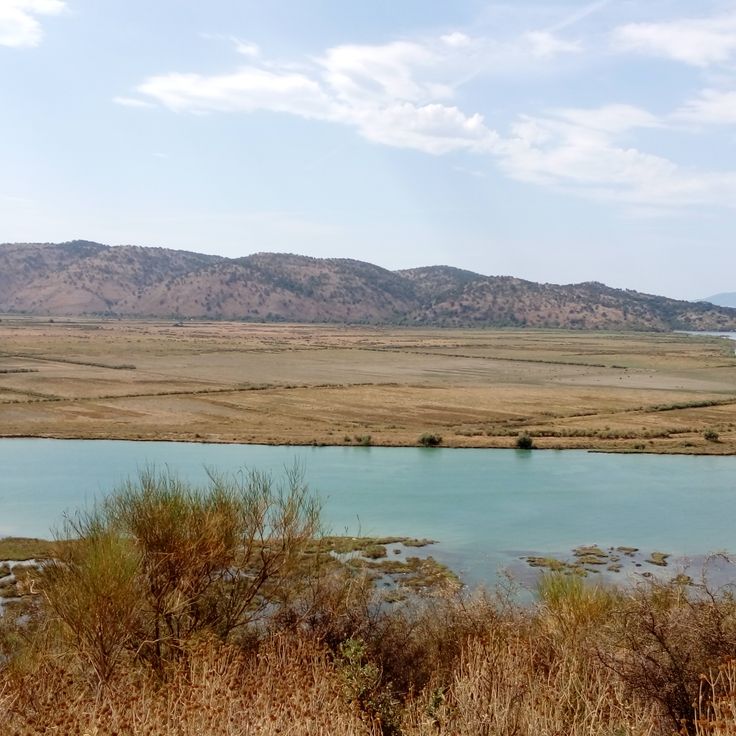
Butrint is an ancient city founded in the 7th century before Christ and mentioned in Homer's Odyssey. At this location, you will find remains from Greek, Roman, Byzantine, and Venetian times. The ruins show how different cultures lived in the same place over centuries and left their own buildings behind. As you walk through, you can literally see the layers of this history.
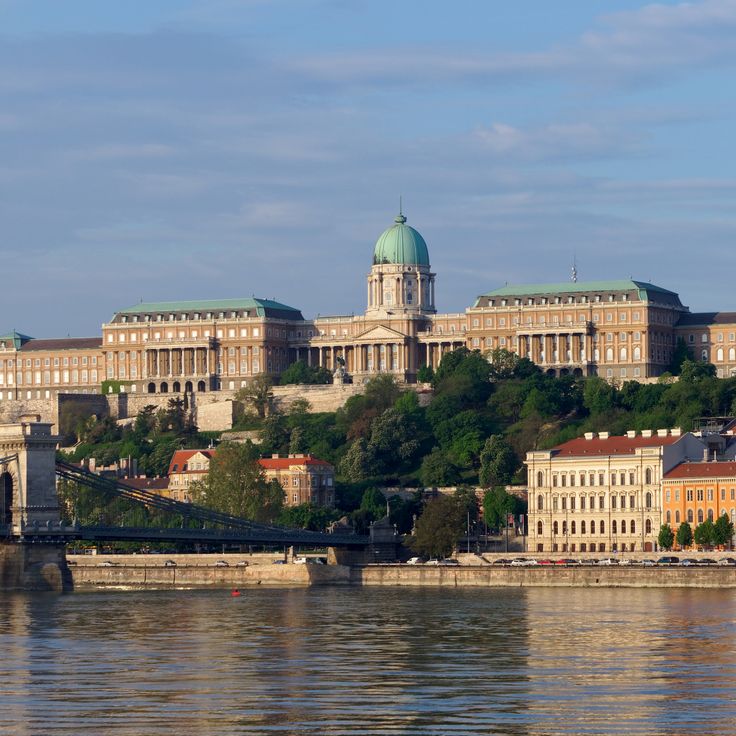
Buda Castle stands on a hill overlooking Budapest with architecture from many different periods. Construction began in the 13th century, but the building was changed and expanded over the centuries. After being destroyed in World War II, the castle was rebuilt. Today visitors can walk through the rooms and see how the royal family lived here. The walls and towers offer views across the city and the Danube River.
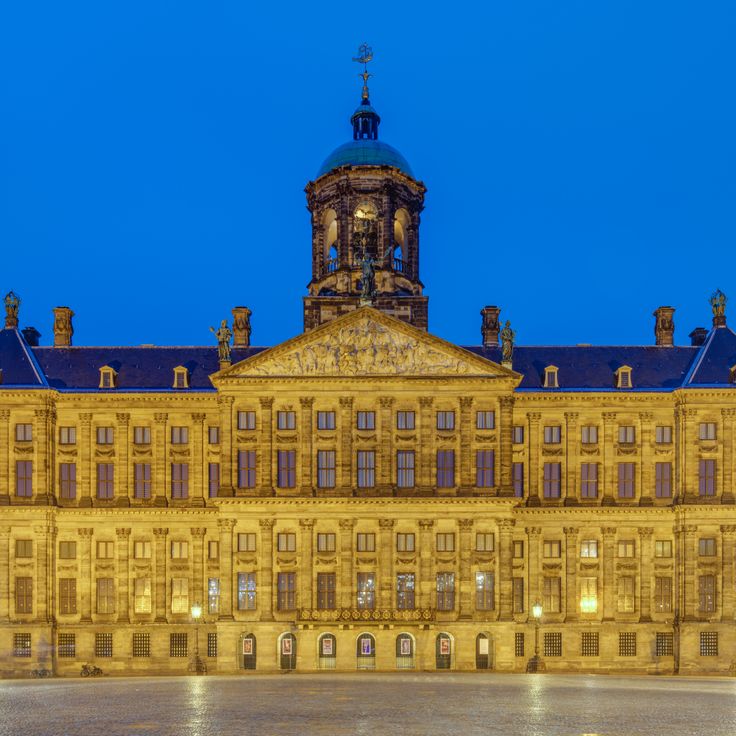
The Royal Palace in Amsterdam was originally built as a city hall in the 17th century and was the largest secular building in Europe at that time. This palace shows how the city of Amsterdam displayed wealth and power during its period of great prosperity. The building's architecture reflects the ambitions of a trading city that shaped the world in those days. Later it was converted from a city hall into a royal residence and continues to serve as a place for state receptions and official occasions.
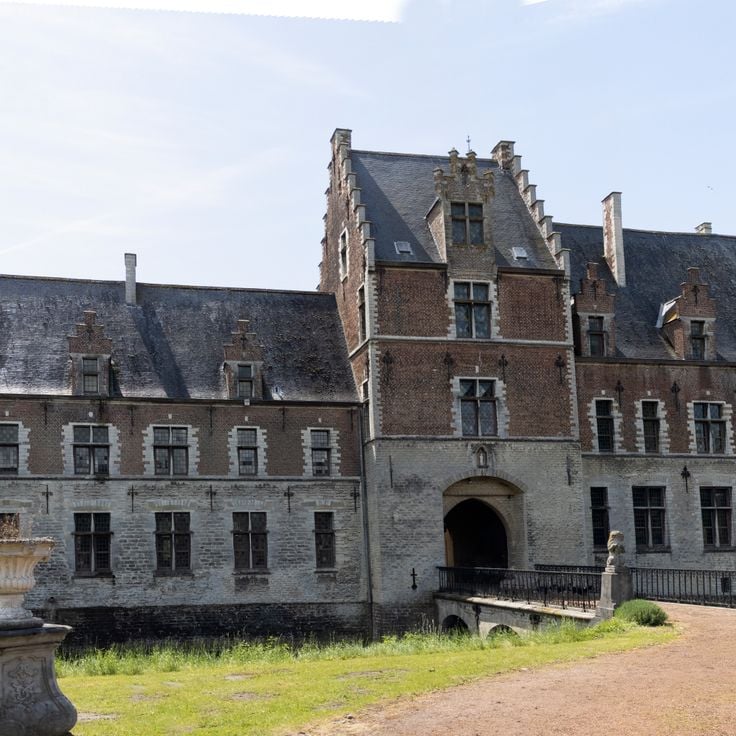
This castle is a medieval fortress built in the 12th century that stands on the banks of the Scheldt River in Antwerp. It was constructed to guard the waterway and protect the city from attacks. Het Steen shows how medieval people defended their settlements and why rivers were vital for trade and security. Today visitors can walk through its thick walls and towers and imagine the soldiers who once kept watch from these ramparts.
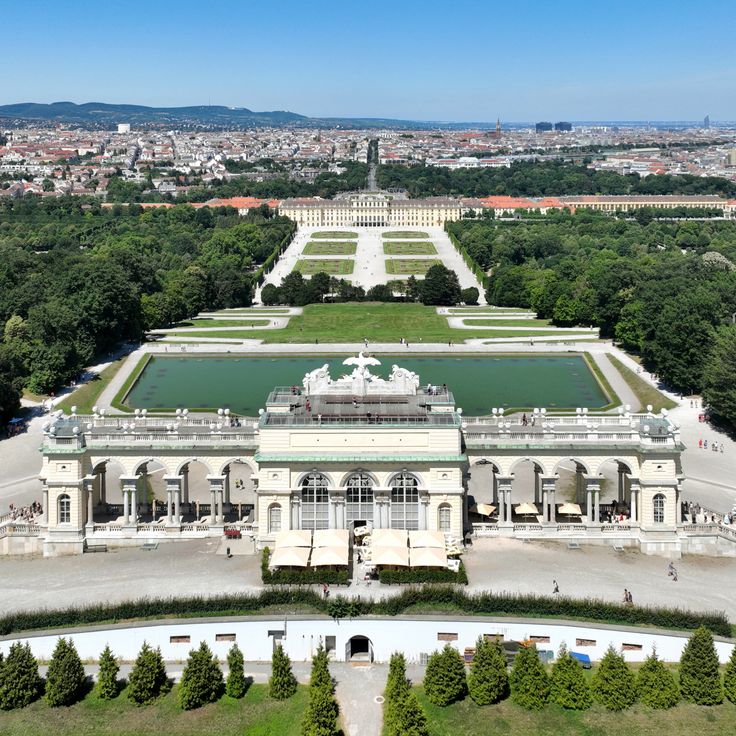
Schönbrunn Palace is an 18th-century residence that served as the summer home of the Habsburg monarchy. With 1441 rooms and vast gardens, this place shows how European aristocracy lived. The gardens contain 32 sculptures and house the world's oldest zoo. Schönbrunn tells the story of a dynasty that shaped Europe.
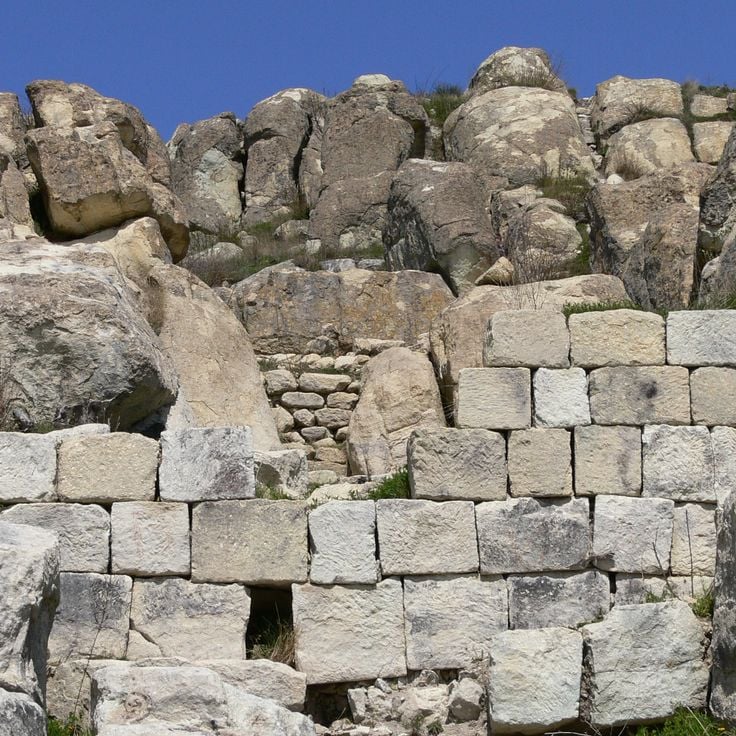
Perperikon is an archaeological site in Kardzhali that holds traces of a settlement dating back 5,000 years. The location served as an important sanctuary dedicated to the god Dionysus. Excavations have uncovered pottery and artifacts from Thracian culture, revealing how people in this region lived and worshipped their gods. The ruins on the hillside offer a window into the ancient world of the eastern Balkans.
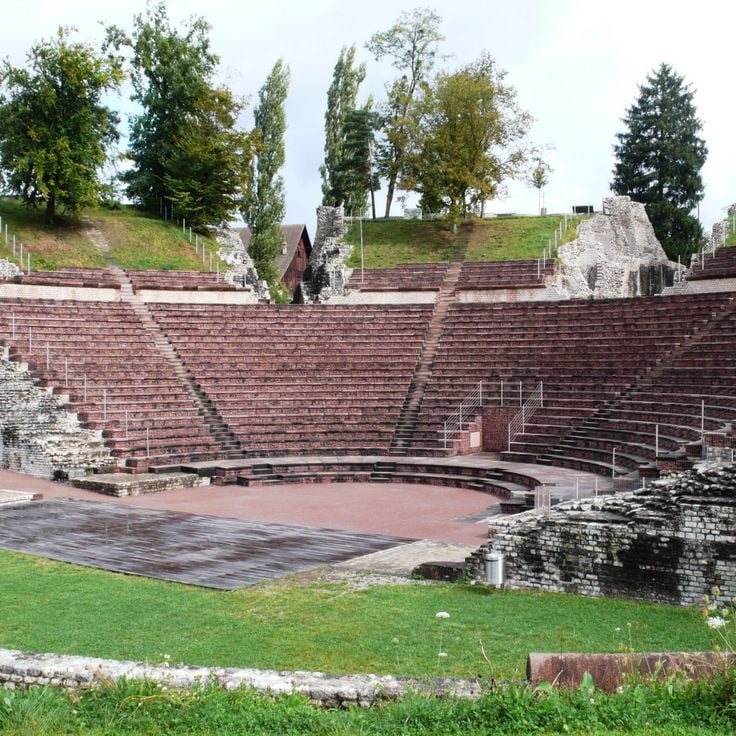
Augusta Raurica was a Roman colony established in the 1st century BCE along the Rhine. This site reveals the full scope of Roman life with temples, baths, theaters, and residential buildings. Walking through the excavations allows you to see how people lived in this ancient city and understand the layout of a functioning Roman settlement.
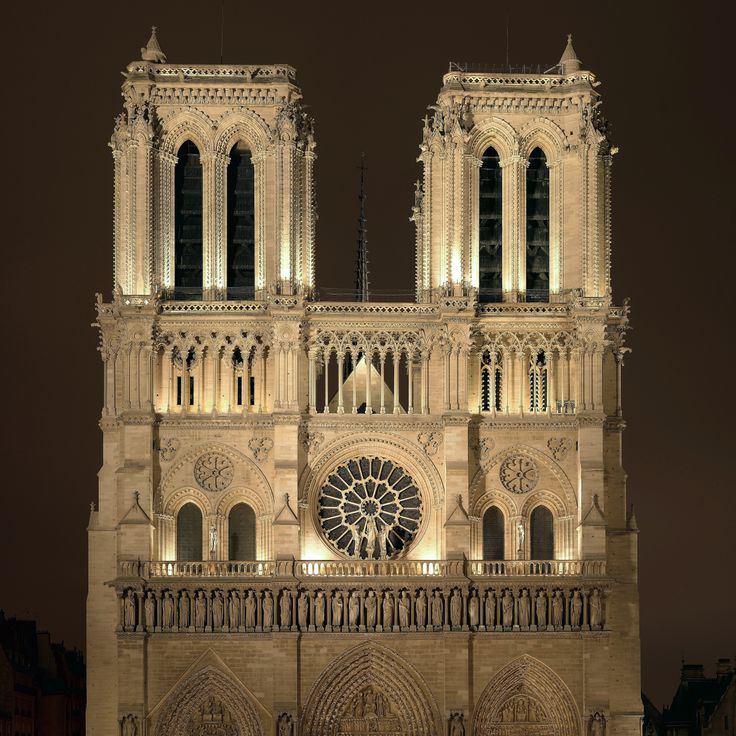
The Cathédrale Notre-Dame de Paris is one of the major Gothic cathedrals of Europe and construction began in the 12th century. It shows medieval craftsmanship through its pointed arches, buttresses, and colored glass windows. This cathedral appears in this collection as an example of religious architecture that shaped the Middle Ages and continues to define Paris today. Its structure tells of the skills of the builders of that time and of the importance such places held for society.
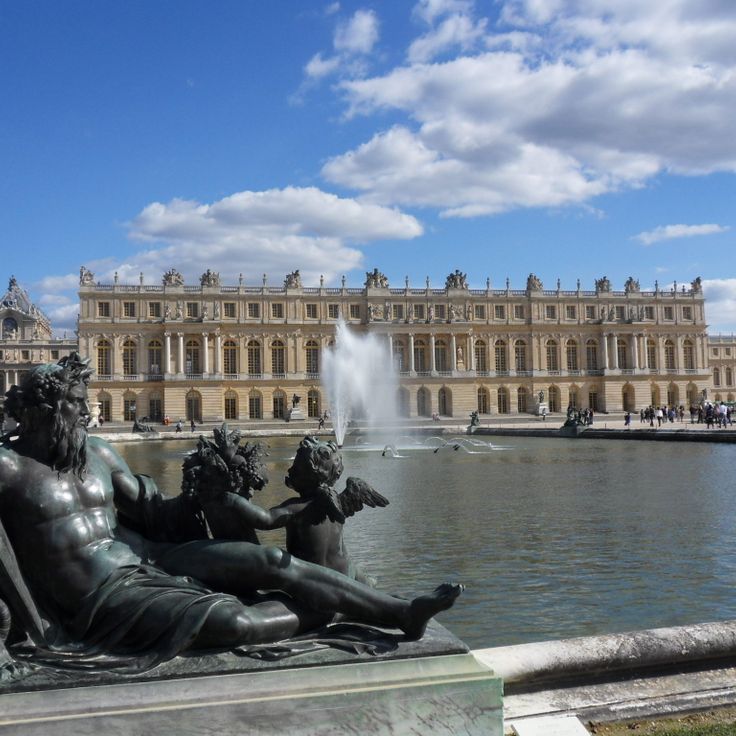
The Château de Versailles was built in the 17th century as the residence of King Louis XIV. It combines Baroque style with French classical design. The palace contains grand rooms and the famous Hall of Mirrors, where the French court conducted its affairs. The gardens surrounding it follow formal geometric patterns, with fountains, tree-lined paths, and water features. This castle shows the power of French royalty and the opulence of court life during this period.
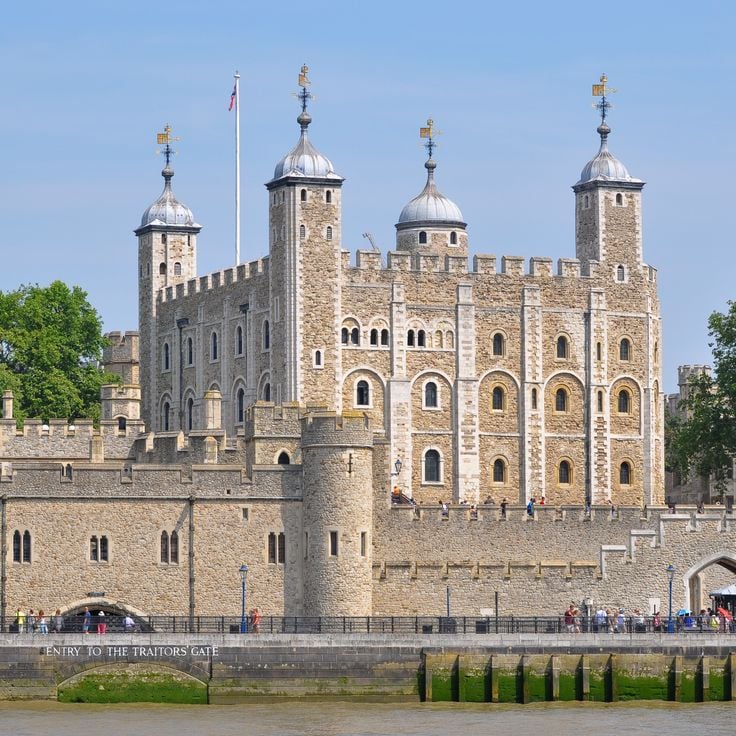
The Tower of London is a Norman fortress built after 1066 in the heart of the city. This castle served as a royal residence for English kings and later became a prison. Today, it houses and protects the Crown Jewels of the British monarchy. The building demonstrates the power of the Normans following their conquest of England. Walking through its walls, visitors encounter the history of royal rule and medieval life. The Tower stands as a significant example of medieval architecture and a key witness to English history across nearly a thousand years.
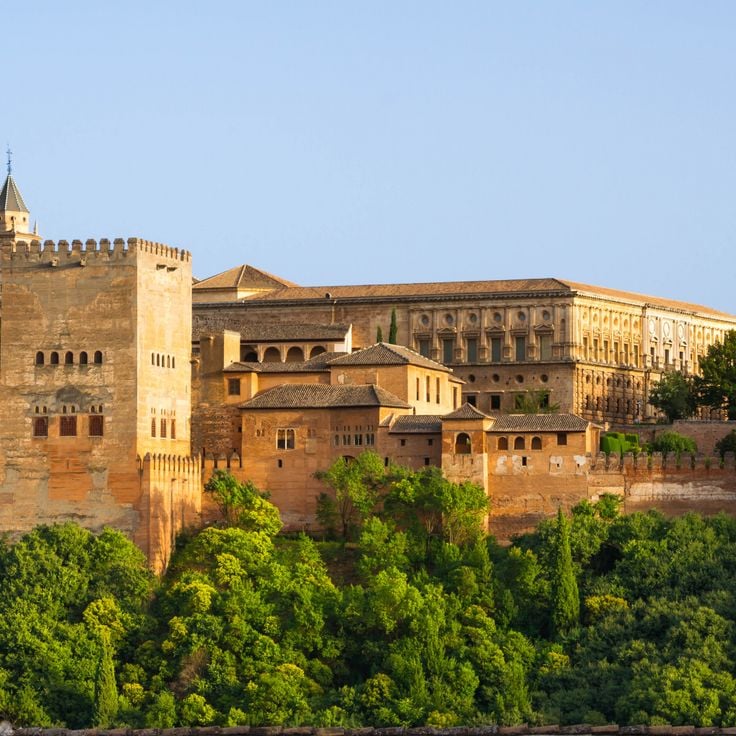
The Alhambra is a palace fortress from the 14th century, the former residence of the Nasrid sultans of Granada. It showcases Islamic architecture from medieval Andalusia with its ornate courtyards, fountains, and intricate decorative details. The rooms and passages tell the story of a time when Granada was an important center of Islamic culture in Europe. Walking through the spaces, you see geometric patterns, tilework, and water features throughout, reflecting how life unfolded within these walls.
The Cathédrale de Cologne is a Gothic cathedral built over several centuries from the 13th to the 19th century. Its two pointed towers rise 157 meters (515 feet) above the Rhine River. The building is recognized as a UNESCO World Heritage site and shows the skill of Gothic builders. Visitors can see the carved portals, stained glass windows, and the soaring interior spaces with their high vaults.
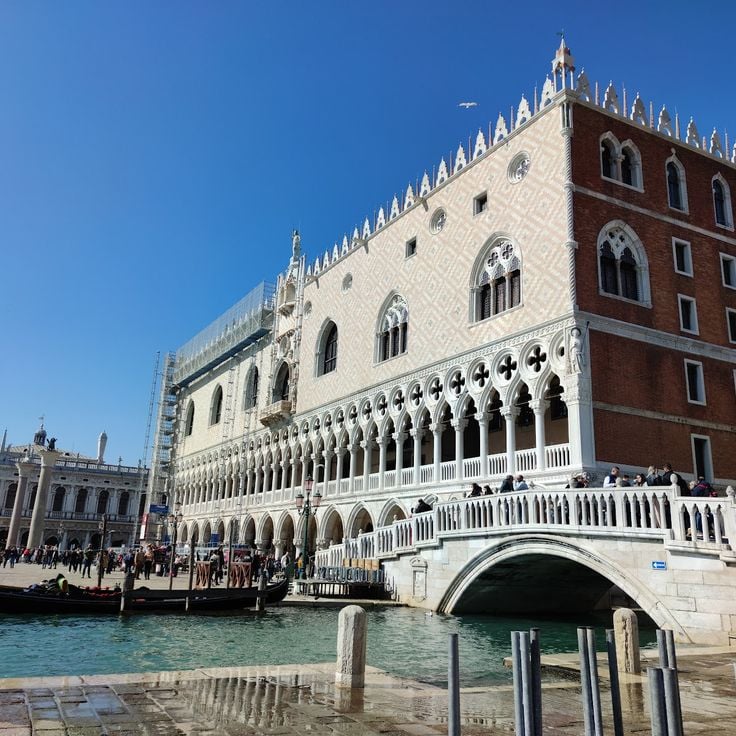
The Doge's Palace was the residence of Venice's leader from the 14th to 18th century. The building combines Gothic and Byzantine architecture in a distinctive way. Inside are grand halls decorated with paintings by Venetian masters. The palace shows how Venice's rulers lived and governed. Its rooms tell the story of the republic's power and wealth. Today visitors can walk through these spaces and understand how this city-state was managed and where its leaders made important decisions.
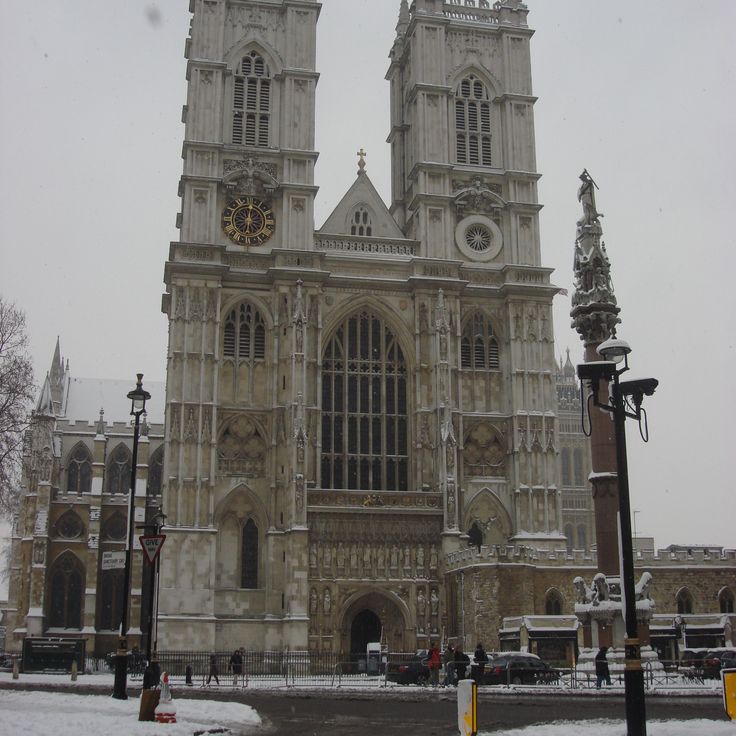
Westminster Abbey was founded in the 10th century as a Benedictine monastery and stands as one of England's most important churches. This building serves as both a religious center and the coronation site for British monarchs. Many significant figures from English history are buried here. The architecture displays Gothic forms that developed over centuries. Visitors can admire the craftsmanship in its details and explore the historical spaces where important moments of British history took place.
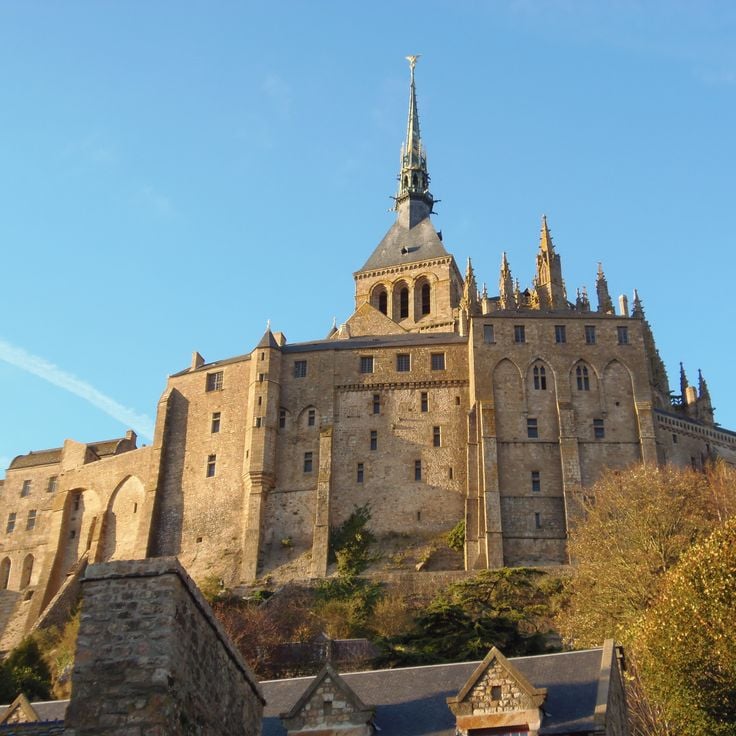
Mont-Saint-Michel is an abbey built on a rocky island from the 8th century, standing 80 meters (260 feet) above the bay. It combines Romanesque and Gothic architecture with medieval fortifications. This structure shows how religious communities built in difficult locations during the Middle Ages. The isolated rocky setting makes this place a significant landmark in Western history.
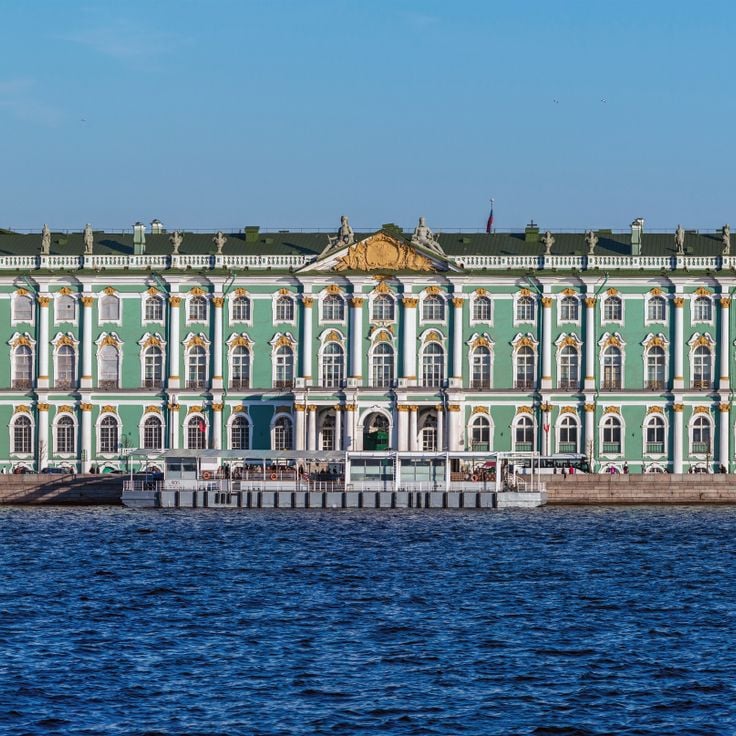
The Hermitage Museum was once the winter residence of Russian tsars, built in the 18th century. Today it is one of the largest museums in the world, displaying artworks and antiquities across many floors. This collection belongs to the European places that bear witness to human history. The museum allows visitors to understand the power and taste of the tsars and how Russian society changed over centuries. Here you can see artworks that would otherwise have remained hidden.
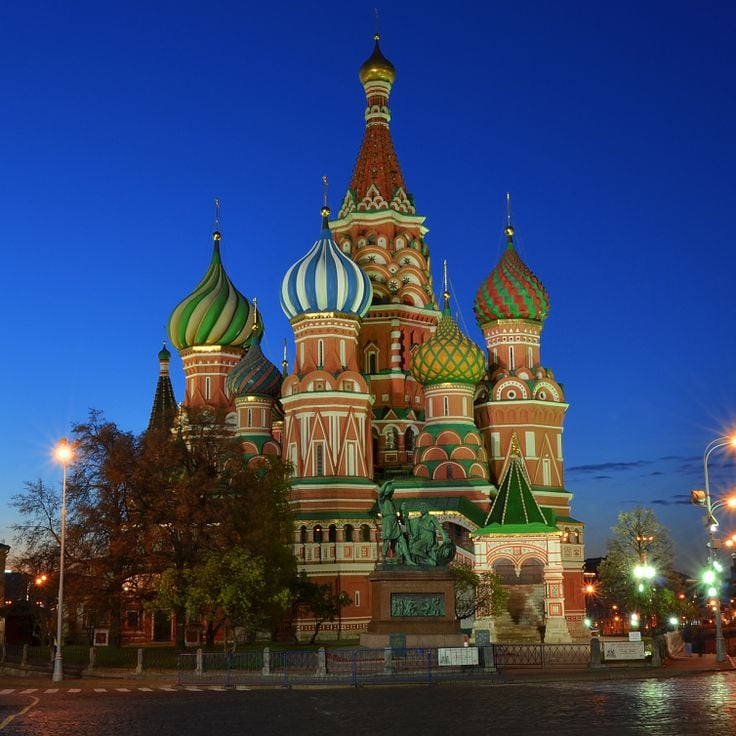
Saint Basil's Cathedral is a 16th-century church built during the reign of Ivan the Terrible, standing on Red Square with its distinctive colorful onion domes. This structure represents a unique blend of Russian and Byzantine architectural traditions, with multiple connected chapels beneath a single framework. The cathedral has become one of the most recognizable symbols of Moscow and Russia itself. Walking inside reveals intricate details and decorative elements that reflect the religious devotion and artistic skill of the era when this monument was constructed.
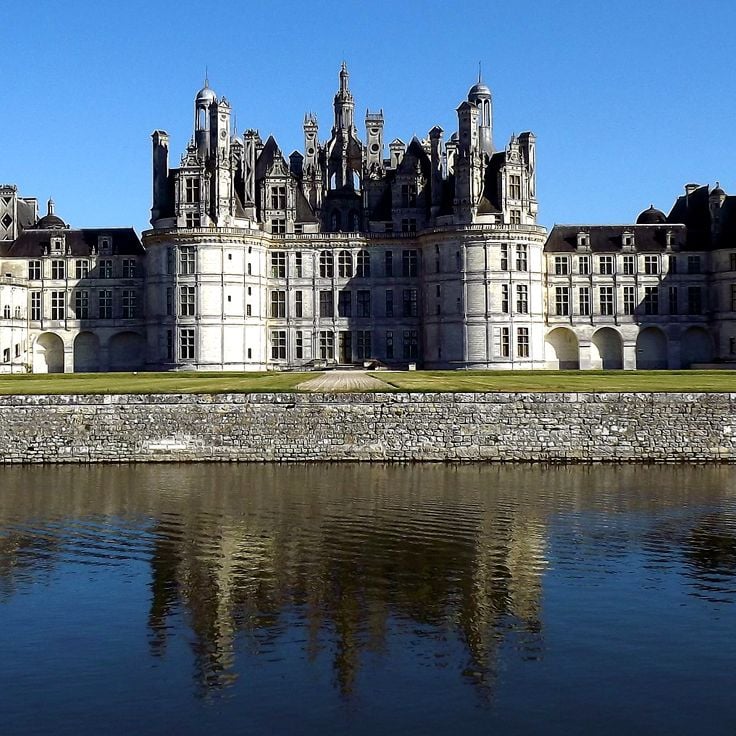
Chambord Castle is a Renaissance castle built in the 16th century by King Francis I in the Loire Valley. The building combines French and Italian architectural styles and is known for its distinctive double-helix staircase and numerous rooms. This castle represents the power and wealth of the French monarchy during the Renaissance and shows how European rulers expressed their authority through grand constructions.
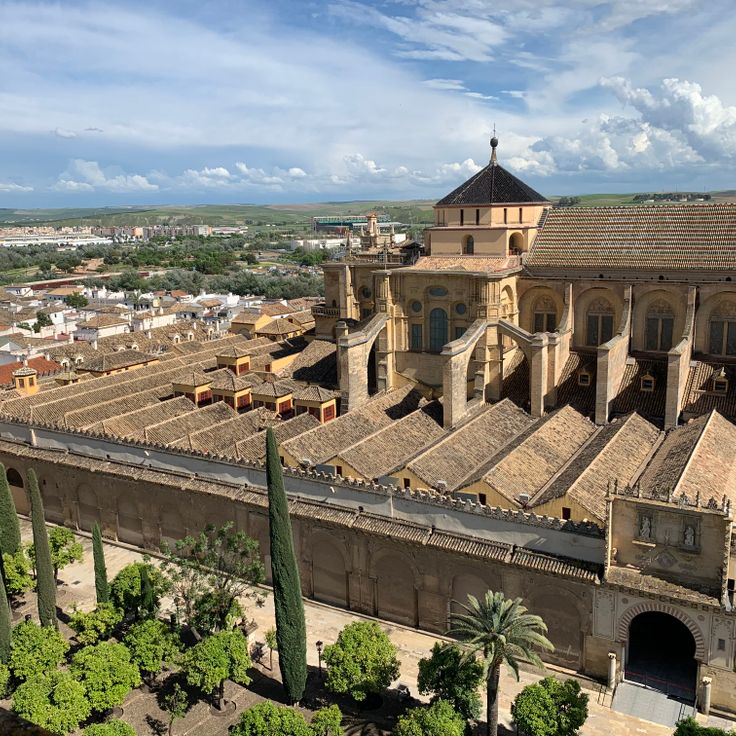
The Mosque-Cathedral of Cordoba was built in the 8th century and shows how two religions shared one building. This structure blends Islamic and Christian architecture in a way that is rare in Europe. The red and white arches that fill the interior tell the story of a time when Muslims and Christians lived alongside each other in Spain. Visitors who walk through this place gain insight into how medieval Iberia actually worked.
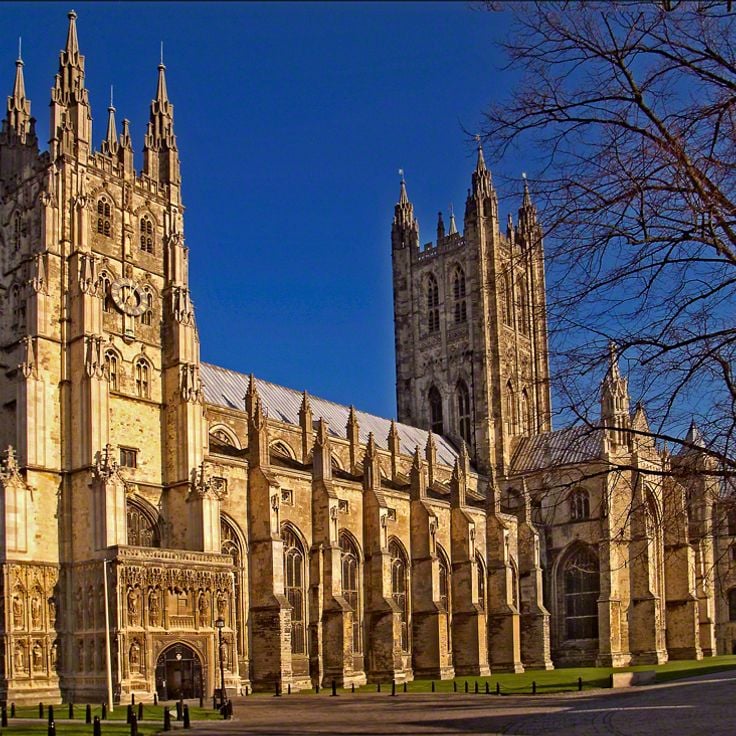
Canterbury Cathedral is a 12th-century church that stands at the heart of Canterbury. It has been an important pilgrimage destination for centuries and displays Gothic architecture with its stained glass windows and medieval cloister. Visitors can walk through the spaces where believers have prayed for generations and experience the role this place has played in England's religious history.
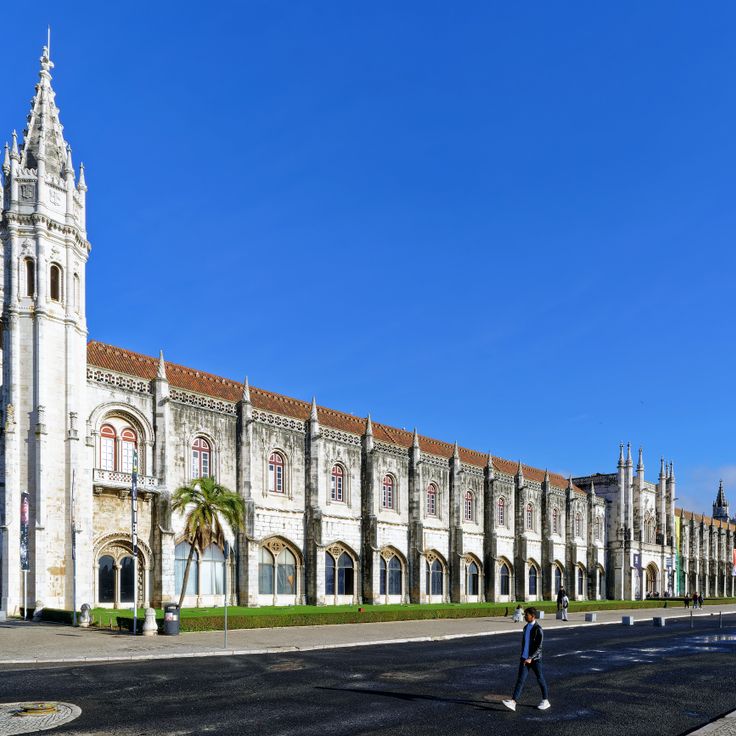
The Jerónimos Monastery in Lisbon is a 16th-century building that shows the Portuguese Manueline style. Its architecture connects religious construction to the maritime ventures of the Age of Discovery. The monastery's ornate cloister reflects the prosperity that Portugal gained through seafaring. The building tells the story of a time when Lisbon was a center of exploration and monks lived and prayed here while ships departed to discover new lands.
The Roman Forum was the heart of political and commercial life in ancient Rome. Here stood important temples, basilicas, and triumphal arches built over many centuries of Roman rule. Today visitors can walk among the ruins and see what remains of these structures that shaped how the Romans built their city. The Forum allows you to understand the power and importance of Rome in ancient times.
The Sagrada Familia is a basilica in Barcelona designed by Antoni Gaudi starting in 1882. The building blends Gothic and Art Nouveau styles in ways that feel fresh and personal. Its facades display detailed stonework and symbolic imagery. Inside, slender columns guide your eyes upward to vaulted ceilings that resemble a stone forest. Gaudi led this project until his death in 1926, pouring many of his architectural ideas into it. The basilica continues to be completed today, with craftspeople working from his original plans. It shows how architecture and skilled craftsmanship can come together.
University of Oxford is one of the world's oldest universities and has shaped intellectual life in England for centuries. With 39 colleges scattered throughout the city, it presents a mix of different architectural styles, from Gothic structures to modern buildings. The university shows how education and architecture have developed over hundreds of years. Its colleges function like small communities with their own dining halls, gardens, and libraries, where students and scholars live and work together. The narrow streets and courtyards tell of a long academic tradition that goes back to the Middle Ages.
The Acropolis of Athens is an ancient fortification and citadel built in the 5th century before Christ. It contains numerous archaeological remains, including the Parthenon, one of the most significant structures of classical antiquity. The Acropolis shows how the ancient Greeks built their cities and what role religion and power held in their society. Visitors can see here the traces of a civilization that deeply shaped European culture.
This bridge was once a Roman aqueduct from the 1st century and shows the engineering skill of ancient times. The structure carried water across three levels of arches and was part of a larger system that supplied water to the city of Nimes. Today visitors can walk across the massive stone structure and see the precise craftsmanship up close. The bridge sits in a green gorge and stands as a testament to Roman builders who understood how to move water over long distances.
The Normandy American Cemetery holds the graves of about 10 000 American soldiers who died during World War II. This burial ground in Colleville-sur-Mer is part of a larger collection of historical sites across Europe that connect visitors to the past. Standing here, you can reflect on the sacrifice made during one of the defining events of the 20th century and understand how this conflict shaped European history.
The Colosseum is a large Roman stadium from the first century that could hold up to 80,000 spectators. It was built to host gladiator fights and other public shows. The structure shows the skill of Roman building with its arches, columns, and multiple levels. Today, visitors can walk through the ruins and imagine how this stadium worked nearly 2000 years ago.
The Pantheon is a Roman building in Rome, constructed over 2000 years ago. It stands out for its massive concrete dome, built without steel reinforcement. With a diameter of 43 meters, it is the largest of its kind in the world. The interior feels open and bright thanks to a large opening at the top of the dome. Visitors experience here how Romans already possessed advanced construction techniques and created spaces that have lasted for centuries.
Pompeii was a Roman city buried under the ash of Mount Vesuvius in the year 79 after Christ. The city was rediscovered in 1748 and shows Roman life exactly as it was before the volcano erupted. You can walk through the streets and see houses, shops, and public spaces. The bodies of people who died there were preserved by the ash and show what happened in that moment. Pompeii helps us understand how Romans lived, what they ate, how they worked, and what mattered to them.
Stonehenge stands on Salisbury Plain as a circle of stones raised about 4500 years ago. The stones measure about 13 feet (4 meters) high and form a pattern that raises questions: Who built this structure? For what purpose? Scientists believe it may have been a sanctuary or a calendar. This monument shows how ancient peoples in Europe could already plan and carry out large construction projects.
Newgrange is a large ancient burial mound from the early period of farming, older than the Egyptian pyramids. This site was built about 5200 years ago and shows how the first people in Ireland lived and how they honored their dead. A special feature of Newgrange is its direction: at sunrise on the winter solstice, the light shines straight into the inner chamber. This shows that the builders watched the sun carefully and used this knowledge in the stone.
Alfama is Lisbon's oldest neighborhood, dating back to the 8th century. Its narrow, winding streets form a maze shaped by Moorish and medieval influences. Walking through these passages, you see yellow tiles on the building facades, laundry hanging between houses, and unexpected staircases leading up or down. The architecture shows how people lived here across centuries, with low doorways, tight passages, and tightly packed buildings. This quarter tells Lisbon's story from the Middle Ages to today.
Meteora is a collection of Eastern Orthodox monasteries built on top of towering rock formations near Kalambaka. Monks established these communities starting in the 14th century, seeking solitude and spiritual life at great heights. The monasteries are carved into and built upon the stone peaks, creating structures that seem to grow from the rocks themselves. Visitors encounter a place where monks still live and worship, maintaining traditions that have continued for centuries.
Tønsberg Fortress is one of Norway's oldest fortified structures, dating to the 13th century. It once served as a royal residence and military stronghold. This fortress shows how medieval Norwegian power was organized and defended. Walking through its remains, you can see the walls and towers that shaped the country's early history.
The Eiffel Tower was built by Gustav Eiffel in 1889 and shows the skill of engineers at that time in working with iron in new ways. Many people thought it was ugly when it was first built. Today, the tower is part of how people see Paris. When you go up the stairs or take the elevator, you can see the whole city below. The Eiffel Tower fits in this collection because it shows how the 19th century changed how Europe looked. While other places in this collection show ancient ruins or medieval walls, this tower shows how Europe developed in modern times.
St. Peter's Basilica is one of the world's largest churches and a major work of the Renaissance. Construction began in 1506 and took roughly 120 years to complete. The building shows the craftsmanship and ambition of its era through its architecture, art, and decoration. Visitors can see how artists and workers labored across generations to build this project.
Edinburgh Castle rises from a rocky outcrop in Scotland's capital and has been a center of power since the 12th century. This fortress combines Romanesque and medieval architecture, showing how Scotland developed over time. Inside, rooms tell stories of kings, warfare, and everyday life, while the walls offer views across the city and surrounding hills. Edinburgh Castle is one of the places that helps you understand the history of the British Isles.
Diocletian's Palace in Split was the residence of a Roman emperor who retired there in 305 CE. The building combines Roman construction with elements from Egypt and the Mediterranean world. Marble from Italy and Greece was used in its making. Columns and Egyptian sphinxes ornament the structure. The palace reveals how Roman rulers lived at the end of their reign and what resources they commanded for their buildings.
Suomenlinna is a sea fortress built in the 18th century across eight islands to protect Helsinki. The fortifications and barracks show how coastal cities were defended at that time. You can walk through the bastions, see old cannons, and understand the history of coastal defense. This place is recognized as a UNESCO World Heritage site.
Prague Castle is the largest ancient castle complex in the world and tells the story of Central European power over more than a thousand years. Construction began in the 9th century and the site grew into a center of royal and imperial authority. The complex contains palaces, churches, and gardens that show different building styles from Romanesque to Baroque periods. Visitors walk through rooms where kings and emperors lived and can enter St. Vitus Cathedral, which sits at the heart of the grounds. The castle served as a seat of power for the region's most important rulers for centuries.
Wawel Castle stands on a hilltop in Krakow and served as the main seat of Polish kings for about 9 centuries starting in the 11th century. The castle displays Roman, Gothic, and Baroque styles, with each era leaving its mark on the buildings and decorations. Walking through the rooms, you see where monarchs once made decisions that shaped Poland. The inner courtyard feels calm, surrounded by arched galleries. A chapel inside holds tombs of important Polish figures. Visitors can explore the royal chambers, still furnished with objects and artworks from different periods, and understand how kings lived and ruled from this location.
Neuschwanstein Castle is a 19th-century fortress that King Ludwig II. built in the Bavarian Alps. Its white walls and towers rise above the landscape on a hilltop. The castle blends medieval building traditions with romantic ideals and fairy-tale imagery. Looking at it from outside, you see how much the king was drawn to stories from the Middle Ages. Inside, the rooms display scenes from old legends and tales. The castle attracts many visitors because it shows how people in the 1800s turned their dreams into stone architecture.
Kronborg Castle in Helsingør, Denmark, began as a fortress around 1420 and evolved into a Renaissance masterpiece. Recognized as a UNESCO World Heritage site, it gained fame through Shakespeare's Hamlet, which draws visitors from around the world. You can walk through its thick stone walls, explore the royal rooms, and stand on the ramparts overlooking the strait between Denmark and Sweden. The castle shows how military structures transformed into elegant royal residences.
The Althing in Reykjavik is one of the oldest gathering places for lawmakers in the world. Founded in 930, this site served as where Icelandic leaders came together to make decisions and create laws. It shows how early Icelanders developed forms of assembly and shared governance. This place belongs to the European locations that document political life across centuries, from the origins of parliament to modern democracy.
Bran Castle was built by Saxons in 1377 and stands as a national monument of Transylvania. This fortress rises from a hilltop and connects medieval history to the landscape of the region. The castle is known worldwide because of its link to the Dracula legend, but its real story is about trade, defense, and life in Transylvania over centuries. Visitors walk through rooms furnished with objects from different periods and learn how people lived within these walls.
Eketorp is an Iron Age fortification built around 400 AD on the Swedish island of Öland. Archaeologists have uncovered more than 24,000 objects at this site, revealing how people lived during that era. Today it functions as an open-air museum where visitors can explore the remains of the ancient fortification and learn about its role in Swedish history.
Rundale Palace is a Baroque and Rococo castle built in the 18th century, designed by Francesco Rastrelli. It served as the summer residence of the Duke of Courland and shows the grandeur that European nobility could create in this period. With its halls, gardens, and decoration, this castle tells the story of how the aristocracy lived and what architecture meant to them at that time. It is one of those places in Europe where you can experience history directly through the rooms and their details.
Gediminas Tower is the last remaining part of Vilnius's upper castle from the 13th century. This red brick tower sits on a hill above the city and marks the place where the medieval fortress once stood. The tower became a symbol of Lithuanian independence and tells the story of the country's past. Visitors can climb to the top and see the city spread out below.
The ruins of this convent in Tallinn were built in 1407 and were once among the most important monastic complexes in Northern Europe. In 1575, the convent was destroyed during a Russian invasion. Today, the remaining stone walls and arches tell the story of a time when this convent served as a religious and cultural center for the region, drawing people from across the surrounding area.
Hagia Sophia was originally a church built in the 6th century in Istanbul and was converted into a mosque in the 15th century. Its massive dome seems to float above the interior space, a defining feature of Byzantine architecture. This structure reveals the complex history of Istanbul and the cultures that have shaped the city. Walking through it, you see layers of different periods in the decorations and inscriptions on its walls.
Butrint is an ancient city founded in the 7th century before Christ and mentioned in Homer's Odyssey. At this location, you will find remains from Greek, Roman, Byzantine, and Venetian times. The ruins show how different cultures lived in the same place over centuries and left their own buildings behind. As you walk through, you can literally see the layers of this history.
Buda Castle stands on a hill overlooking Budapest with architecture from many different periods. Construction began in the 13th century, but the building was changed and expanded over the centuries. After being destroyed in World War II, the castle was rebuilt. Today visitors can walk through the rooms and see how the royal family lived here. The walls and towers offer views across the city and the Danube River.
The Royal Palace in Amsterdam was originally built as a city hall in the 17th century and was the largest secular building in Europe at that time. This palace shows how the city of Amsterdam displayed wealth and power during its period of great prosperity. The building's architecture reflects the ambitions of a trading city that shaped the world in those days. Later it was converted from a city hall into a royal residence and continues to serve as a place for state receptions and official occasions.
This castle is a medieval fortress built in the 12th century that stands on the banks of the Scheldt River in Antwerp. It was constructed to guard the waterway and protect the city from attacks. Het Steen shows how medieval people defended their settlements and why rivers were vital for trade and security. Today visitors can walk through its thick walls and towers and imagine the soldiers who once kept watch from these ramparts.
Schönbrunn Palace is an 18th-century residence that served as the summer home of the Habsburg monarchy. With 1441 rooms and vast gardens, this place shows how European aristocracy lived. The gardens contain 32 sculptures and house the world's oldest zoo. Schönbrunn tells the story of a dynasty that shaped Europe.
Perperikon is an archaeological site in Kardzhali that holds traces of a settlement dating back 5,000 years. The location served as an important sanctuary dedicated to the god Dionysus. Excavations have uncovered pottery and artifacts from Thracian culture, revealing how people in this region lived and worshipped their gods. The ruins on the hillside offer a window into the ancient world of the eastern Balkans.
Augusta Raurica was a Roman colony established in the 1st century BCE along the Rhine. This site reveals the full scope of Roman life with temples, baths, theaters, and residential buildings. Walking through the excavations allows you to see how people lived in this ancient city and understand the layout of a functioning Roman settlement.
The Cathédrale Notre-Dame de Paris is one of the major Gothic cathedrals of Europe and construction began in the 12th century. It shows medieval craftsmanship through its pointed arches, buttresses, and colored glass windows. This cathedral appears in this collection as an example of religious architecture that shaped the Middle Ages and continues to define Paris today. Its structure tells of the skills of the builders of that time and of the importance such places held for society.
The Château de Versailles was built in the 17th century as the residence of King Louis XIV. It combines Baroque style with French classical design. The palace contains grand rooms and the famous Hall of Mirrors, where the French court conducted its affairs. The gardens surrounding it follow formal geometric patterns, with fountains, tree-lined paths, and water features. This castle shows the power of French royalty and the opulence of court life during this period.
The Tower of London is a Norman fortress built after 1066 in the heart of the city. This castle served as a royal residence for English kings and later became a prison. Today, it houses and protects the Crown Jewels of the British monarchy. The building demonstrates the power of the Normans following their conquest of England. Walking through its walls, visitors encounter the history of royal rule and medieval life. The Tower stands as a significant example of medieval architecture and a key witness to English history across nearly a thousand years.
The Alhambra is a palace fortress from the 14th century, the former residence of the Nasrid sultans of Granada. It showcases Islamic architecture from medieval Andalusia with its ornate courtyards, fountains, and intricate decorative details. The rooms and passages tell the story of a time when Granada was an important center of Islamic culture in Europe. Walking through the spaces, you see geometric patterns, tilework, and water features throughout, reflecting how life unfolded within these walls.
The Cathédrale de Cologne is a Gothic cathedral built over several centuries from the 13th to the 19th century. Its two pointed towers rise 157 meters (515 feet) above the Rhine River. The building is recognized as a UNESCO World Heritage site and shows the skill of Gothic builders. Visitors can see the carved portals, stained glass windows, and the soaring interior spaces with their high vaults.
The Doge's Palace was the residence of Venice's leader from the 14th to 18th century. The building combines Gothic and Byzantine architecture in a distinctive way. Inside are grand halls decorated with paintings by Venetian masters. The palace shows how Venice's rulers lived and governed. Its rooms tell the story of the republic's power and wealth. Today visitors can walk through these spaces and understand how this city-state was managed and where its leaders made important decisions.
Westminster Abbey was founded in the 10th century as a Benedictine monastery and stands as one of England's most important churches. This building serves as both a religious center and the coronation site for British monarchs. Many significant figures from English history are buried here. The architecture displays Gothic forms that developed over centuries. Visitors can admire the craftsmanship in its details and explore the historical spaces where important moments of British history took place.
Mont-Saint-Michel is an abbey built on a rocky island from the 8th century, standing 80 meters (260 feet) above the bay. It combines Romanesque and Gothic architecture with medieval fortifications. This structure shows how religious communities built in difficult locations during the Middle Ages. The isolated rocky setting makes this place a significant landmark in Western history.
The Hermitage Museum was once the winter residence of Russian tsars, built in the 18th century. Today it is one of the largest museums in the world, displaying artworks and antiquities across many floors. This collection belongs to the European places that bear witness to human history. The museum allows visitors to understand the power and taste of the tsars and how Russian society changed over centuries. Here you can see artworks that would otherwise have remained hidden.
Saint Basil's Cathedral is a 16th-century church built during the reign of Ivan the Terrible, standing on Red Square with its distinctive colorful onion domes. This structure represents a unique blend of Russian and Byzantine architectural traditions, with multiple connected chapels beneath a single framework. The cathedral has become one of the most recognizable symbols of Moscow and Russia itself. Walking inside reveals intricate details and decorative elements that reflect the religious devotion and artistic skill of the era when this monument was constructed.
Chambord Castle is a Renaissance castle built in the 16th century by King Francis I in the Loire Valley. The building combines French and Italian architectural styles and is known for its distinctive double-helix staircase and numerous rooms. This castle represents the power and wealth of the French monarchy during the Renaissance and shows how European rulers expressed their authority through grand constructions.
The Mosque-Cathedral of Cordoba was built in the 8th century and shows how two religions shared one building. This structure blends Islamic and Christian architecture in a way that is rare in Europe. The red and white arches that fill the interior tell the story of a time when Muslims and Christians lived alongside each other in Spain. Visitors who walk through this place gain insight into how medieval Iberia actually worked.
Canterbury Cathedral is a 12th-century church that stands at the heart of Canterbury. It has been an important pilgrimage destination for centuries and displays Gothic architecture with its stained glass windows and medieval cloister. Visitors can walk through the spaces where believers have prayed for generations and experience the role this place has played in England's religious history.
The Jerónimos Monastery in Lisbon is a 16th-century building that shows the Portuguese Manueline style. Its architecture connects religious construction to the maritime ventures of the Age of Discovery. The monastery's ornate cloister reflects the prosperity that Portugal gained through seafaring. The building tells the story of a time when Lisbon was a center of exploration and monks lived and prayed here while ships departed to discover new lands.
The Roman Forum was the heart of political and commercial life in ancient Rome. Here stood important temples, basilicas, and triumphal arches built over many centuries of Roman rule. Today visitors can walk among the ruins and see what remains of these structures that shaped how the Romans built their city. The Forum allows you to understand the power and importance of Rome in ancient times.
The Sagrada Familia is a basilica in Barcelona designed by Antoni Gaudi starting in 1882. The building blends Gothic and Art Nouveau styles in ways that feel fresh and personal. Its facades display detailed stonework and symbolic imagery. Inside, slender columns guide your eyes upward to vaulted ceilings that resemble a stone forest. Gaudi led this project until his death in 1926, pouring many of his architectural ideas into it. The basilica continues to be completed today, with craftspeople working from his original plans. It shows how architecture and skilled craftsmanship can come together.
University of Oxford is one of the world's oldest universities and has shaped intellectual life in England for centuries. With 39 colleges scattered throughout the city, it presents a mix of different architectural styles, from Gothic structures to modern buildings. The university shows how education and architecture have developed over hundreds of years. Its colleges function like small communities with their own dining halls, gardens, and libraries, where students and scholars live and work together. The narrow streets and courtyards tell of a long academic tradition that goes back to the Middle Ages.
The Acropolis of Athens is an ancient fortification and citadel built in the 5th century before Christ. It contains numerous archaeological remains, including the Parthenon, one of the most significant structures of classical antiquity. The Acropolis shows how the ancient Greeks built their cities and what role religion and power held in their society. Visitors can see here the traces of a civilization that deeply shaped European culture.
This bridge was once a Roman aqueduct from the 1st century and shows the engineering skill of ancient times. The structure carried water across three levels of arches and was part of a larger system that supplied water to the city of Nimes. Today visitors can walk across the massive stone structure and see the precise craftsmanship up close. The bridge sits in a green gorge and stands as a testament to Roman builders who understood how to move water over long distances.
The Normandy American Cemetery holds the graves of about 10 000 American soldiers who died during World War II. This burial ground in Colleville-sur-Mer is part of a larger collection of historical sites across Europe that connect visitors to the past. Standing here, you can reflect on the sacrifice made during one of the defining events of the 20th century and understand how this conflict shaped European history.
The Colosseum is a large Roman stadium from the first century that could hold up to 80,000 spectators. It was built to host gladiator fights and other public shows. The structure shows the skill of Roman building with its arches, columns, and multiple levels. Today, visitors can walk through the ruins and imagine how this stadium worked nearly 2000 years ago.
The Pantheon is a Roman building in Rome, constructed over 2000 years ago. It stands out for its massive concrete dome, built without steel reinforcement. With a diameter of 43 meters, it is the largest of its kind in the world. The interior feels open and bright thanks to a large opening at the top of the dome. Visitors experience here how Romans already possessed advanced construction techniques and created spaces that have lasted for centuries.
Pompeii was a Roman city buried under the ash of Mount Vesuvius in the year 79 after Christ. The city was rediscovered in 1748 and shows Roman life exactly as it was before the volcano erupted. You can walk through the streets and see houses, shops, and public spaces. The bodies of people who died there were preserved by the ash and show what happened in that moment. Pompeii helps us understand how Romans lived, what they ate, how they worked, and what mattered to them.
Stonehenge stands on Salisbury Plain as a circle of stones raised about 4500 years ago. The stones measure about 13 feet (4 meters) high and form a pattern that raises questions: Who built this structure? For what purpose? Scientists believe it may have been a sanctuary or a calendar. This monument shows how ancient peoples in Europe could already plan and carry out large construction projects.
Newgrange is a large ancient burial mound from the early period of farming, older than the Egyptian pyramids. This site was built about 5200 years ago and shows how the first people in Ireland lived and how they honored their dead. A special feature of Newgrange is its direction: at sunrise on the winter solstice, the light shines straight into the inner chamber. This shows that the builders watched the sun carefully and used this knowledge in the stone.
Alfama is Lisbon's oldest neighborhood, dating back to the 8th century. Its narrow, winding streets form a maze shaped by Moorish and medieval influences. Walking through these passages, you see yellow tiles on the building facades, laundry hanging between houses, and unexpected staircases leading up or down. The architecture shows how people lived here across centuries, with low doorways, tight passages, and tightly packed buildings. This quarter tells Lisbon's story from the Middle Ages to today.
Meteora is a collection of Eastern Orthodox monasteries built on top of towering rock formations near Kalambaka. Monks established these communities starting in the 14th century, seeking solitude and spiritual life at great heights. The monasteries are carved into and built upon the stone peaks, creating structures that seem to grow from the rocks themselves. Visitors encounter a place where monks still live and worship, maintaining traditions that have continued for centuries.
Tønsberg Fortress is one of Norway's oldest fortified structures, dating to the 13th century. It once served as a royal residence and military stronghold. This fortress shows how medieval Norwegian power was organized and defended. Walking through its remains, you can see the walls and towers that shaped the country's early history.
The Eiffel Tower was built by Gustav Eiffel in 1889 and shows the skill of engineers at that time in working with iron in new ways. Many people thought it was ugly when it was first built. Today, the tower is part of how people see Paris. When you go up the stairs or take the elevator, you can see the whole city below. The Eiffel Tower fits in this collection because it shows how the 19th century changed how Europe looked. While other places in this collection show ancient ruins or medieval walls, this tower shows how Europe developed in modern times.
St. Peter's Basilica is one of the world's largest churches and a major work of the Renaissance. Construction began in 1506 and took roughly 120 years to complete. The building shows the craftsmanship and ambition of its era through its architecture, art, and decoration. Visitors can see how artists and workers labored across generations to build this project.
Edinburgh Castle rises from a rocky outcrop in Scotland's capital and has been a center of power since the 12th century. This fortress combines Romanesque and medieval architecture, showing how Scotland developed over time. Inside, rooms tell stories of kings, warfare, and everyday life, while the walls offer views across the city and surrounding hills. Edinburgh Castle is one of the places that helps you understand the history of the British Isles.
Diocletian's Palace in Split was the residence of a Roman emperor who retired there in 305 CE. The building combines Roman construction with elements from Egypt and the Mediterranean world. Marble from Italy and Greece was used in its making. Columns and Egyptian sphinxes ornament the structure. The palace reveals how Roman rulers lived at the end of their reign and what resources they commanded for their buildings.
Suomenlinna is a sea fortress built in the 18th century across eight islands to protect Helsinki. The fortifications and barracks show how coastal cities were defended at that time. You can walk through the bastions, see old cannons, and understand the history of coastal defense. This place is recognized as a UNESCO World Heritage site.
Prague Castle is the largest ancient castle complex in the world and tells the story of Central European power over more than a thousand years. Construction began in the 9th century and the site grew into a center of royal and imperial authority. The complex contains palaces, churches, and gardens that show different building styles from Romanesque to Baroque periods. Visitors walk through rooms where kings and emperors lived and can enter St. Vitus Cathedral, which sits at the heart of the grounds. The castle served as a seat of power for the region's most important rulers for centuries.
Wawel Castle stands on a hilltop in Krakow and served as the main seat of Polish kings for about 9 centuries starting in the 11th century. The castle displays Roman, Gothic, and Baroque styles, with each era leaving its mark on the buildings and decorations. Walking through the rooms, you see where monarchs once made decisions that shaped Poland. The inner courtyard feels calm, surrounded by arched galleries. A chapel inside holds tombs of important Polish figures. Visitors can explore the royal chambers, still furnished with objects and artworks from different periods, and understand how kings lived and ruled from this location.
Neuschwanstein Castle is a 19th-century fortress that King Ludwig II. built in the Bavarian Alps. Its white walls and towers rise above the landscape on a hilltop. The castle blends medieval building traditions with romantic ideals and fairy-tale imagery. Looking at it from outside, you see how much the king was drawn to stories from the Middle Ages. Inside, the rooms display scenes from old legends and tales. The castle attracts many visitors because it shows how people in the 1800s turned their dreams into stone architecture.
Kronborg Castle in Helsingør, Denmark, began as a fortress around 1420 and evolved into a Renaissance masterpiece. Recognized as a UNESCO World Heritage site, it gained fame through Shakespeare's Hamlet, which draws visitors from around the world. You can walk through its thick stone walls, explore the royal rooms, and stand on the ramparts overlooking the strait between Denmark and Sweden. The castle shows how military structures transformed into elegant royal residences.
The Althing in Reykjavik is one of the oldest gathering places for lawmakers in the world. Founded in 930, this site served as where Icelandic leaders came together to make decisions and create laws. It shows how early Icelanders developed forms of assembly and shared governance. This place belongs to the European locations that document political life across centuries, from the origins of parliament to modern democracy.
Bran Castle was built by Saxons in 1377 and stands as a national monument of Transylvania. This fortress rises from a hilltop and connects medieval history to the landscape of the region. The castle is known worldwide because of its link to the Dracula legend, but its real story is about trade, defense, and life in Transylvania over centuries. Visitors walk through rooms furnished with objects from different periods and learn how people lived within these walls.
Eketorp is an Iron Age fortification built around 400 AD on the Swedish island of Öland. Archaeologists have uncovered more than 24,000 objects at this site, revealing how people lived during that era. Today it functions as an open-air museum where visitors can explore the remains of the ancient fortification and learn about its role in Swedish history.
Rundale Palace is a Baroque and Rococo castle built in the 18th century, designed by Francesco Rastrelli. It served as the summer residence of the Duke of Courland and shows the grandeur that European nobility could create in this period. With its halls, gardens, and decoration, this castle tells the story of how the aristocracy lived and what architecture meant to them at that time. It is one of those places in Europe where you can experience history directly through the rooms and their details.
Gediminas Tower is the last remaining part of Vilnius's upper castle from the 13th century. This red brick tower sits on a hill above the city and marks the place where the medieval fortress once stood. The tower became a symbol of Lithuanian independence and tells the story of the country's past. Visitors can climb to the top and see the city spread out below.
The ruins of this convent in Tallinn were built in 1407 and were once among the most important monastic complexes in Northern Europe. In 1575, the convent was destroyed during a Russian invasion. Today, the remaining stone walls and arches tell the story of a time when this convent served as a religious and cultural center for the region, drawing people from across the surrounding area.
Hagia Sophia was originally a church built in the 6th century in Istanbul and was converted into a mosque in the 15th century. Its massive dome seems to float above the interior space, a defining feature of Byzantine architecture. This structure reveals the complex history of Istanbul and the cultures that have shaped the city. Walking through it, you see layers of different periods in the decorations and inscriptions on its walls.
Butrint is an ancient city founded in the 7th century before Christ and mentioned in Homer's Odyssey. At this location, you will find remains from Greek, Roman, Byzantine, and Venetian times. The ruins show how different cultures lived in the same place over centuries and left their own buildings behind. As you walk through, you can literally see the layers of this history.
Buda Castle stands on a hill overlooking Budapest with architecture from many different periods. Construction began in the 13th century, but the building was changed and expanded over the centuries. After being destroyed in World War II, the castle was rebuilt. Today visitors can walk through the rooms and see how the royal family lived here. The walls and towers offer views across the city and the Danube River.
The Royal Palace in Amsterdam was originally built as a city hall in the 17th century and was the largest secular building in Europe at that time. This palace shows how the city of Amsterdam displayed wealth and power during its period of great prosperity. The building's architecture reflects the ambitions of a trading city that shaped the world in those days. Later it was converted from a city hall into a royal residence and continues to serve as a place for state receptions and official occasions.
This castle is a medieval fortress built in the 12th century that stands on the banks of the Scheldt River in Antwerp. It was constructed to guard the waterway and protect the city from attacks. Het Steen shows how medieval people defended their settlements and why rivers were vital for trade and security. Today visitors can walk through its thick walls and towers and imagine the soldiers who once kept watch from these ramparts.
Schönbrunn Palace is an 18th-century residence that served as the summer home of the Habsburg monarchy. With 1441 rooms and vast gardens, this place shows how European aristocracy lived. The gardens contain 32 sculptures and house the world's oldest zoo. Schönbrunn tells the story of a dynasty that shaped Europe.
Perperikon is an archaeological site in Kardzhali that holds traces of a settlement dating back 5,000 years. The location served as an important sanctuary dedicated to the god Dionysus. Excavations have uncovered pottery and artifacts from Thracian culture, revealing how people in this region lived and worshipped their gods. The ruins on the hillside offer a window into the ancient world of the eastern Balkans.
Augusta Raurica was a Roman colony established in the 1st century BCE along the Rhine. This site reveals the full scope of Roman life with temples, baths, theaters, and residential buildings. Walking through the excavations allows you to see how people lived in this ancient city and understand the layout of a functioning Roman settlement.
The Cathédrale Notre-Dame de Paris is one of the major Gothic cathedrals of Europe and construction began in the 12th century. It shows medieval craftsmanship through its pointed arches, buttresses, and colored glass windows. This cathedral appears in this collection as an example of religious architecture that shaped the Middle Ages and continues to define Paris today. Its structure tells of the skills of the builders of that time and of the importance such places held for society.
The Château de Versailles was built in the 17th century as the residence of King Louis XIV. It combines Baroque style with French classical design. The palace contains grand rooms and the famous Hall of Mirrors, where the French court conducted its affairs. The gardens surrounding it follow formal geometric patterns, with fountains, tree-lined paths, and water features. This castle shows the power of French royalty and the opulence of court life during this period.
The Tower of London is a Norman fortress built after 1066 in the heart of the city. This castle served as a royal residence for English kings and later became a prison. Today, it houses and protects the Crown Jewels of the British monarchy. The building demonstrates the power of the Normans following their conquest of England. Walking through its walls, visitors encounter the history of royal rule and medieval life. The Tower stands as a significant example of medieval architecture and a key witness to English history across nearly a thousand years.
The Alhambra is a palace fortress from the 14th century, the former residence of the Nasrid sultans of Granada. It showcases Islamic architecture from medieval Andalusia with its ornate courtyards, fountains, and intricate decorative details. The rooms and passages tell the story of a time when Granada was an important center of Islamic culture in Europe. Walking through the spaces, you see geometric patterns, tilework, and water features throughout, reflecting how life unfolded within these walls.
The Cathédrale de Cologne is a Gothic cathedral built over several centuries from the 13th to the 19th century. Its two pointed towers rise 157 meters (515 feet) above the Rhine River. The building is recognized as a UNESCO World Heritage site and shows the skill of Gothic builders. Visitors can see the carved portals, stained glass windows, and the soaring interior spaces with their high vaults.
The Doge's Palace was the residence of Venice's leader from the 14th to 18th century. The building combines Gothic and Byzantine architecture in a distinctive way. Inside are grand halls decorated with paintings by Venetian masters. The palace shows how Venice's rulers lived and governed. Its rooms tell the story of the republic's power and wealth. Today visitors can walk through these spaces and understand how this city-state was managed and where its leaders made important decisions.
Westminster Abbey was founded in the 10th century as a Benedictine monastery and stands as one of England's most important churches. This building serves as both a religious center and the coronation site for British monarchs. Many significant figures from English history are buried here. The architecture displays Gothic forms that developed over centuries. Visitors can admire the craftsmanship in its details and explore the historical spaces where important moments of British history took place.
Mont-Saint-Michel is an abbey built on a rocky island from the 8th century, standing 80 meters (260 feet) above the bay. It combines Romanesque and Gothic architecture with medieval fortifications. This structure shows how religious communities built in difficult locations during the Middle Ages. The isolated rocky setting makes this place a significant landmark in Western history.
The Hermitage Museum was once the winter residence of Russian tsars, built in the 18th century. Today it is one of the largest museums in the world, displaying artworks and antiquities across many floors. This collection belongs to the European places that bear witness to human history. The museum allows visitors to understand the power and taste of the tsars and how Russian society changed over centuries. Here you can see artworks that would otherwise have remained hidden.
Saint Basil's Cathedral is a 16th-century church built during the reign of Ivan the Terrible, standing on Red Square with its distinctive colorful onion domes. This structure represents a unique blend of Russian and Byzantine architectural traditions, with multiple connected chapels beneath a single framework. The cathedral has become one of the most recognizable symbols of Moscow and Russia itself. Walking inside reveals intricate details and decorative elements that reflect the religious devotion and artistic skill of the era when this monument was constructed.
Chambord Castle is a Renaissance castle built in the 16th century by King Francis I in the Loire Valley. The building combines French and Italian architectural styles and is known for its distinctive double-helix staircase and numerous rooms. This castle represents the power and wealth of the French monarchy during the Renaissance and shows how European rulers expressed their authority through grand constructions.
The Mosque-Cathedral of Cordoba was built in the 8th century and shows how two religions shared one building. This structure blends Islamic and Christian architecture in a way that is rare in Europe. The red and white arches that fill the interior tell the story of a time when Muslims and Christians lived alongside each other in Spain. Visitors who walk through this place gain insight into how medieval Iberia actually worked.
Canterbury Cathedral is a 12th-century church that stands at the heart of Canterbury. It has been an important pilgrimage destination for centuries and displays Gothic architecture with its stained glass windows and medieval cloister. Visitors can walk through the spaces where believers have prayed for generations and experience the role this place has played in England's religious history.
The Jerónimos Monastery in Lisbon is a 16th-century building that shows the Portuguese Manueline style. Its architecture connects religious construction to the maritime ventures of the Age of Discovery. The monastery's ornate cloister reflects the prosperity that Portugal gained through seafaring. The building tells the story of a time when Lisbon was a center of exploration and monks lived and prayed here while ships departed to discover new lands.
Visiting these places takes patience and time. Each site shows its details to those who stop to look. Take notes along the way because what you see will speak to you long after you return. Local guides often know stories that are not in books.