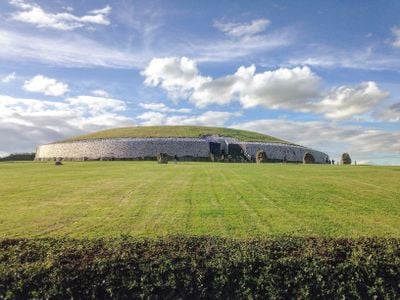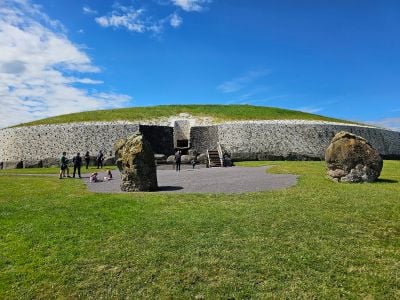
Newgrange, Neolithic passage tomb in Boyne Valley, Ireland
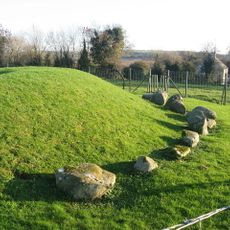
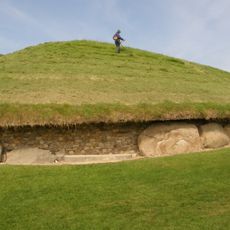
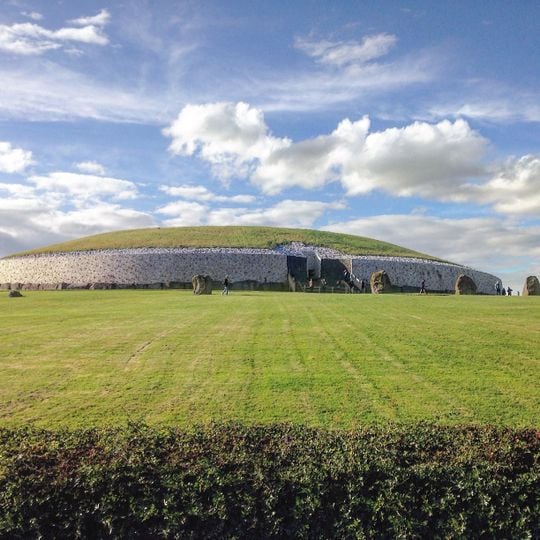
Newgrange is a Neolithic passage tomb in the Boyne Valley, Ireland, consisting of a large mound with an inner chamber. The circular grass-covered stone structure measures roughly 85 meters across and contains a 19-meter corridor leading to a cruciform burial chamber inside.
The structure was built around 3200 BC by Stone Age farming communities and predates the Egyptian pyramids and Stonehenge by several centuries. Over time the site fell into obscurity and was only rediscovered in the 17th century, with major restoration work undertaken during the 1960s and 1970s.
Around the winter solstice, for about 15 minutes after sunrise on roughly 13 days each year, a beam of light passes through the roofbox above the entrance and reaches the passage and chamber. The name Sí an Bhrú means "fairy mound of the Brú", and medieval texts make the mound the dwelling of the god Aengus.
Access is only possible with guided tours departing from the Brú na Bóinne Visitor Centre, and advance booking is recommended during busy periods. The interior passage is low and narrow, so visitors should be prepared for the physical demands involved.
The entrance stone and 96 additional kerbstones surrounding the mound feature intricate geometric carvings from the Neolithic period. These patterns of spirals, lozenges, and circles represent some of the oldest surviving artworks in Ireland and their precise meaning remains a subject of debate today.
The community of curious travelers
AroundUs brings together thousands of curated places, local tips, and hidden gems, enriched daily by 94,103 contributors worldwide.