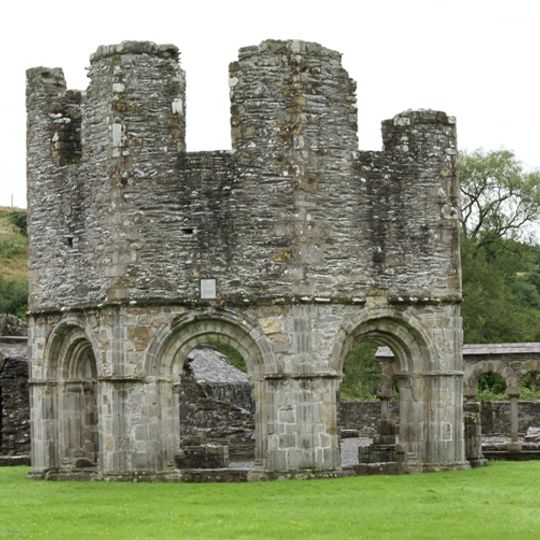
Mellifont Abbey, Cistercian monastery ruins near Drogheda, Ireland
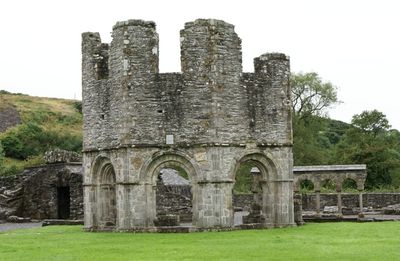
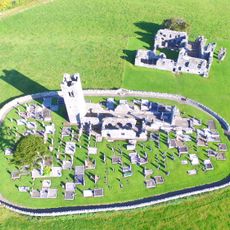
Mellifont Abbey is a roofless ruin of grey and brown rubble masonry on the banks of the River Mattock, about 10 km north-west of Drogheda. Its surviving west facade has two tall, slender turrets flanking a central wall pierced by three deep rounded arches, with two small rectangular openings above and a blank plaque set between them. Behind the arches lie further ruined walls; the 13th-century octagonal lavabo, some Romanesque arches and a 14th-century chapter house are what remain of the monastery.
The abbey was founded in 1142 and became the first Cistercian monastery in Ireland, establishing a new monastic tradition in the country. The community grew rapidly and influenced the spiritual and intellectual life of the region for centuries.
The remains reflect how monks organized their daily routines around prayer and communal work, creating a structured spiritual community. This way of life left a lasting mark on the Irish landscape and continues to draw people interested in monastic traditions.
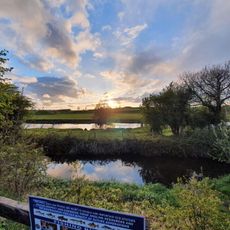
The grounds are accessible throughout the year for self-guided exploration at your own pace. Information panels on site help visitors identify the different buildings and understand how the monastery was originally organized.
The lavabo is the best-preserved structure at Mellifont: a 13th-century octagonal washing house where monks washed their hands before eating. The German sources describe it as a fountain house with an unusual octagonal plan, and it is one of the few standing remains besides the Romanesque cloister arches and the 14th-century chapter house.
The community of curious travelers
AroundUs brings together thousands of curated places, local tips, and hidden gems, enriched daily by 94,032 contributors worldwide.