See the monuments around you in AROpen chests in the app
Around Us is built for your phone — point your camera at the streets and discover the monuments and places around you in augmented reality.Around Us is built for your phone — chests unlock when you walk, explore and capture nearby places.
Rome joins history with modern photography. The city spreads across several hills and holds buildings from different centuries, from ancient ruins to baroque churches and fountains. Photographers find subjects on every street corner, from large public squares to narrow alleys in old neighborhoods. The Colosseum and Roman Forum show the building techniques of ancient Rome. Trevi Fountain and Piazza Navona present baroque design with flowing water and sculptures. The Spanish Steps serve as a meeting point where people rest on the steps and watch the activity below. The Pantheon has stood for nearly 2,000 years and impresses through its dome with a circular opening at the center. In Vatican City, St. Peter's Basilica rises with its tall dome, and the Vatican Museums contain long galleries filled with artworks. Castel Sant'Angelo stands by the Tiber River and offers a wide view over the city's rooftops from above.
Trastevere sits on the other side of the river and shows a different face of Rome: small squares, narrow streets with laundry lines between buildings, and restaurants with tables on the pavement. The church of Santa Maria in Trastevere has a golden mosaic on its facade that glows in the evening light. Campo de' Fiori is a market in the morning with vegetables and flowers, and in the evening the square fills with people. Via Margutta is a quiet street with galleries and plants on the building walls. The Aventine Keyhole shows St. Peter's Dome through a small opening in perfect framing. The Janiculum hill and Villa Borghese Gardens offer green spaces for walking and views over the city. Caracalla Baths and the Appian Way show Rome outside the center, where ancient structures stand in the landscape.
Rome joins history with modern photography. The city spreads across several hills and holds buildings from different centuries, from ancient ruins to baroque churches and fountains. Photographers find subjects on every street corner, from large public squares to narrow alleys in old neighborhoods. The Colosseum and Roman Forum show the building techniques of ancient Rome. Trevi Fountain and Piazza Navona present baroque design with flowing water and sculptures. The Spanish Steps serve as a meeting point where people rest on the steps and watch the activity below. The Pantheon has stood for nearly 2,000 years and impresses through its dome with a circular opening at the center. In Vatican City, St. Peter's Basilica rises with its tall dome, and the Vatican Museums contain long galleries filled with artworks. Castel Sant'Angelo stands by the Tiber River and offers a wide view over the city's rooftops from above.
Trastevere sits on the other side of the river and shows a different face of Rome: small squares, narrow streets with laundry lines between buildings, and restaurants with tables on the pavement. The church of Santa Maria in Trastevere has a golden mosaic on its facade that glows in the evening light. Campo de' Fiori is a market in the morning with vegetables and flowers, and in the evening the square fills with people. Via Margutta is a quiet street with galleries and plants on the building walls. The Aventine Keyhole shows St. Peter's Dome through a small opening in perfect framing. The Janiculum hill and Villa Borghese Gardens offer green spaces for walking and views over the city. Caracalla Baths and the Appian Way show Rome outside the center, where ancient structures stand in the landscape.
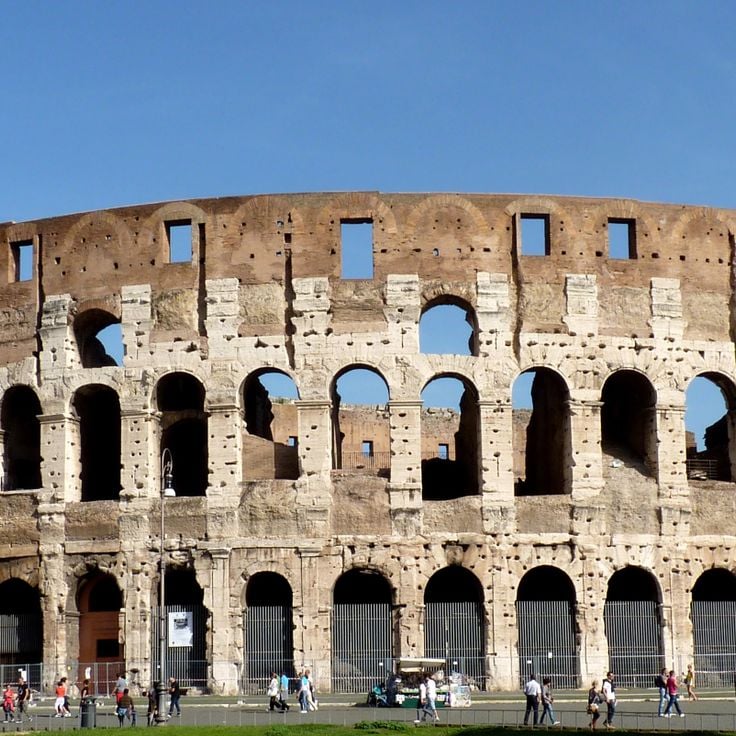
This ancient Roman amphitheater stands in the heart of the city and ranks among the most photographed structures in the world. The Colosseum was built in the first century AD from travertine and tufa stone, serving as an arena for gladiator fights and public spectacles. The outer facade shows three levels of arches, while the interior reveals underground passages once used by fighters and animals to enter the arena. Photographers find subjects from many angles, from the streets around it to the upper tiers overlooking the city.
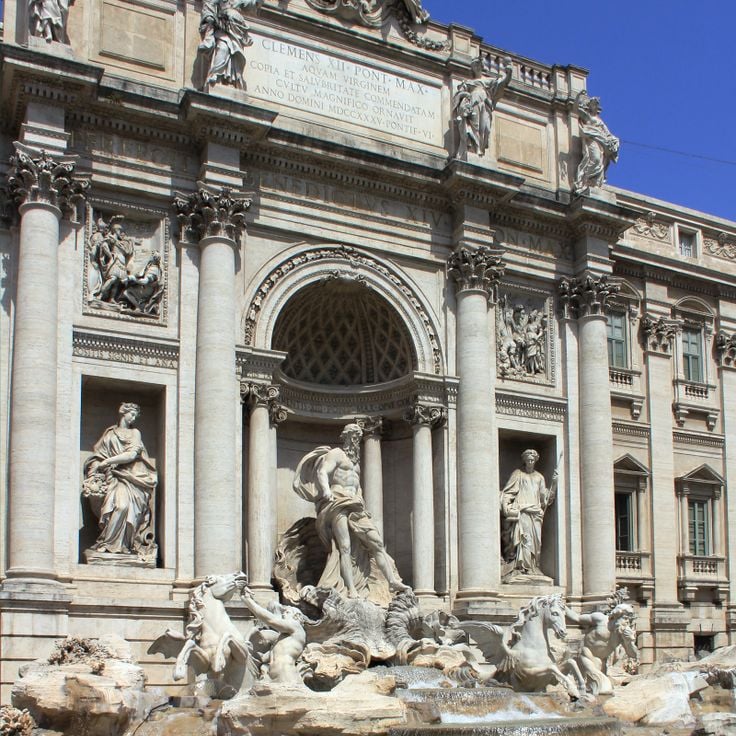
This 18th-century baroque fountain shows Neptune on a shell-shaped chariot. Water flows over rocks into a large basin. The fountain stands in a small piazza, surrounded by ochre-colored buildings. People toss coins into the water, following the custom that promises a return to Rome. The architecture combines dramatic sculptures with natural elements like stones and flowing water. In the evening, lights illuminate the scene and emphasize the movement of the statues and water.
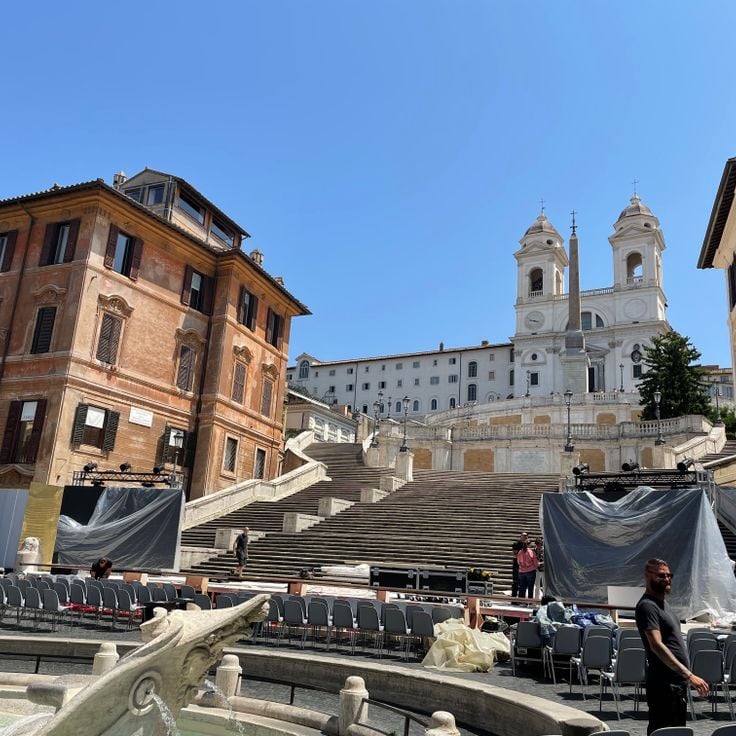
These steps connect Piazza di Spagna with the church of Trinità dei Monti on the hill above. The 135 stairs from the 18th century draw visitors who rest on them or look out over the square from the top. The fountain at the base and the facades of the surrounding buildings create a frame for photographs. In the morning and evening the light changes the color of the stones and the church.
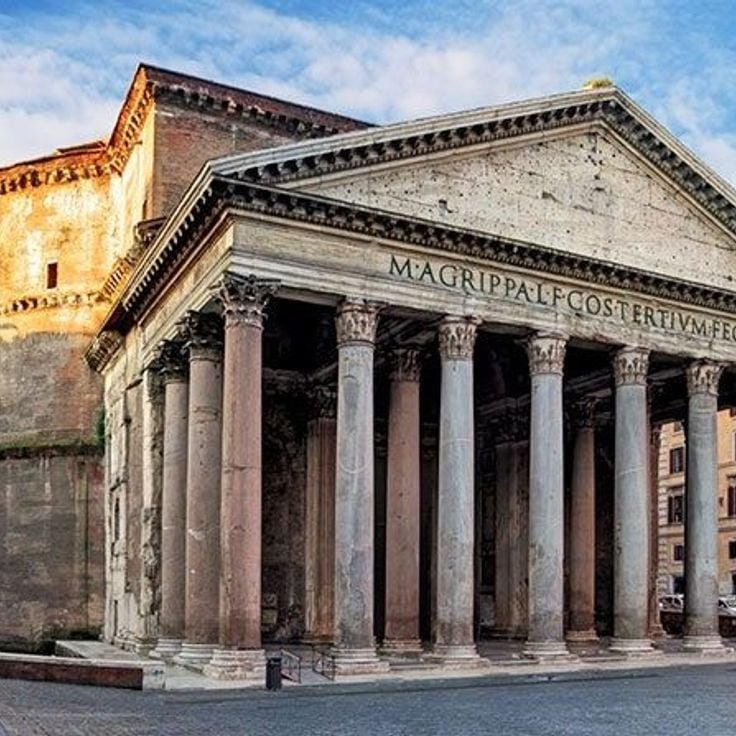
This Roman building from the 2nd century displays a dome measuring 43 meters (141 feet) across with a circular opening at its center. The Pantheon stands as an example of Roman engineering. The interior receives natural light through the opening, which travels across floors and walls throughout the day. The massive dome rests on thick walls without visible supports. Visitors often find a quiet moment in this ancient space, which today serves as a popular subject for photographers in Rome.
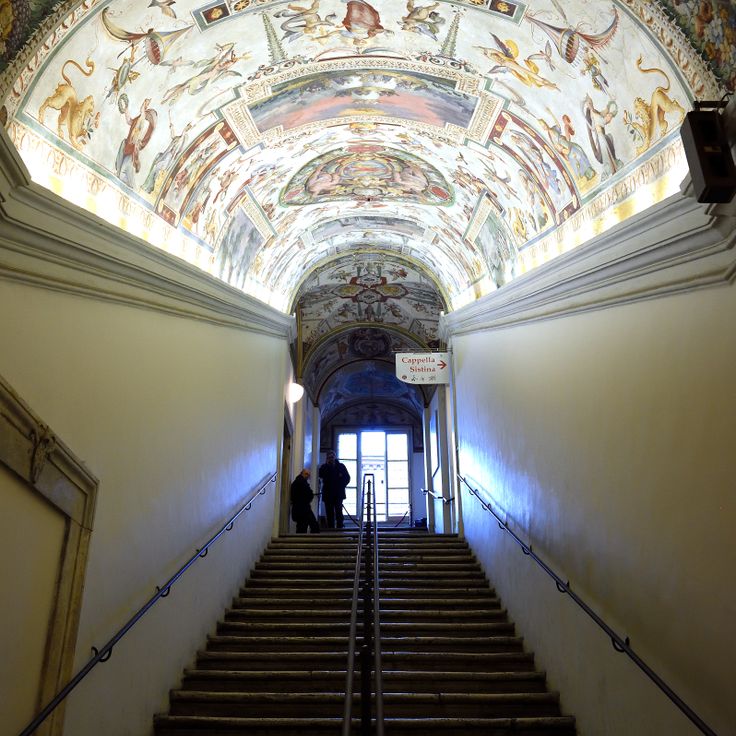
These museums in Vatican City display Roman sculptures and Renaissance works across 54 exhibition halls. Visitors walk through long corridors lined with statues, tapestries and paintings that tell centuries of artistic creation. The Sistine Chapel with Michelangelo's frescoes marks the culmination of the route. Photographers find subjects in the tall rooms with decorated ceiling paintings, in the courtyards with ancient fragments, and along the winding staircases. Light falls through high windows onto marble figures and golden frames as crowds move through the galleries each day.
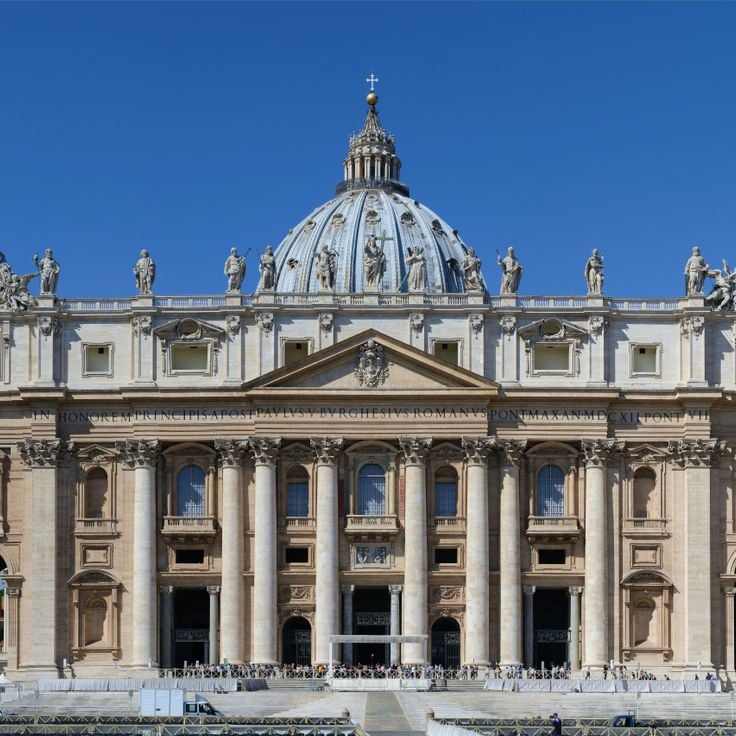
This basilica stands at the center of the Catholic Church and displays works by Bernini and Michelangelo. The dome rises above the Vatican hill and is visible from many points across the city. Inside, rows of columns lead through the wide nave. Light falls through tall windows onto mosaics and sculptures. Visitors move slowly through the spaces, viewing altars and chapels. The architecture combines Renaissance and Baroque styles. From the dome, you look out over the city and the surrounding gardens.
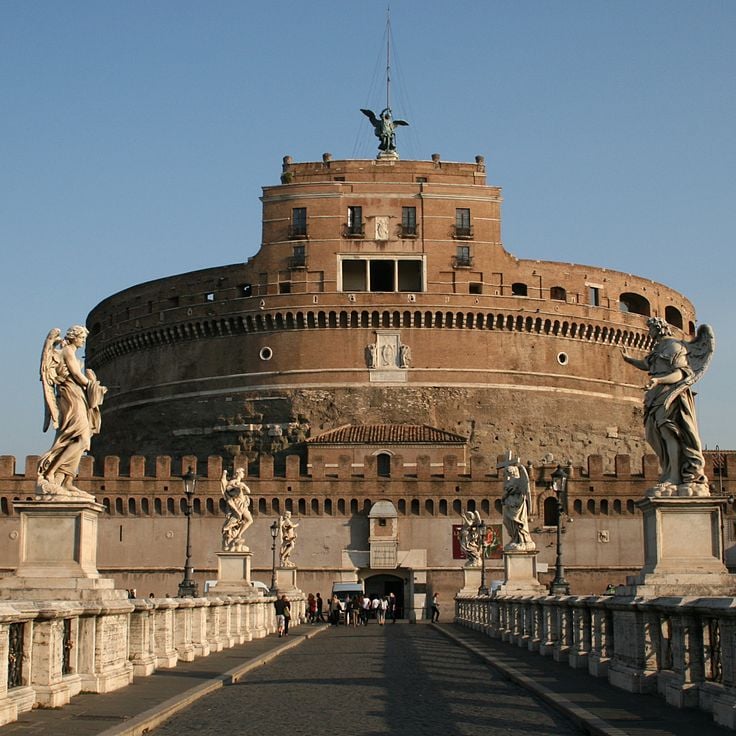
This fortress rises along the Tiber as a round, solid structure from Roman times. The original purpose as a tomb shifted over centuries into a military stronghold and papal refuge. Thick stone walls enclose several floors with narrow passages, spiral staircases and underground cells. From the upper terrace the view opens across the city and the river. The bridge in front of the entrance, lined with stone figures, leads directly to the gate and connects the building to the opposite bank.
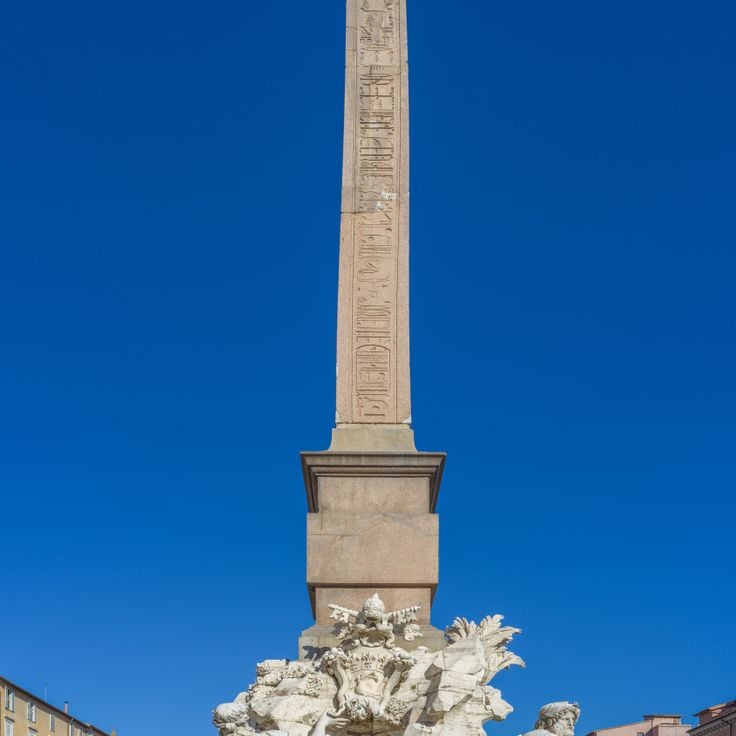
This square sits on the ruins of an ancient Roman stadium from the first century. The long oval shape recalls the old arena. Three fountains from the 16th and 17th centuries stand along the center. The Fountain of the Four Rivers by Bernini shows figures representing four rivers of the continents known at the time. The two other fountains at the ends complete the ensemble. Baroque facades surround the square. Cafés and restaurants line the edges. Street artists and painters animate the space. The open layout works well for photographs of architecture and city life.
This medieval district sits on the western bank of the Tiber and shows narrow cobblestone streets, wine bars in old cellars, and small craft shops on the ground floors of buildings. Trastevere keeps its traditional Roman character with laundry lines stretched between houses, hidden courtyards, and facades painted in ochre and rose. The streets lead to small piazzas where locals sit outside and visitors walk through the winding paths. This neighborhood comes alive in the evening when restaurants set tables outdoors and warm lamplight brightens the old walls.
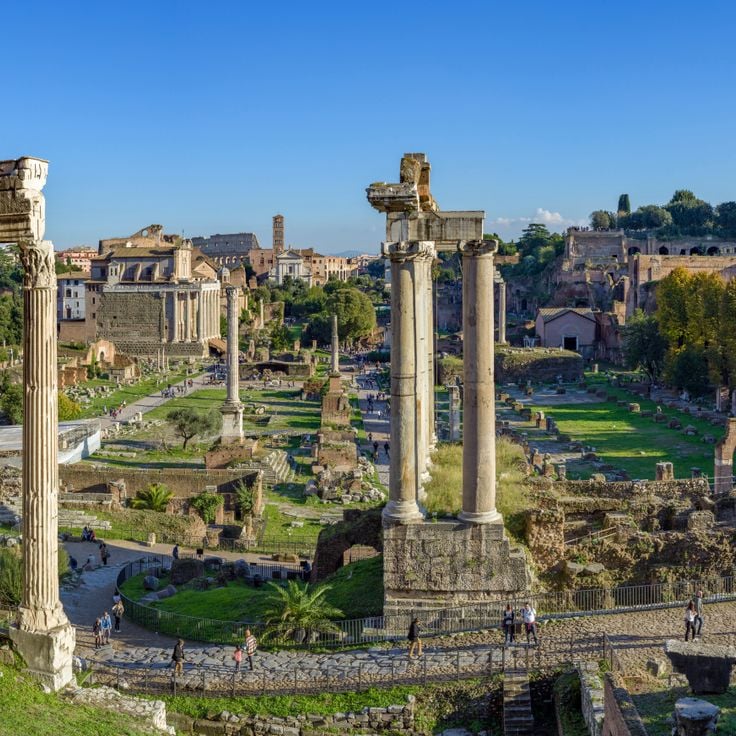
This archaeological site displays remains of temples, government buildings and monuments from the Roman Empire period. The Forum once served as the political and social center of the ancient city, and today visitors can walk among columns and ruins that reach back over two millennia. The site offers photographers subjects with ancient stone structures set against the Roman sky. The Forum connects naturally with nearby monuments and contributes to the sense of ancient history throughout the city.
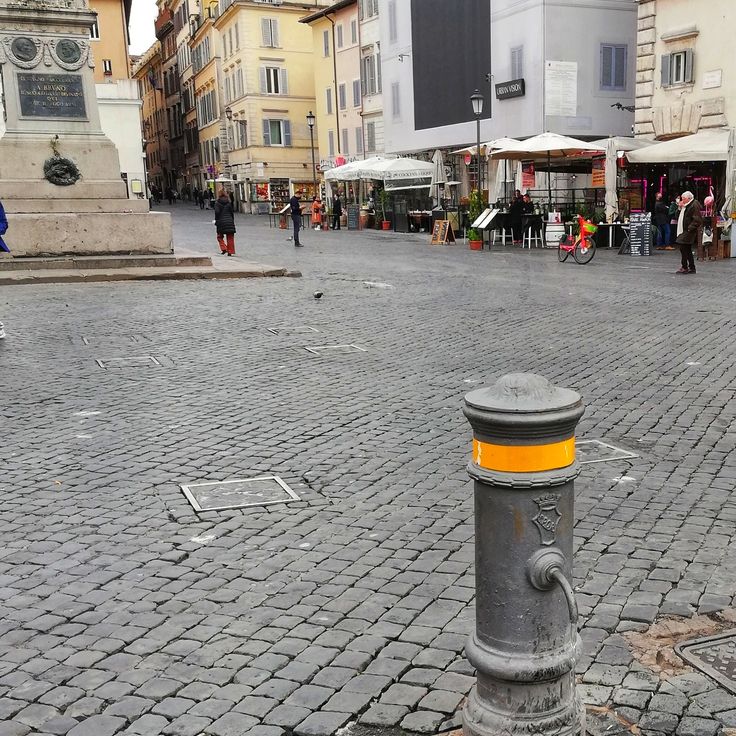
This square shows Roman daily life between market stalls and historic facades. Campo de' Fiori connects commerce with dining and offers photographers subjects of fruit, vegetables and flowers in the open air. The surrounding restaurants frame the central fountain, while architecture from past centuries forms the backdrop.
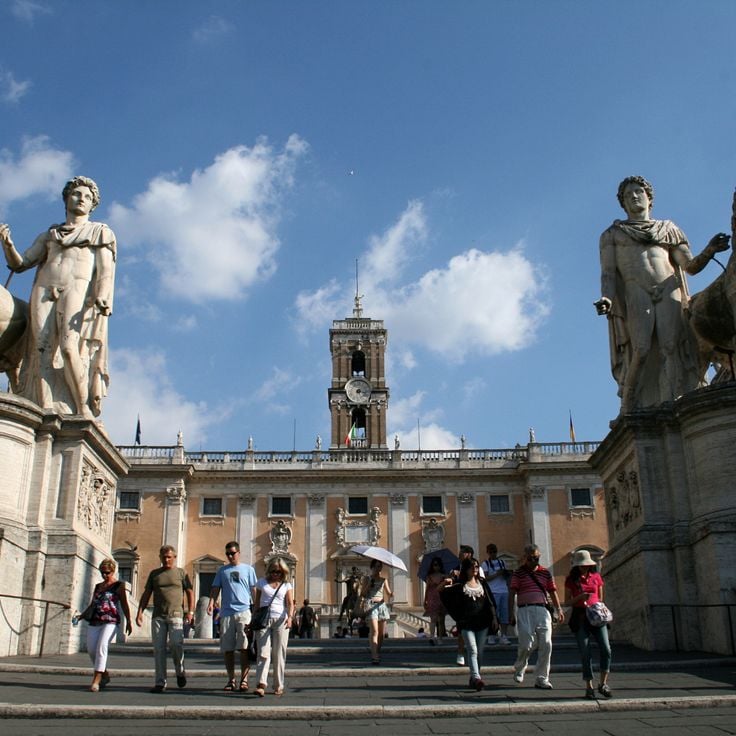
This square sits on Capitoline Hill and shows the Renaissance design by Michelangelo from the 16th century. Piazza del Campidoglio connects three palaces that now house museums, arranged in a trapezoidal shape. The geometric floor pattern in stone radiates from the center, where an equestrian statue of Marcus Aurelius stands. The wide staircase leads up from the Roman Forum and offers an ascent through history. The square opens toward the city and frames the domes in the background. Morning light falls softly on the ocher stone facades, while afternoon shadows emphasize the oval patterns on the ground. Photographers find symmetry and architectural details here for shots of Roman monuments.
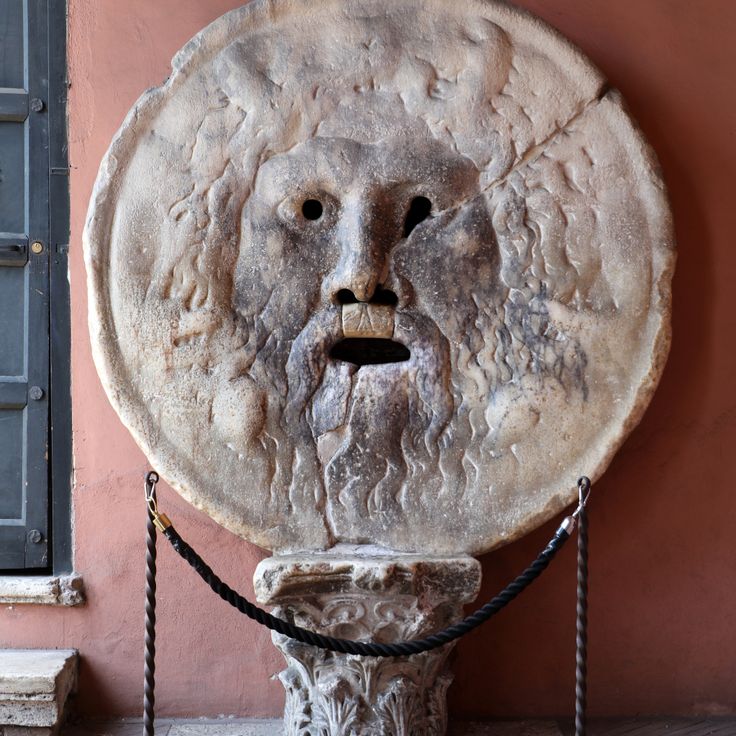
This round marble disk from ancient Rome hangs in the portico of the church of Santa Maria in Cosmedin. The Mouth of Truth probably dates from the first century and likely served as a drain cover or fountain piece. Many visitors place their hand inside the opening, as medieval legend says the face will close on the fingers of anyone who does not tell the truth. The disk measures roughly 5.7 feet (1.75 meters) across and shows what may be the sea god Oceanus or a river deity, with flowing beard and wild hair.
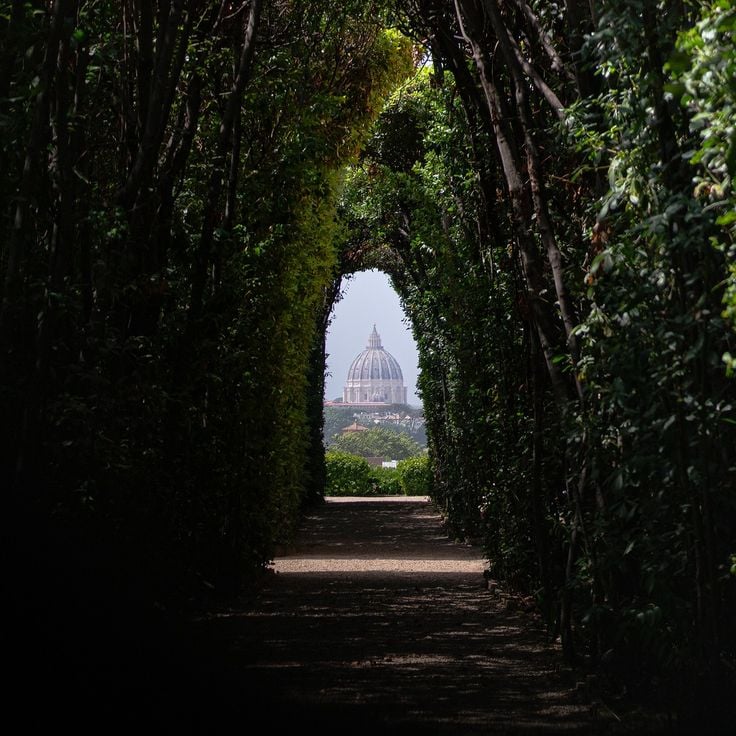
This keyhole in the door of the Maltese Priory offers a view of St. Peter's Basilica dome through a garden. The Aventine Keyhole attracts photographers in Rome looking for an unusual perspective on the papal landmark. The door belongs to an Order building on the Aventine, one of the city's seven hills. Visitors often line up to peer through the small opening and capture the framed view.
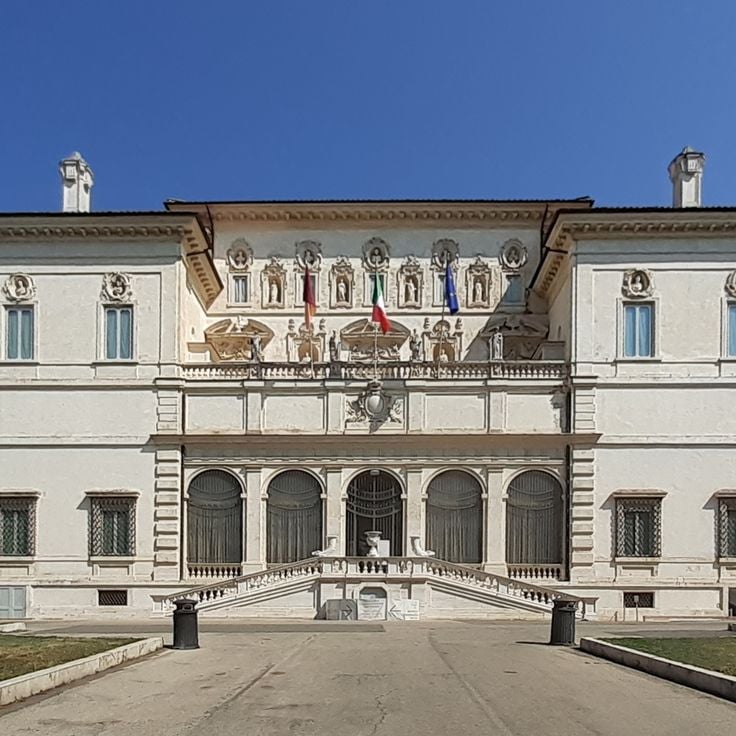
This gallery presents Roman art in a 17th-century villa. The collection includes works by Bernini and Caravaggio. The site offers photographers interior spaces with sculptures and paintings. The villa sits within the Villa Borghese Gardens. Visitors can walk through rooms with marble figures and baroque ceiling frescoes.
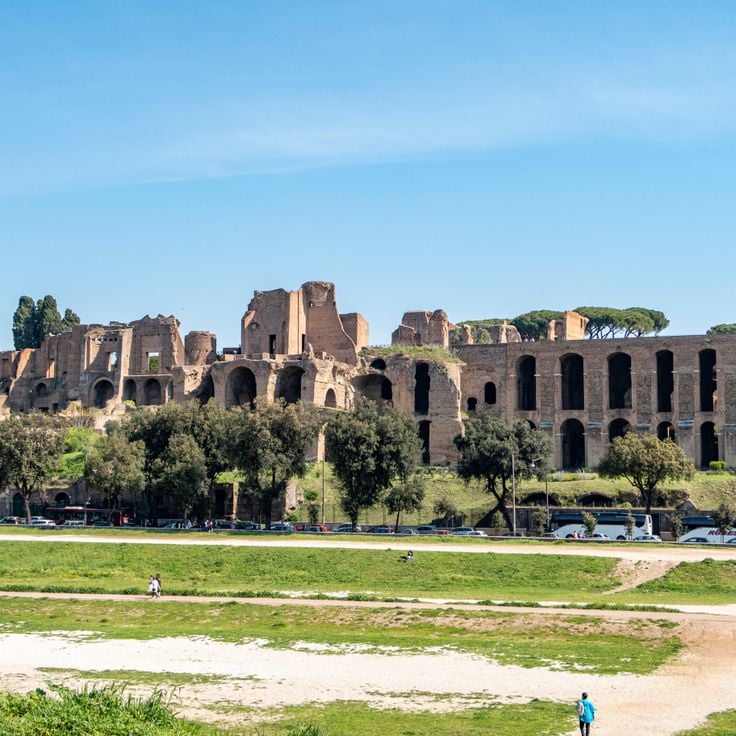
This hill preserves remains of Roman palaces from the 1st century. Among brick arches and terraced gardens, photographers experience the view over the Roman Forum and the Colosseum. Pine trees frame ancient walls while paths wind between archaeological areas. Morning or late afternoon light emphasizes the texture of the ruins and illuminates the city below. The Palatine Hill connects Roman history with perspectives for capturing the main monuments.
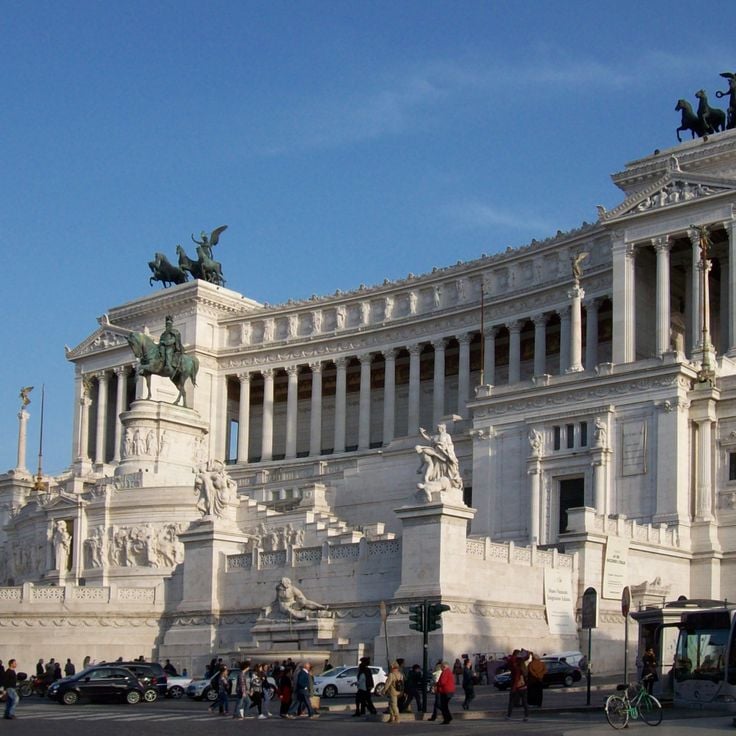
This white marble monument dominates Piazza Venezia in central Rome and provides a striking backdrop for photographs. The complex, completed in 1911, now houses the Museum of Italian Unification and sits directly beside the ancient Imperial Forums. Photographers use the wide staircases, rows of columns and elevated terraces for different angles. The bright facade stands out from the surrounding ochre buildings. From the upper platform, a panoramic view opens over the rooftops of the old city, the domes and the distant hills.
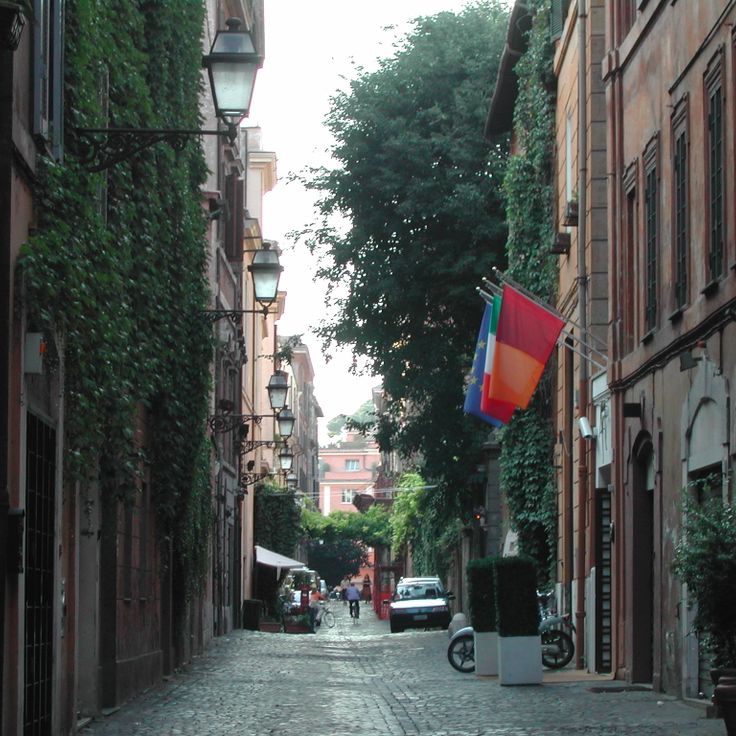
This historic street has housed artist studios, antique shops, and craft stores among Roman townhouses since the 17th century. Via Margutta connects art and everyday life in a quiet setting near the Spanish Steps. Small galleries open onto courtyards where ivy climbs ochre facades. The street is narrow and paved with cobblestones, lined with flower boxes on wrought iron balconies. Morning light falls gently on workshops where artisans work. This location offers photographers a setting that shows the creative heritage of Rome.
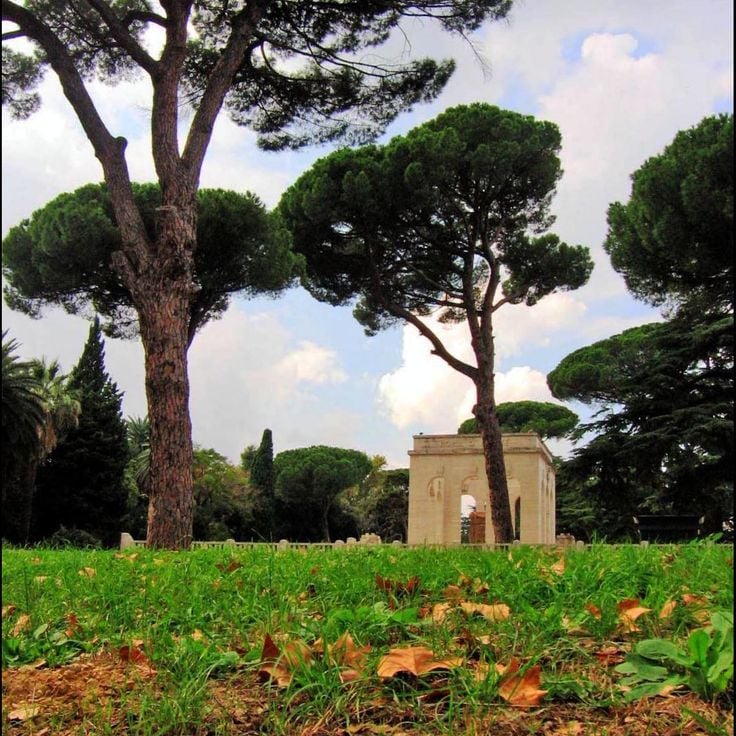
This hill rises above the western bank of the Tiber River and offers a wide view of the city, from domes to distant hills. The Janiculum sits slightly away from the tourist routes and is a popular spot for photographers looking to capture the panorama of Rome in one frame. A cannon is fired here every day at noon, a ritual that has been in place for more than a century. The terrace is often visited by locals who gather here, while street musicians and vendors add to the atmosphere. The Janiculum combines history with a quiet viewpoint over the rooftops and monuments of the city.
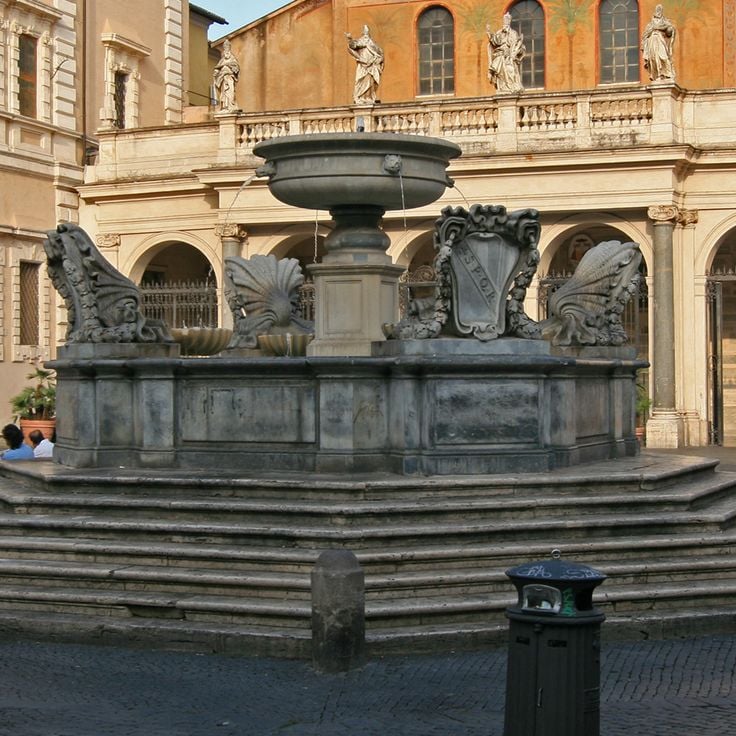
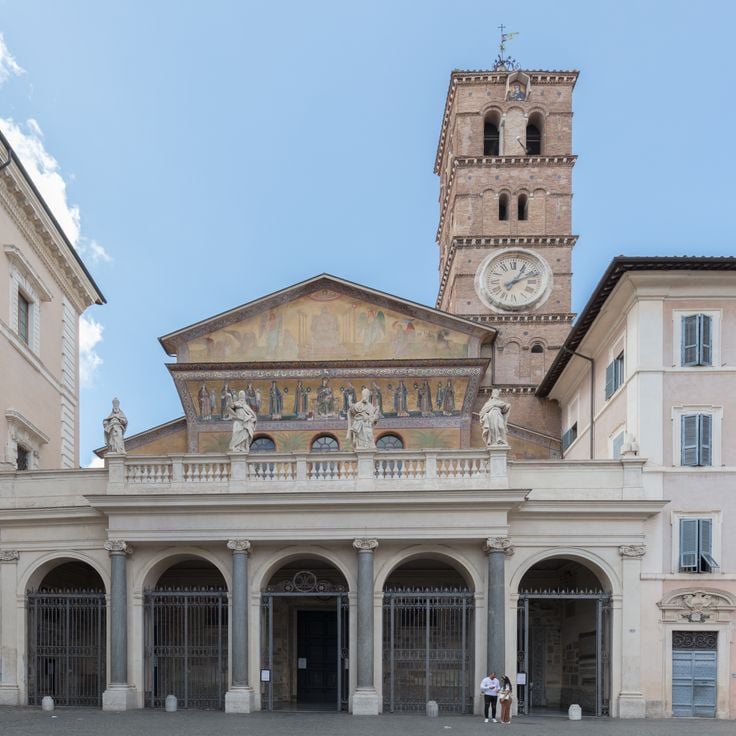
This basilica from the 12th century stands in the heart of Trastevere and combines different architectural periods. The facade shows golden mosaics that glow at sunset. Inside, ancient Roman columns support the roof while the apse displays medieval golden mosaics. The floor has colorful marble patterns. In front of the church, locals and travelers gather on the square with its old fountain. Street musicians often play here. The mosaics show religious scenes in warm tones. Santa Maria in Trastevere works well for capturing historical details and the animated square atmosphere.
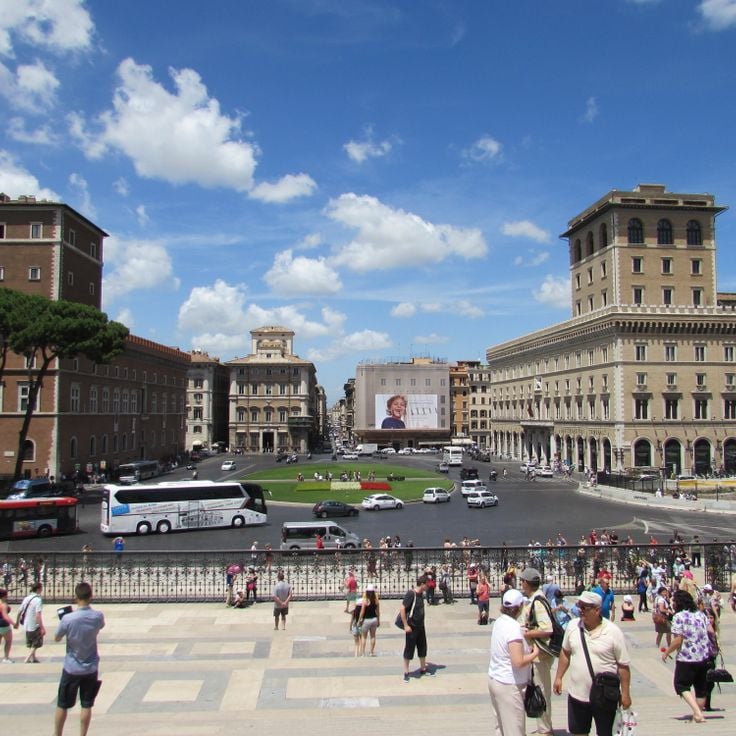
This central square connects several main roads of Rome and displays monumental buildings from different periods. Piazza Venezia serves as a hub where historic routes cross and where the Altare della Patria with its white marble facades dominates the space. The square is busy with traffic and visitors moving between the surrounding neighborhoods. From here you can walk to the ancient forums and the Capitoline Hill. The architecture ranges from Renaissance palaces to 19th century monuments. Photographers use the perspectives on the buildings and the wide staircases leading up to the monument.
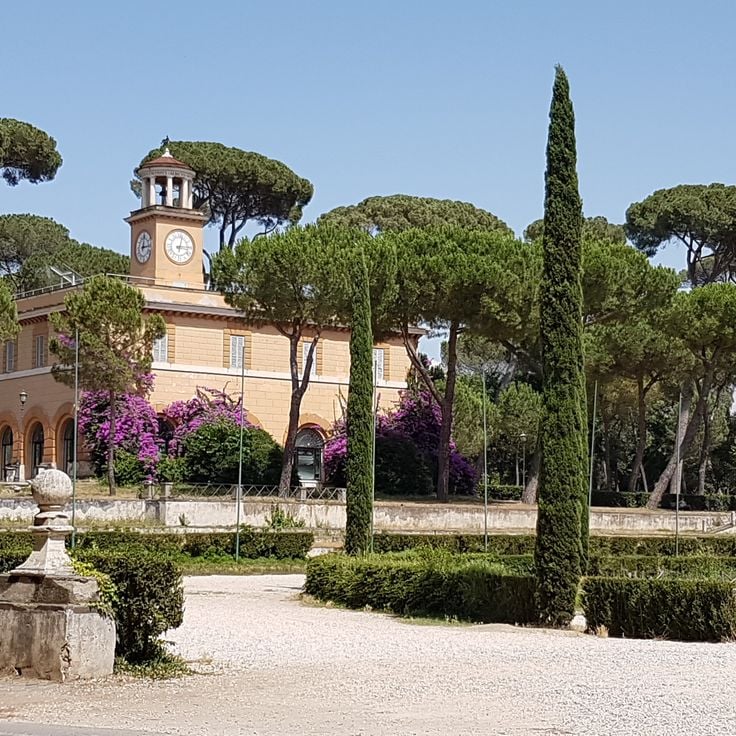
These gardens form a popular backdrop for photographers seeking to combine Roman green spaces with historical elements. The grounds stretch across a large area in the northern part of the city, offering maintained paths, shaded avenues and open lawns. Visitors find various buildings from different centuries here, including a gallery with artworks and a small theater. A lake with rowboats sits centrally in the gardens and serves as a subject for shots featuring water and vegetation. The Italian garden layouts show classical design with sculptures, fountains and sightlines. From elevated points, images of Roman rooftops and domes emerge in the background.
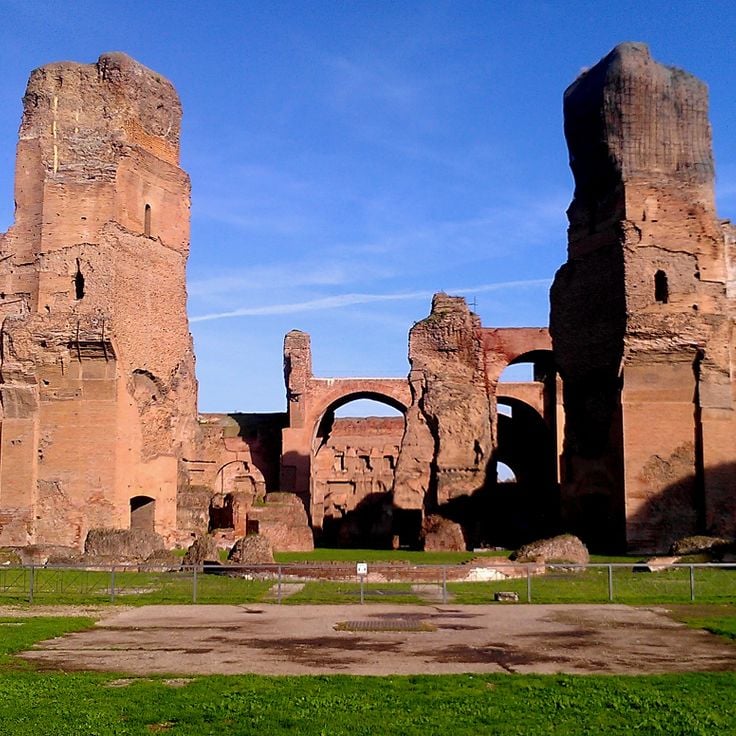
These ancient baths from the 3rd century show Roman life at its most expansive. The Caracalla Baths could hold around 1600 people at once and included libraries and sports grounds alongside the various bathing areas. Today, the ruins stand as a photographic subject, with high brick walls and arches rising against the sky. The remains of the great halls, mosaics, and underground passages give a sense of the scale of Roman architecture and public spaces in ancient times.
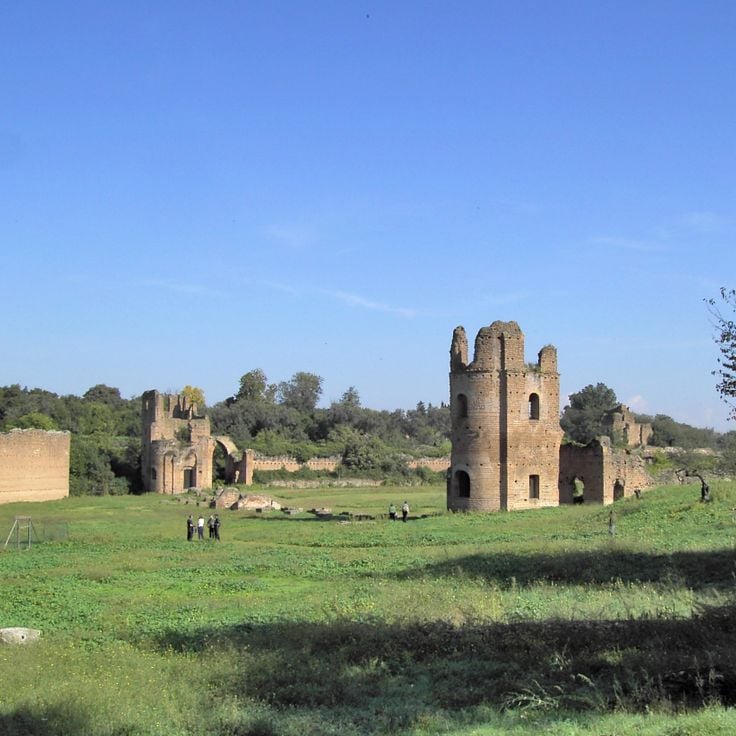
The Via Appia Antica connects Rome to Brindisi and was built in 312 BC. This section near Rome offers views of centuries-old stone paving, ruins of ancient tombs, and entrances to catacombs along the route. Cypress and pine trees line the road, while burial monuments and columns from different periods mark the landscape. Cyclists and walkers use the road on weekends when traffic is closed. The surroundings feel quiet, with open fields and sparse buildings that keep the view clear to the historical structures.
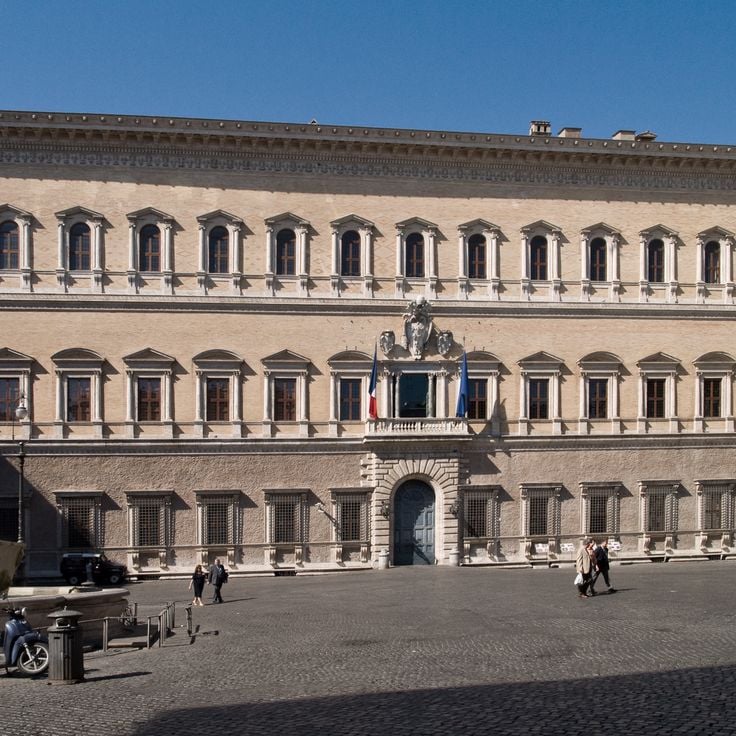
This 16th-century palace houses the French Embassy and displays architectural elements by Michelangelo. The facade of Palazzo Farnese presents clean Renaissance lines with three stories and a central entrance. The courtyard connects ancient Roman columns with Renaissance arches. As an embassy building, access is restricted, but the exterior facade remains an example of Roman palace architecture for photographers in the city.
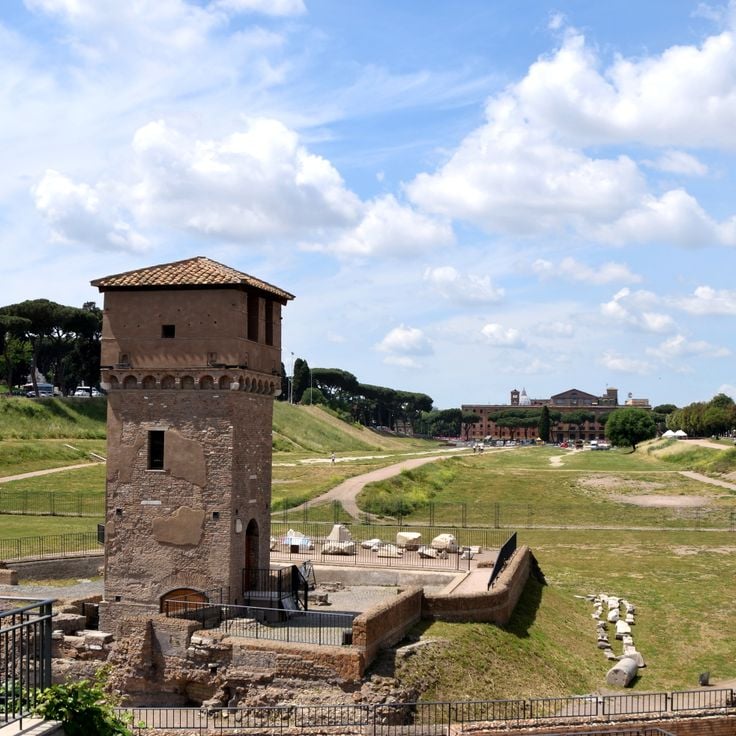
This ancient circus stretches across open grounds between the Palatine Hill and the Aventine. The remains show where chariot races once took place before crowds of thousands. Today the site is a grassy field where you can trace the outline of the former arena. The length of the racetrack and the visible foundations convey the scale of Roman entertainment architecture. From here you get views of the surrounding hills and historical structures.
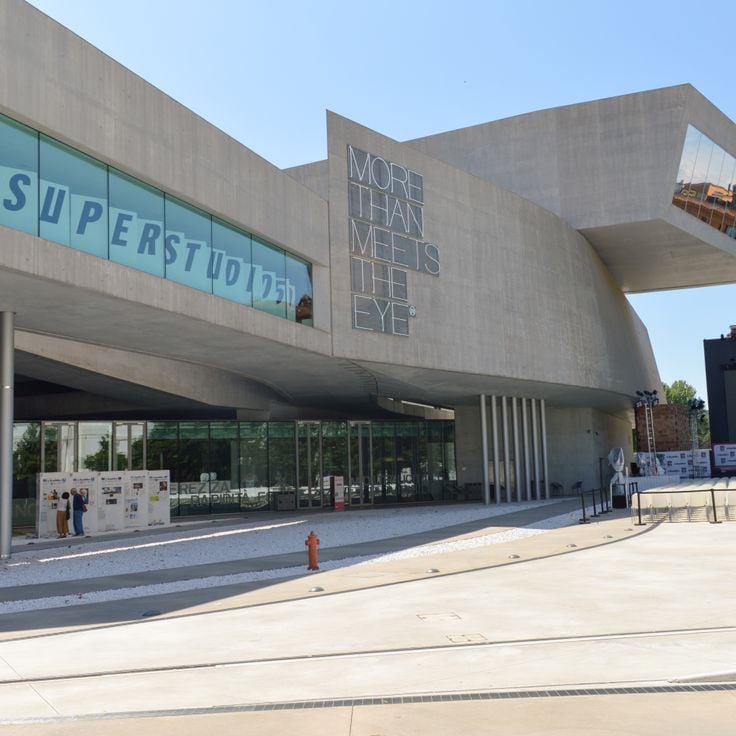
This museum displays modern art in a building with curved walls and multiple levels. The exhibition spaces offer room for contemporary works and rotating installations. Visitors find paintings, sculptures and digital pieces by international artists. The interior feels open through natural light and flowing galleries. The architecture itself is often photographed, as the curves and perspectives create interesting compositions. This place connects the art scene of Rome with current trends in contemporary art.
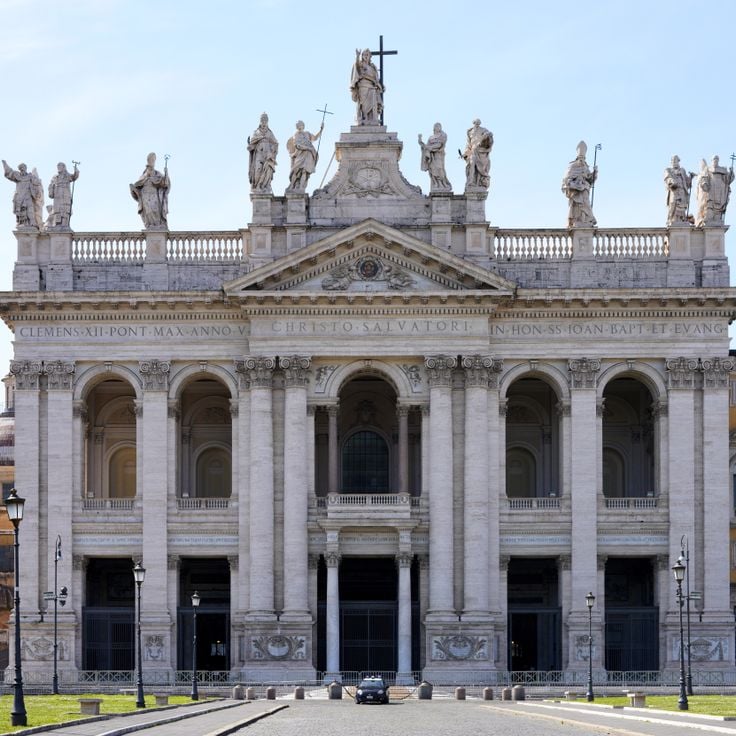
This basilica serves as the cathedral of the Diocese of Rome and the seat of the Pope. The 18th-century facade shows monumental statues of Christ and the Church Doctors. Inside, five naves extend under a painted wooden ceiling. The 13th-century cloister connects twisted columns with mosaics. The complex includes the baptistery, where early baptisms took place. Photographers find light in the side aisles and in the square with the obelisk. San Giovanni in Laterano presents Roman church architecture away from the usual tourist routes.
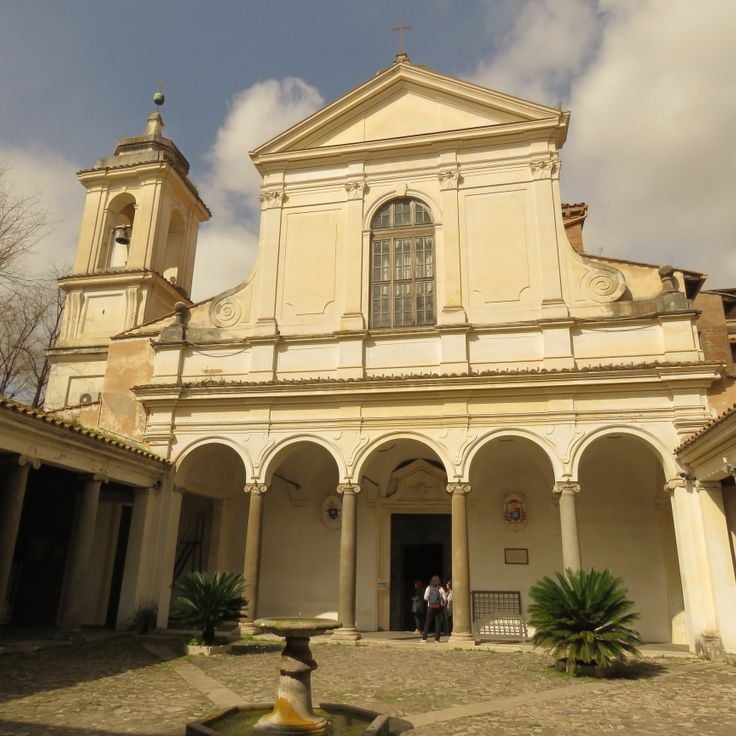
This basilica reveals three levels of Roman history. The upper church from the 12th century sits above an older church from the 4th century, which was built over Roman structures. San Clemente al Laterano offers photographers mosaics, frescoes and ancient chambers. Visitors can descend through centuries, exploring different layers of construction, from medieval chapels to underground rooms dating back to Roman times.
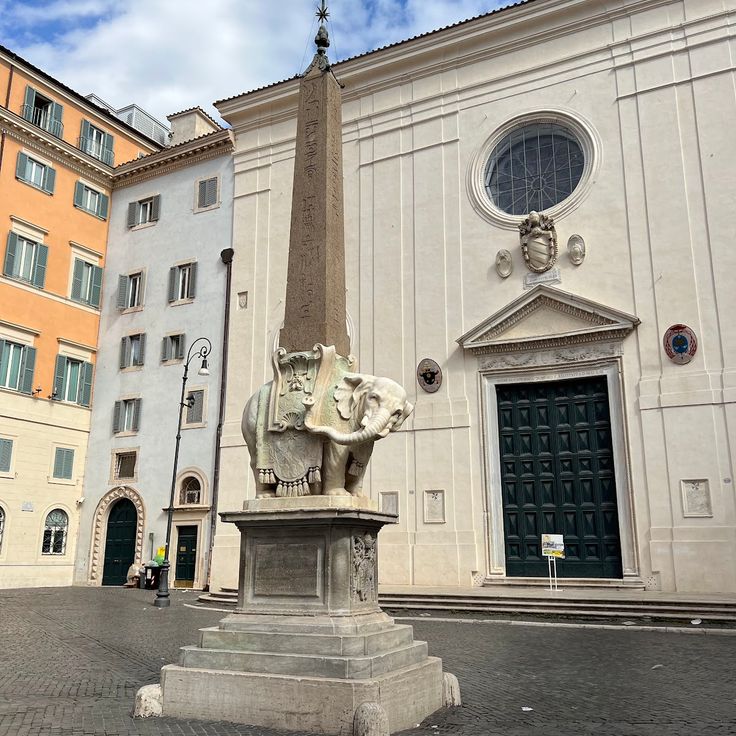
This Gothic church was built on the foundations of an ancient temple dedicated to Minerva, about 200 meters from the Pantheon. The building shows the only medieval church facade in Rome. The blue coffered ceiling spans the three-aisle interior with columns of gray granite. Along the walls are tombs from the 15th and 16th centuries. In the presbytery stands a statue of Christ by Michelangelo carved in white marble, holding a cross staff. Behind the main altar rests Saint Catherine of Siena. The small square in front of the church offers a quiet place to pause between the narrow streets of the old center.
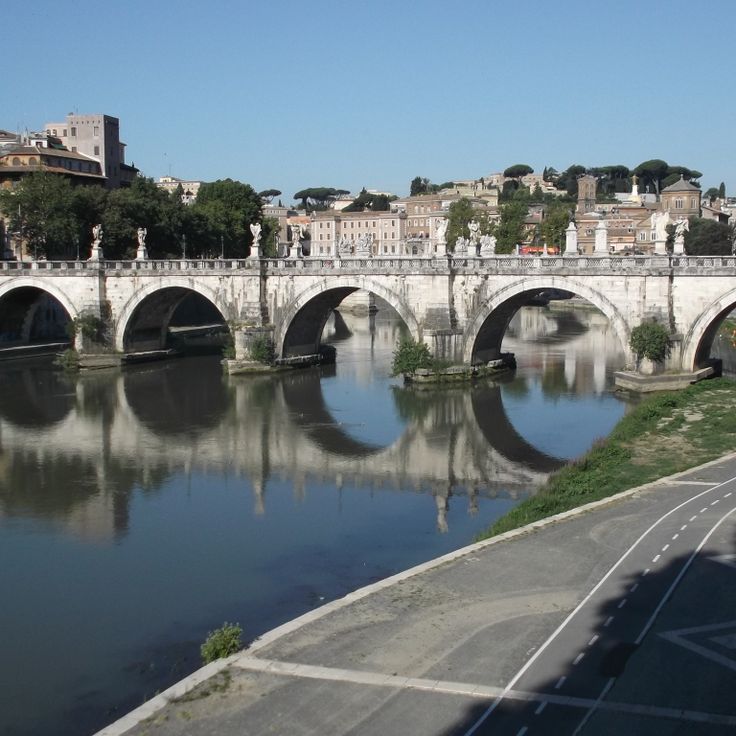
This bridge connects the center of the city with Castel Sant'Angelo and features ten Baroque angel statues. Most of the angels standing on the bridge today are reproductions of 17th-century originals by Bernini and his students. The bridge itself dates back to the 2nd century, when it led to the mausoleum of Emperor Hadrian. Walking across the Tiber here, you see the dome of St. Peter's and the river banks on either side.
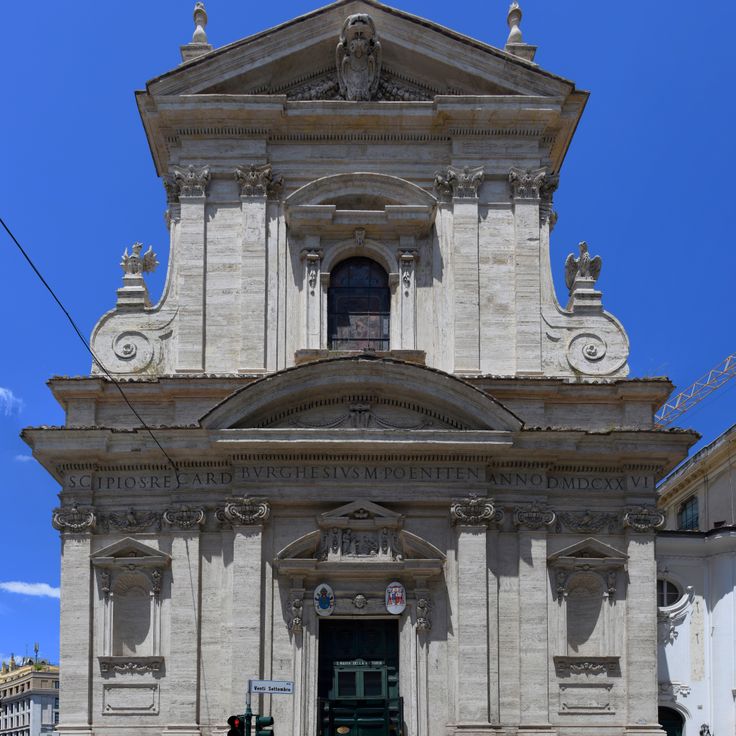
This baroque church in central Rome houses the Cornaro Chapel, where Bernini's marble sculpture of Saint Teresa in religious ecstasy can be seen. The interior displays gilded stucco work and ceiling frescoes. Soft light from a hidden window illuminates the sculpture and creates a theatrical effect. The chapel resembles a small stage, with the Cornaro family watching from the side walls. The church sits on a quiet street away from the tourist crowds and offers a moment of contemplation. Photographers come here to capture the play of light and the drama of the scene.
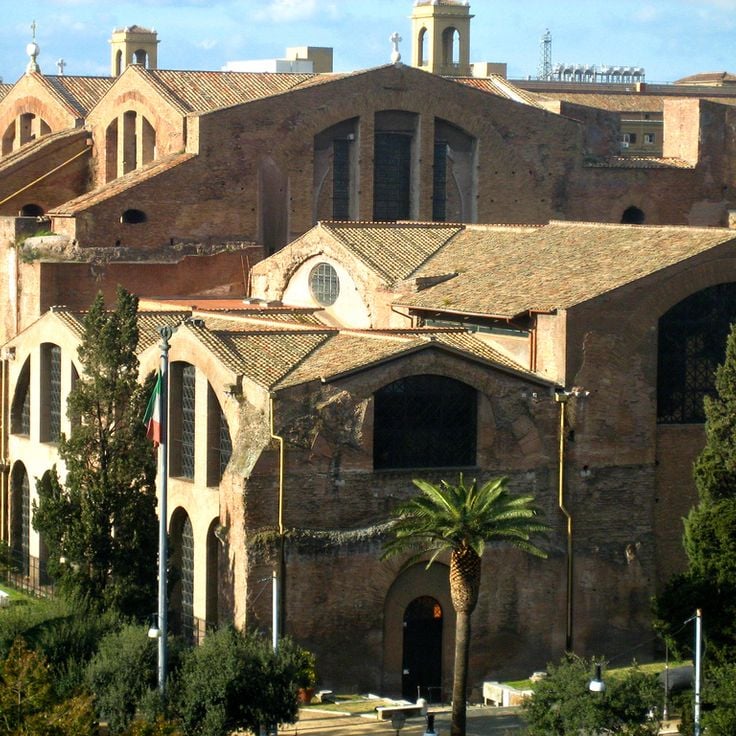
This third-century bathing complex covers 13 hectares (32 acres) in central Rome. The Baths of Diocletian were once the largest public bathing facility in the city, with space for thousands of visitors at a time. Today the surviving rooms and halls house the National Museum, displaying Roman sculptures, inscriptions and archaeological finds. The high vaults and massive brick walls show the scale of ancient construction. Between the historic structures run quiet courtyards with trees and fountains that invite you to linger.
This ancient Roman amphitheater stands in the heart of the city and ranks among the most photographed structures in the world. The Colosseum was built in the first century AD from travertine and tufa stone, serving as an arena for gladiator fights and public spectacles. The outer facade shows three levels of arches, while the interior reveals underground passages once used by fighters and animals to enter the arena. Photographers find subjects from many angles, from the streets around it to the upper tiers overlooking the city.
This 18th-century baroque fountain shows Neptune on a shell-shaped chariot. Water flows over rocks into a large basin. The fountain stands in a small piazza, surrounded by ochre-colored buildings. People toss coins into the water, following the custom that promises a return to Rome. The architecture combines dramatic sculptures with natural elements like stones and flowing water. In the evening, lights illuminate the scene and emphasize the movement of the statues and water.
These steps connect Piazza di Spagna with the church of Trinità dei Monti on the hill above. The 135 stairs from the 18th century draw visitors who rest on them or look out over the square from the top. The fountain at the base and the facades of the surrounding buildings create a frame for photographs. In the morning and evening the light changes the color of the stones and the church.
This Roman building from the 2nd century displays a dome measuring 43 meters (141 feet) across with a circular opening at its center. The Pantheon stands as an example of Roman engineering. The interior receives natural light through the opening, which travels across floors and walls throughout the day. The massive dome rests on thick walls without visible supports. Visitors often find a quiet moment in this ancient space, which today serves as a popular subject for photographers in Rome.
These museums in Vatican City display Roman sculptures and Renaissance works across 54 exhibition halls. Visitors walk through long corridors lined with statues, tapestries and paintings that tell centuries of artistic creation. The Sistine Chapel with Michelangelo's frescoes marks the culmination of the route. Photographers find subjects in the tall rooms with decorated ceiling paintings, in the courtyards with ancient fragments, and along the winding staircases. Light falls through high windows onto marble figures and golden frames as crowds move through the galleries each day.
This basilica stands at the center of the Catholic Church and displays works by Bernini and Michelangelo. The dome rises above the Vatican hill and is visible from many points across the city. Inside, rows of columns lead through the wide nave. Light falls through tall windows onto mosaics and sculptures. Visitors move slowly through the spaces, viewing altars and chapels. The architecture combines Renaissance and Baroque styles. From the dome, you look out over the city and the surrounding gardens.
This fortress rises along the Tiber as a round, solid structure from Roman times. The original purpose as a tomb shifted over centuries into a military stronghold and papal refuge. Thick stone walls enclose several floors with narrow passages, spiral staircases and underground cells. From the upper terrace the view opens across the city and the river. The bridge in front of the entrance, lined with stone figures, leads directly to the gate and connects the building to the opposite bank.
This square sits on the ruins of an ancient Roman stadium from the first century. The long oval shape recalls the old arena. Three fountains from the 16th and 17th centuries stand along the center. The Fountain of the Four Rivers by Bernini shows figures representing four rivers of the continents known at the time. The two other fountains at the ends complete the ensemble. Baroque facades surround the square. Cafés and restaurants line the edges. Street artists and painters animate the space. The open layout works well for photographs of architecture and city life.
This medieval district sits on the western bank of the Tiber and shows narrow cobblestone streets, wine bars in old cellars, and small craft shops on the ground floors of buildings. Trastevere keeps its traditional Roman character with laundry lines stretched between houses, hidden courtyards, and facades painted in ochre and rose. The streets lead to small piazzas where locals sit outside and visitors walk through the winding paths. This neighborhood comes alive in the evening when restaurants set tables outdoors and warm lamplight brightens the old walls.
This archaeological site displays remains of temples, government buildings and monuments from the Roman Empire period. The Forum once served as the political and social center of the ancient city, and today visitors can walk among columns and ruins that reach back over two millennia. The site offers photographers subjects with ancient stone structures set against the Roman sky. The Forum connects naturally with nearby monuments and contributes to the sense of ancient history throughout the city.
This square shows Roman daily life between market stalls and historic facades. Campo de' Fiori connects commerce with dining and offers photographers subjects of fruit, vegetables and flowers in the open air. The surrounding restaurants frame the central fountain, while architecture from past centuries forms the backdrop.
This square sits on Capitoline Hill and shows the Renaissance design by Michelangelo from the 16th century. Piazza del Campidoglio connects three palaces that now house museums, arranged in a trapezoidal shape. The geometric floor pattern in stone radiates from the center, where an equestrian statue of Marcus Aurelius stands. The wide staircase leads up from the Roman Forum and offers an ascent through history. The square opens toward the city and frames the domes in the background. Morning light falls softly on the ocher stone facades, while afternoon shadows emphasize the oval patterns on the ground. Photographers find symmetry and architectural details here for shots of Roman monuments.
This round marble disk from ancient Rome hangs in the portico of the church of Santa Maria in Cosmedin. The Mouth of Truth probably dates from the first century and likely served as a drain cover or fountain piece. Many visitors place their hand inside the opening, as medieval legend says the face will close on the fingers of anyone who does not tell the truth. The disk measures roughly 5.7 feet (1.75 meters) across and shows what may be the sea god Oceanus or a river deity, with flowing beard and wild hair.
This keyhole in the door of the Maltese Priory offers a view of St. Peter's Basilica dome through a garden. The Aventine Keyhole attracts photographers in Rome looking for an unusual perspective on the papal landmark. The door belongs to an Order building on the Aventine, one of the city's seven hills. Visitors often line up to peer through the small opening and capture the framed view.
This gallery presents Roman art in a 17th-century villa. The collection includes works by Bernini and Caravaggio. The site offers photographers interior spaces with sculptures and paintings. The villa sits within the Villa Borghese Gardens. Visitors can walk through rooms with marble figures and baroque ceiling frescoes.
This hill preserves remains of Roman palaces from the 1st century. Among brick arches and terraced gardens, photographers experience the view over the Roman Forum and the Colosseum. Pine trees frame ancient walls while paths wind between archaeological areas. Morning or late afternoon light emphasizes the texture of the ruins and illuminates the city below. The Palatine Hill connects Roman history with perspectives for capturing the main monuments.
This white marble monument dominates Piazza Venezia in central Rome and provides a striking backdrop for photographs. The complex, completed in 1911, now houses the Museum of Italian Unification and sits directly beside the ancient Imperial Forums. Photographers use the wide staircases, rows of columns and elevated terraces for different angles. The bright facade stands out from the surrounding ochre buildings. From the upper platform, a panoramic view opens over the rooftops of the old city, the domes and the distant hills.
This historic street has housed artist studios, antique shops, and craft stores among Roman townhouses since the 17th century. Via Margutta connects art and everyday life in a quiet setting near the Spanish Steps. Small galleries open onto courtyards where ivy climbs ochre facades. The street is narrow and paved with cobblestones, lined with flower boxes on wrought iron balconies. Morning light falls gently on workshops where artisans work. This location offers photographers a setting that shows the creative heritage of Rome.
This hill rises above the western bank of the Tiber River and offers a wide view of the city, from domes to distant hills. The Janiculum sits slightly away from the tourist routes and is a popular spot for photographers looking to capture the panorama of Rome in one frame. A cannon is fired here every day at noon, a ritual that has been in place for more than a century. The terrace is often visited by locals who gather here, while street musicians and vendors add to the atmosphere. The Janiculum combines history with a quiet viewpoint over the rooftops and monuments of the city.
This basilica from the 12th century stands in the heart of Trastevere and combines different architectural periods. The facade shows golden mosaics that glow at sunset. Inside, ancient Roman columns support the roof while the apse displays medieval golden mosaics. The floor has colorful marble patterns. In front of the church, locals and travelers gather on the square with its old fountain. Street musicians often play here. The mosaics show religious scenes in warm tones. Santa Maria in Trastevere works well for capturing historical details and the animated square atmosphere.
This central square connects several main roads of Rome and displays monumental buildings from different periods. Piazza Venezia serves as a hub where historic routes cross and where the Altare della Patria with its white marble facades dominates the space. The square is busy with traffic and visitors moving between the surrounding neighborhoods. From here you can walk to the ancient forums and the Capitoline Hill. The architecture ranges from Renaissance palaces to 19th century monuments. Photographers use the perspectives on the buildings and the wide staircases leading up to the monument.
These gardens form a popular backdrop for photographers seeking to combine Roman green spaces with historical elements. The grounds stretch across a large area in the northern part of the city, offering maintained paths, shaded avenues and open lawns. Visitors find various buildings from different centuries here, including a gallery with artworks and a small theater. A lake with rowboats sits centrally in the gardens and serves as a subject for shots featuring water and vegetation. The Italian garden layouts show classical design with sculptures, fountains and sightlines. From elevated points, images of Roman rooftops and domes emerge in the background.
These ancient baths from the 3rd century show Roman life at its most expansive. The Caracalla Baths could hold around 1600 people at once and included libraries and sports grounds alongside the various bathing areas. Today, the ruins stand as a photographic subject, with high brick walls and arches rising against the sky. The remains of the great halls, mosaics, and underground passages give a sense of the scale of Roman architecture and public spaces in ancient times.
The Via Appia Antica connects Rome to Brindisi and was built in 312 BC. This section near Rome offers views of centuries-old stone paving, ruins of ancient tombs, and entrances to catacombs along the route. Cypress and pine trees line the road, while burial monuments and columns from different periods mark the landscape. Cyclists and walkers use the road on weekends when traffic is closed. The surroundings feel quiet, with open fields and sparse buildings that keep the view clear to the historical structures.
This 16th-century palace houses the French Embassy and displays architectural elements by Michelangelo. The facade of Palazzo Farnese presents clean Renaissance lines with three stories and a central entrance. The courtyard connects ancient Roman columns with Renaissance arches. As an embassy building, access is restricted, but the exterior facade remains an example of Roman palace architecture for photographers in the city.
This ancient circus stretches across open grounds between the Palatine Hill and the Aventine. The remains show where chariot races once took place before crowds of thousands. Today the site is a grassy field where you can trace the outline of the former arena. The length of the racetrack and the visible foundations convey the scale of Roman entertainment architecture. From here you get views of the surrounding hills and historical structures.
This museum displays modern art in a building with curved walls and multiple levels. The exhibition spaces offer room for contemporary works and rotating installations. Visitors find paintings, sculptures and digital pieces by international artists. The interior feels open through natural light and flowing galleries. The architecture itself is often photographed, as the curves and perspectives create interesting compositions. This place connects the art scene of Rome with current trends in contemporary art.
This basilica serves as the cathedral of the Diocese of Rome and the seat of the Pope. The 18th-century facade shows monumental statues of Christ and the Church Doctors. Inside, five naves extend under a painted wooden ceiling. The 13th-century cloister connects twisted columns with mosaics. The complex includes the baptistery, where early baptisms took place. Photographers find light in the side aisles and in the square with the obelisk. San Giovanni in Laterano presents Roman church architecture away from the usual tourist routes.
This basilica reveals three levels of Roman history. The upper church from the 12th century sits above an older church from the 4th century, which was built over Roman structures. San Clemente al Laterano offers photographers mosaics, frescoes and ancient chambers. Visitors can descend through centuries, exploring different layers of construction, from medieval chapels to underground rooms dating back to Roman times.
This Gothic church was built on the foundations of an ancient temple dedicated to Minerva, about 200 meters from the Pantheon. The building shows the only medieval church facade in Rome. The blue coffered ceiling spans the three-aisle interior with columns of gray granite. Along the walls are tombs from the 15th and 16th centuries. In the presbytery stands a statue of Christ by Michelangelo carved in white marble, holding a cross staff. Behind the main altar rests Saint Catherine of Siena. The small square in front of the church offers a quiet place to pause between the narrow streets of the old center.
This bridge connects the center of the city with Castel Sant'Angelo and features ten Baroque angel statues. Most of the angels standing on the bridge today are reproductions of 17th-century originals by Bernini and his students. The bridge itself dates back to the 2nd century, when it led to the mausoleum of Emperor Hadrian. Walking across the Tiber here, you see the dome of St. Peter's and the river banks on either side.
This baroque church in central Rome houses the Cornaro Chapel, where Bernini's marble sculpture of Saint Teresa in religious ecstasy can be seen. The interior displays gilded stucco work and ceiling frescoes. Soft light from a hidden window illuminates the sculpture and creates a theatrical effect. The chapel resembles a small stage, with the Cornaro family watching from the side walls. The church sits on a quiet street away from the tourist crowds and offers a moment of contemplation. Photographers come here to capture the play of light and the drama of the scene.
This third-century bathing complex covers 13 hectares (32 acres) in central Rome. The Baths of Diocletian were once the largest public bathing facility in the city, with space for thousands of visitors at a time. Today the surviving rooms and halls house the National Museum, displaying Roman sculptures, inscriptions and archaeological finds. The high vaults and massive brick walls show the scale of ancient construction. Between the historic structures run quiet courtyards with trees and fountains that invite you to linger.
This ancient Roman amphitheater stands in the heart of the city and ranks among the most photographed structures in the world. The Colosseum was built in the first century AD from travertine and tufa stone, serving as an arena for gladiator fights and public spectacles. The outer facade shows three levels of arches, while the interior reveals underground passages once used by fighters and animals to enter the arena. Photographers find subjects from many angles, from the streets around it to the upper tiers overlooking the city.
This 18th-century baroque fountain shows Neptune on a shell-shaped chariot. Water flows over rocks into a large basin. The fountain stands in a small piazza, surrounded by ochre-colored buildings. People toss coins into the water, following the custom that promises a return to Rome. The architecture combines dramatic sculptures with natural elements like stones and flowing water. In the evening, lights illuminate the scene and emphasize the movement of the statues and water.
These steps connect Piazza di Spagna with the church of Trinità dei Monti on the hill above. The 135 stairs from the 18th century draw visitors who rest on them or look out over the square from the top. The fountain at the base and the facades of the surrounding buildings create a frame for photographs. In the morning and evening the light changes the color of the stones and the church.
This Roman building from the 2nd century displays a dome measuring 43 meters (141 feet) across with a circular opening at its center. The Pantheon stands as an example of Roman engineering. The interior receives natural light through the opening, which travels across floors and walls throughout the day. The massive dome rests on thick walls without visible supports. Visitors often find a quiet moment in this ancient space, which today serves as a popular subject for photographers in Rome.
These museums in Vatican City display Roman sculptures and Renaissance works across 54 exhibition halls. Visitors walk through long corridors lined with statues, tapestries and paintings that tell centuries of artistic creation. The Sistine Chapel with Michelangelo's frescoes marks the culmination of the route. Photographers find subjects in the tall rooms with decorated ceiling paintings, in the courtyards with ancient fragments, and along the winding staircases. Light falls through high windows onto marble figures and golden frames as crowds move through the galleries each day.
This basilica stands at the center of the Catholic Church and displays works by Bernini and Michelangelo. The dome rises above the Vatican hill and is visible from many points across the city. Inside, rows of columns lead through the wide nave. Light falls through tall windows onto mosaics and sculptures. Visitors move slowly through the spaces, viewing altars and chapels. The architecture combines Renaissance and Baroque styles. From the dome, you look out over the city and the surrounding gardens.
This fortress rises along the Tiber as a round, solid structure from Roman times. The original purpose as a tomb shifted over centuries into a military stronghold and papal refuge. Thick stone walls enclose several floors with narrow passages, spiral staircases and underground cells. From the upper terrace the view opens across the city and the river. The bridge in front of the entrance, lined with stone figures, leads directly to the gate and connects the building to the opposite bank.
This square sits on the ruins of an ancient Roman stadium from the first century. The long oval shape recalls the old arena. Three fountains from the 16th and 17th centuries stand along the center. The Fountain of the Four Rivers by Bernini shows figures representing four rivers of the continents known at the time. The two other fountains at the ends complete the ensemble. Baroque facades surround the square. Cafés and restaurants line the edges. Street artists and painters animate the space. The open layout works well for photographs of architecture and city life.
This medieval district sits on the western bank of the Tiber and shows narrow cobblestone streets, wine bars in old cellars, and small craft shops on the ground floors of buildings. Trastevere keeps its traditional Roman character with laundry lines stretched between houses, hidden courtyards, and facades painted in ochre and rose. The streets lead to small piazzas where locals sit outside and visitors walk through the winding paths. This neighborhood comes alive in the evening when restaurants set tables outdoors and warm lamplight brightens the old walls.
This archaeological site displays remains of temples, government buildings and monuments from the Roman Empire period. The Forum once served as the political and social center of the ancient city, and today visitors can walk among columns and ruins that reach back over two millennia. The site offers photographers subjects with ancient stone structures set against the Roman sky. The Forum connects naturally with nearby monuments and contributes to the sense of ancient history throughout the city.
This square shows Roman daily life between market stalls and historic facades. Campo de' Fiori connects commerce with dining and offers photographers subjects of fruit, vegetables and flowers in the open air. The surrounding restaurants frame the central fountain, while architecture from past centuries forms the backdrop.
This square sits on Capitoline Hill and shows the Renaissance design by Michelangelo from the 16th century. Piazza del Campidoglio connects three palaces that now house museums, arranged in a trapezoidal shape. The geometric floor pattern in stone radiates from the center, where an equestrian statue of Marcus Aurelius stands. The wide staircase leads up from the Roman Forum and offers an ascent through history. The square opens toward the city and frames the domes in the background. Morning light falls softly on the ocher stone facades, while afternoon shadows emphasize the oval patterns on the ground. Photographers find symmetry and architectural details here for shots of Roman monuments.
This round marble disk from ancient Rome hangs in the portico of the church of Santa Maria in Cosmedin. The Mouth of Truth probably dates from the first century and likely served as a drain cover or fountain piece. Many visitors place their hand inside the opening, as medieval legend says the face will close on the fingers of anyone who does not tell the truth. The disk measures roughly 5.7 feet (1.75 meters) across and shows what may be the sea god Oceanus or a river deity, with flowing beard and wild hair.
This keyhole in the door of the Maltese Priory offers a view of St. Peter's Basilica dome through a garden. The Aventine Keyhole attracts photographers in Rome looking for an unusual perspective on the papal landmark. The door belongs to an Order building on the Aventine, one of the city's seven hills. Visitors often line up to peer through the small opening and capture the framed view.
This gallery presents Roman art in a 17th-century villa. The collection includes works by Bernini and Caravaggio. The site offers photographers interior spaces with sculptures and paintings. The villa sits within the Villa Borghese Gardens. Visitors can walk through rooms with marble figures and baroque ceiling frescoes.
This hill preserves remains of Roman palaces from the 1st century. Among brick arches and terraced gardens, photographers experience the view over the Roman Forum and the Colosseum. Pine trees frame ancient walls while paths wind between archaeological areas. Morning or late afternoon light emphasizes the texture of the ruins and illuminates the city below. The Palatine Hill connects Roman history with perspectives for capturing the main monuments.
This white marble monument dominates Piazza Venezia in central Rome and provides a striking backdrop for photographs. The complex, completed in 1911, now houses the Museum of Italian Unification and sits directly beside the ancient Imperial Forums. Photographers use the wide staircases, rows of columns and elevated terraces for different angles. The bright facade stands out from the surrounding ochre buildings. From the upper platform, a panoramic view opens over the rooftops of the old city, the domes and the distant hills.
This historic street has housed artist studios, antique shops, and craft stores among Roman townhouses since the 17th century. Via Margutta connects art and everyday life in a quiet setting near the Spanish Steps. Small galleries open onto courtyards where ivy climbs ochre facades. The street is narrow and paved with cobblestones, lined with flower boxes on wrought iron balconies. Morning light falls gently on workshops where artisans work. This location offers photographers a setting that shows the creative heritage of Rome.
This hill rises above the western bank of the Tiber River and offers a wide view of the city, from domes to distant hills. The Janiculum sits slightly away from the tourist routes and is a popular spot for photographers looking to capture the panorama of Rome in one frame. A cannon is fired here every day at noon, a ritual that has been in place for more than a century. The terrace is often visited by locals who gather here, while street musicians and vendors add to the atmosphere. The Janiculum combines history with a quiet viewpoint over the rooftops and monuments of the city.
This basilica from the 12th century stands in the heart of Trastevere and combines different architectural periods. The facade shows golden mosaics that glow at sunset. Inside, ancient Roman columns support the roof while the apse displays medieval golden mosaics. The floor has colorful marble patterns. In front of the church, locals and travelers gather on the square with its old fountain. Street musicians often play here. The mosaics show religious scenes in warm tones. Santa Maria in Trastevere works well for capturing historical details and the animated square atmosphere.
This central square connects several main roads of Rome and displays monumental buildings from different periods. Piazza Venezia serves as a hub where historic routes cross and where the Altare della Patria with its white marble facades dominates the space. The square is busy with traffic and visitors moving between the surrounding neighborhoods. From here you can walk to the ancient forums and the Capitoline Hill. The architecture ranges from Renaissance palaces to 19th century monuments. Photographers use the perspectives on the buildings and the wide staircases leading up to the monument.
These gardens form a popular backdrop for photographers seeking to combine Roman green spaces with historical elements. The grounds stretch across a large area in the northern part of the city, offering maintained paths, shaded avenues and open lawns. Visitors find various buildings from different centuries here, including a gallery with artworks and a small theater. A lake with rowboats sits centrally in the gardens and serves as a subject for shots featuring water and vegetation. The Italian garden layouts show classical design with sculptures, fountains and sightlines. From elevated points, images of Roman rooftops and domes emerge in the background.
These ancient baths from the 3rd century show Roman life at its most expansive. The Caracalla Baths could hold around 1600 people at once and included libraries and sports grounds alongside the various bathing areas. Today, the ruins stand as a photographic subject, with high brick walls and arches rising against the sky. The remains of the great halls, mosaics, and underground passages give a sense of the scale of Roman architecture and public spaces in ancient times.
The Via Appia Antica connects Rome to Brindisi and was built in 312 BC. This section near Rome offers views of centuries-old stone paving, ruins of ancient tombs, and entrances to catacombs along the route. Cypress and pine trees line the road, while burial monuments and columns from different periods mark the landscape. Cyclists and walkers use the road on weekends when traffic is closed. The surroundings feel quiet, with open fields and sparse buildings that keep the view clear to the historical structures.
This 16th-century palace houses the French Embassy and displays architectural elements by Michelangelo. The facade of Palazzo Farnese presents clean Renaissance lines with three stories and a central entrance. The courtyard connects ancient Roman columns with Renaissance arches. As an embassy building, access is restricted, but the exterior facade remains an example of Roman palace architecture for photographers in the city.
This ancient circus stretches across open grounds between the Palatine Hill and the Aventine. The remains show where chariot races once took place before crowds of thousands. Today the site is a grassy field where you can trace the outline of the former arena. The length of the racetrack and the visible foundations convey the scale of Roman entertainment architecture. From here you get views of the surrounding hills and historical structures.
This museum displays modern art in a building with curved walls and multiple levels. The exhibition spaces offer room for contemporary works and rotating installations. Visitors find paintings, sculptures and digital pieces by international artists. The interior feels open through natural light and flowing galleries. The architecture itself is often photographed, as the curves and perspectives create interesting compositions. This place connects the art scene of Rome with current trends in contemporary art.
This basilica serves as the cathedral of the Diocese of Rome and the seat of the Pope. The 18th-century facade shows monumental statues of Christ and the Church Doctors. Inside, five naves extend under a painted wooden ceiling. The 13th-century cloister connects twisted columns with mosaics. The complex includes the baptistery, where early baptisms took place. Photographers find light in the side aisles and in the square with the obelisk. San Giovanni in Laterano presents Roman church architecture away from the usual tourist routes.
This basilica reveals three levels of Roman history. The upper church from the 12th century sits above an older church from the 4th century, which was built over Roman structures. San Clemente al Laterano offers photographers mosaics, frescoes and ancient chambers. Visitors can descend through centuries, exploring different layers of construction, from medieval chapels to underground rooms dating back to Roman times.
This Gothic church was built on the foundations of an ancient temple dedicated to Minerva, about 200 meters from the Pantheon. The building shows the only medieval church facade in Rome. The blue coffered ceiling spans the three-aisle interior with columns of gray granite. Along the walls are tombs from the 15th and 16th centuries. In the presbytery stands a statue of Christ by Michelangelo carved in white marble, holding a cross staff. Behind the main altar rests Saint Catherine of Siena. The small square in front of the church offers a quiet place to pause between the narrow streets of the old center.
This bridge connects the center of the city with Castel Sant'Angelo and features ten Baroque angel statues. Most of the angels standing on the bridge today are reproductions of 17th-century originals by Bernini and his students. The bridge itself dates back to the 2nd century, when it led to the mausoleum of Emperor Hadrian. Walking across the Tiber here, you see the dome of St. Peter's and the river banks on either side.
This baroque church in central Rome houses the Cornaro Chapel, where Bernini's marble sculpture of Saint Teresa in religious ecstasy can be seen. The interior displays gilded stucco work and ceiling frescoes. Soft light from a hidden window illuminates the sculpture and creates a theatrical effect. The chapel resembles a small stage, with the Cornaro family watching from the side walls. The church sits on a quiet street away from the tourist crowds and offers a moment of contemplation. Photographers come here to capture the play of light and the drama of the scene.
This third-century bathing complex covers 13 hectares (32 acres) in central Rome. The Baths of Diocletian were once the largest public bathing facility in the city, with space for thousands of visitors at a time. Today the surviving rooms and halls house the National Museum, displaying Roman sculptures, inscriptions and archaeological finds. The high vaults and massive brick walls show the scale of ancient construction. Between the historic structures run quiet courtyards with trees and fountains that invite you to linger.