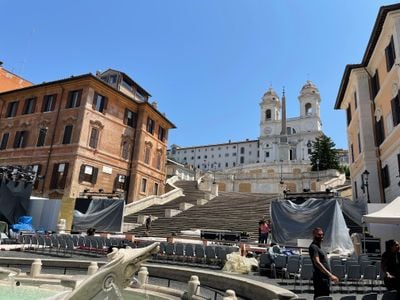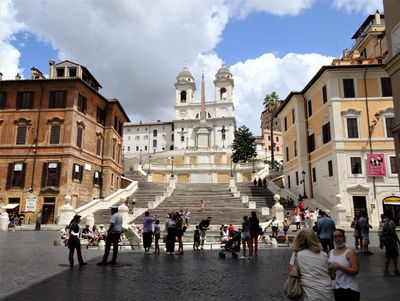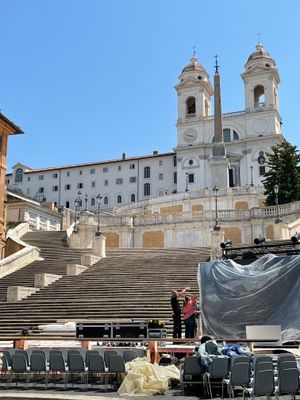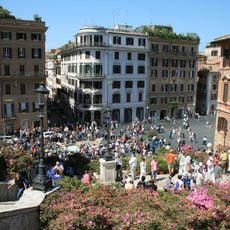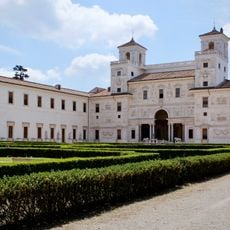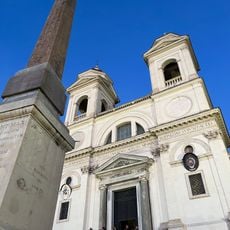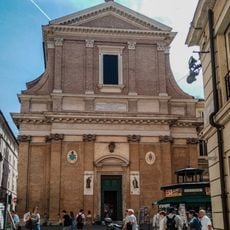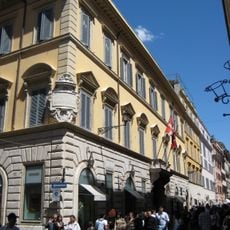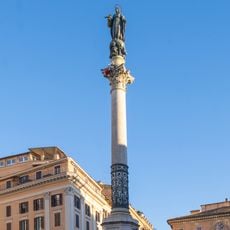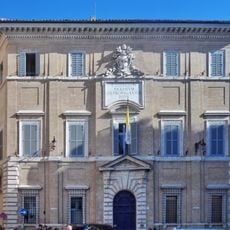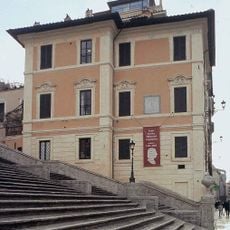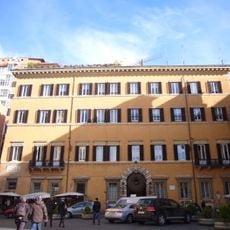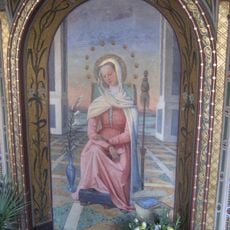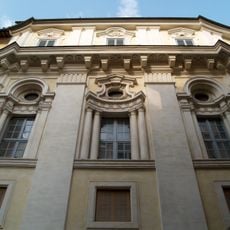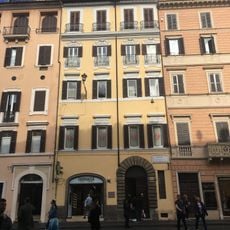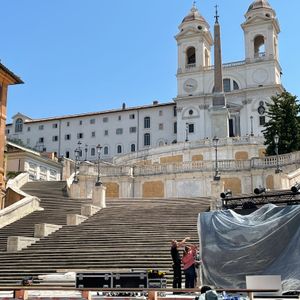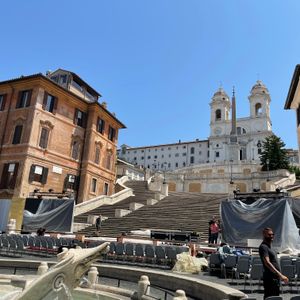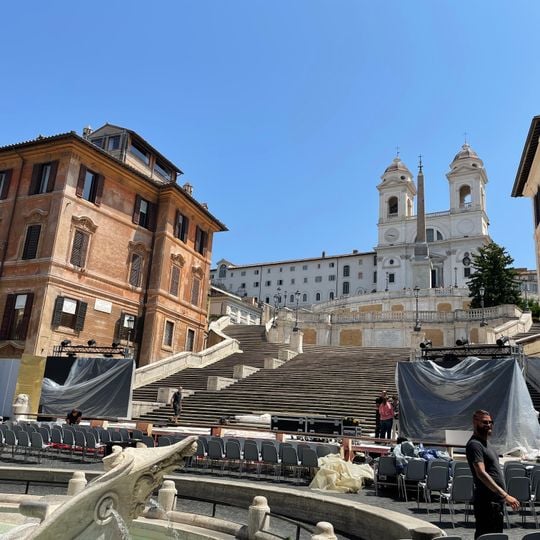
Spanish Steps, Monumental staircase in Piazza di Spagna, Italy.
The Spanish Steps form a Baroque staircase with 135 steps linking Piazza di Spagna to Trinità dei Monti church through three levels of white marble landings. The construction spreads across multiple terraces, creating a wide, tapering structure that rises between balconies and surrounding buildings.
French diplomat Étienne Gueffier initiated the staircase project in 1660, but construction began in 1723 under architect Francesco de Sanctis. The completion came in 1725, marking the end of decades of negotiations between French and papal interests over the design and funding.
Locals and tourists relax on the steps, especially during early evening hours when the crowd becomes more animated. Street performers and occasional musicians add a creative atmosphere, while the staircase serves as a popular meeting point for both Romans and visitors.
Visitors can reach the staircase through Spagna metro station on Line A, with restaurants and shops along nearby Via Condotti. The steps remain accessible from early morning until late evening, with early morning offering quieter viewing conditions before the crowds arrive.
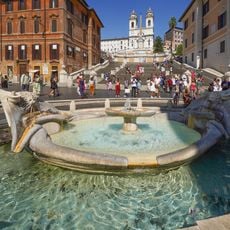
The Fontana della Barcaccia at the base commemorates a 1598 Christmas flood when a boat washed into Piazza di Spagna. The fountain sits below street level because water pressure in this part of Rome was too low to lift water higher.
Location: Municipio I
Location: Rome
Inception: 1725
Architects: Francesco de Sanctis
Official opening: 1725
Architectural style: baroque architecture
Part of: Piazza di Spagna
GPS coordinates: 41.90611,12.48278
Latest update: December 28, 2025 15:15
Stairs serve not only to overcome elevation changes but often rank among the notable structures of their cities. The Spanish Steps in Rome with its 135 steps has connected two districts since 1725 and became a meeting point for locals and visitors. In Montmartre, 222 steps lead to the Basilica of...
Rome preserves more than 2,000 years of architectural history within its city limits, maintaining ancient temples and amphitheaters beside Renaissance churches and Baroque piazzas. The Roman Forum displays ruins from the first century BC through the fourth century AD, including government buildings...
Rome joins history with modern photography. The city spreads across several hills and holds buildings from different centuries, from ancient ruins to baroque churches and fountains. Photographers find subjects on every street corner, from large public squares to narrow alleys in old neighborhoods....
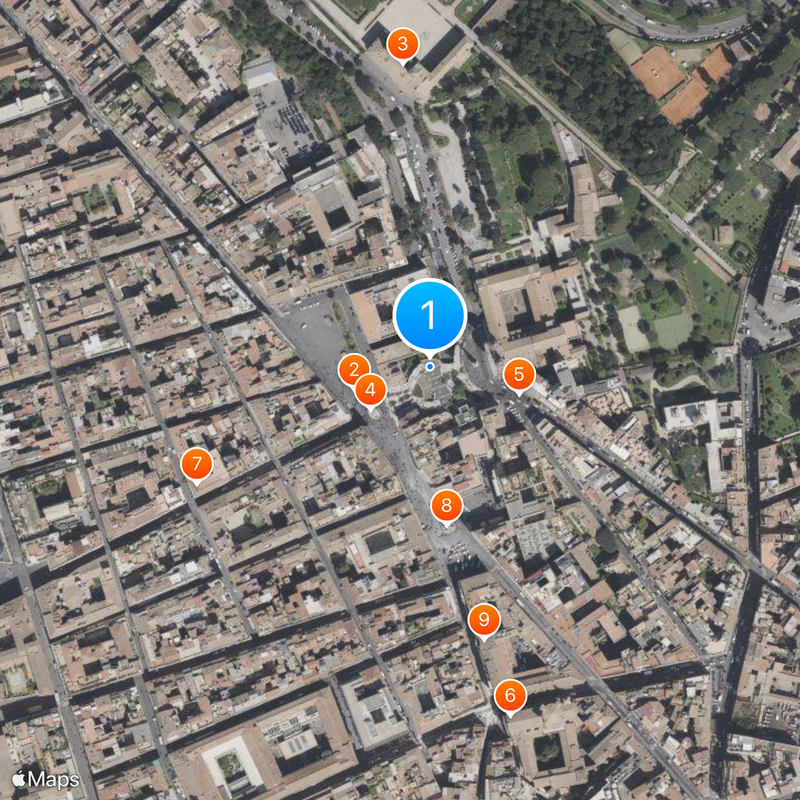
Piazza di Spagna
62 m
Villa Medici
241 m
Fontana della Barcaccia
58 m
Trinità dei Monti
74 m
Sant'Andrea delle Fratte
284 m
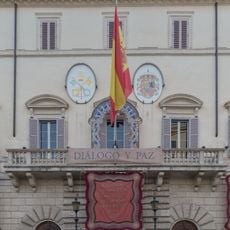
Magistral Palace
206 m
Column of the Immaculate Conception
126 m
Palazzo di Propaganda Fide
221 m
Keats-Shelley Memorial House
42 m
Palazzetto Zuccari
104 mGardens of Lucullus
67 m
Palazzo di Spagna
125 m
Fountain
316 m
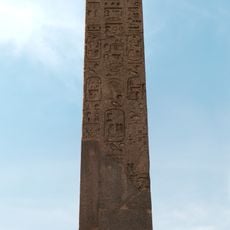
Sallustiano obelisk
35 m
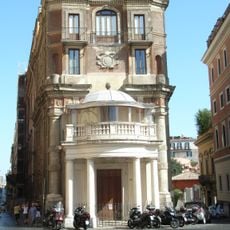
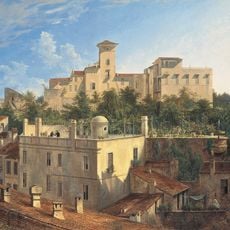
Palazzo Gabrielli-Mignanelli
123 m
Mater Admirabilis
80 m
Capella dei Re Magi
226 m
Giorgio De Chirico House
67 m
Palazzo Núñez-Torlonia
222 m
Villa Malta
215 m
Palazzi Bernini
272 m
San Giorgio e Martiri Inglesi
95 m
Resurrezione di Nostro Signore Gesù Cristo
145 m
Oratorio del Santissimo Sacramento di San Lorenzo in Lucina
294 m
San Giovanni in Capite
291 m
San Sebastianello
87 m
Fontana degli Artisti
277 m
Fontana della palla di cannone
224 mVisited this place? Tap the stars to rate it and share your experience / photos with the community! Try now! You can cancel it anytime.
Discover hidden gems everywhere you go!
From secret cafés to breathtaking viewpoints, skip the crowded tourist spots and find places that match your style. Our app makes it easy with voice search, smart filtering, route optimization, and insider tips from travelers worldwide. Download now for the complete mobile experience.

A unique approach to discovering new places❞
— Le Figaro
All the places worth exploring❞
— France Info
A tailor-made excursion in just a few clicks❞
— 20 Minutes