Obelisco Agonale, Ancient Egyptian obelisk in Piazza Navona, Rome, Italy
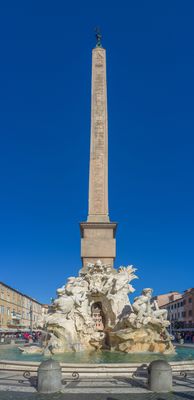
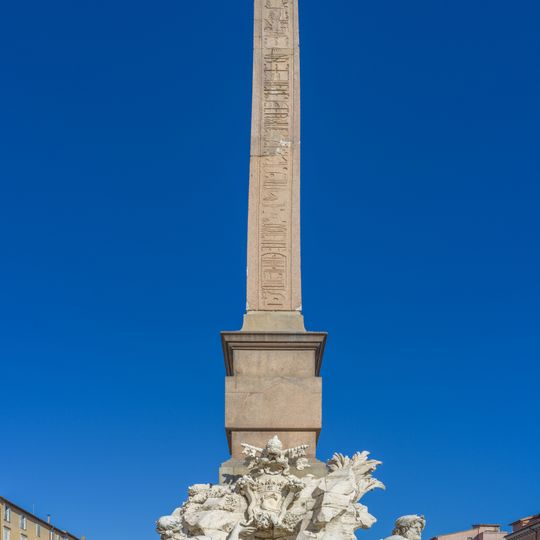
The Obelisco Agonale is a reddish granite shaft rising about 16.5 meters above Piazza Navona, topped with inscriptions and a dove symbol. The monument forms a central element of a Baroque fountain complex surrounded by sculptures and flowing water.
The obelisk was transported from Aswan by Roman Emperor Domitian in the first century and originally placed between Egyptian temples in Rome. In the 17th century, the artist Bernini incorporated it into the current fountain complex on Piazza Navona.
The obelisk stands at the heart of Bernini's Fountain of Four Rivers and shows how ancient Egyptian forms were reused in Rome. Visitors can see how this shaft reflects the Romans' fascination with distant cultures and their artistic traditions.
The obelisk is visible at all times since Piazza Navona remains open to the public around the clock. Early morning hours offer the best viewing experience, with favorable lighting on the stone and fewer visitors in the square.
The inscriptions on this shaft were actually carved by Romans themselves in Egyptian style, not by ancient Egyptians. This was a deliberate artistic choice to suggest authenticity and connection to Egypt's heritage.
The community of curious travelers
AroundUs brings together thousands of curated places, local tips, and hidden gems, enriched daily by 60,000 contributors worldwide.