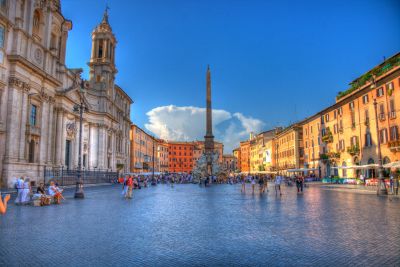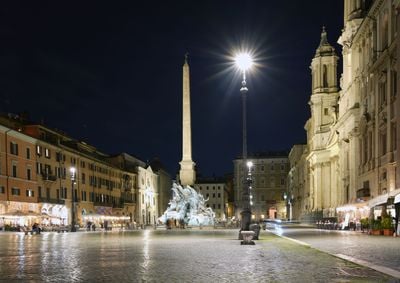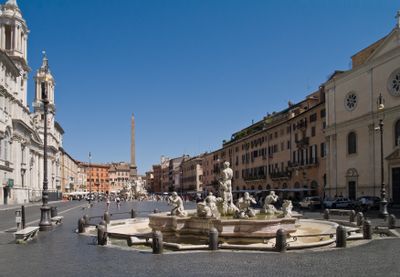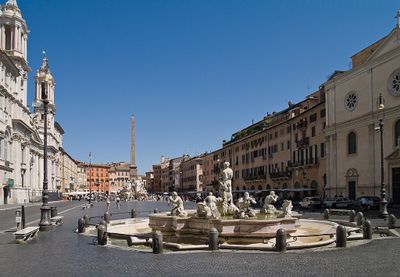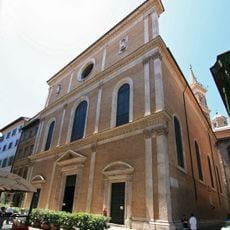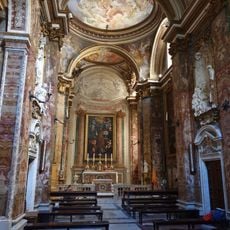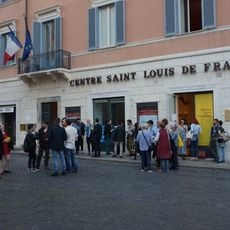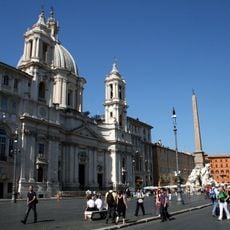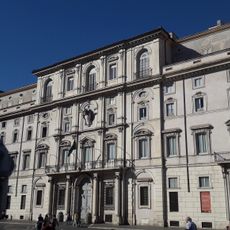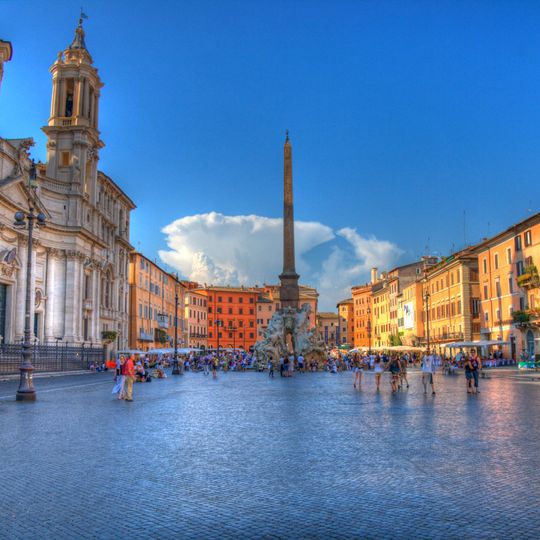
Piazza Navona, Baroque square in Ponte district, Rome, Italy.
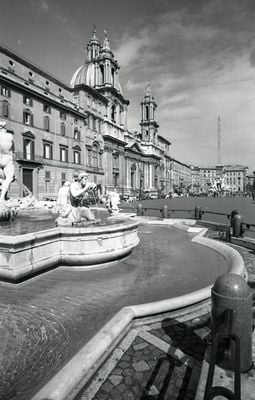
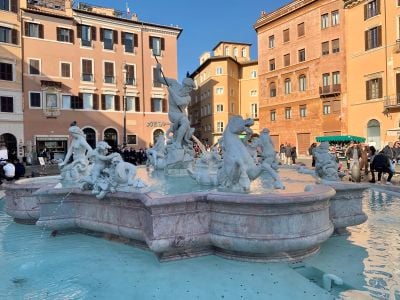
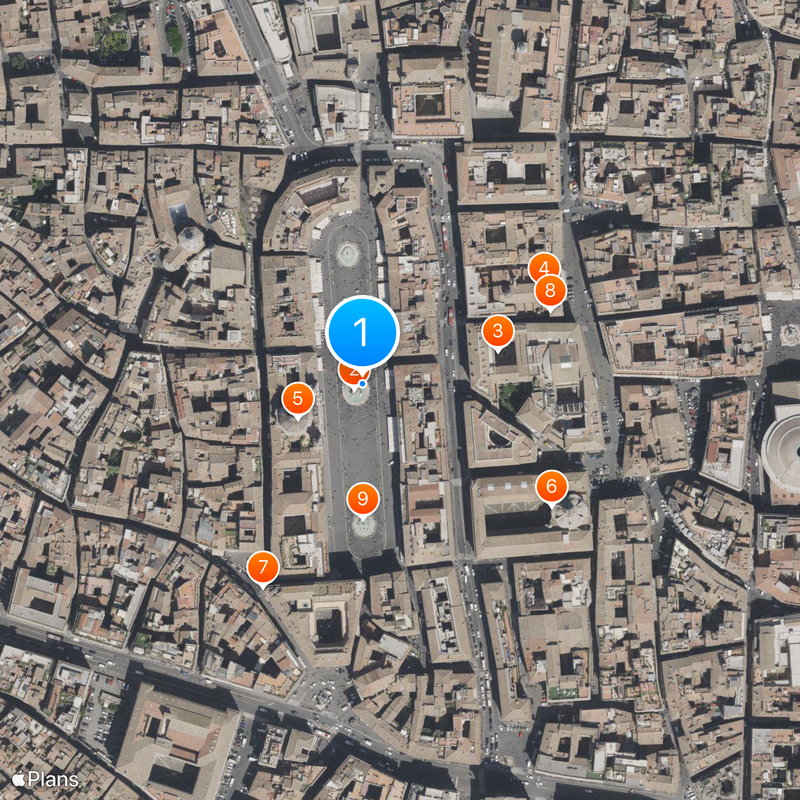
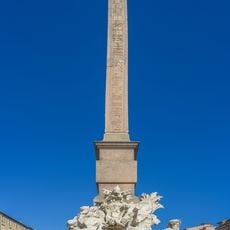
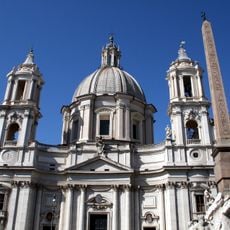
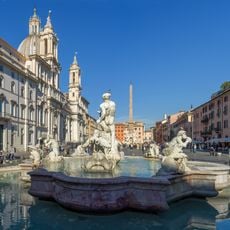
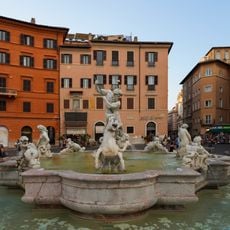
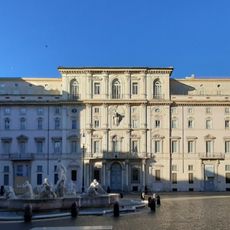
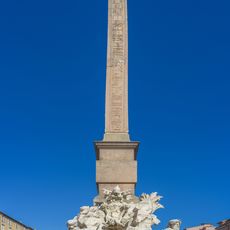
Piazza Navona is an elongated rectangular plaza in the Ponte district of Rome, known for its three monumental fountains. The central Fountain of Four Rivers displays an Egyptian obelisk surrounded by stone figures representing major rivers of the continents known at the time.
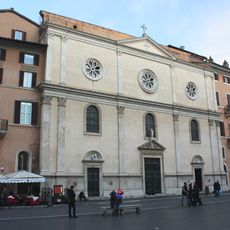
The plaza was built in the first century AD as the Stadium of Domitian, where Romans watched athletic contests and celebrations. In the seventeenth century, Pope Innocent X transformed the site into a baroque square with fountains and a church.
Street performers play music and pose before the baroque facade of Sant'Agnese in Agone while people sit at restaurant tables. Locals and travelers alike pause by the fountain edges or walk across the wavy cobblestones.
You can reach the plaza at any time of day, with evening hours offering a chance to watch street performers and eat at outdoor cafes. Daytime brings crowds, while early mornings feel quieter and less filled.
Until 1866, the city flooded the plaza on summer weekends, turning it into a shallow lake for entertainment. Carriages drove through the water while families watched from the edges.
The community of curious travelers
AroundUs brings together thousands of curated places, local tips, and hidden gems, enriched daily by 90,866 contributors worldwide.