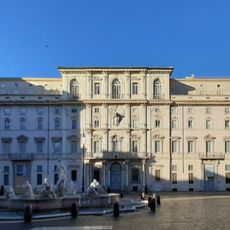
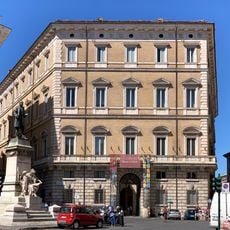
Pasquino, Ancient marble statue at Palazzo Braschi, Rome, Italy
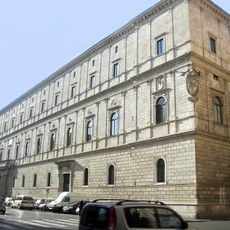
Pasquino is a weathered marble statue fragment on a stepped stone pedestal at Piazza Pasquino, at the northwest corner of Palazzo Braschi. The upper part shows a muscular male torso cut off at the top and missing its arms, with a deeply carved draped lower section bending sharply forward at the waist. The mottled beige, gray, and brown stone is identified as Menelaus supporting the dying Patroclus. A panel to the right holds overlapping paper notices, one reading "Il Messaggero".
The torso was unearthed in 1501 during paving works and the renovation of Palazzo Orsini, now Palazzo Braschi, in the square where it still stands. Cardinal Oliviero Carafa, who oversaw the works with Bramante, saved the piece and had it set in the corner with his coat of arms and a celebratory scroll. From the early 16th century, satirical verses were hung on it, making it Rome's first talking statue.
In the 1500s, residents started attaching anonymous satirical verses to the base. This tradition turned the torso into a space for free expression, where political criticism could be voiced without consequences.
The sculpture stands at a street corner near Piazza Navona and is accessible at any time. Occasionally, notes with messages still hang on the base, recalling the old tradition.
Pope Adrian VI considered throwing the torso into the Tiber in the 16th century because the critical messages annoyed him. The attempt to end the tradition failed due to popular resistance.
The community of curious travelers
AroundUs brings together thousands of curated places, local tips, and hidden gems, enriched daily by 93,373 contributors worldwide.