Trevi Fountain

Log in to your account

AroundUs is a community-driven map of interesting places, built by curious explorers like you. It grows with every review, story, and photo you share.
Connect to save your favorite spots, contribute locations, and create personalized routes.
By continuing, you accept our Terms and Conditions and our Privacy Policy
Add to collection
Map
Suggest a change
Share

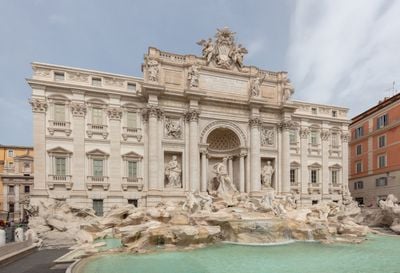
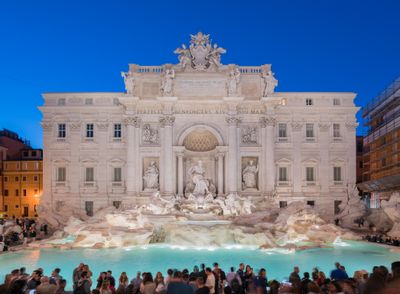
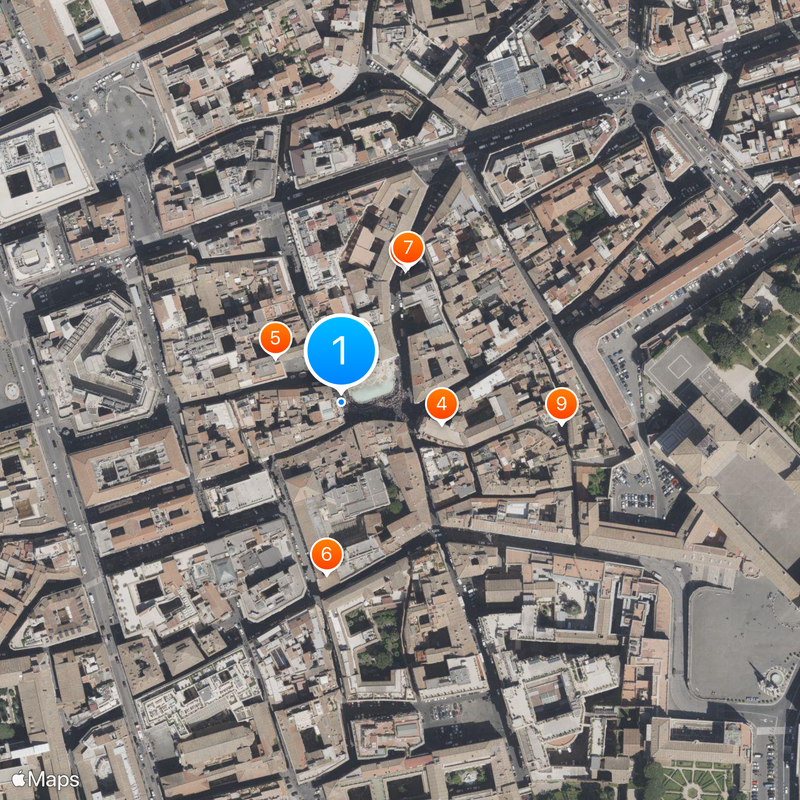
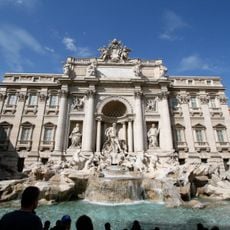
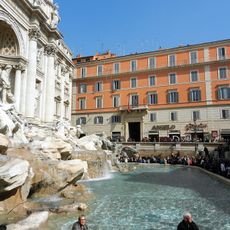
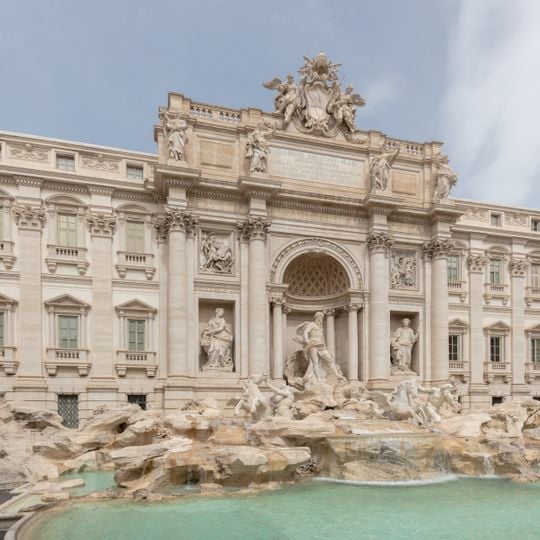
Trevi Fountain, Baroque fountain in Trevi district, Rome, Italy

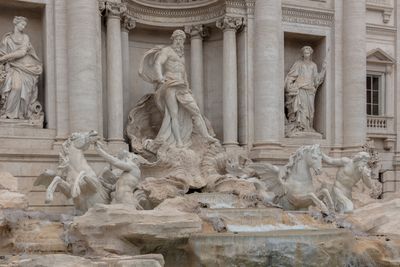
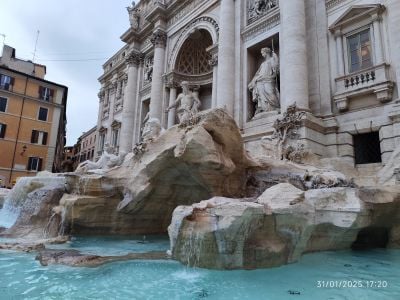
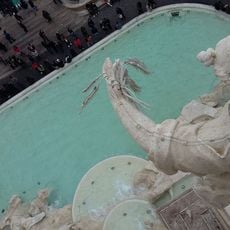
The Trevi Fountain is a fountain structure in the Trevi district of Rome, where Oceanus stands in a shell-shaped chariot atop rocky formations, pulled by sea horses. Water flows in cascades over the rocks down into a large basin, while two tritons accompany the horses.

Pope Urban VIII commissioned Gian Lorenzo Bernini in the 17th century to redesign it, but Nicola Salvi completed the fountain between 1732 and 1762. The structure replaced the older Renaissance fountain that had stood at this spot since the 15th century.

Visitors from around the world toss coins with their left hand over their right shoulder into the water to return to Rome. This custom transforms the square daily into a place of shared gestures and hopes.

The fountain remains accessible day and night, with early morning or late evening hours meaning fewer crowds. The nearest metro stop Barberini lies about eight walking minutes away on the red line.

The ancient Aqua Virgo aqueduct still supplies water to the fountain today, making it the only functioning Roman water system. This connection to antiquity means the water comes from the same source as over two thousand years ago.

Location: Trevi

Location: Municipio I

Inception: 1735

Architects: Nicola Salvi, Giuseppe Pannini

Creator: Nicola Salvi

Architectural style: baroque architecture

Height: 26 m

Width: 49 m

Accessibility: Wheelchair limited access

Made from material: Roman travertine, Carrara marble

Address: Piazza di Trevi, Roma

Website: http://trevifountain.net

GPS coordinates: 41.90083,12.48306

Latest update: December 2, 2025 22:25

Historic fountains in Italy

Italian historic fountains demonstrate five centuries of craftsmanship in sculpture, hydraulic engineering, and urban design. From the 15th to the 19th century, Italian artisans shaped marble, bronze, and stone to create works combining practicality and artistic expression. These fountains tell stories from classical mythology, such as Neptune and marine deities, or from the Bible, like Moses drawing water from the rock. They also celebrate the political power of great families and the identity of Italian cities. In Rome, the Trevi Fountain extends 86 feet (26 meters) high with baroque sculptures, while Bernini's Fountain of the Four Rivers symbolizes continents on Piazza Navona. In Florence, Neptune sits above the Piazza della Signoria, recalling the Medici family's maritime ambitions. The gardens of Villa d'Este in Tivoli feature 51 fountains spread across multiple terraces, showcasing Renaissance hydraulic mastery. These works reveal how water has shaped Italy’s architecture and urban life, from papal Rome to squares in Palermo and Siena.

Historic water fountains in Europe

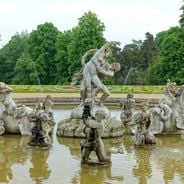
A selection of monumental water features of cultural and architectural merit. The fountains adorn European squares, gardens and palaces since the 16th century and display motifs from mythology, religion and history.

Ancient monuments and landmarks to visit in Rome

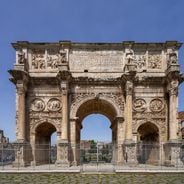
Rome preserves more than 2,000 years of architectural history within its city limits, maintaining ancient temples and amphitheaters beside Renaissance churches and Baroque piazzas. The Roman Forum displays ruins from the first century BC through the fourth century AD, including government buildings and temples that formed the administrative heart of the Roman Empire. The Pantheon demonstrates Roman engineering with its concrete dome, while the Colosseum remains the largest ancient amphitheater ever built. The city evolved through subsequent centuries as papal patronage transformed medieval Rome into a showcase of Renaissance and Baroque art and architecture. The Vatican holds significant religious and artistic collections, including the Sistine Chapel with Michelangelo's ceiling frescoes and Saint Peter's Basilica, the world's largest church building. Throughout the historic center, public squares like Piazza Navona preserve the footprint of ancient Roman structures while displaying Baroque fountains by Bernini and Borromini. The Trevi Fountain draws thousands of visitors daily to its 18th century facade, and the Spanish Steps connect different elevation levels of the city. Rome's neighborhoods maintain traditional Italian life around these monuments, with restaurants, shops and residences occupying buildings from various historical periods.

Instagram spots in Rome

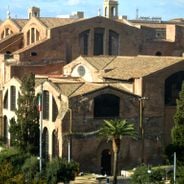
Rome joins history with modern photography. The city spreads across several hills and holds buildings from different centuries, from ancient ruins to baroque churches and fountains. Photographers find subjects on every street corner, from large public squares to narrow alleys in old neighborhoods. The Colosseum and Roman Forum show the building techniques of ancient Rome. Trevi Fountain and Piazza Navona present baroque design with flowing water and sculptures. The Spanish Steps serve as a meeting point where people rest on the steps and watch the activity below. The Pantheon has stood for nearly 2,000 years and impresses through its dome with a circular opening at the center. In Vatican City, St. Peter's Basilica rises with its tall dome, and the Vatican Museums contain long galleries filled with artworks. Castel Sant'Angelo stands by the Tiber River and offers a wide view over the city's rooftops from above. Trastevere sits on the other side of the river and shows a different face of Rome: small squares, narrow streets with laundry lines between buildings, and restaurants with tables on the pavement. The church of Santa Maria in Trastevere has a golden mosaic on its facade that glows in the evening light. Campo de' Fiori is a market in the morning with vegetables and flowers, and in the evening the square fills with people. Via Margutta is a quiet street with galleries and plants on the building walls. The Aventine Keyhole shows St. Peter's Dome through a small opening in perfect framing. The Janiculum hill and Villa Borghese Gardens offer green spaces for walking and views over the city. Caracalla Baths and the Appian Way show Rome outside the center, where ancient structures stand in the landscape.

Main heritage sites and monuments in Italy

Italy preserves architectural evidence from two thousand years of history. In Rome, Roman temples stand beside Renaissance palaces, while Florence houses museums and cathedrals from the 15th century. Venice developed its canal system over centuries as a response to its lagoon environment. In the Campania region, Mount Vesuvius shapes the landscape, and the ancient city of Pompeii has remained preserved under volcanic ash since the 1st century.

Reviews

Real people, real opinions — but not verified.

Visited this place? Tap the stars to rate it and share your experience / photos with the community! Try now! You can cancel it anytime.

herpin
@herpin

May 30, 2025 13:40

aldo60
@aldo60

Apr 18, 2025 19:18

stephren
@stephren

Mar 31, 2025 08:06

A must-see, but you will be surprised by the narrowness of the place!

« Trevi Fountain - Baroque fountain in Trevi district, Rome, Italy » is provided by Around Us (aroundus.com). Images and texts are derived from Wikimedia project under a Creative Commons license. You are allowed to copy, distribute, and modify copies of this page, under the conditions set by the license, as long as this note is clearly visible.

Discover hidden gems everywhere you go!

From secret cafés to breathtaking viewpoints, skip the crowded tourist spots and find places that match your style. Our app makes it easy with voice search, smart filtering, route optimization, and insider tips from travelers worldwide. Download now for the complete mobile experience.

Around Us App Screenshot

A unique approach to discovering new places

Le Figaro

All the places worth exploring

France Info

A tailor-made excursion in just a few clicks

20 Minutes