Palazzo Poli, Baroque palace near Trevi Fountain, Rome, Italy
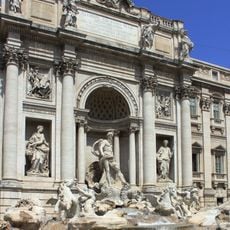
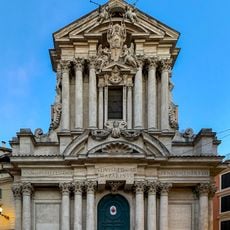
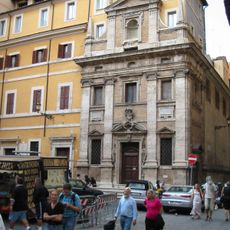
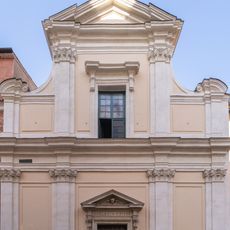
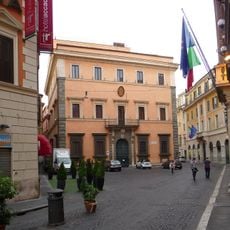
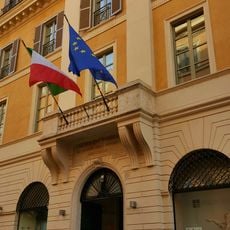
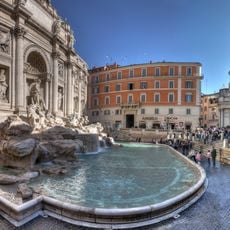
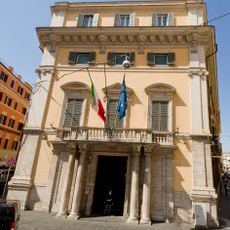
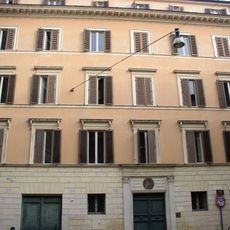
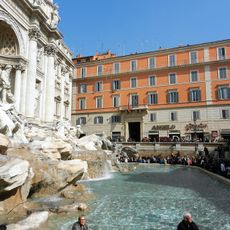
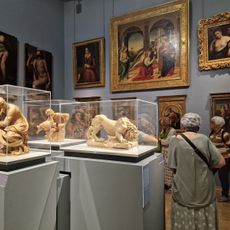
Palazzo Poli is a Baroque palace near Trevi Fountain with a monumental south facade punctuated by Corinthian columns. The building spans multiple levels and now houses the National Institute for Graphics, with various exhibition spaces throughout.
In 1566 Lelio Cesi, Duke of Ceri, bought the Palazzo Del Monte and had Martino Longhi the Elder build a new palace, completed after Longhi's death by Ottaviano Mascherino. Lucrezia Colonna, wife of Duke Giuseppe Lotario Conti di Poli, bought it in 1678, giving it its name. In 1729 Stefano Conti unified the facade, and in 1732 Nicola Salvi built the Trevi Fountain against it.
The palace's name comes from Lucrezia Colonna, who bought it in 1678 and was married to Giuseppe Lotario Conti, Duke of Poli. Its Sala Dante, built in the 1720s for the Conti family library, was rented in 1865–66 by Romualdo Gentilucci for his Galleria Dantesca: twenty-seven canvases, four by six metres, after drawings by Filippo Bigioli, shown with special mechanisms and lighting. Liszt's Dante Symphony was performed at the opening.
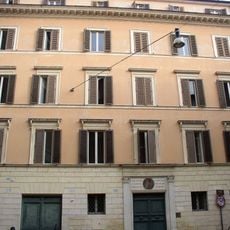
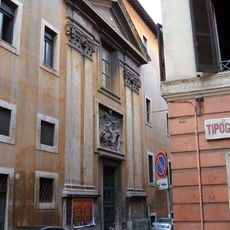
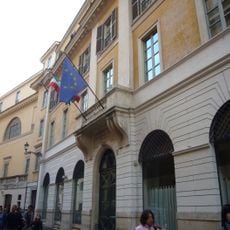
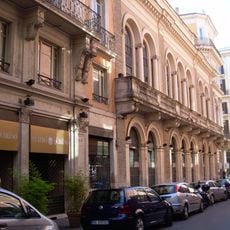
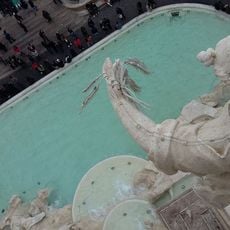
The National Institute for Graphics occupies the palace, with its entrance on Via della Stamperia, the street running along the building's eastern side. The exhibition rooms and the Sala Dante, which overlooks the Trevi Fountain, are reached from there rather than from the fountain square itself. The square in front of the fountain is usually crowded, so mornings are easier for reading the facade.
The Sala Dante, built in the 1720s by Duke Stefano Conti to house his family library, was rented in 1865–66 by Romualdo Gentilucci for his Galleria Dantesca: 27 canvases, four by six metres, after drawings by Filippo Bigioli, shown in turn with special mechanisms and lighting. Liszt's Dante Symphony was performed at the opening.
The community of curious travelers
AroundUs brings together thousands of curated places, local tips, and hidden gems, enriched daily by 92,782 contributors worldwide.