Baths of Caracalla, Roman bath complex in Rome, Italy
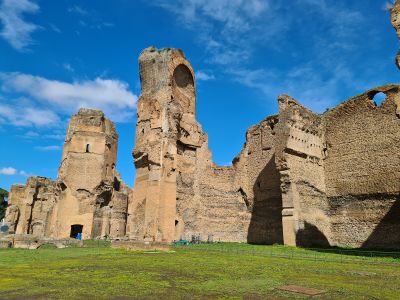
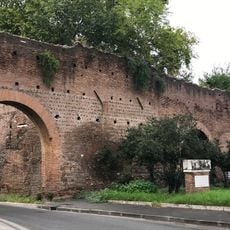
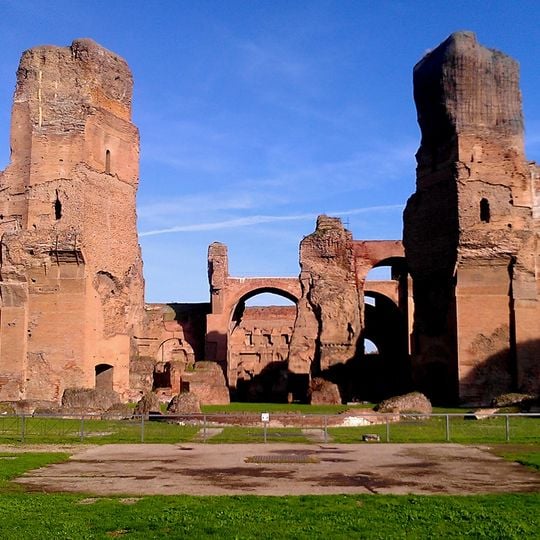
The Baths of Caracalla form a rectangular walled complex measuring 337 by 328 metres, with a central block of 114 by 220 metres. Two tall brick towers with small arched openings flank lower walls pierced by a large central arch and a smaller arch to its right. The red-brick masonry, laid in thin horizontal courses, shows a jagged patch of missing brickwork on the upper right of the main wall.
The emperor ordered construction between 212 and 216 AD to provide the population with a public bathhouse. The complex remained in operation until the sixth century before being abandoned after the aqueducts fell into disrepair.
The baths are also called Thermae Antoninianae, after Caracalla's full name as a member of the Severan dynasty. Since 1937 the central block has hosted open-air opera for the Rome Opera's summer season, interrupted only by the war and by restoration work between 1993 and 2003. In 2024, after some 1,800 years, water flowed again through a new pool at the monument's entrance.
The site opens Tuesday through Sunday and is accessible across much of its area, allowing wheelchair users to reach most sections. It is advisable to wear sturdy shoes, as the ground is uneven and many steps connect the different levels.
The largest mithraeum known in Rome was found here in 1938, in the underground rooms cleared in 1901 and 1912. The site also holds a two-storey Hadrianic house of 134–138 AD, buried beneath the baths and opened to the public with frescoed ceilings and a lararium.
The community of curious travelers
AroundUs brings together thousands of curated places, local tips, and hidden gems, enriched daily by 92,567 contributors worldwide.