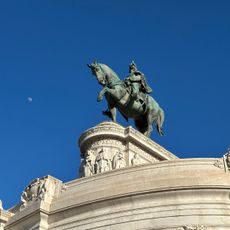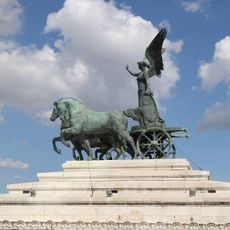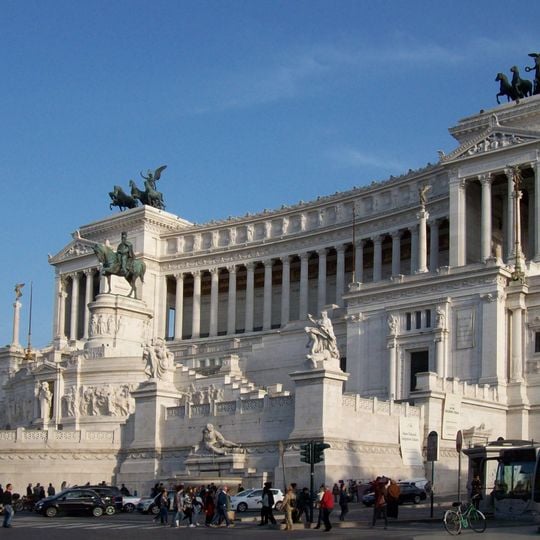
Altare della Patria, National monument in Piazza Venezia, Rome, Italy
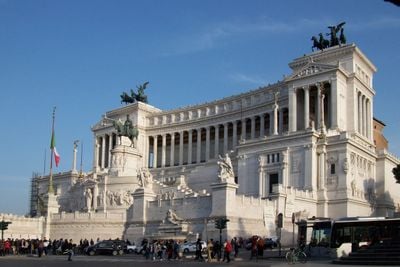
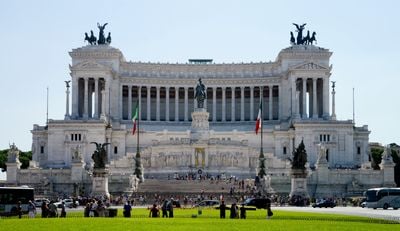
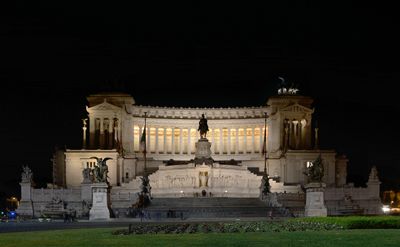
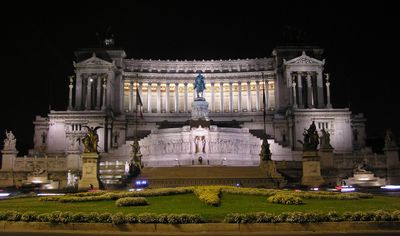
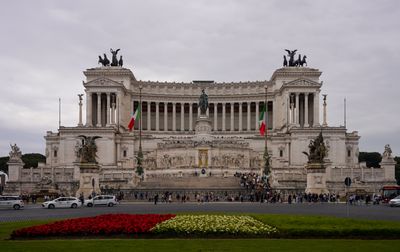
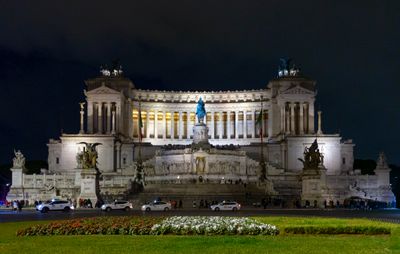
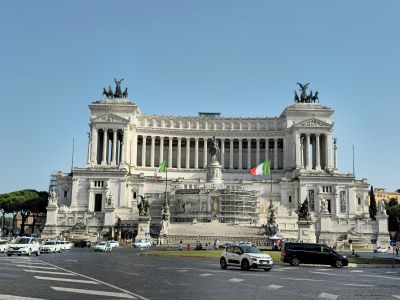
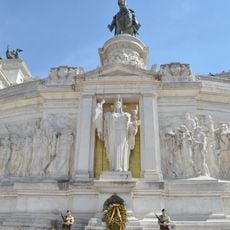
The Altare della Patria is a national monument in Piazza Venezia at the center of Rome. The structure rises in white marble across multiple terraces with massive columns, wide staircases, and sculptures that reach an overall height of 81 meters.
The monument opened in 1911 to honor Victor Emmanuel II, the first king of unified Italy. Construction took about forty years and transformed the cityscape of the historical center.
The Tomb of the Unknown Soldier with its eternal flame serves as the central site for military ceremonies and national celebrations. Honor guards stand motionless at the tomb every day, while locals and visitors pause in respectful silence to remember the fallen and lay wreaths.
Visitors can reach the viewing terrace by elevator, while the monument is open daily and includes facilities for wheelchair users. The best time to visit is early morning or just before sunset when the marble facade glows most intensely.
The construction required 17,000 cubic meters of white marble from Botticino quarries and features two bronze quadrigae at its summit. Inside are lesser known museum rooms documenting the history of Italian unification that many visitors overlook while focusing on the exterior.
Location: Pigna
Inception: 3 Millenium
Architects: Giuseppe Sacconi
Official opening: June 4, 1911
Architectural style: Neoclassical architecture, eclectic architecture
Elevators: 1
Height: 81 m
Accessibility: Wheelchair accessible
Made from material: travertine, marble
Part of: National symbols of Italy, Vittoriano e Palazzo Venezia
Address: Piazza Venezia 6, 00187 Roma
Opening Hours: Monday-Sunday 09:30-19:30
Phone: +39066783588
Email: pm-laz.vittoriano@beniculturali.it
Website: https://vive.cultura.gov.it/en
GPS coordinates: 41.89454,12.48310
Latest update: December 3, 2025 09:16
Rome preserves more than 2,000 years of architectural history within its city limits, maintaining ancient temples and amphitheaters beside Renaissance churches and Baroque piazzas. The Roman Forum displays ruins from the first century BC through the fourth century AD, including government buildings and temples that formed the administrative heart of the Roman Empire. The Pantheon demonstrates Roman engineering with its concrete dome, while the Colosseum remains the largest ancient amphitheater ever built. The city evolved through subsequent centuries as papal patronage transformed medieval Rome into a showcase of Renaissance and Baroque art and architecture. The Vatican holds significant religious and artistic collections, including the Sistine Chapel with Michelangelo's ceiling frescoes and Saint Peter's Basilica, the world's largest church building. Throughout the historic center, public squares like Piazza Navona preserve the footprint of ancient Roman structures while displaying Baroque fountains by Bernini and Borromini. The Trevi Fountain draws thousands of visitors daily to its 18th century facade, and the Spanish Steps connect different elevation levels of the city. Rome's neighborhoods maintain traditional Italian life around these monuments, with restaurants, shops and residences occupying buildings from various historical periods.
Rome joins history with modern photography. The city spreads across several hills and holds buildings from different centuries, from ancient ruins to baroque churches and fountains. Photographers find subjects on every street corner, from large public squares to narrow alleys in old neighborhoods. The Colosseum and Roman Forum show the building techniques of ancient Rome. Trevi Fountain and Piazza Navona present baroque design with flowing water and sculptures. The Spanish Steps serve as a meeting point where people rest on the steps and watch the activity below. The Pantheon has stood for nearly 2,000 years and impresses through its dome with a circular opening at the center. In Vatican City, St. Peter's Basilica rises with its tall dome, and the Vatican Museums contain long galleries filled with artworks. Castel Sant'Angelo stands by the Tiber River and offers a wide view over the city's rooftops from above. Trastevere sits on the other side of the river and shows a different face of Rome: small squares, narrow streets with laundry lines between buildings, and restaurants with tables on the pavement. The church of Santa Maria in Trastevere has a golden mosaic on its facade that glows in the evening light. Campo de' Fiori is a market in the morning with vegetables and flowers, and in the evening the square fills with people. Via Margutta is a quiet street with galleries and plants on the building walls. The Aventine Keyhole shows St. Peter's Dome through a small opening in perfect framing. The Janiculum hill and Villa Borghese Gardens offer green spaces for walking and views over the city. Caracalla Baths and the Appian Way show Rome outside the center, where ancient structures stand in the landscape.
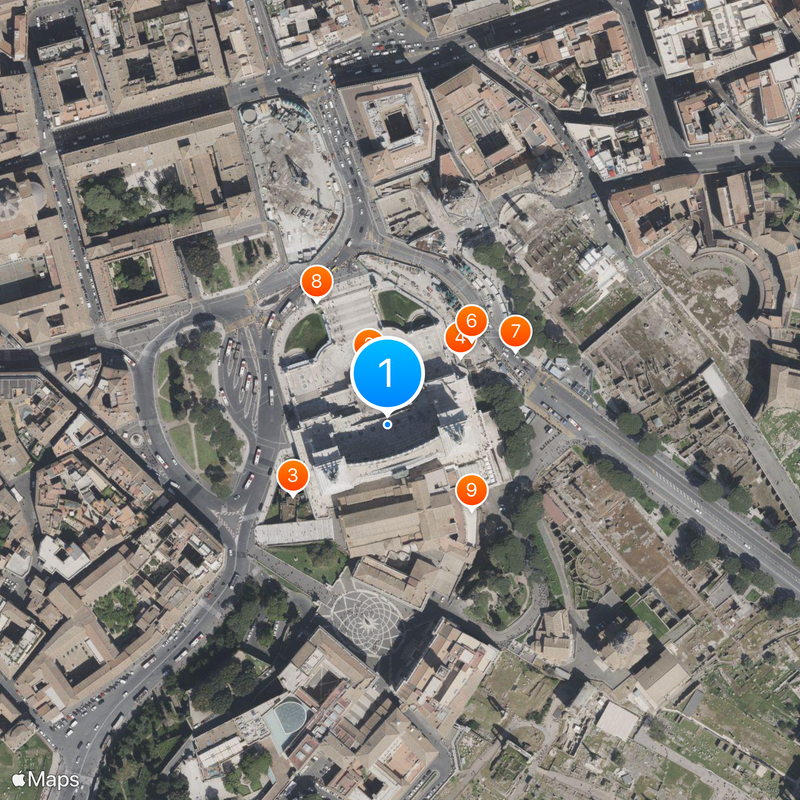
Trajan's Column
169 m
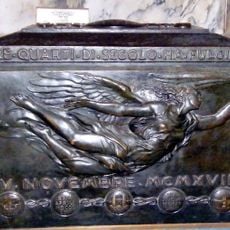
Tomb of the Unknown Soldier
44 m
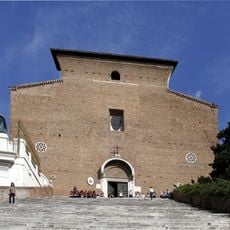
Santa Maria in Aracoeli
75 m
Basilica Ulpia
166 m
Temple of Venus Genetrix
146 m
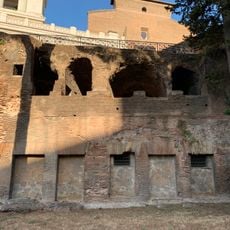
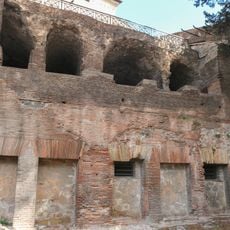
Insula Romana
83 m
Arx
75 m
Marforio
103 m
Temple of Juno Moneta
77 m
Palazzo Nuovo
105 m
Cordonata Capitolina
123 m
Santa Maria di Loreto
164 m
Athenaeum
137 m
Ulpian Library
168 m
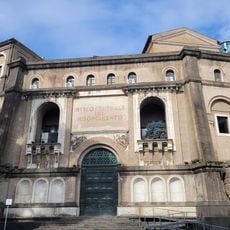
Museo Centrale del Risorgimento
98 m
Sacrario delle bandiere
69 m
Equestrian Statue of Victor Emmanuel II
26 m
Basilica Argentaria
119 m
Bufalini Chapel
87 m
Trajan's Column
175 m
Porta Fontinalis
116 m
Clivus Argentarius
152 m
Tomb of Gaius Publicius Bibulus
137 m
San Biagio de Mercato
89 m
Monument to Cola di Rienzo
112 m
Portrait of Goffredo Mameli
129 m
Fontana della Pigna
159 m
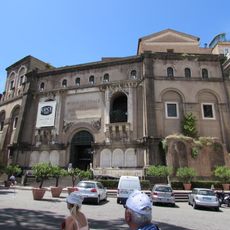
Central Museum of the Risorgimento
83 mReviews
Visited this place? Tap the stars to rate it and share your experience / photos with the community! Try now! You can cancel it anytime.
Discover hidden gems everywhere you go!
From secret cafés to breathtaking viewpoints, skip the crowded tourist spots and find places that match your style. Our app makes it easy with voice search, smart filtering, route optimization, and insider tips from travelers worldwide. Download now for the complete mobile experience.

A unique approach to discovering new places❞
— Le Figaro
All the places worth exploring❞
— France Info
A tailor-made excursion in just a few clicks❞
— 20 Minutes