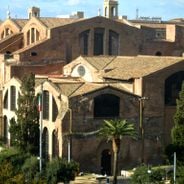
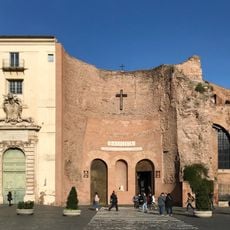
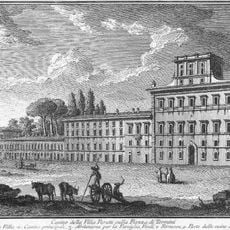
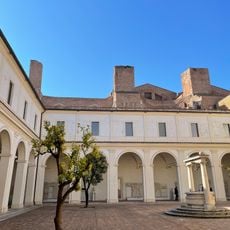
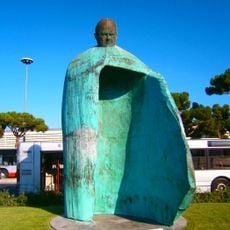
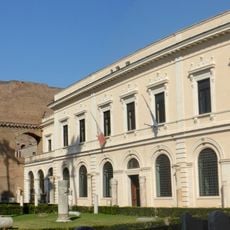
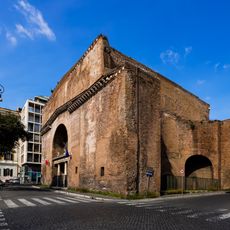
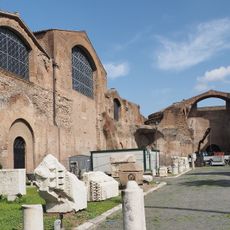
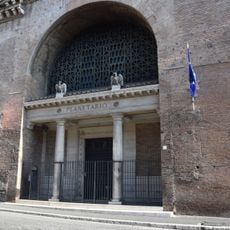
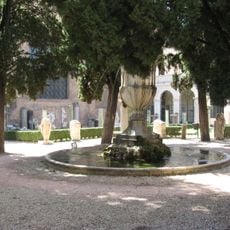
Baths of Diocletian, Archaeological site near Termini Station, Rome, Italy.
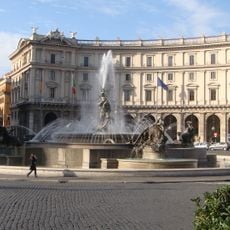
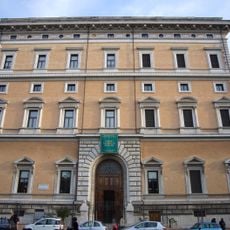
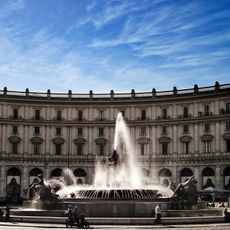
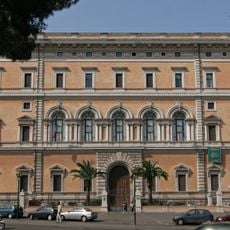
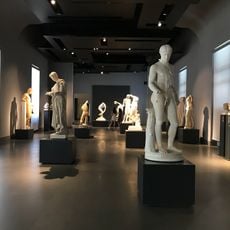
The Baths of Diocletian are a bath complex on the Viminal hill in Rome, built of brick stamped with Diocletianic-period marks. The enclosure covered 13 hectares, about the size of the Baths of Caracalla; the main entrance was to the northeast and a large exedra to the southwest survives as the curve of Piazza della Repubblica. The surviving halls now hold part of the National Roman Museum and the Basilica of Santa Maria degli Angeli e dei Martiri.
Maximian commissioned the baths in AD 298 on his return from Africa, in honour of Diocletian; building continued until 306, after both emperors had abdicated. Brick stamps from the Diocletianic period survive in the main structure. In the 1560s Pius IV had Michelangelo convert the frigidarium and tepidarium into Santa Maria degli Angeli e dei Martiri, and Vanvitelli reoriented the church in 1749.
The name Thermae Diocletiani honours Diocletian, though Maximian ordered the works on his return from Africa in 298. The dedication inscription, now in eight fragments reassembled in the museum's entrance hall, was copied by an 8th- or 9th-century pilgrim and kept at Einsiedeln Abbey. Christian tradition wrongly held that the baths were built by Christian slaves, which is why the 16th-century basilica was dedicated to the martyrs.
The site sits near Termini Station and combines the ruins with the Church of Santa Maria degli Angeli, which shares the same space. Guided tours run during the day and help identify the different building phases.
The dedication inscription survives only in fragments, but an 8th- or 9th-century pilgrim copied the full Latin text, which was kept at Einsiedeln Abbey in Switzerland. It records that Maximian ordered the baths built in his brother Diocletian's name after buying up the needed properties.
The community of curious travelers
AroundUs brings together thousands of curated places, local tips, and hidden gems, enriched daily by 94,259 contributors worldwide.