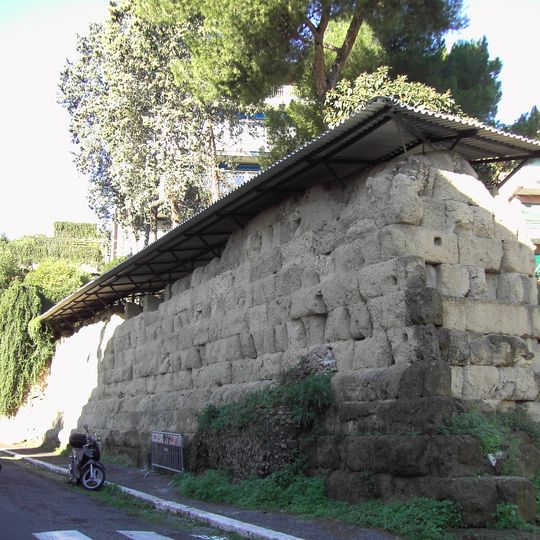
Servian Wall, Ancient defensive wall in Rome, Italy
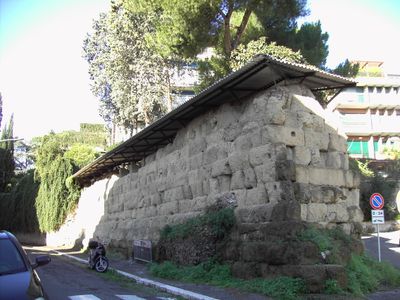
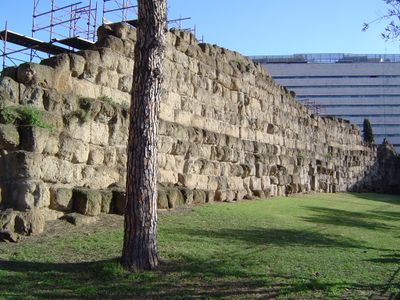
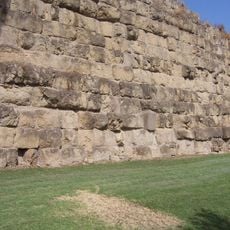
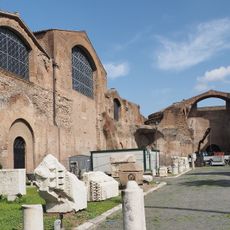
The Servian Wall consists of massive tuff blocks stacked without mortar and still visible in several locations across the city. The surviving sections show the original construction with walls reaching up to ten meters high and about four meters thick.
The earliest defences, an earth rampart and small Palatine-tuff walls, are attributed to Servius Tullius in the sixth century BCE. After the Gallic sack of 390 BCE the wall was rebuilt along the same line in harder Grotta Oscura tuff, quarried near Veii after its capture in 396 BCE; Livy dates the work to 378 BCE under censors Spurius Servilius Priscus and Quintus Cloelius Siculus. It served as Rome's main defence for about seven centuries.
The fortification marks the physical boundary of early Rome, representing a milestone in Roman military engineering and urban development from the Republican period.
The best preserved sections are located near Termini Station and on the Aventine Hill, where you can view the stones up close. Most remains are freely accessible and can be discovered during a walk through the city.
The largest surviving stretch stands outside Termini station, and one section runs through a McDonald's dining area there. On the Aventine, near the modern viale Aventino, a section of wall incorporates an arch said to have served a catapult in the late Republic.
The community of curious travelers
AroundUs brings together thousands of curated places, local tips, and hidden gems, enriched daily by 94,669 contributors worldwide.