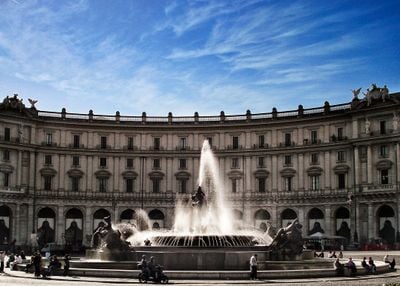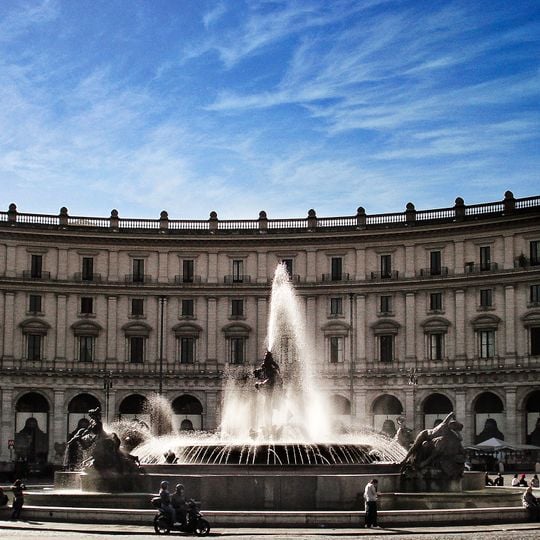
Fountain of the Naiads, Public fountain in Piazza della Repubblica, Rome, Italy
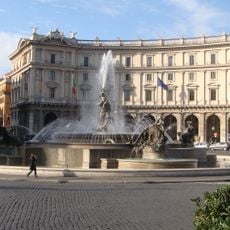
The Fountain of the Naiads is a public water feature in Piazza della Repubblica, Rome, with four marble sculptures depicting female water figures positioned around a central basin. Water flows from multiple jets into the circular pool, creating an active fountain that still serves as a drinking water source.
Construction began in 1870 and the artist Mario Rutelli added the marble sculptures, finishing the work in 1901. This completion coincided with a period when Rome was reshaping its public spaces during urban transformation.
The sculptures depict figures from classical mythology, each representing different water sources and their characteristics. When visiting, you notice how these representations shaped public conversation about art and the human form.
The fountain is located in a large public square that is freely accessible during daylight hours. Plenty of space surrounds the structure, making it easy to view and move around the site.
The marble sculptures sparked heated public debate shortly after installation due to their artistic representation. This controversy made the fountain a topic of discussion far beyond the art world itself.
Location: Roma Capitale
Creator: Mario Rutelli
GPS coordinates: 41.90272,12.49625
Latest update: December 6, 2025 16:03
Italian historic fountains demonstrate five centuries of craftsmanship in sculpture, hydraulic engineering, and urban design. From the 15th to the 19th century, Italian artisans shaped marble, bronze, and stone to create works combining practicality and artistic expression. These fountains tell stories from classical mythology, such as Neptune and marine deities, or from the Bible, like Moses drawing water from the rock. They also celebrate the political power of great families and the identity of Italian cities. In Rome, the Trevi Fountain extends 86 feet (26 meters) high with baroque sculptures, while Bernini's Fountain of the Four Rivers symbolizes continents on Piazza Navona. In Florence, Neptune sits above the Piazza della Signoria, recalling the Medici family's maritime ambitions. The gardens of Villa d'Este in Tivoli feature 51 fountains spread across multiple terraces, showcasing Renaissance hydraulic mastery. These works reveal how water has shaped Italy’s architecture and urban life, from papal Rome to squares in Palermo and Siena.
Rome preserves more than 2,000 years of architectural history within its city limits, maintaining ancient temples and amphitheaters beside Renaissance churches and Baroque piazzas. The Roman Forum displays ruins from the first century BC through the fourth century AD, including government buildings and temples that formed the administrative heart of the Roman Empire. The Pantheon demonstrates Roman engineering with its concrete dome, while the Colosseum remains the largest ancient amphitheater ever built. The city evolved through subsequent centuries as papal patronage transformed medieval Rome into a showcase of Renaissance and Baroque art and architecture. The Vatican holds significant religious and artistic collections, including the Sistine Chapel with Michelangelo's ceiling frescoes and Saint Peter's Basilica, the world's largest church building. Throughout the historic center, public squares like Piazza Navona preserve the footprint of ancient Roman structures while displaying Baroque fountains by Bernini and Borromini. The Trevi Fountain draws thousands of visitors daily to its 18th century facade, and the Spanish Steps connect different elevation levels of the city. Rome's neighborhoods maintain traditional Italian life around these monuments, with restaurants, shops and residences occupying buildings from various historical periods.
Ecstasy of Saint Teresa
282 m
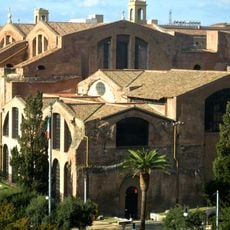
Baths of Diocletian
173 m
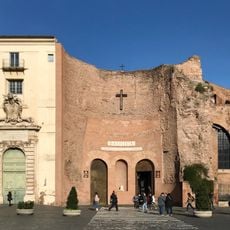
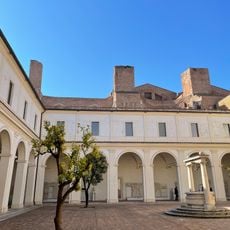
Santa Maria degli Angeli e dei Martiri
68 m
Santa Maria della Vittoria
267 m
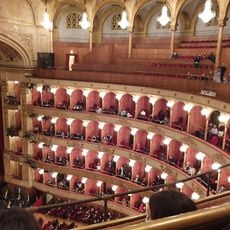
Teatro dell'Opera di Roma
218 m
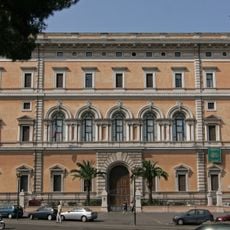
Museo Nazionale Romano
242 m
Museum Palazzo Massimo alle Terme
231 m
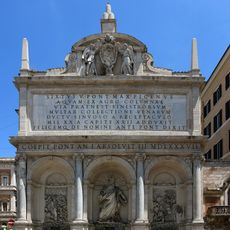
Fontana dell'Acqua Felice
238 m
Santa Susanna
275 m
St Paul's Within the Walls
248 m
Palazzo Massimo alle Terme
200 m
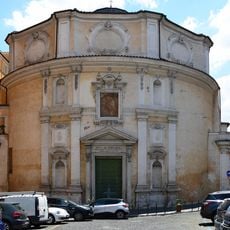
San Bernardo alle Terme
179 m
Acqua Felice
237 m
Cornaro chapel
275 m
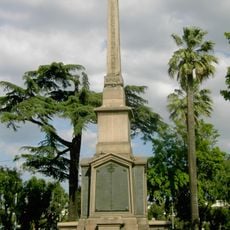
Dogali obelisk
119 m
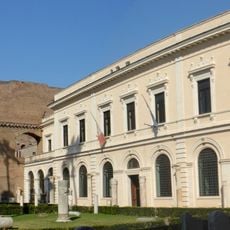
National Roman Museum - Palazzo Massimo
194 m
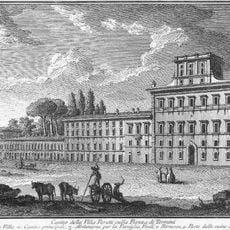
Villa Montalto (Rome)
208 m
Museo Nazionale Romano, Terme di Diocleziano
192 m
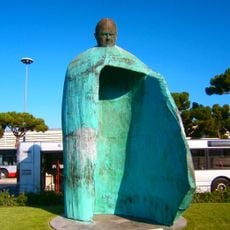
Monumento a Giovanni Paolo II, Roma
243 m
Museum of the Baths of Diocletian
241 m
San Caio
273 m
Octagonal hall, Rome
132 m
Horti Lolliani
262 m
Palazzo Nathan
125 m
Teatro dell'Opera di Roma
293 m
Aula Ottagona
126 m
Monumento a Silvio Spaventa
278 m
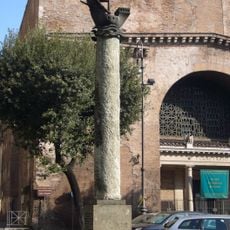
Rome-Paris twinning column
127 mReviews
Visited this place? Tap the stars to rate it and share your experience / photos with the community! Try now! You can cancel it anytime.
Discover hidden gems everywhere you go!
From secret cafés to breathtaking viewpoints, skip the crowded tourist spots and find places that match your style. Our app makes it easy with voice search, smart filtering, route optimization, and insider tips from travelers worldwide. Download now for the complete mobile experience.
A unique approach to discovering new places❞
— Le Figaro
All the places worth exploring❞
— France Info
A tailor-made excursion in just a few clicks❞
— 20 Minutes