Santa Maria sopra Minerva

Log in to your account

AroundUs is a community-driven map of interesting places, built by curious explorers like you. It grows with every review, story, and photo you share.
Connect to save your favorite spots, contribute locations, and create personalized routes.
By continuing, you accept our Terms and Conditions and our Privacy Policy
Add to collection
Map
Suggest a change
Share

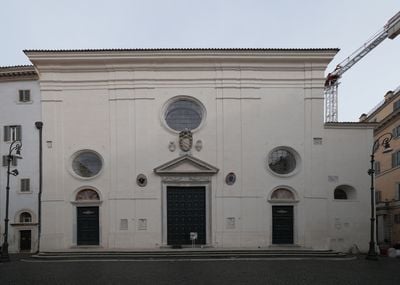
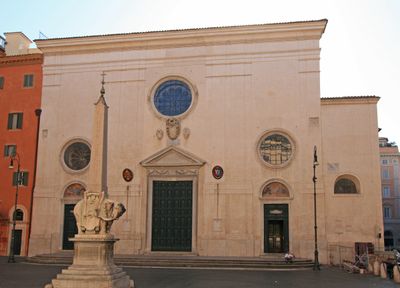
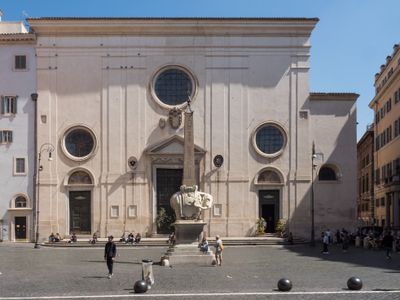
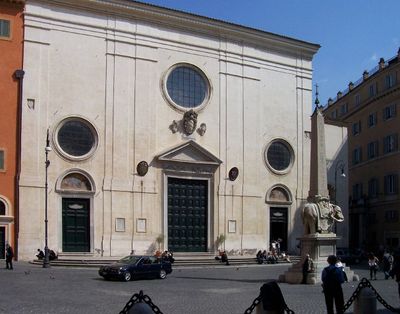
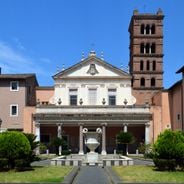
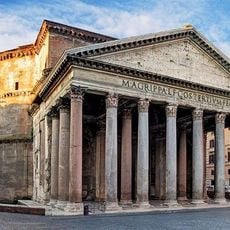
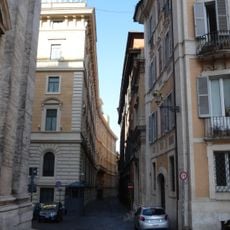
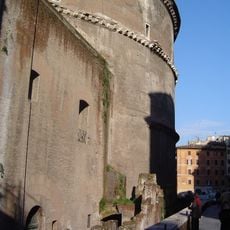
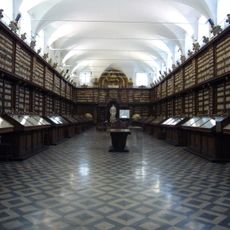
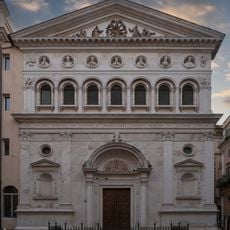
Santa Maria sopra Minerva, Gothic church in Pigna district, Rome, Italy.

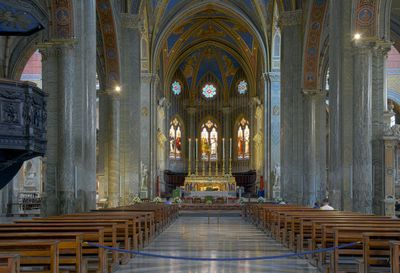
Santa Maria sopra Minerva stands as a rare example of Gothic architecture in Rome, measuring 101 meters in length and featuring three naves with stone pillars supporting ribbed vaults.

The church was built starting around 1370 by the Dominican order over the ruins of an ancient Roman temple dedicated to Minerva, with architect Carlo Maderno contributing to its development.

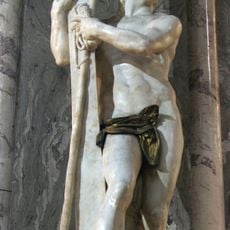
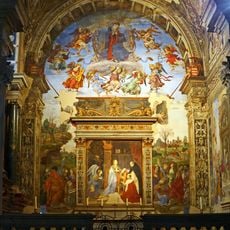
The basilica houses the tomb of Saint Catherine of Siena and contains masterpieces by artists like Filippino Lippi, Melozzo da Forlì, and a statue by Michelangelo called Christ the Redeemer.

The church opens Monday to Friday from 6:55 to 19:00, Saturday from 10:00 to 12:30 and 15:30 to 19:00, and Sunday from 8:10 to 12:30 and 15:30 to 19:00.

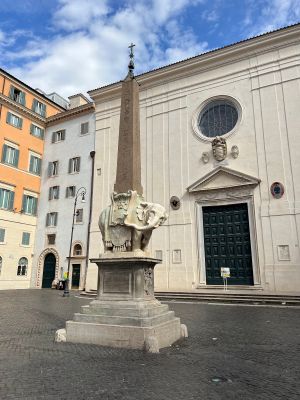
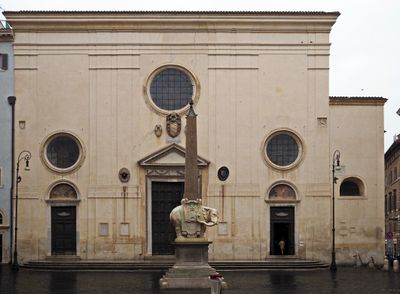
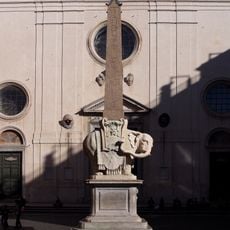
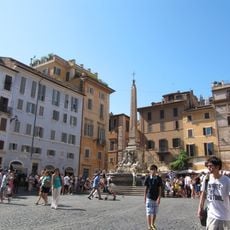
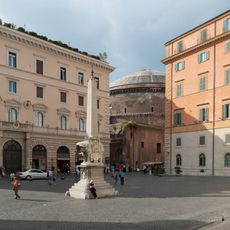
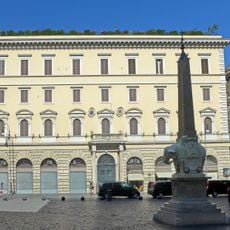
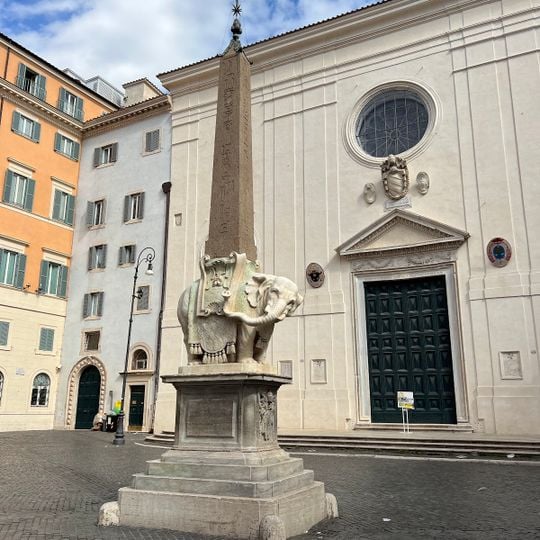
An elephant obelisk designed by Bernini stands in front of the church, making it the only church in Rome with such an unusual monument in its piazza.

Location: Rome

Inception: 1370

Architects: Carlo Maderno

Architectural style: Gothic architecture

Length: 101 m

Width: 41 m

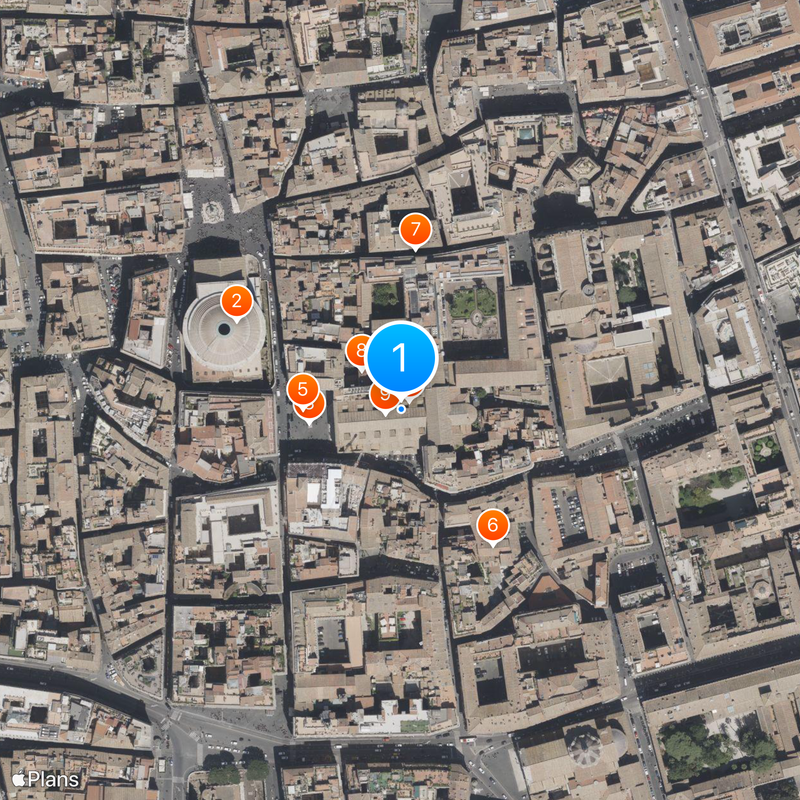
Address: Piazza della Minerva, 42, 00186 Roma RM, Italy

Opening Hours: Monday-Friday 06:55-19:00; Saturday 10:00-12:30, 15:30-19:00; Sunday 08:10-12:30, 15:30-19:00

Phone: +393337468785

Website: https://santamariasopraminerva.it

GPS coordinates: 41.89806,12.47833

Latest update: October 28, 2025 21:26

Ancient monuments and landmarks to visit in Rome

Rome preserves more than 2,000 years of architectural history within its city limits, maintaining ancient temples and amphitheaters beside Renaissance churches and Baroque piazzas. The Roman Forum displays ruins from the first century BC through the fourth century AD, including government buildings and temples that formed the administrative heart of the Roman Empire. The Pantheon demonstrates Roman engineering with its concrete dome, while the Colosseum remains the largest ancient amphitheater ever built. The city evolved through subsequent centuries as papal patronage transformed medieval Rome into a showcase of Renaissance and Baroque art and architecture. The Vatican holds significant religious and artistic collections, including the Sistine Chapel with Michelangelo's ceiling frescoes and Saint Peter's Basilica, the world's largest church building. Throughout the historic center, public squares like Piazza Navona preserve the footprint of ancient Roman structures while displaying Baroque fountains by Bernini and Borromini. The Trevi Fountain draws thousands of visitors daily to its 18th century facade, and the Spanish Steps connect different elevation levels of the city. Rome's neighborhoods maintain traditional Italian life around these monuments, with restaurants, shops and residences occupying buildings from various historical periods.

Churches of Rome: religious architecture, basilicas and sacred art

Rome contains over 900 churches that demonstrate two thousand years of sacred architecture, from Roman antiquity to the Baroque period. These buildings reveal the evolution of construction techniques and artistic expressions over the centuries. St. Peter's Basilica covers 20,000 square meters and features a dome designed by Michelangelo. The Pantheon retains its Roman dome with a 43-meter (141 feet) diameter, the largest ever constructed in unreinforced concrete. Major basilicas such as Santa Maria Maggiore showcase Byzantine mosaics from the 5th century beneath a Renaissance ceiling with gilded coffers. Saint Clement's Basilica in the Lateran overlays three levels of construction from the 1st to the 12th centuries, illustrating Rome's urban stratification. Santa Maria in Trastevere, one of the city's oldest churches, presents medieval gilded mosaics, while Saint Peter's in Chains houses Michelangelo's Moses. These monuments help understand how Rome shaped European religious architecture for over fifteen centuries.

Secret locations in Rome

These sites in Rome display art, history, and architecture away from main routes. From ancient temples to small churches, the city reveals its historical depth. The locations include underground catacombs, Roman villas, Gothic churches, and industrial buildings with art collections.

Instagram spots in Rome

Rome joins history with modern photography. The city spreads across several hills and holds buildings from different centuries, from ancient ruins to baroque churches and fountains. Photographers find subjects on every street corner, from large public squares to narrow alleys in old neighborhoods. The Colosseum and Roman Forum show the building techniques of ancient Rome. Trevi Fountain and Piazza Navona present baroque design with flowing water and sculptures. The Spanish Steps serve as a meeting point where people rest on the steps and watch the activity below. The Pantheon has stood for nearly 2,000 years and impresses through its dome with a circular opening at the center. In Vatican City, St. Peter's Basilica rises with its tall dome, and the Vatican Museums contain long galleries filled with artworks. Castel Sant'Angelo stands by the Tiber River and offers a wide view over the city's rooftops from above. Trastevere sits on the other side of the river and shows a different face of Rome: small squares, narrow streets with laundry lines between buildings, and restaurants with tables on the pavement. The church of Santa Maria in Trastevere has a golden mosaic on its facade that glows in the evening light. Campo de' Fiori is a market in the morning with vegetables and flowers, and in the evening the square fills with people. Via Margutta is a quiet street with galleries and plants on the building walls. The Aventine Keyhole shows St. Peter's Dome through a small opening in perfect framing. The Janiculum hill and Villa Borghese Gardens offer green spaces for walking and views over the city. Caracalla Baths and the Appian Way show Rome outside the center, where ancient structures stand in the landscape.

Reviews

Visited this place? Tap the stars to rate it and share your experience / photos with the community! Try now! You can cancel it anytime.

« Santa Maria sopra Minerva - Gothic church in Pigna district, Rome, Italy » is provided by Around Us (aroundus.com). Images and texts are derived from Wikimedia project under a Creative Commons license. You are allowed to copy, distribute, and modify copies of this page, under the conditions set by the license, as long as this note is clearly visible.

Discover hidden gems everywhere you go!

From secret cafés to breathtaking viewpoints, skip the crowded tourist spots and find places that match your style. Our app makes it easy with voice search, smart filtering, route optimization, and insider tips from travelers worldwide. Download now for the complete mobile experience.
Around Us App Screenshot

A unique approach to discovering new places

Le Figaro

All the places worth exploring

France Info

A tailor-made excursion in just a few clicks

20 Minutes