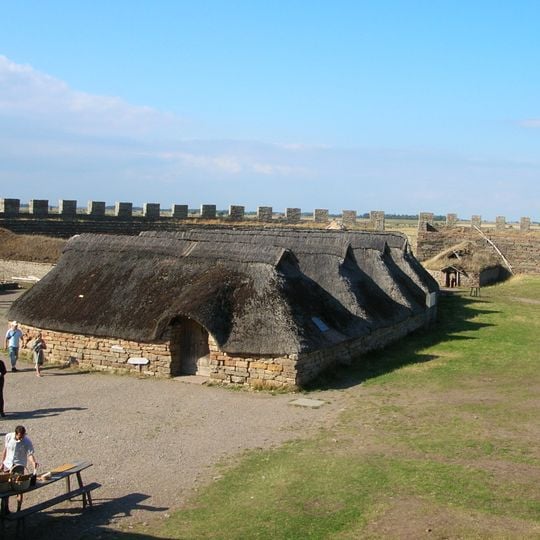
Eketorp Fort, Iron Age ring fort and museum in Mörbylånga Municipality, Sweden
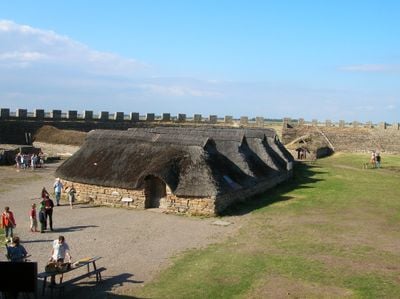
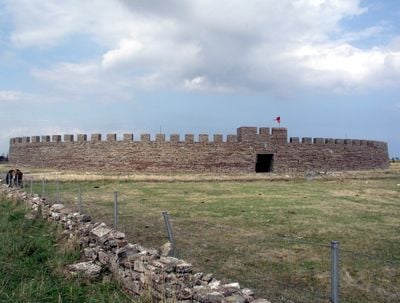
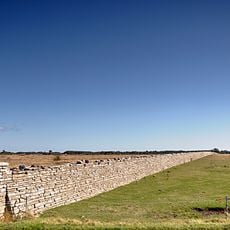
Eketorp Fort is a circular stone ringfort on the Great Alvar of southeastern Öland, built of stacked limestone blocks without mortar. Its reconstructed wall encloses about 80 metres in diameter, with a thatched longhouse and a crenellated outer gatehouse topped by a small red flag. Inside, some 53 cells were built into the wall or stood in the open centre.
The first ringfort was built around 300 AD with a circumference of about 57 metres, using limestone blocks stacked without mortar. In the 400s the circle was enlarged to roughly 80 metres in diameter and held 53 cells. After abandonment in the late 600s, the fort was rebuilt in the late 1100s with timber houses and a second defensive wall, serving until 1240.
Since 2019 Mörbylånga Municipality has run the fort, and its first season drew almost 39,000 visitors. In summer, staff in reconstructed clothing of 400–650 CE demonstrate archery, bread baking and crafts. A 2005 exhibition showing horse heads on poles, based on archaeological evidence of Iron Age sacrifices, was reported to the police but the museum was cleared in court.
The site is best visited during daylight so you can see the structure and excavation finds from both outside and inside clearly. Summer months bring regular activities like crafts demonstrations and traditional techniques that show how people lived in the past.
The fort is the only completely excavated fortification of its kind on Öland, even though the island holds many similar ruins. This distinction makes it a rare window into Iron Age life in this region.
The community of curious travelers
AroundUs brings together thousands of curated places, local tips, and hidden gems, enriched daily by 93,146 contributors worldwide.