Ottenby kungsgård, Royal estate in Mörbylånga Municipality, Sweden
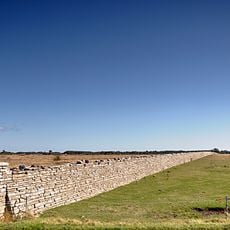
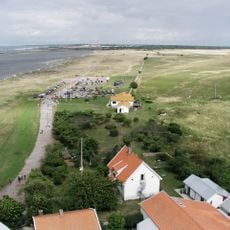
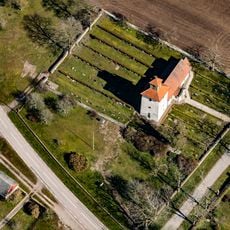
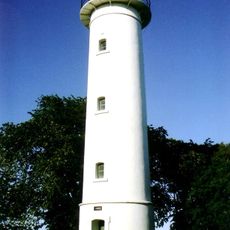
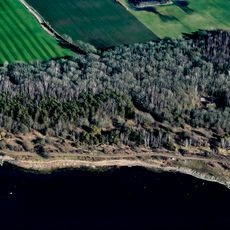
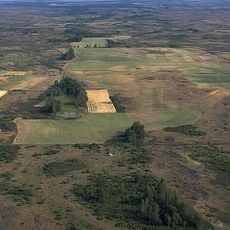
Ottenby kungsgård is a royal estate at the southern tip of Öland in Mörbylånga Municipality. Its main building, a white-plastered stone house with a hipped roof, was built in 1804 to designs by Carl Fredrik Sundvall. The two wings are of limestone from the late 1700s, and the grounds also hold ruins of older outbuildings and Karl X Gustav's wall of 1654–1655.
Ottenby is first recorded in 1279 as ecclesie de Othanby, when its 19 farms belonged to Nydala Monastery. Gustav Vasa confiscated the farms and turned them into a royal farm with a sheep operation and a stud. A state stud for army horses operated from 1831 to 1892, and half-bred horses were bred at Ottenby afterwards.
The name Ottenby first appears in writing in 1279 as "ecclesie de Othanby" and in 1293 as "Othamaby"; it likely comes from the male name Otami, meaning "the untamed one." The name was used as the parish name before 1300. The estate is still farmed by the Wiström family.
The estate is owned by Statens fastighetsverk and farmed by the Wiström family, so parts of the grounds are working farmland rather than a visitor site. Since 1935 the buildings have been a state building monument, which limits alterations. Check opening arrangements before travelling, as access to the main building and wings is not guaranteed.
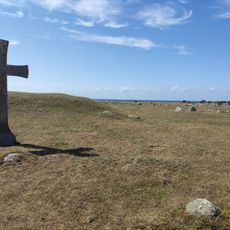
Karl X Gustav's wall, built in 1654–1655, runs north of the estate; it was raised to keep the royal fallow deer enclosed in the grove. The name Ottenby is first recorded in 1279 as ecclesie de Othanby, and before 1300 it served as the parish name.
The community of curious travelers
AroundUs brings together thousands of curated places, local tips, and hidden gems, enriched daily by 93,625 contributors worldwide.