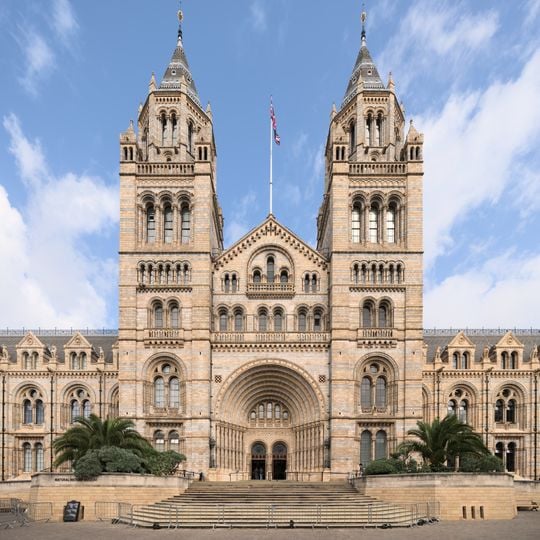
Natural History Museum, National museum in South Kensington, England
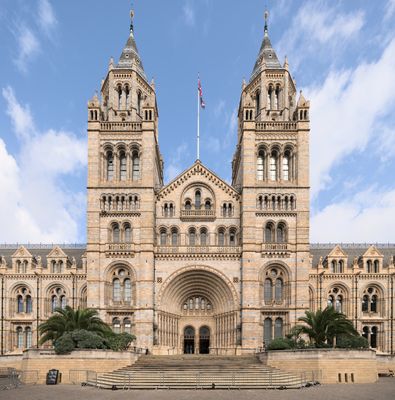
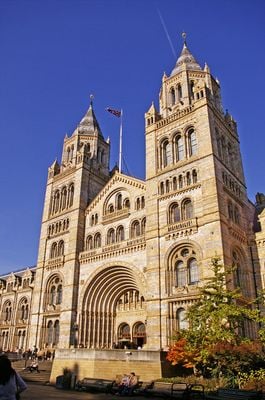
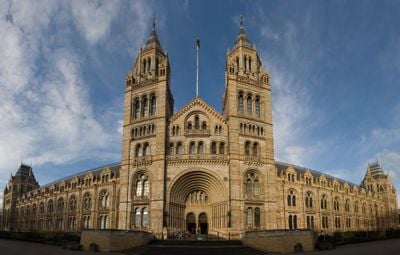
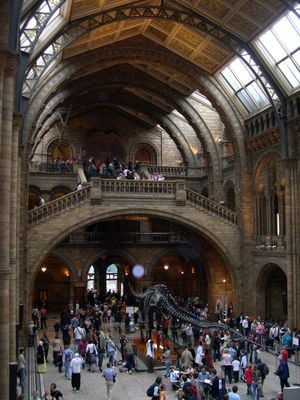
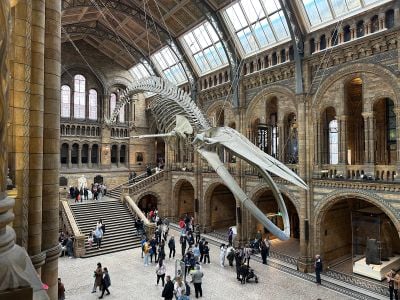
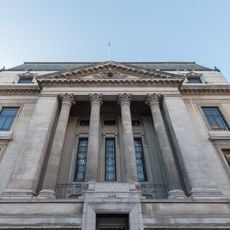
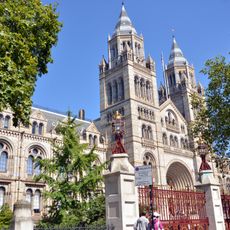
The Natural History Museum occupies Alfred Waterhouse's Romanesque Revival building on Cromwell Road, its tan and buff stone facade marked by two tall towers, a central gable with a rose window and a deep round-arched entrance. Inside, the vaulted central hall is surrounded by galleries covering botany, entomology, mineralogy, palaeontology and zoology.
Richard Owen worked from the 1850s onward to separate the natural history collections from the main British Museum building, and the new house finally opened in 1881 in South Kensington. The status as an independent institution followed more than a century later, in 1992.
The museum's nickname, "cathedral of nature", comes from the Waterhouse building's Romanesque Revival design. The Earth Galleries are reached by an escalator that passes through a giant model of the Earth, and the Life Galleries display a lifelike Tyrannosaurus rex robot that snaps and roars at visitors. The Darwin Centre keeps specimens collected by Charles Darwin, some still bearing labels in his handwriting.
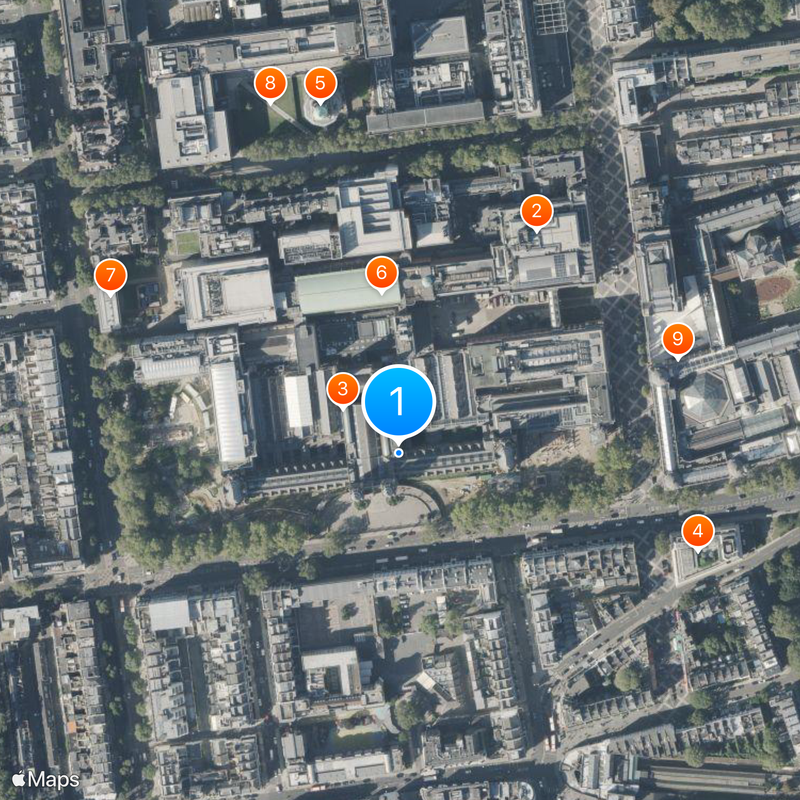
Access is easiest from South Kensington Underground station, which connects directly to the entrance through a tunnel. Opening hours run daily from 10 in the morning to half past five, and entry is free.
The central hall has displayed a blue whale skeleton hanging from the ceiling since 2017, named Hope, which replaced the formerly exhibited Diplodocus model. The original whale skeleton washed ashore off the Irish coast in the early 20th century and was then brought to the institution.
The community of curious travelers
AroundUs brings together thousands of curated places, local tips, and hidden gems, enriched daily by 92,130 contributors worldwide.