Natural History Museum, London, National museum in South Kensington, England
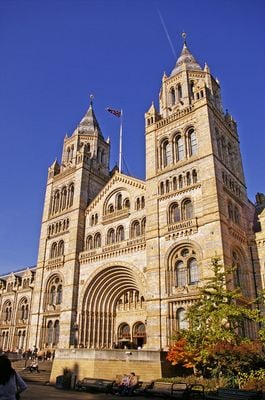
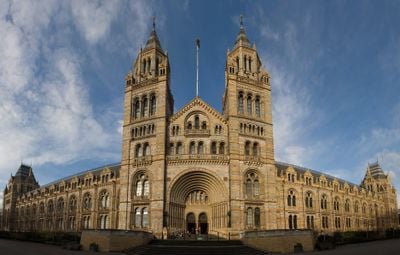
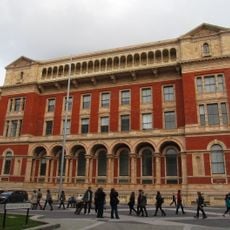
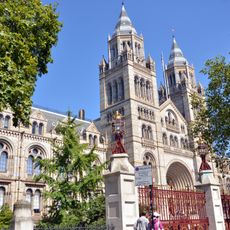
The Natural History Museum is a large natural history institution in South Kensington, housed in a building of red and cream terracotta stone designed in Romanesque Revival architecture. The collections are spread across several floors and include sections on mammals, birds, insects, rocks, planets and the story of life on Earth.
Richard Owen worked from the 1850s onward to separate the natural history collections from the main British Museum building, and the new house finally opened in 1881 in South Kensington. The status as an independent institution followed more than a century later, in 1992.
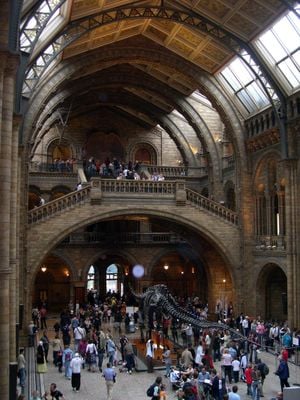
The main entrance opens into a large hall with a vaulted ceiling that recalls a cathedral, while galleries with fossils, minerals and mounted animals from every continent are arranged all around. Families and school groups move through the rooms and use interactive stations to learn about evolution, earthquakes or the disappearance of species.
Access is easiest from South Kensington Underground station, which connects directly to the entrance through a tunnel. Opening hours run daily from 10 in the morning to half past five, and entry is free.
The central hall has displayed a blue whale skeleton hanging from the ceiling since 2017, named Hope, which replaced the formerly exhibited Diplodocus model. The original whale skeleton washed ashore off the Irish coast in the early 20th century and was then brought to the institution.
The community of curious travelers
AroundUs brings together thousands of curated places, local tips, and hidden gems, enriched daily by 60,000 contributors worldwide.