Sutton Hoo, Anglo-Saxon burial ground in Suffolk, England
Sutton Hoo is an archaeological site in Suffolk, England, where eighteen burial mounds from the 6th and 7th centuries rise along the banks of the River Deben estuary. Each mound marks a grave from the Anglo-Saxon period, with the largest containing the remains of a wooden ship and burial goods now considered among the most important finds of that era in Britain.
In 1939, archaeologist Basil Brown uncovered an intact ship burial beneath the largest mound, revealing objects that transformed our understanding of early medieval Britain. The excavation exposed a complete burial assemblage of gold, silver and gemstones believed to belong to a 7th-century king or high-ranking noble.
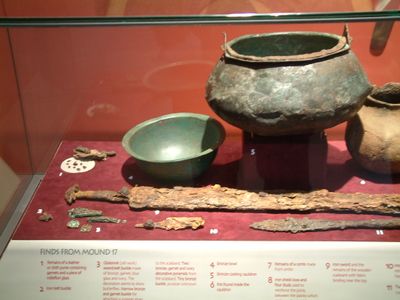
School groups and history clubs regularly visit the exhibition halls, where they can examine and handle replicas of burial objects that once accompanied Anglo-Saxon nobles to the afterlife. The reconstructed burial chamber allows visitors to see how early medieval communities honored their dead and what everyday items or treasures they chose to place alongside them.
The National Trust manages the grounds and offers guided tours, exhibition spaces and interactive displays that explain the finds and the story of Anglo-Saxon society. Paths around the burial mounds are mostly firm and allow walking even in damp weather, though some slopes can become steep in places.
The wooden ship discovered beneath the largest mound measured roughly 90 feet (27 meters) in length, and its shape survived through more than four thousand metal rivets that remained in their original positions. Although the timber had long since decayed, the rivets traced the entire outline of the hull in the soil and allowed archaeologists to reconstruct the vessel's design and scale with precision.
The community of curious travelers
AroundUs brings together thousands of curated places, local tips, and hidden gems, enriched daily by 90,928 contributors worldwide.