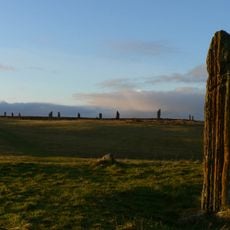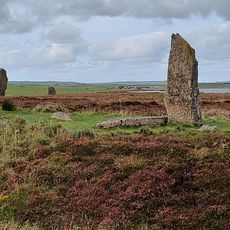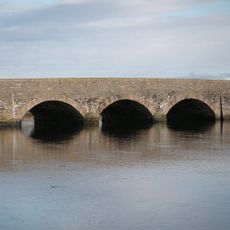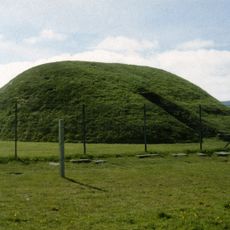
Maes Howe, Neolithic chambered cairn in Orkney Islands, Scotland
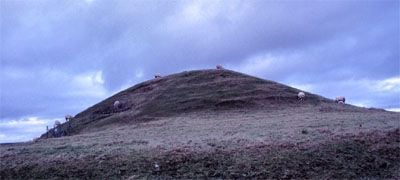
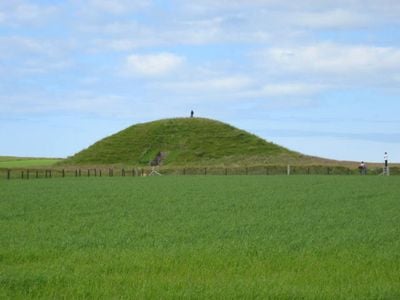
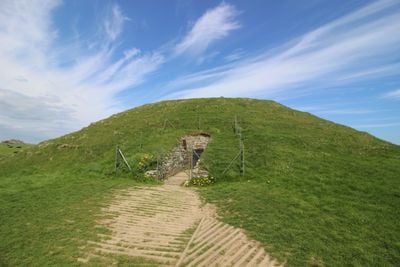
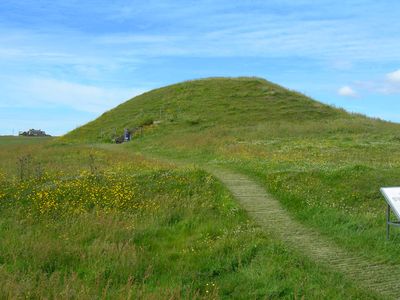
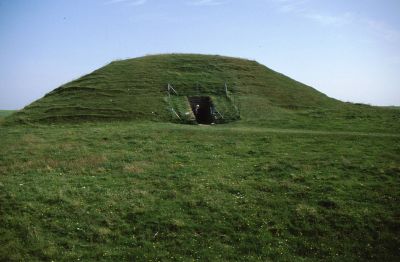
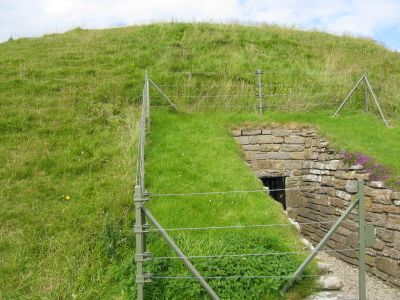
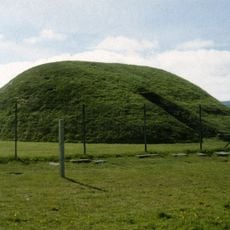
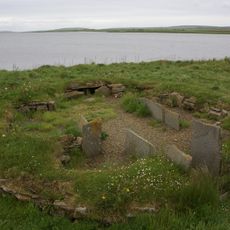
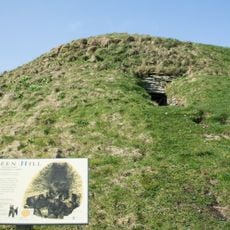
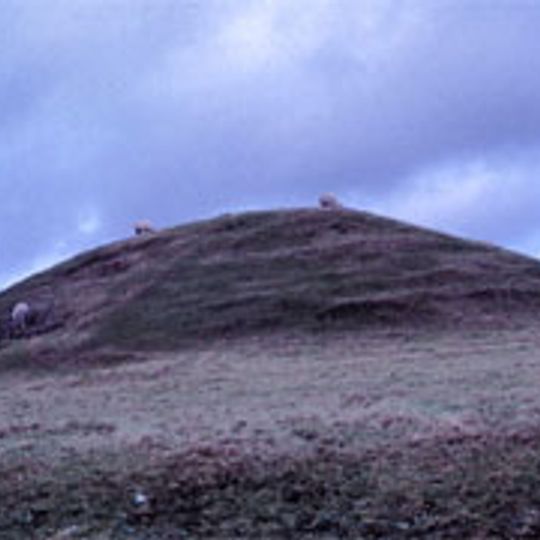
Maes Howe is a grass-covered mound about 35 metres across and 7.3 metres high, built from local flagstone. A passage 11 metres long and only about 0.91 metres high leads to a central chamber roughly 4.6 metres square and 3.8 metres high, with three side cells set above floor level. The chamber is capped by a modern corbelled roof.
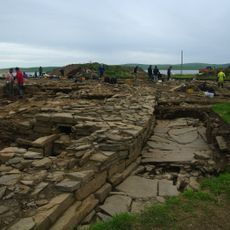
Built between 3200 and 2900 BCE, Maeshowe is the largest and most sophisticated example of its cairn type, likely the tradition's final stage. In 1861 antiquarian James Farrer opened the mound and recorded the runes; Vere Gordon Childe's 1950s excavations showed the mound was mostly clay and peat with broken stone, not a rubble cairn. The runes were mostly carved by a group of crusaders around 1134–35, as recorded in the Orkneyinga saga.
The passage is set so that the setting sun on the winter solstice shines down it and strikes the back wall of the central chamber, lighting the entrance to the rear cell. The alignment was built into the tomb around 2800 BC, and the passage bends slightly, perhaps corrected during construction. The effect lasts only a few days either side of midwinter.
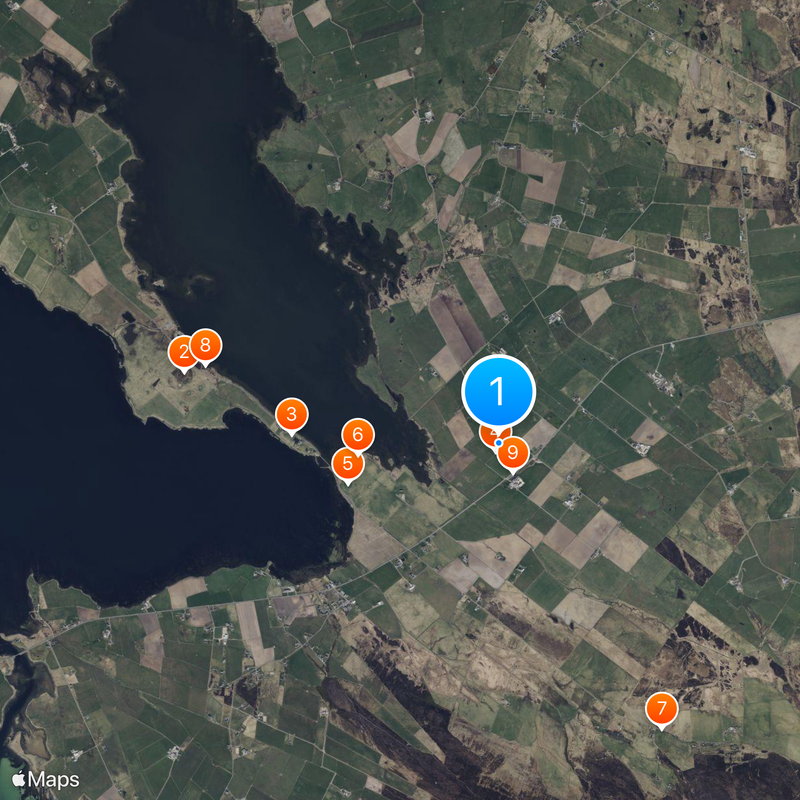
Visitors need to arrange visits in advance through guided tours that depart regularly from the visitor center in Stenness village. These tours run throughout the year and allow safe access to the interior chambers.
The runes were carved by crusaders around 1134–35, as recorded in the Orkneyinga saga. They are the largest in-situ collection of runic inscriptions found so far, and they use all three known runic writing systems: normal, twig runes and tree runes. Deciphering the tree runes only became possible through this find. One carver, Lifolf, was a woman in the crusader group.
The community of curious travelers
AroundUs brings together thousands of curated places, local tips, and hidden gems, enriched daily by 95,746 contributors worldwide.