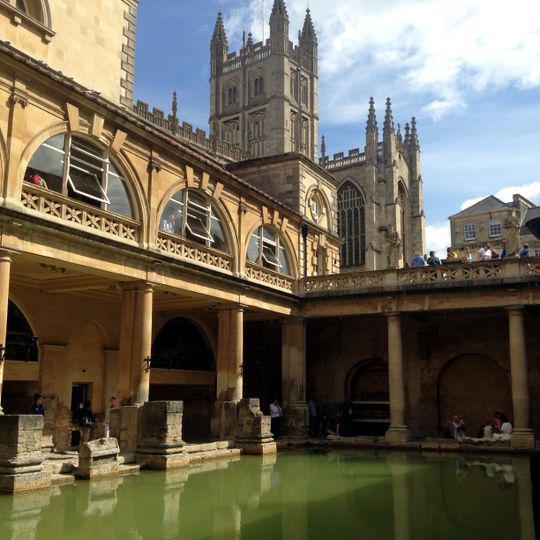
Aquae Sulis, Roman archaeological site in Bath, England
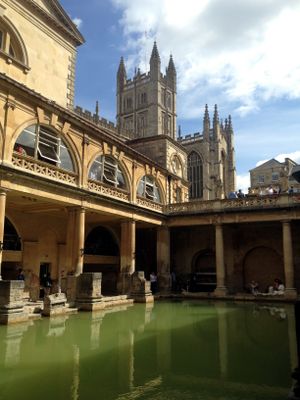
Aquae Sulis is the Roman town beneath and around Bath's hot springs, where a temple precinct and bathhouse were built from the AD 60s onward. The Great Bath is a lead-lined pool 22 m long, 8.8 m wide and 1.5 m deep, set 1.5 m below floor level and reached by steps on all sides. Its long sides carried arcades of eight columns each, and a lead pipe fed it directly from the spring to the west. Above the remains rise the tan stone arcades and round-arched upper tier of the 19th-century museum building, with Bath Abbey tower behind.
Romans built the site around 60 AD after encountering Celtic springs already regarded as sacred. The settlement grew into an important religious and social center that was expanded and reshaped over several centuries.
Worship of Sulis Minerva blended Celtic and Roman beliefs in a location already considered holy before the conquest. Visitors today can see how pilgrims and travelers inscribed wishes or curses on lead tablets, then threw them into the spring water to gain the attention of the deity.
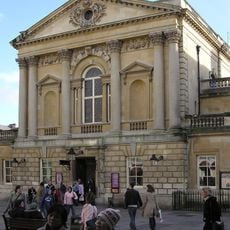
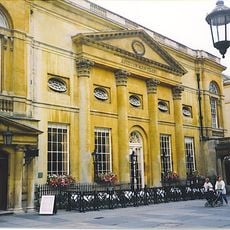
The site sits in the center of Bath, close to modern shops and cafes, and is easy to reach on foot. The remains lie partly below present ground level, so visitors walk through galleries and platforms to view the ancient structures.
About 130 messages to Sulis, scratched onto lead curse tablets, were recovered from the Sacred Spring; most are in Latin, but one is in Brythonic and is the only known sentence in that language. It reads "Adixoui Deuina Deieda Andagin Uindiorix cuamenai", usually rendered as a binding by Windiorix of a woman named Andagin.
The community of curious travelers
AroundUs brings together thousands of curated places, local tips, and hidden gems, enriched daily by 94,657 contributors worldwide.