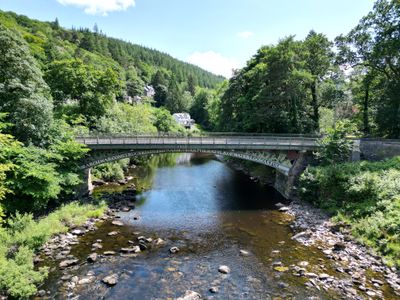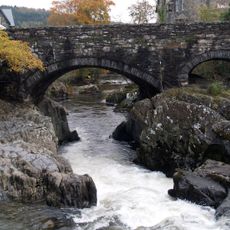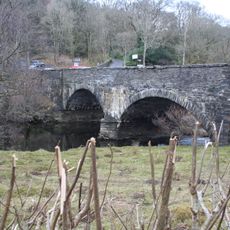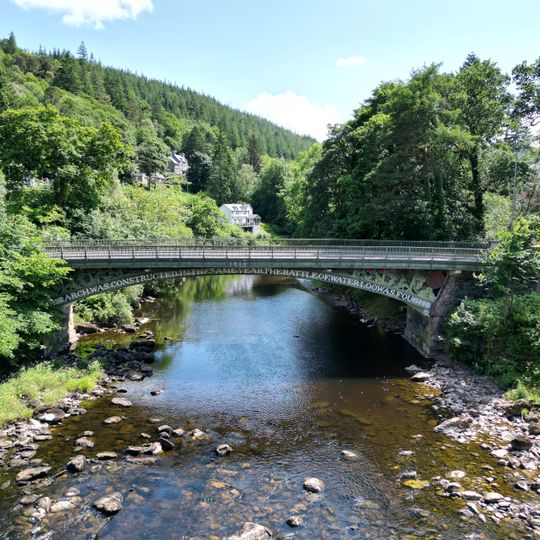
Waterloo Bridge, Cast iron arch bridge in Betws-y-coed, Wales.
Waterloo Bridge is a cast iron arch structure spanning approximately 32 meters across the River Conwy with support from stone abutments on either side. The bridge carries two lanes of vehicle traffic and was later reinforced with concrete additions.
Thomas Telford designed this bridge in 1815 with construction completed in 1816, coinciding with the Battle of Waterloo. It represented part of a broader period of infrastructure expansion across Wales during the early 19th century.
The bridge displays four national symbols of the United Kingdom cast in iron: the rose, thistle, leek, and shamrock. These decorative elements reflect British unity and are details visitors can notice when looking closely at the structure.
The bridge carries the A5 road connecting London to Holyhead and accommodates both vehicles and pedestrians. As it is an active roadway, visitors should exercise caution when crossing or viewing the structure.
The cast iron materials came from William Hazledine's foundry, linking it to one of the era's most respected ironworks. This connection demonstrates the quality of metalwork engineering that was possible during this period.
The community of curious travelers
AroundUs brings together thousands of curated places, local tips, and hidden gems, enriched daily by 90,813 contributors worldwide.