Mount Vernon, Georgian estate in Fairfax County, United States.
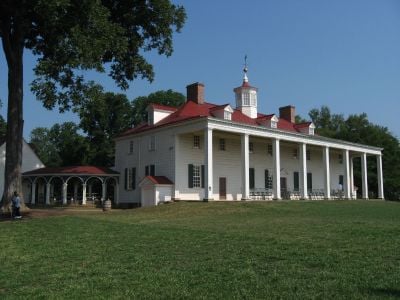
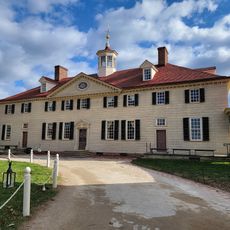
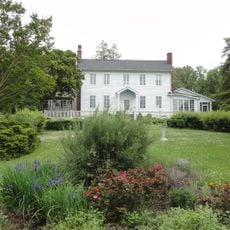
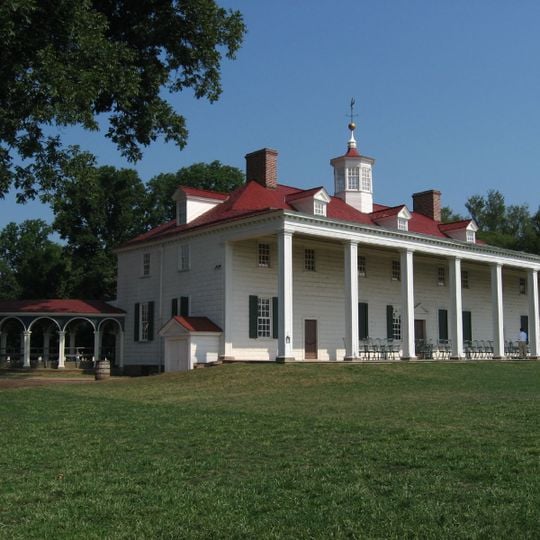
Mount Vernon is a colonial era estate along the Potomac River set on a bluff roughly 120 feet (40 meters) above the water and surrounded by formal gardens. The main house displays symmetrical Georgian architecture with white wood facades, a two-story veranda, and a red roof, while the grounds hold several outbuildings, agricultural structures, and reconstructed facilities.
George Washington inherited the property in 1754 and expanded it over decades into a large plantation operated through the labor of over 300 enslaved people. After his death in 1799 the complex fell into disrepair until a women's organization purchased it in 1858 and began restoration.
The property functions as a living museum where interpreters in period dress reenact the labor and daily rhythms of the 18th century. Visitors watch craftspeople practice blacksmithing, weaving, and barrel making using methods from Washington's era.
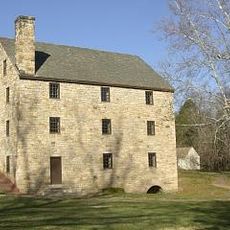
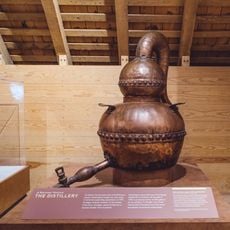
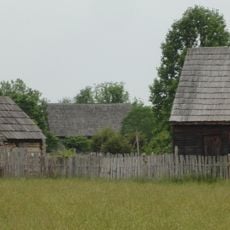
The 500-acre estate holds the mansion, over 30 outbuildings, four gardens, a 1.62-hectare demonstration farm five minutes' walk south of the mansion beside the Potomac pier, plus the working gristmill and distillery. Paths are gravel and grass with slopes; the forest trail runs about 400 metres. The pier, rebuilt in the 19th century and restored in 1991, marks the riverfront.
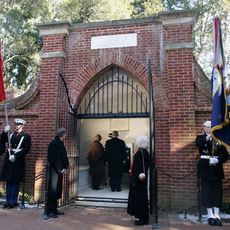
Washington's remains were moved in 1831 to the brick tomb he had chosen, once the old family vault had deteriorated; he, Martha and other family members lie there now. A separate monument marks the former slave cemetery, where about 75 people were buried and no original headstones survive.
The community of curious travelers
AroundUs brings together thousands of curated places, local tips, and hidden gems, enriched daily by 92,241 contributors worldwide.